Dolphin Dance
,
2026
Patrick Piccinelli
Dolphin Dance
2026
acrylic paint, oil stick, colored pencils, dry pastels, pigment
acrylic paint, oil stick, colored pencils, dry pastels, pigment
50
50
X
X
65
65
Sold
Private collection:
The Hague
,
Netherland
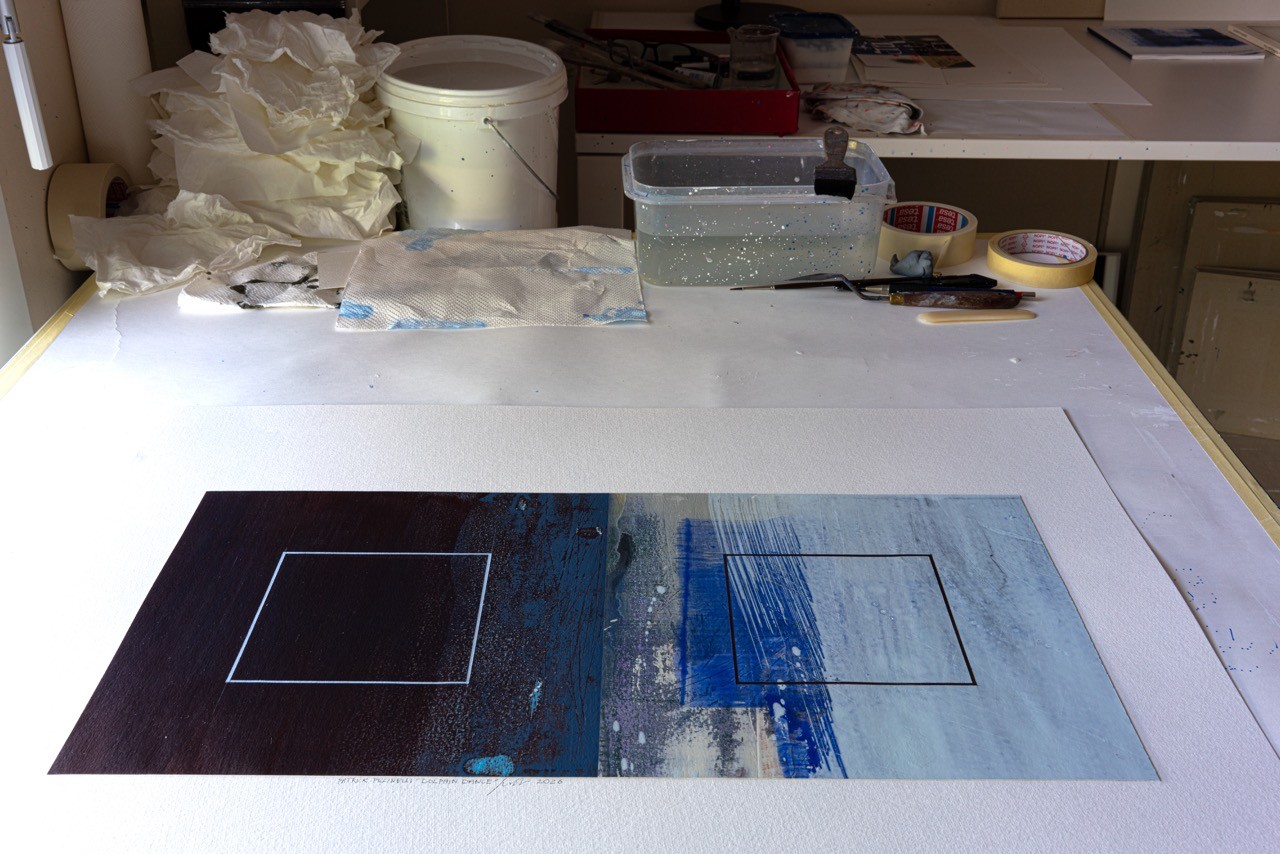
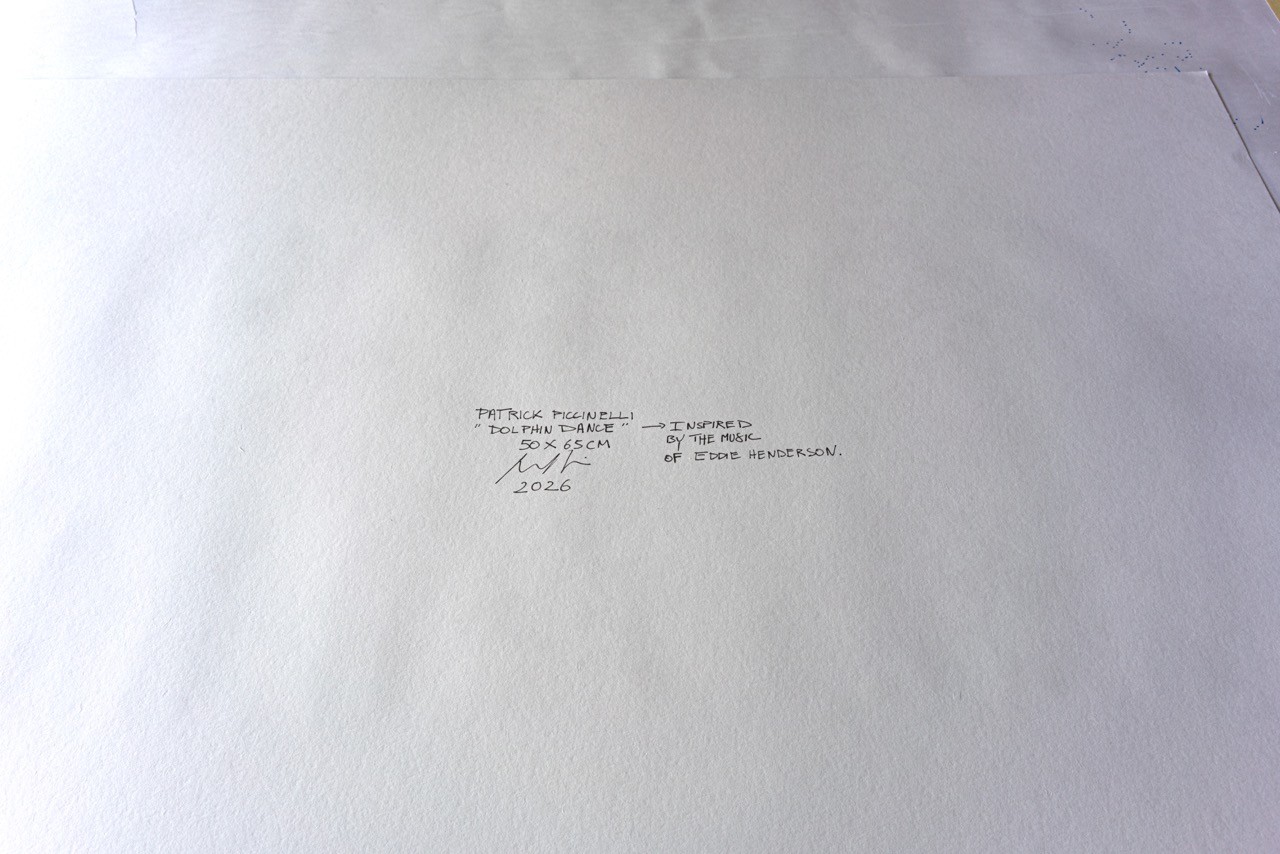
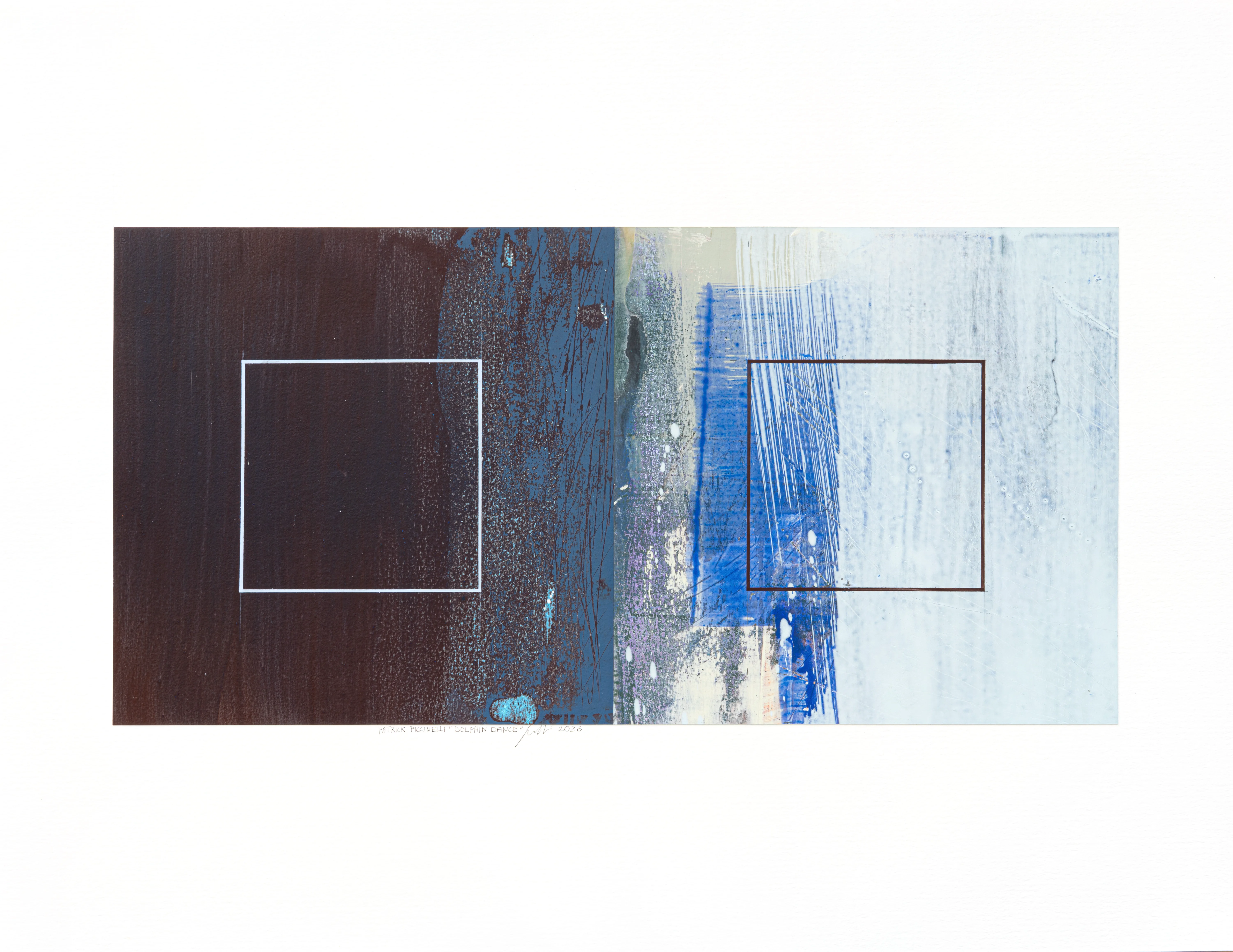
"Dolphin Dance," acrylic paint, oil stick, colored pencils, dry pastels, pigment on Arches paper, 50 x 65 cm, 2026.
The title of this work is inspired by the Eddie Henderson piece.
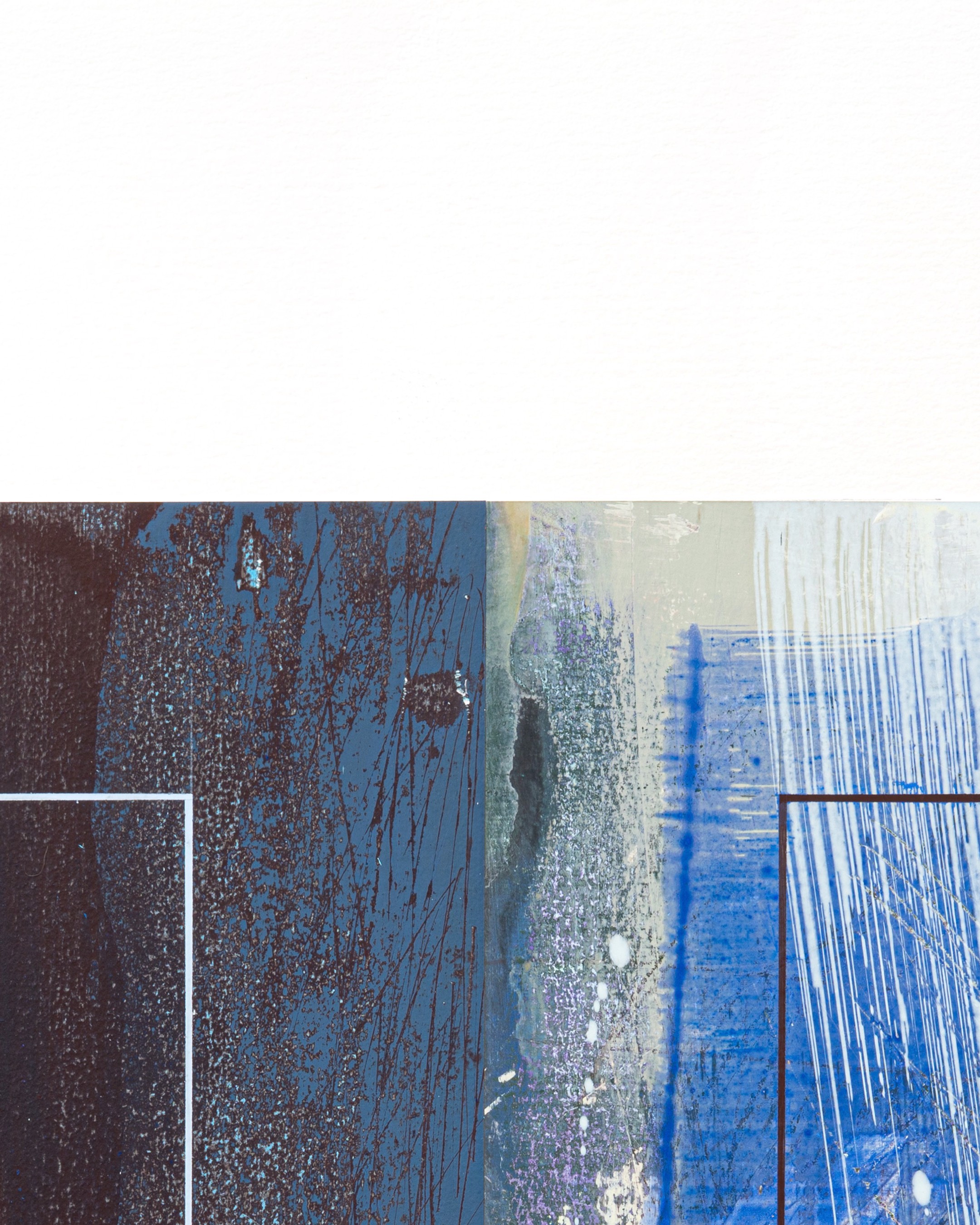
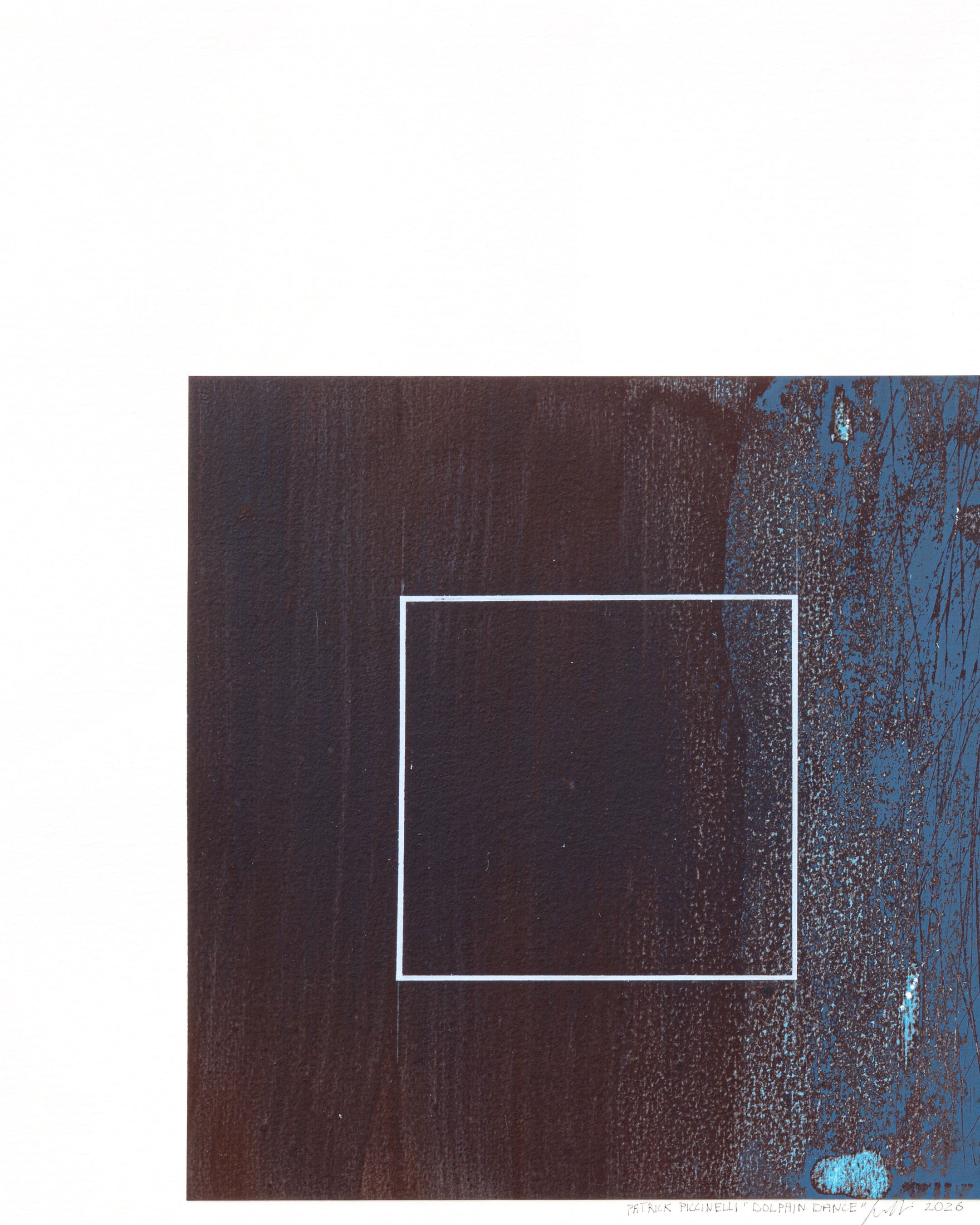
"Dolphin Dance" is originally a composition by Herbie Hancock, released on the album Maiden Voyage (1965). The piece is renowned for its fluid, non-functional harmony, where the chords move through melodic motion rather than expected cadences, creating a sensation of swimming, a continuous curve rather than discrete steps. Eddie Henderson covered this standard several times throughout his career. The musical piece and the visual work share a binary structure that responds to each other without duplicating it: two harmonic tones in Hancock's work that glide toward one another without clear resolution, and two inverted chromatic panels (dark/light square on the left, light/dark square on the right) in my composition. It's the same principle of an imperfect mirror. The two empty squares, one with a light line on a dark background, the other with a dark line on a light background, can be read as two "spaces for improvisation" left pending, much like the harmonic grid of "Dolphin Dance" leaves the soloist an open space to navigate without fixed reference points.
"Dolphin Dance," acrylic paint, oil stick, colored pencils, dry pastels, pigment on Arches paper, 50 x 65 cm, 2026.
The title of this work is inspired by the Eddie Henderson piece.
"Dolphin Dance" is originally a composition by Herbie Hancock, released on the album Maiden Voyage (1965). The piece is renowned for its fluid, non-functional harmony, where the chords move through melodic motion rather than expected cadences, creating a sensation of swimming, a continuous curve rather than discrete steps. Eddie Henderson covered this standard several times throughout his career. The musical piece and the visual work share a binary structure that responds to each other without duplicating it: two harmonic tones in Hancock's work that glide toward one another without clear resolution, and two inverted chromatic panels (dark/light square on the left, light/dark square on the right) in my composition. It's the same principle of an imperfect mirror. The two empty squares, one with a light line on a dark background, the other with a dark line on a light background, can be read as two "spaces for improvisation" left pending, much like the harmonic grid of "Dolphin Dance" leaves the soloist an open space to navigate without fixed reference points.