Free Country
,
2026
Patrick Piccinelli
Free Country
2026
acrylic paint, archival ink, collage on paper, sold without frame
acrylic paint, archival ink, collage on paper, sold without frame
30
30
X
X
25.8
25.8
Sold
Private collection:
New Jersey
,
USA
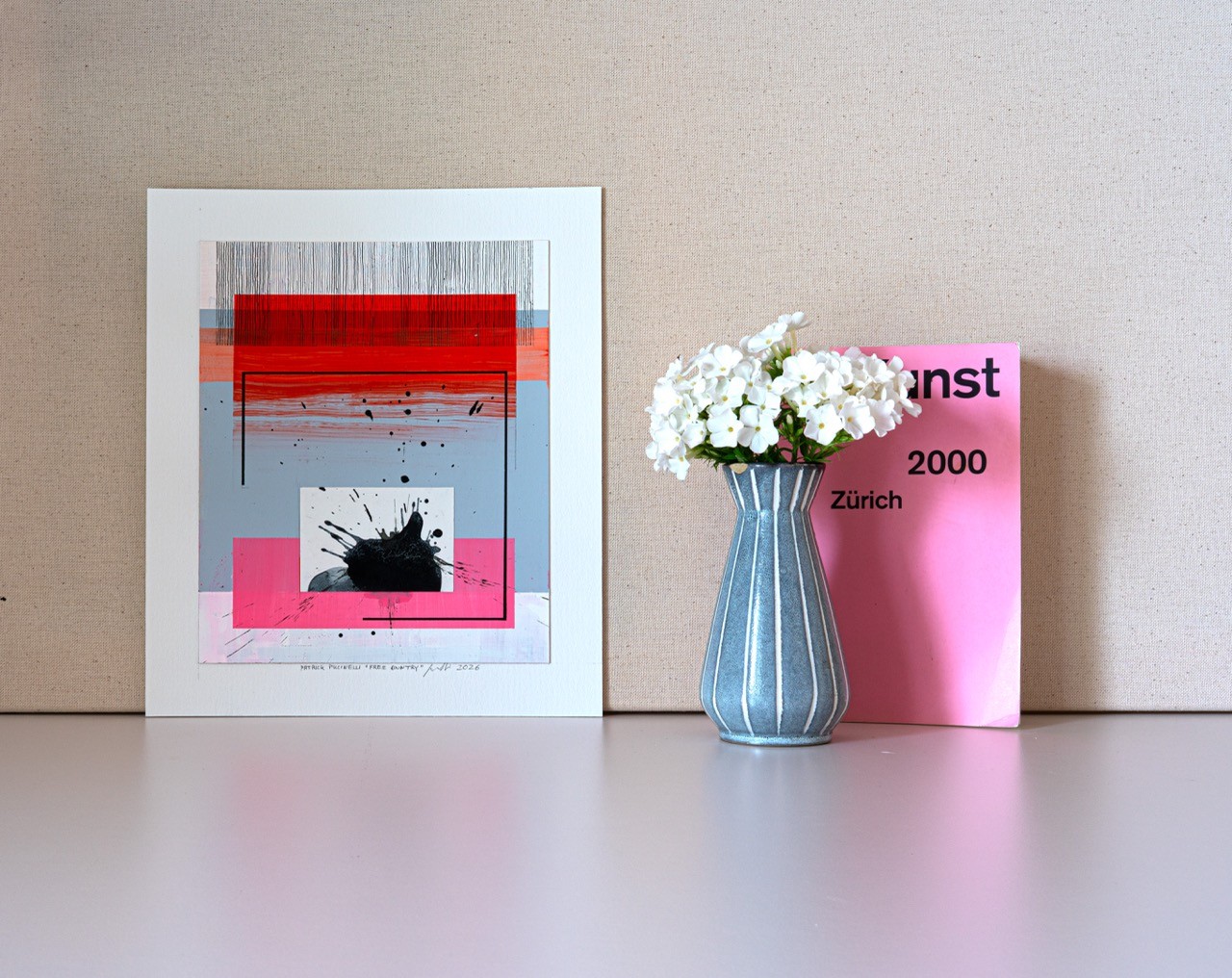
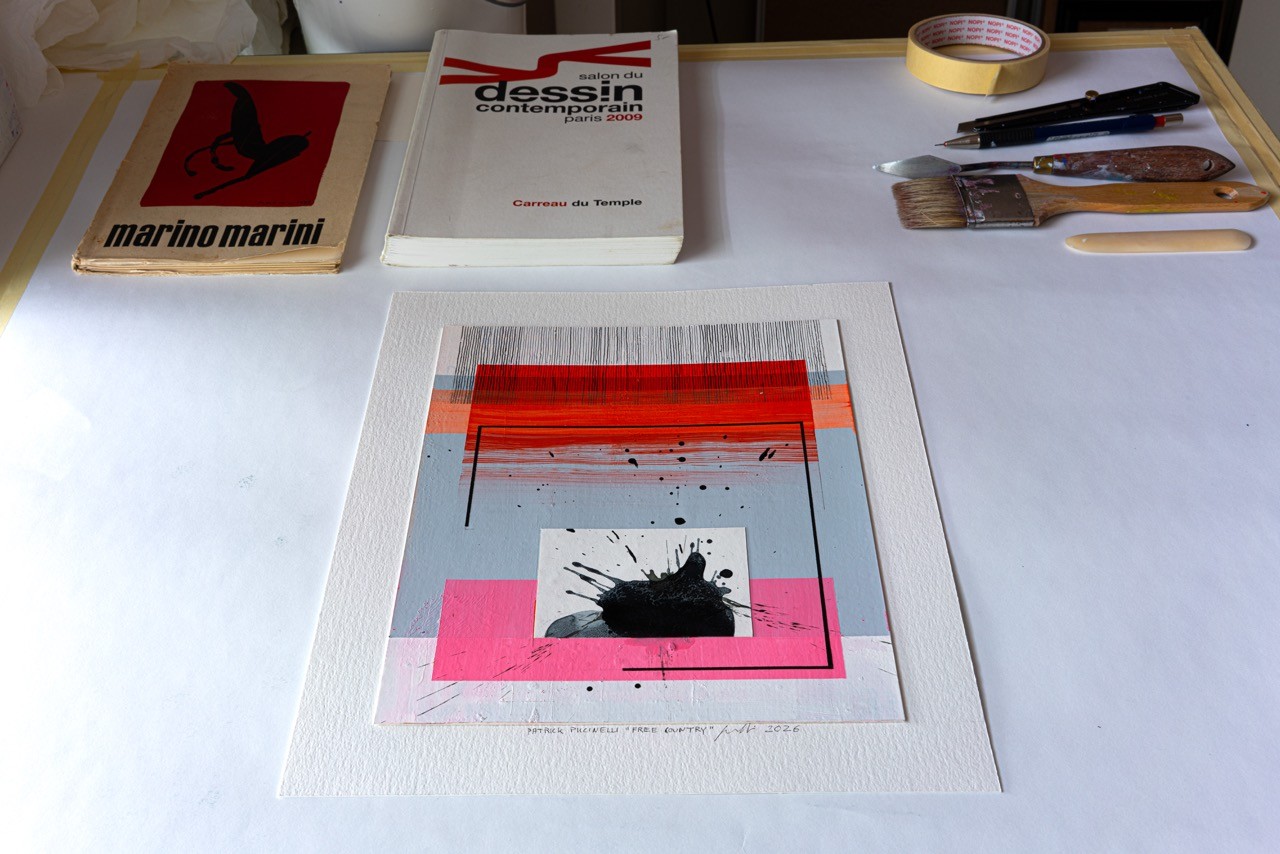
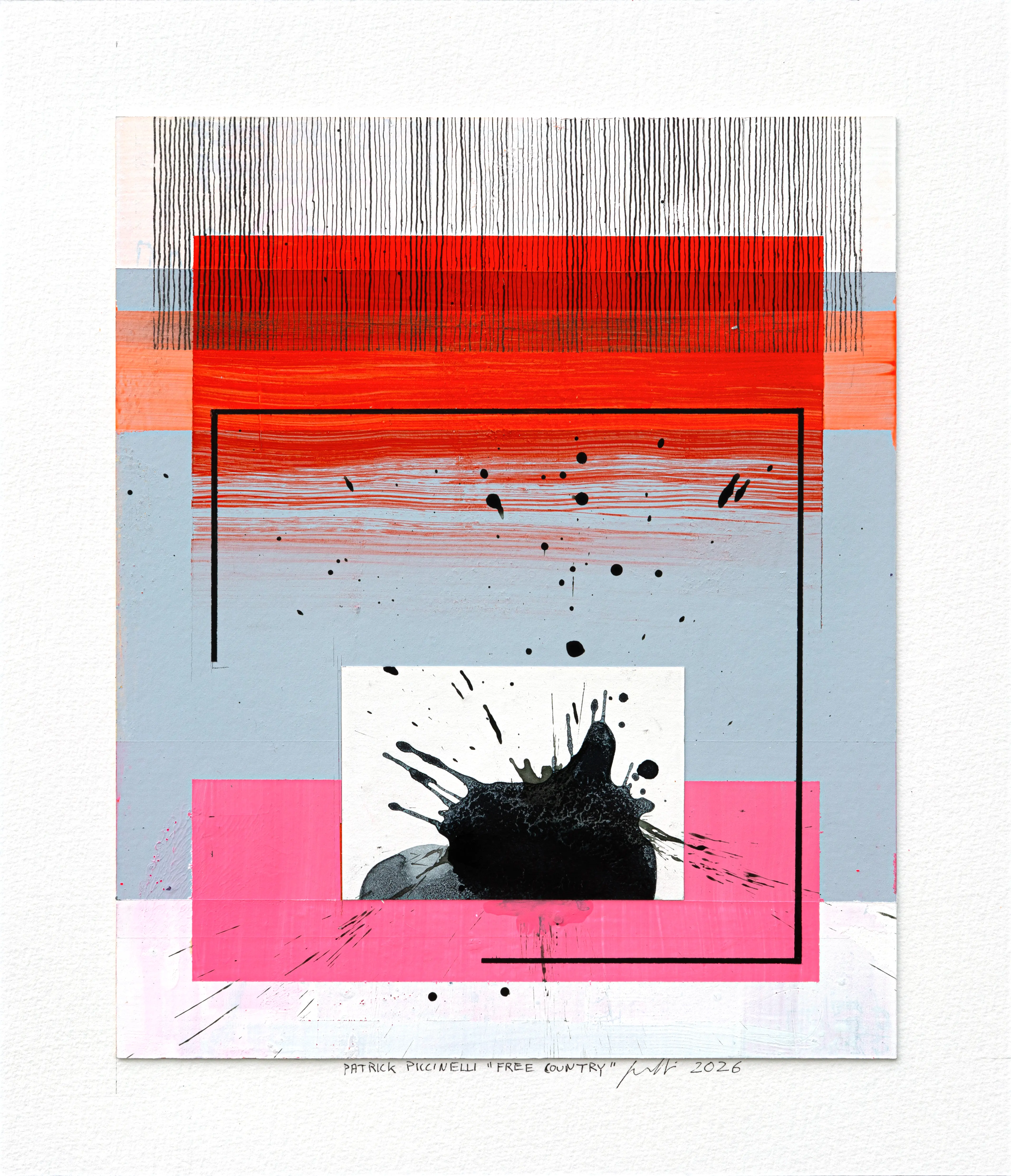
Free Country, acrylic paint, archival ink, collage on paper, 30 x 25.8 cm, 2026.
Artwork inspired by the song "Free Country" by the band Chicago.
This instrumental piece from the album Chicago III (1971) is part of the "Travel Suite" composed by Robert Lamm. It is considered the most atonal and least mainstream instrumental the band ever recorded. There are no brass instruments, only Lamm's piano and Parazaider's flute answering each other, with percussion providing accompaniment. It is essentially three solos layered on top of each other. Lamm begins with a piano solo, then Parazaider enters with a soft, melodic touch before shifting into something almost avant-garde and disjointed. In other words: a structure initially established, which gradually disintegrates into the freest improvisation.
What makes this comparison particularly relevant is that I theorize my work in these terms: the search for a balance between minimalism and expressionism. My approach is similar to that of contemporary jazz musicians who improvise, embracing chance within a melody, chromatic composition, and rhythm, geometric structure.
The black frame, drawn freehand and slightly off-center from the strips, acts as a measure that no longer quite coincides with the grid, a structure that begins to slip.
The explosion of black ink at the bottom, with its splashes overflowing the white square that contains it, represents the moment of pure improvisation: the uncontrolled gesture that disrupts the minimalist order, just like Parazaider's flute, which leaves the melody to venture into "disjointed" territory.
Free Country, acrylic paint, archival ink, collage on paper, 30 x 25.8 cm, 2026.
Artwork inspired by the song "Free Country" by the band Chicago.
This instrumental piece from the album Chicago III (1971) is part of the "Travel Suite" composed by Robert Lamm. It is considered the most atonal and least mainstream instrumental the band ever recorded. There are no brass instruments, only Lamm's piano and Parazaider's flute answering each other, with percussion providing accompaniment. It is essentially three solos layered on top of each other. Lamm begins with a piano solo, then Parazaider enters with a soft, melodic touch before shifting into something almost avant-garde and disjointed. In other words: a structure initially established, which gradually disintegrates into the freest improvisation.
What makes this comparison particularly relevant is that I theorize my work in these terms: the search for a balance between minimalism and expressionism. My approach is similar to that of contemporary jazz musicians who improvise, embracing chance within a melody, chromatic composition, and rhythm, geometric structure.
The black frame, drawn freehand and slightly off-center from the strips, acts as a measure that no longer quite coincides with the grid, a structure that begins to slip.
The explosion of black ink at the bottom, with its splashes overflowing the white square that contains it, represents the moment of pure improvisation: the uncontrolled gesture that disrupts the minimalist order, just like Parazaider's flute, which leaves the melody to venture into "disjointed" territory.