Our Prayer
,
2026
Patrick Piccinelli
Our Prayer
2026
acrylic paint, pigment, colour pencils, oil pastel, varnish on paper, sold without frame
acrylic paint, pigment, colour pencils, oil pastel, varnish on paper, sold without frame
50
50
X
X
65
65
Available
€
1,600
shipping worldwide included
Add to card
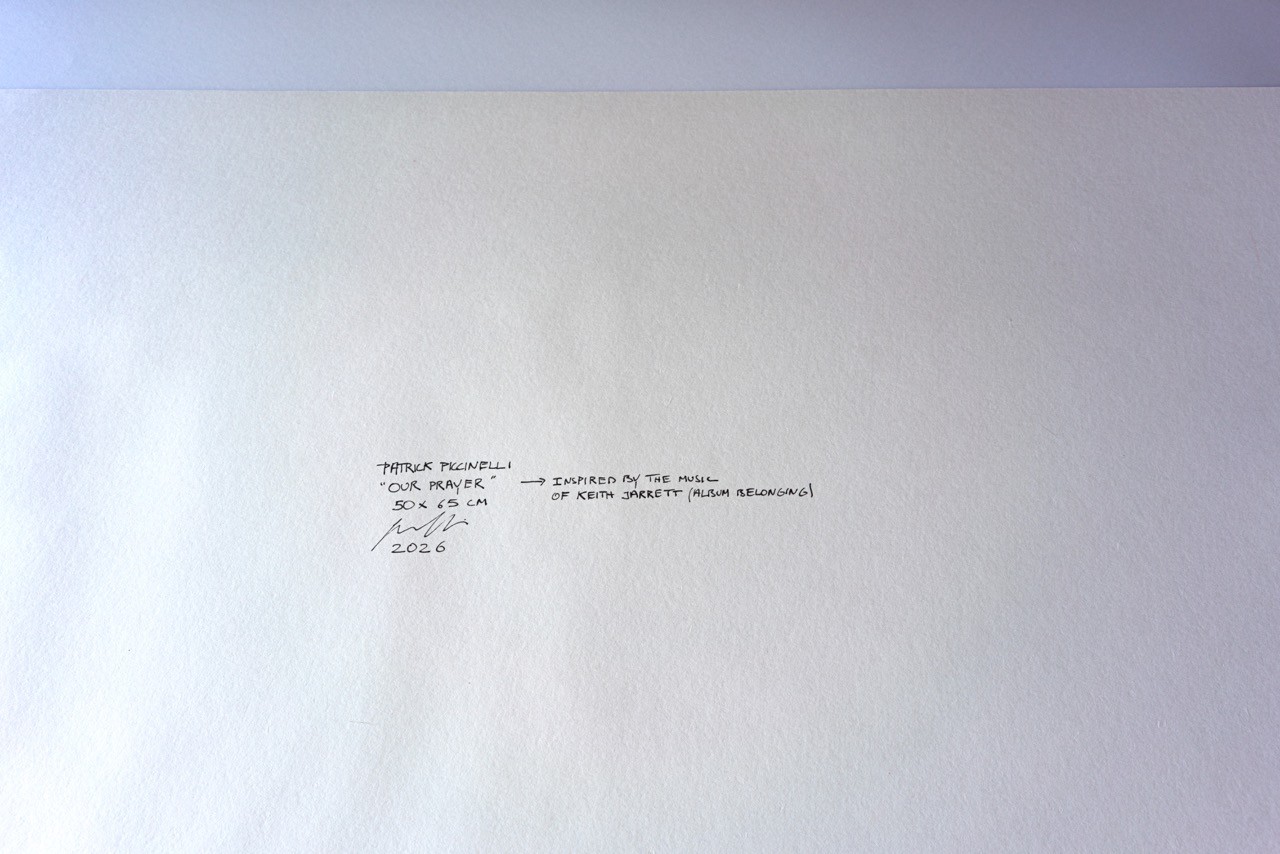
Inspired by the music of Keith Jarrett (Prayer)
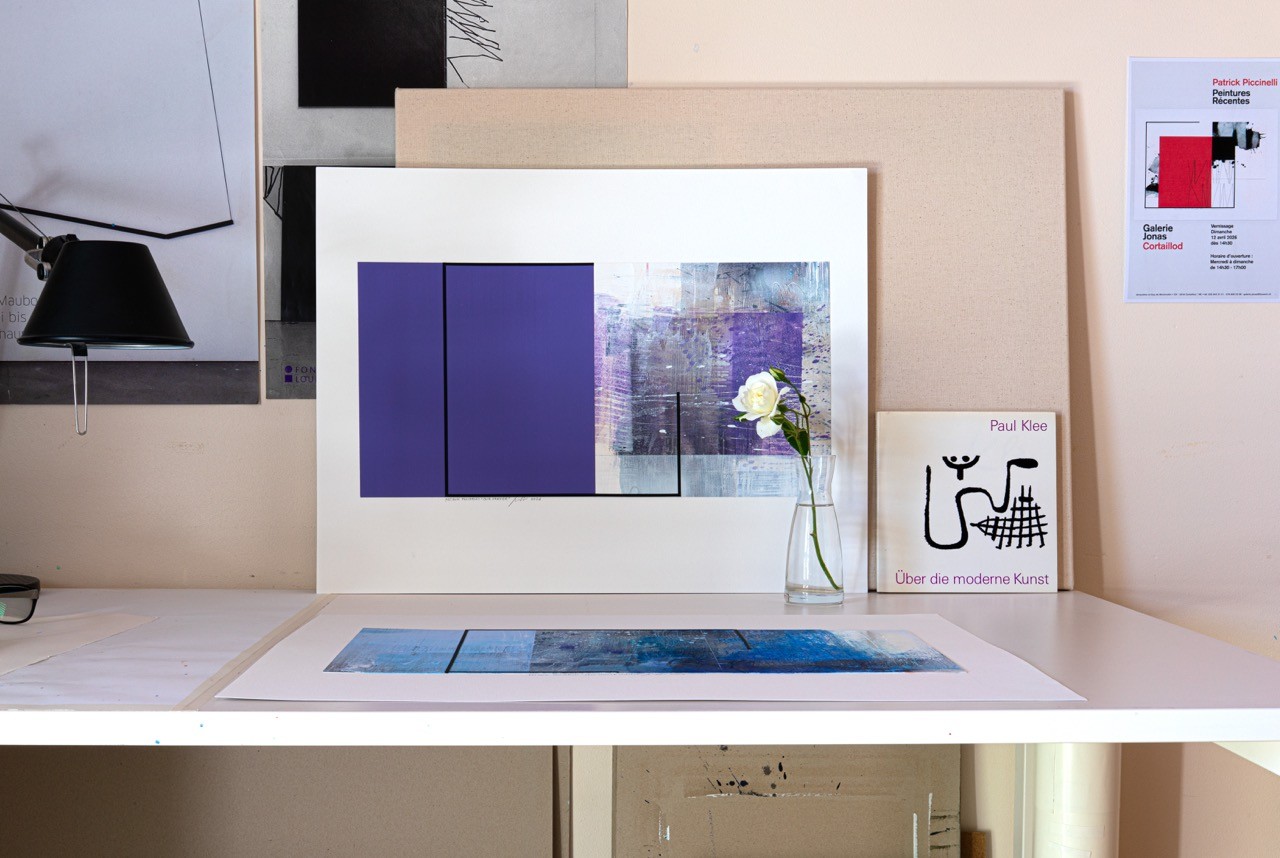
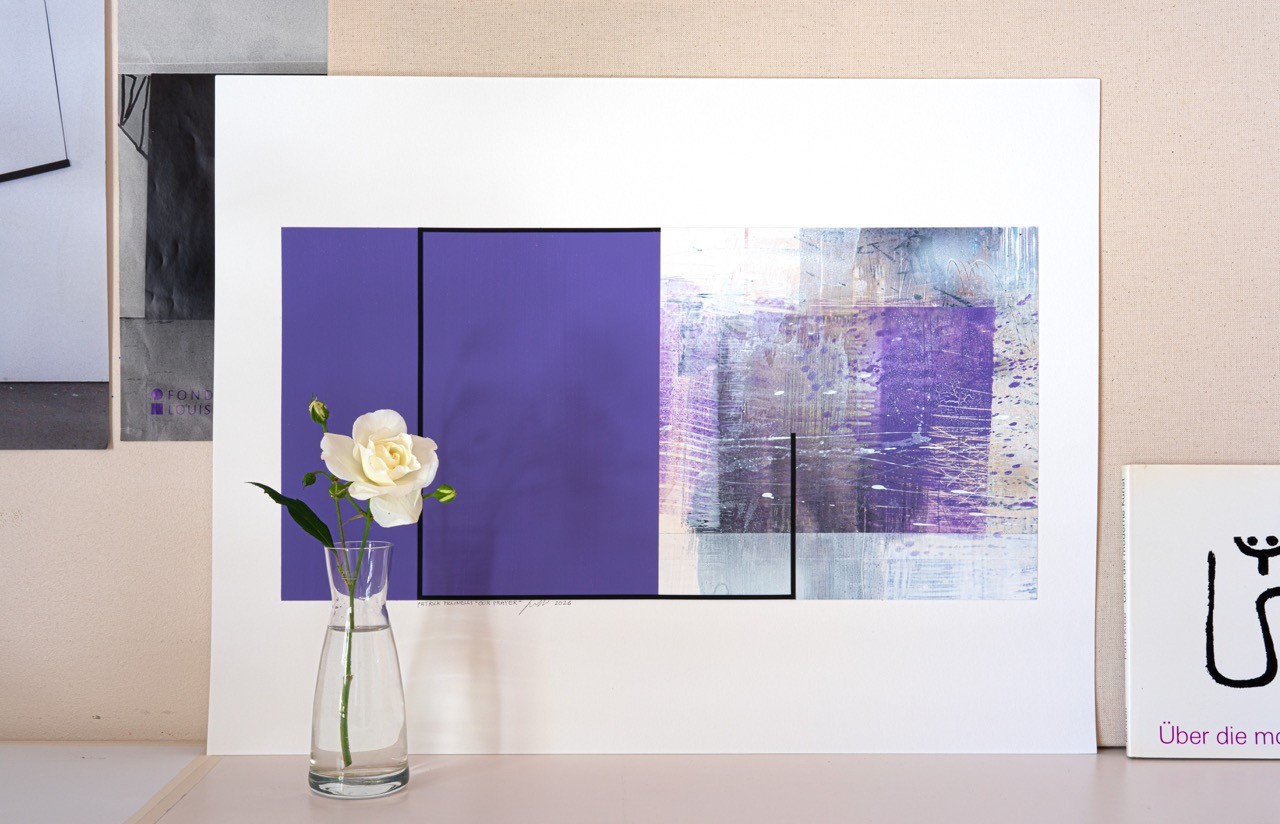
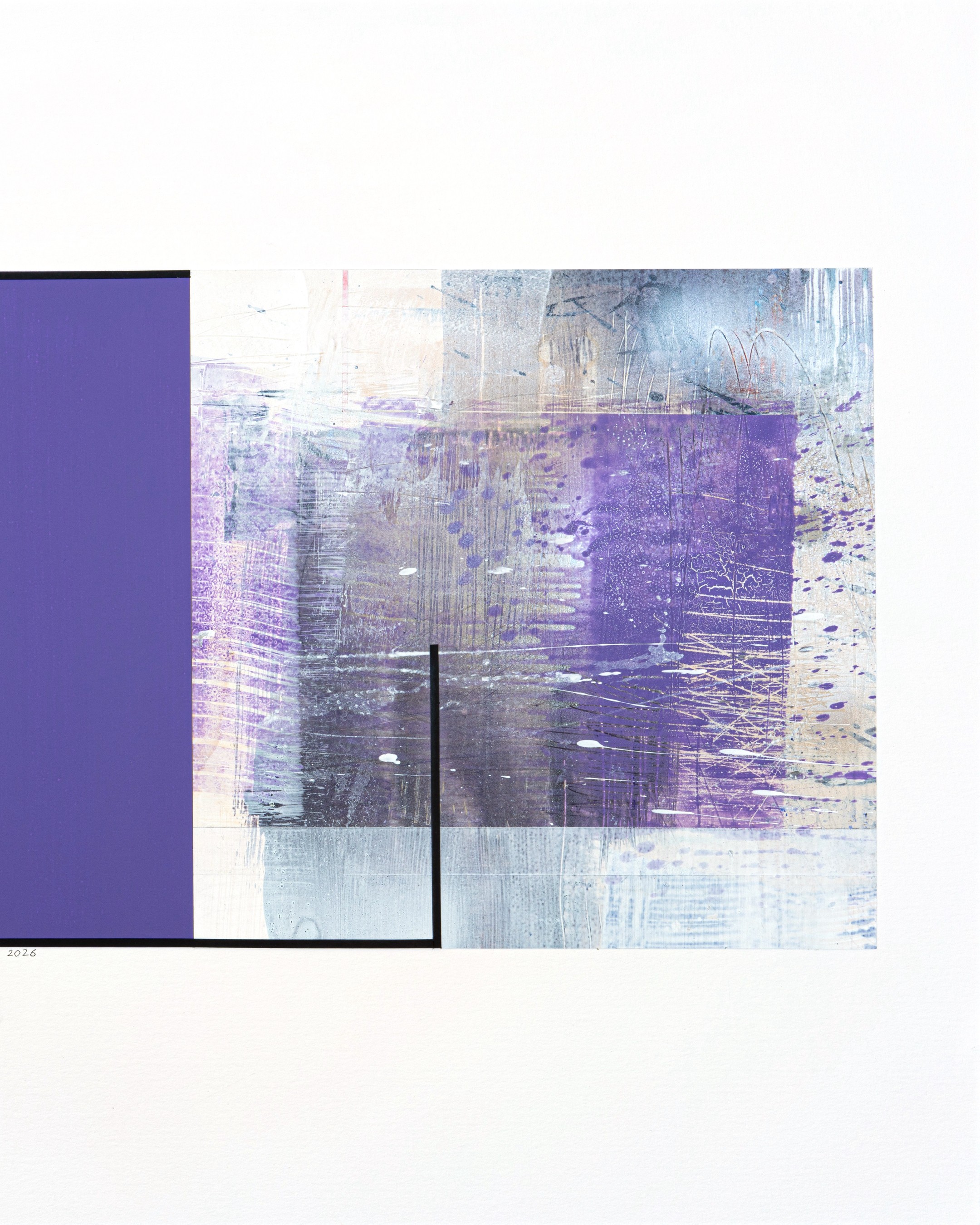
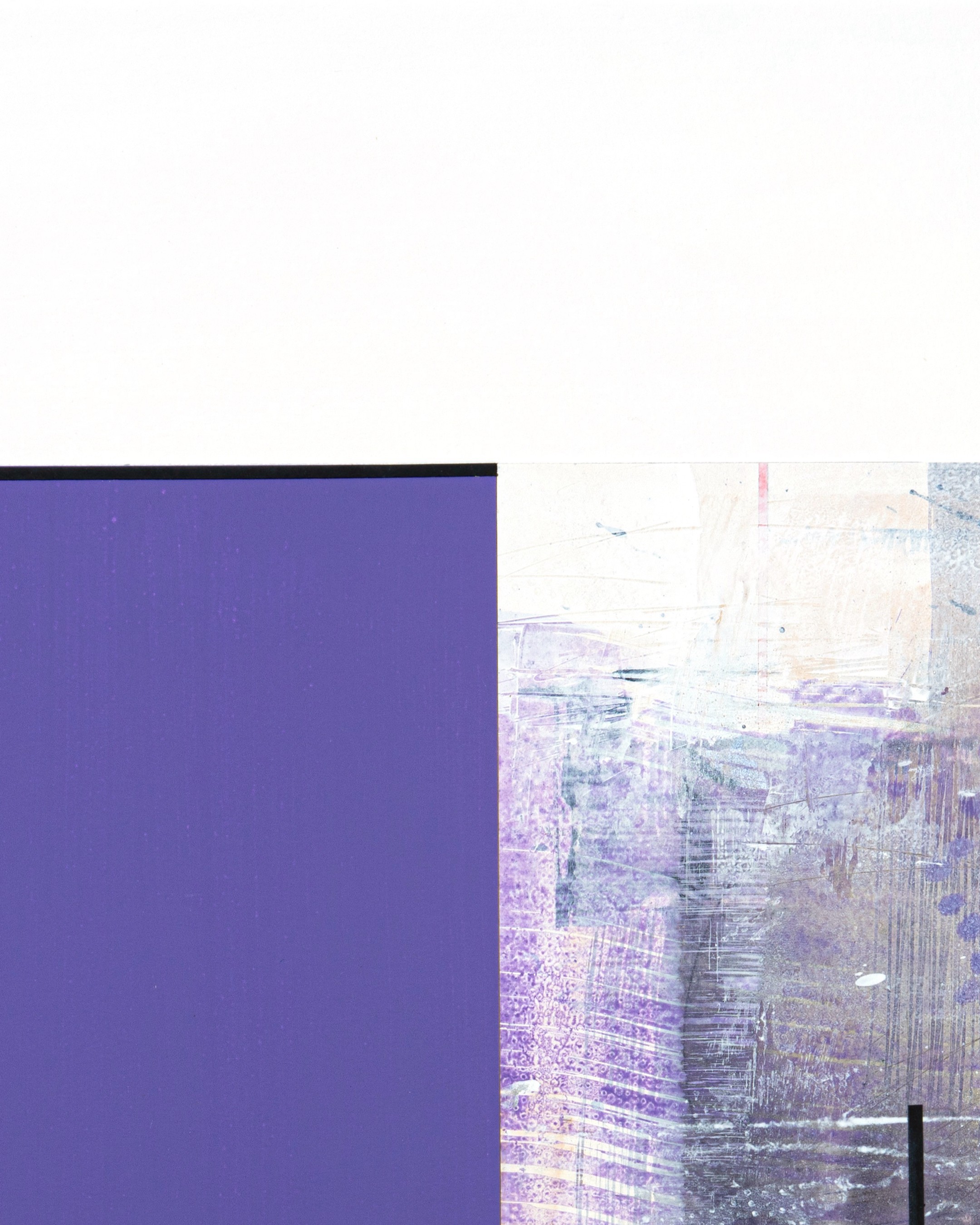
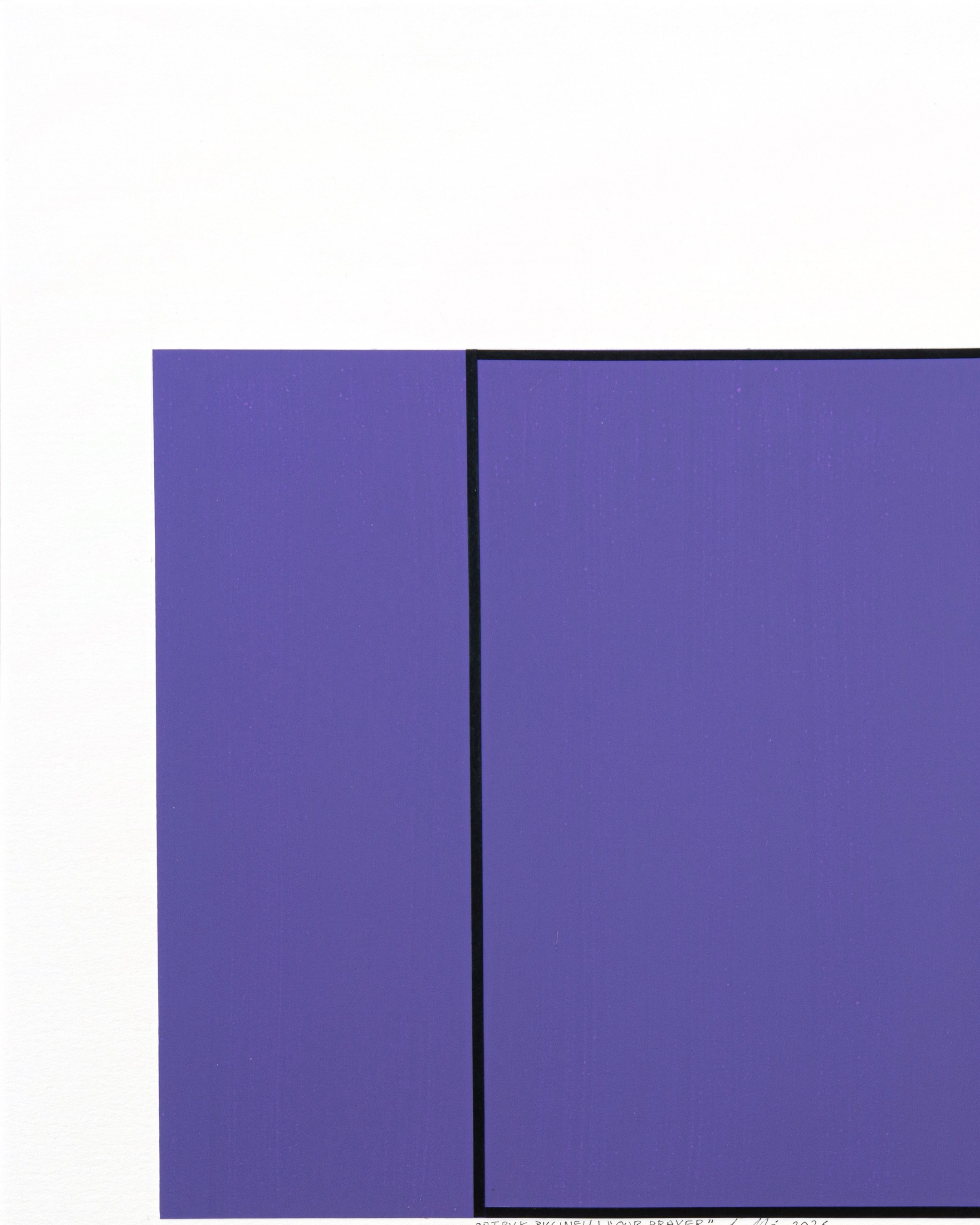
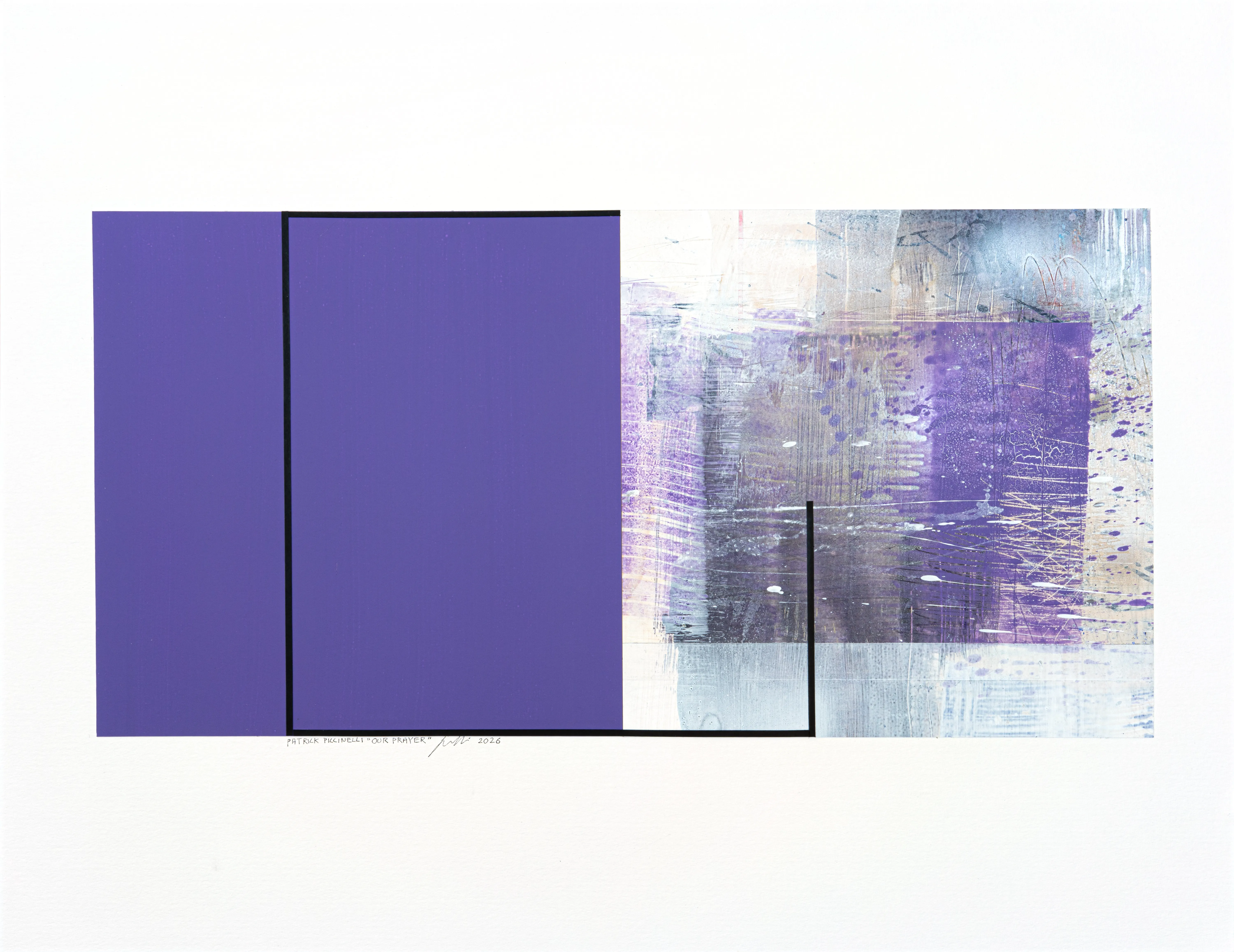
"Our Prayer" exists in a suspended space, between score and erasure, architecture and breath. The composition is divided into two breaths. On the left, a vast, almost silent, violet expanse, contained by a rigorous black line. On the right, a more unstable material, rubbed, layered, traversed by traces and scratches as if the surface had retained the memory of successive gestures. This visual tension between restraint and overflowing engages in a dialogue with the music of Keith Jarrett, and more specifically with his piece "Prayer"—or what can be understood as a "prayer" in Jarrett's work: not a closed religious form, but a state of inner openness. Jarrett has often associated his music with a form of spiritual quest, particularly in his work with sacred hymns and improvisation as an act of deep listening.
The work offers a preparatory silence. The large purple field on the left acts almost like a sustained piano chord: a long, breathed note, without urgency. In Jarrett's language, one could hear those fragile beginnings where an improvisation is born from an empty space, before the melody even knows where it's going. For him, music never arrives as a demonstration: it seems to emerge from an inner silence.
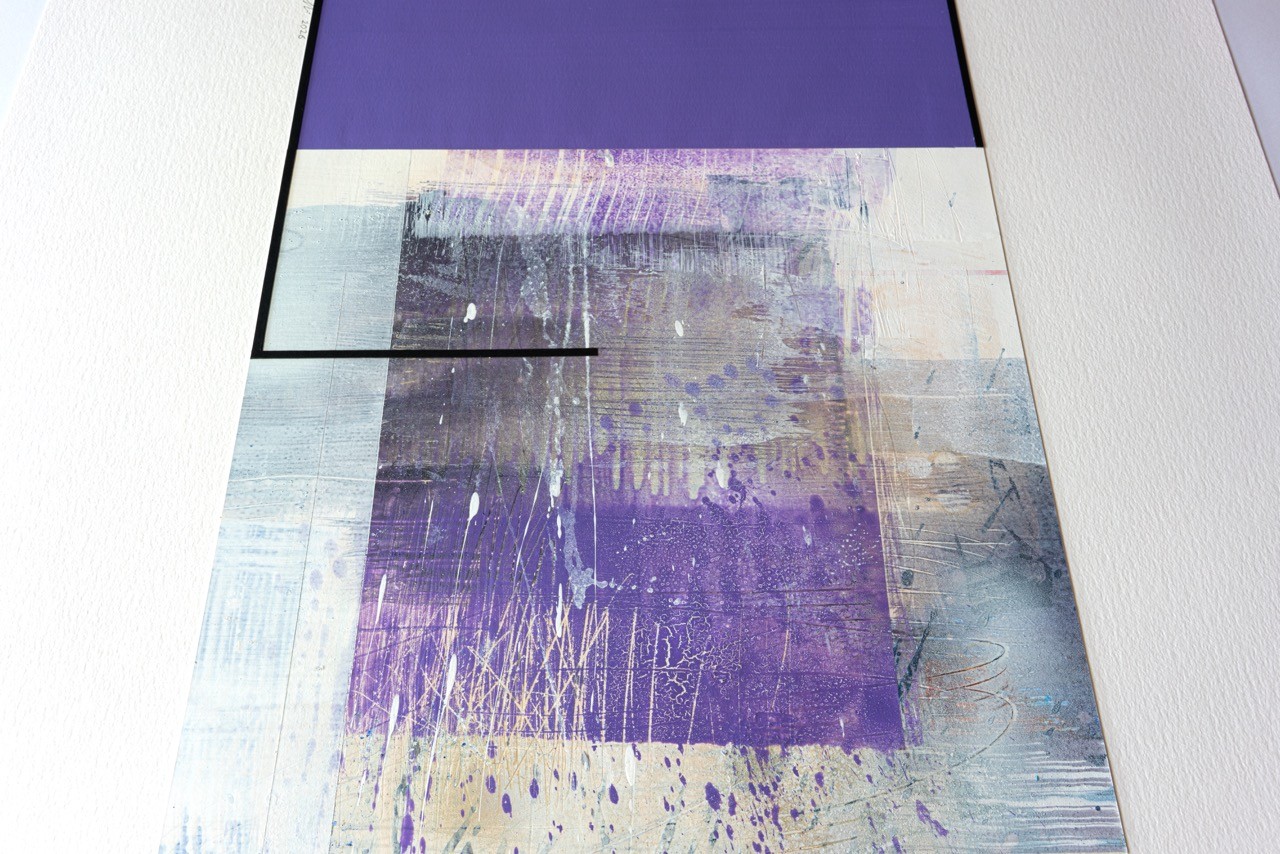
The right side of "Our Prayer" is created with scratches, transparencies, superimpositions, and almost erased textures. If the left is the contained breath, the right is the vibration of the world. This coexistence particularly evokes Jarrett's track "Prayer" on Death and the Flower: music that doesn't advance through assertion, but through sensitive groping, where each phrase seems to remember another before it.
One could say that this painting holds its breath, waiting for an invisible sound to finally inhabit it.
Inspired by the music of Keith Jarrett (Prayer)
"Our Prayer" exists in a suspended space, between score and erasure, architecture and breath. The composition is divided into two breaths. On the left, a vast, almost silent, violet expanse, contained by a rigorous black line. On the right, a more unstable material, rubbed, layered, traversed by traces and scratches as if the surface had retained the memory of successive gestures. This visual tension between restraint and overflowing engages in a dialogue with the music of Keith Jarrett, and more specifically with his piece "Prayer"—or what can be understood as a "prayer" in Jarrett's work: not a closed religious form, but a state of inner openness. Jarrett has often associated his music with a form of spiritual quest, particularly in his work with sacred hymns and improvisation as an act of deep listening.
The work offers a preparatory silence. The large purple field on the left acts almost like a sustained piano chord: a long, breathed note, without urgency. In Jarrett's language, one could hear those fragile beginnings where an improvisation is born from an empty space, before the melody even knows where it's going. For him, music never arrives as a demonstration: it seems to emerge from an inner silence.
The right side of "Our Prayer" is created with scratches, transparencies, superimpositions, and almost erased textures. If the left is the contained breath, the right is the vibration of the world. This coexistence particularly evokes Jarrett's track "Prayer" on Death and the Flower: music that doesn't advance through assertion, but through sensitive groping, where each phrase seems to remember another before it.
One could say that this painting holds its breath, waiting for an invisible sound to finally inhabit it.