blob_xtb3zk.webp

All Blues

,

2026

Patrick Piccinelli

All Blues

2026

Acrylic paint, pigment ,varnish

Acrylic paint, pigment ,varnish

50

50

X

X

65

65

Available

This work is inspired by the music of Miles Davis.

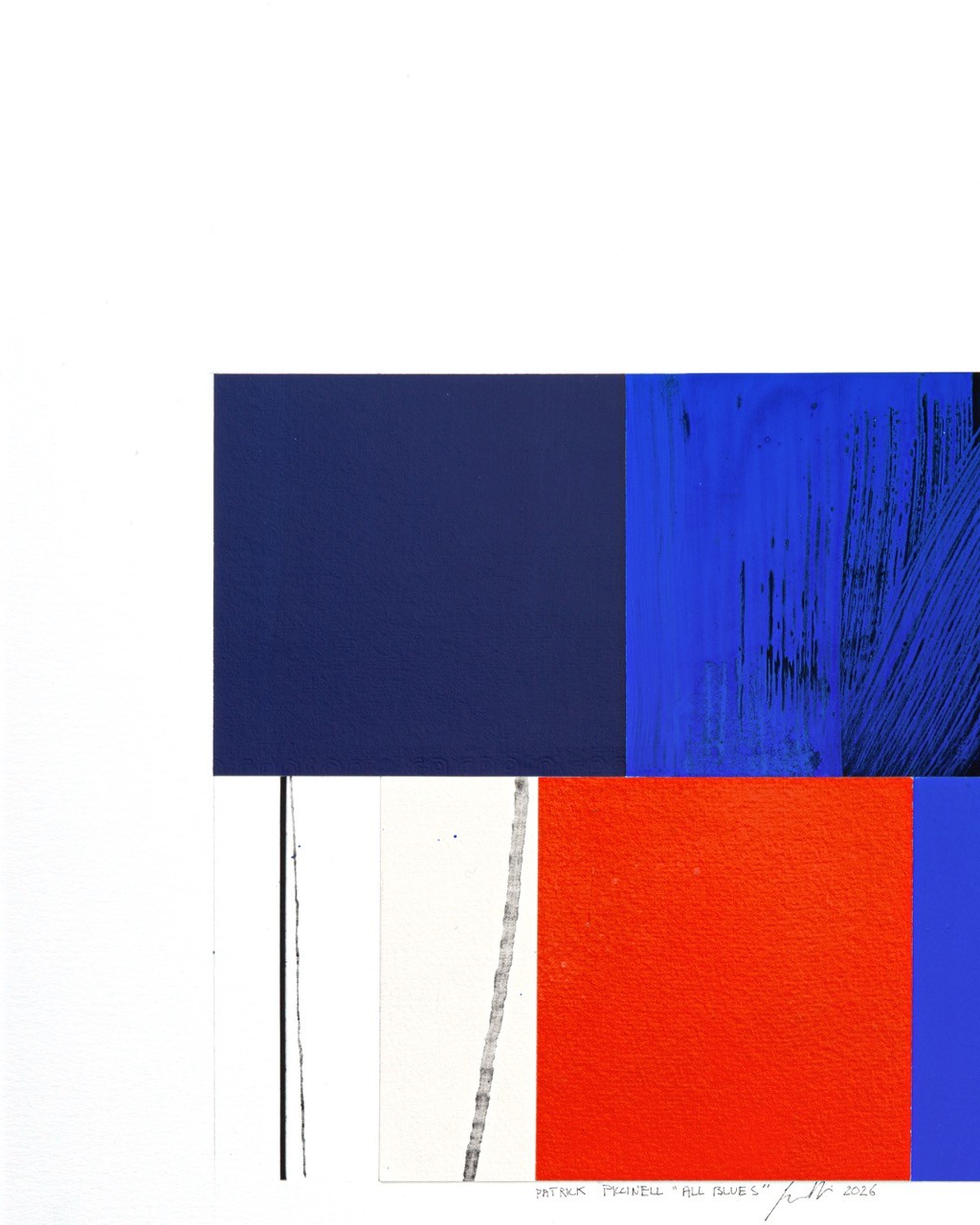
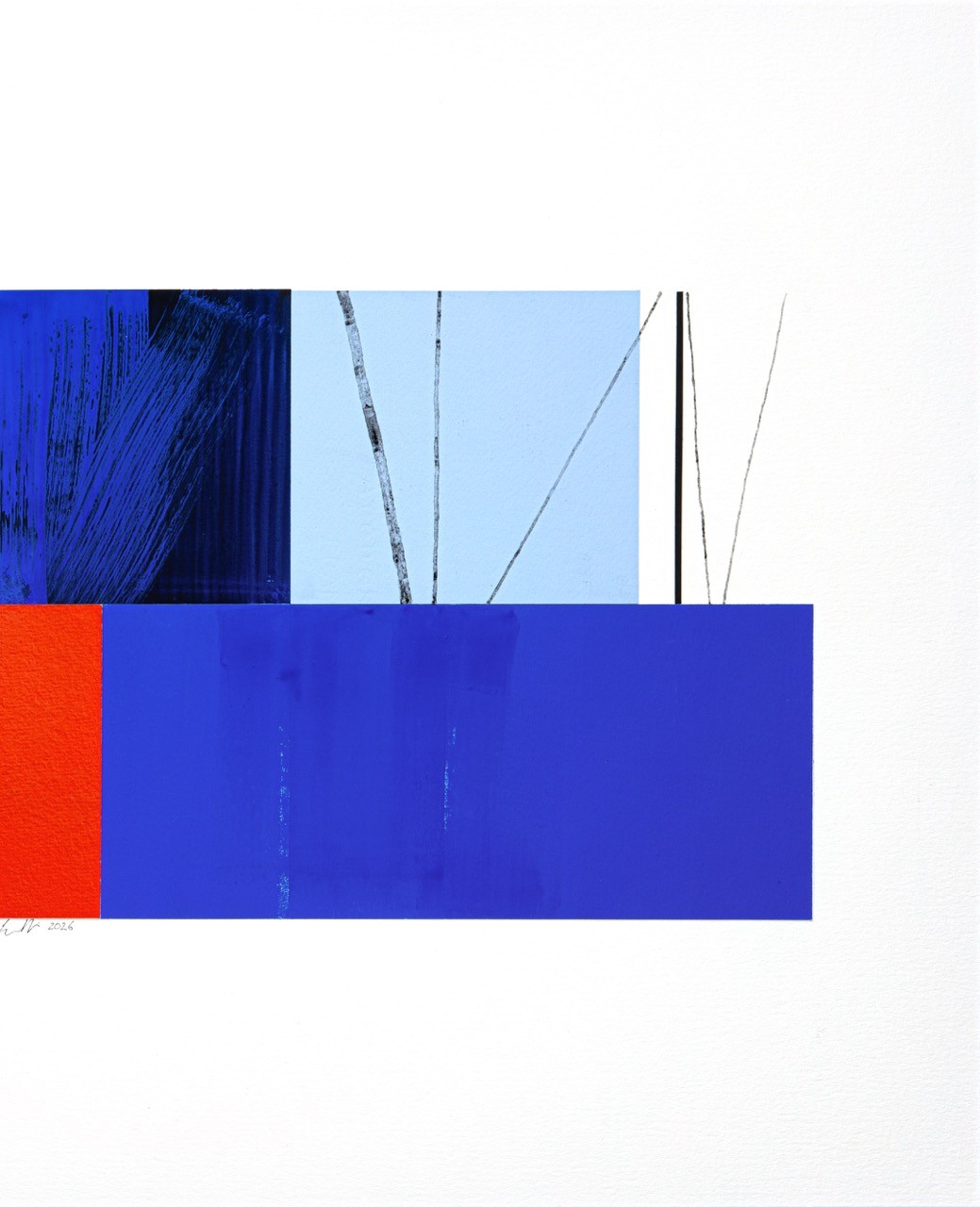
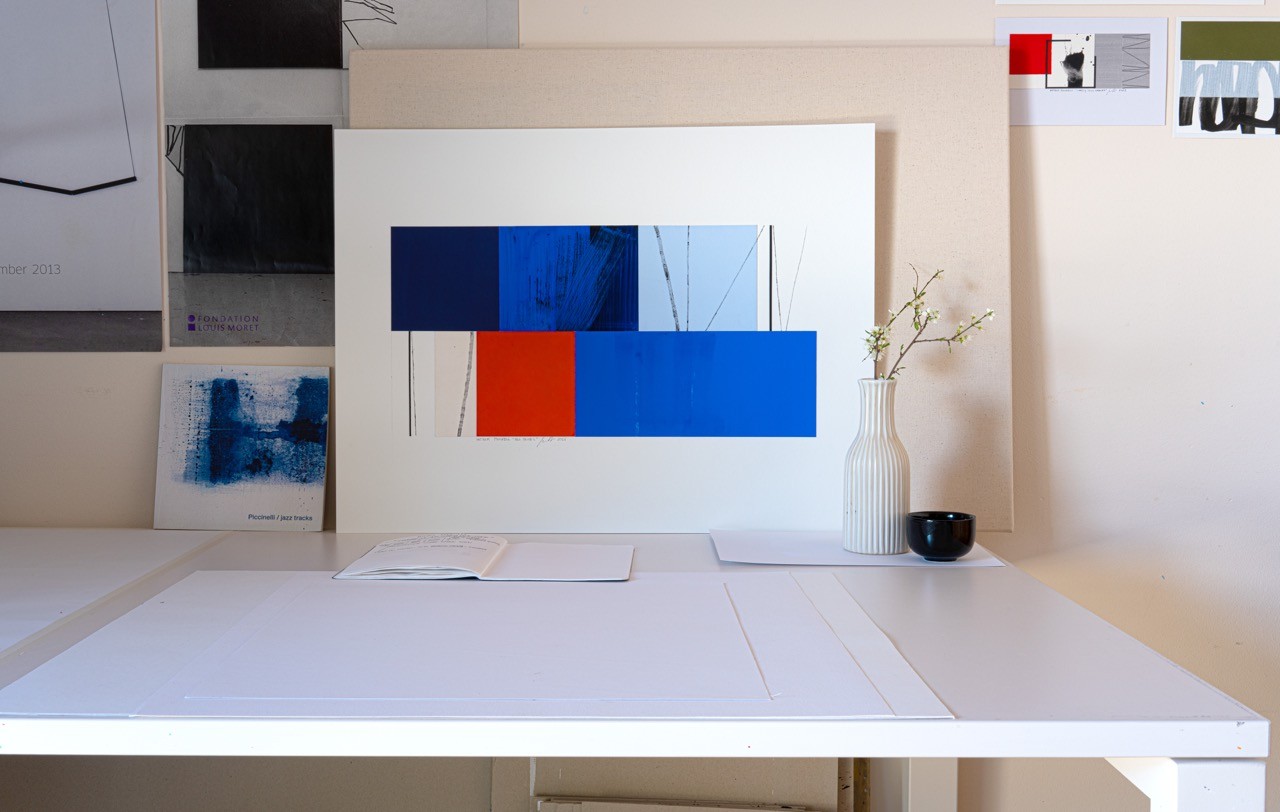
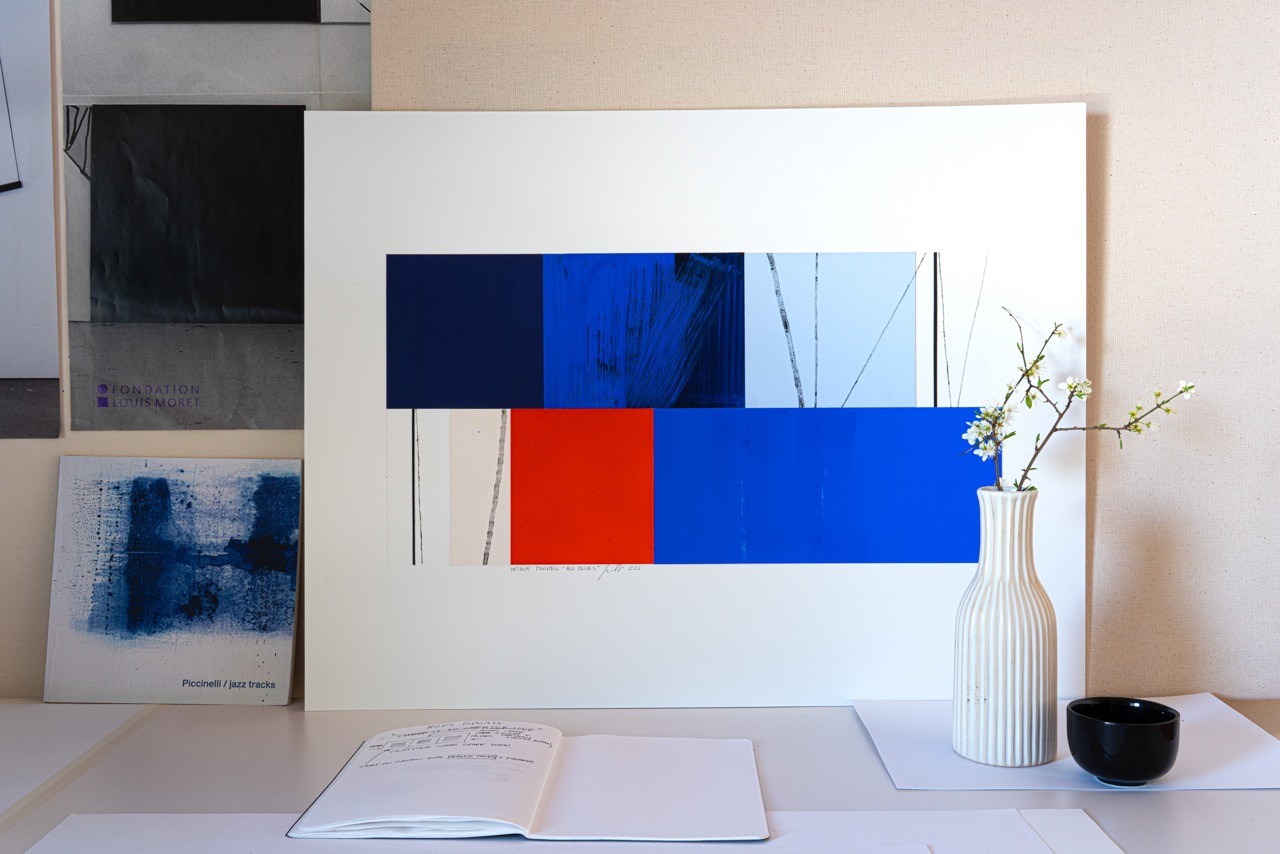
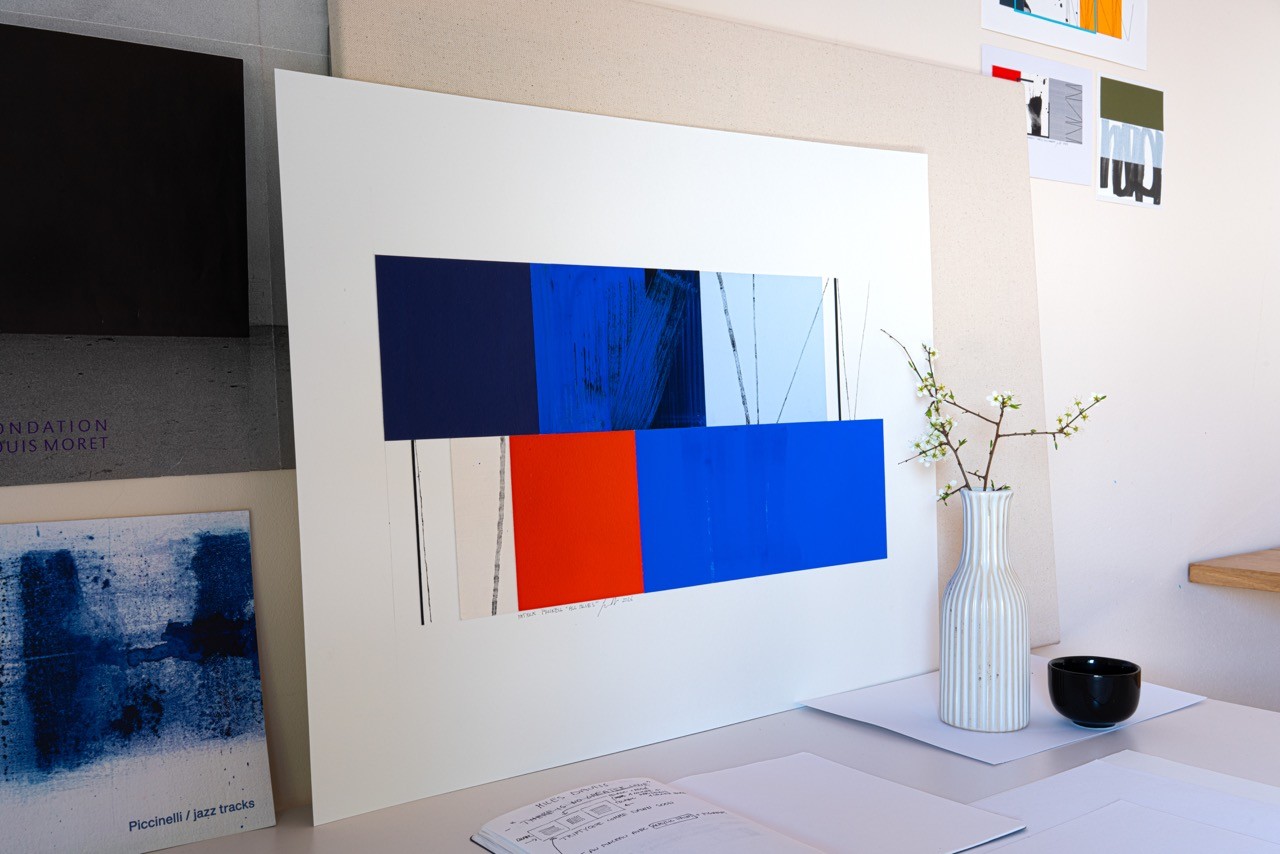
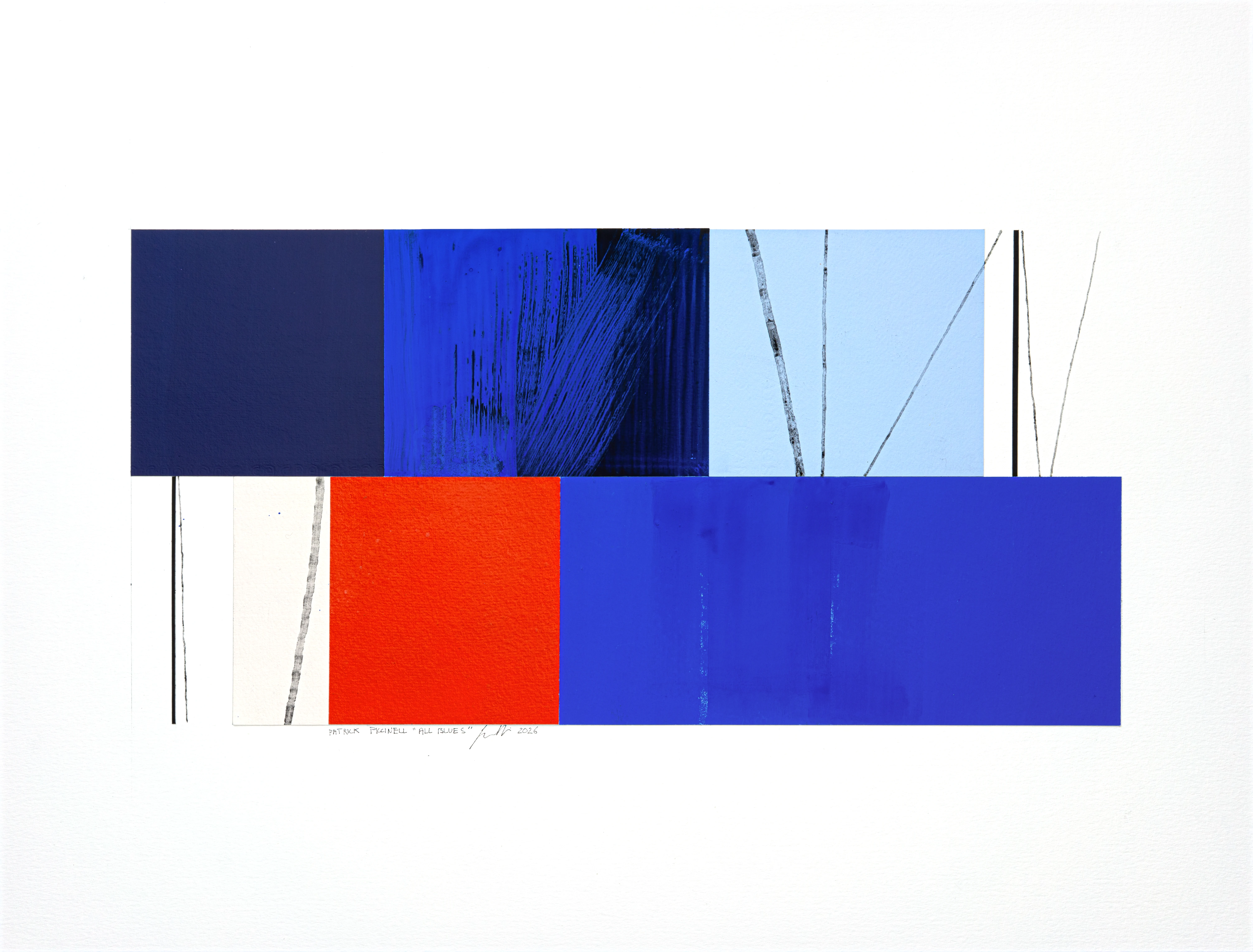
On All Blues, Davis abandons the rapid harmonic progression of bebop for a stationary mode, a hypnotic 6/8 that revolves around itself without ever "arriving" anywhere. I tried to recapture this same sense of suspension: the rectangles of blue are not hierarchical, they don't tell a linear story. They coexist—dark navy, electric blue, royal blue, sky blue—like different modes of the same key.

The composition doesn't progress from left to right. It breathes. Davis plays All Blues with an ensemble where each voice retains its autonomy—Miles, Coltrane, Evans, Adderley never fully blend together. Similarly, I layer radically distinct materials:

The muted, silent blue of the navy square, like a sustained note

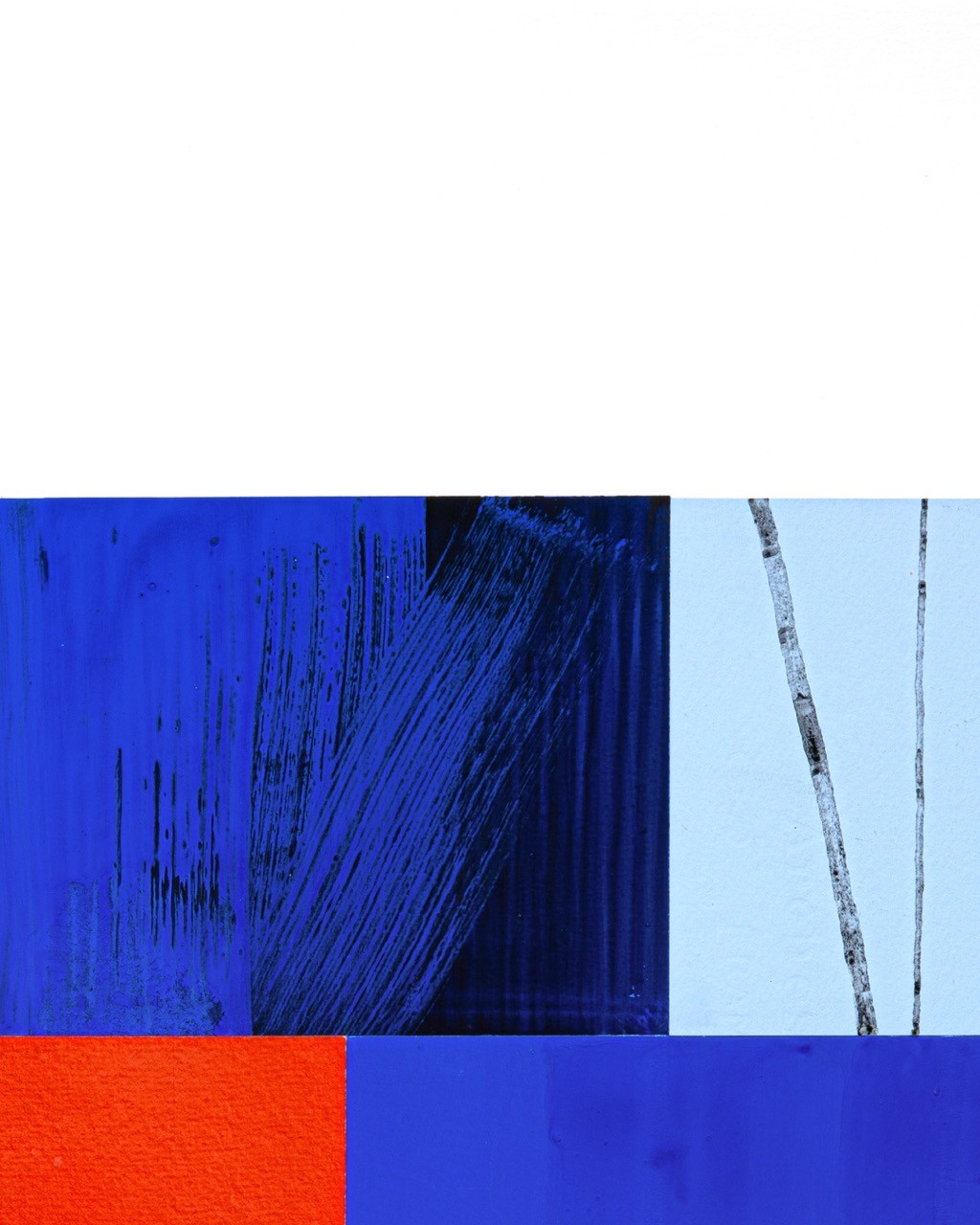
The striated, scratched electric blue, like Coltrane's improvisation—violent, introspective

The photographic sky blue with its plant-like stems, ethereal like Bill Evans

The large, solid royal blue at the bottom, fundamental, like Paul Chambers' double bass

Each zone is a soloist.

The irruption of the reddish-orange in the lower center is the most audacious gesture in the work—and the most Davisian. In All Blues, Davis introduces chromatic halftones that rub against the mode, creating a dissonance that is not a mistake but an emotional necessity.

This red does not destroy the unity of the work. It reveals it. Without it, the blues would be decorative. With it, they become tragic.

That is the blues: the warm color at the heart of the cold.

The black lines—thin, almost calligraphic—traverse the composition without ever explaining it. They resemble those silences that Davis cultivated like no other musician: spaces that are not empty but charged with intention.

Miles said that the notes he didn't play mattered as much as the ones he did. Similarly, I seek out these silences; I leave white space. I leave intervals between the rectangles. I don't fill them in.

This work is inspired by the music of Miles Davis.

On All Blues, Davis abandons the rapid harmonic progression of bebop for a stationary mode, a hypnotic 6/8 that revolves around itself without ever "arriving" anywhere. I tried to recapture this same sense of suspension: the rectangles of blue are not hierarchical, they don't tell a linear story. They coexist—dark navy, electric blue, royal blue, sky blue—like different modes of the same key.

The composition doesn't progress from left to right. It breathes. Davis plays All Blues with an ensemble where each voice retains its autonomy—Miles, Coltrane, Evans, Adderley never fully blend together. Similarly, I layer radically distinct materials:

The muted, silent blue of the navy square, like a sustained note

The striated, scratched electric blue, like Coltrane's improvisation—violent, introspective

The photographic sky blue with its plant-like stems, ethereal like Bill Evans

The large, solid royal blue at the bottom, fundamental, like Paul Chambers' double bass

Each zone is a soloist.

The irruption of the reddish-orange in the lower center is the most audacious gesture in the work—and the most Davisian. In All Blues, Davis introduces chromatic halftones that rub against the mode, creating a dissonance that is not a mistake but an emotional necessity.

This red does not destroy the unity of the work. It reveals it. Without it, the blues would be decorative. With it, they become tragic.

That is the blues: the warm color at the heart of the cold.

The black lines—thin, almost calligraphic—traverse the composition without ever explaining it. They resemble those silences that Davis cultivated like no other musician: spaces that are not empty but charged with intention.

Miles said that the notes he didn't play mattered as much as the ones he did. Similarly, I seek out these silences; I leave white space. I leave intervals between the rectangles. I don't fill them in.