Search For Peace
,
2026
Patrick Piccinelli
Search For Peace
2026
Gouache, acrylic paint, pigment, ink, varnish, collage on paper, sold without frame
Gouache, acrylic paint, pigment, ink, varnish, collage on paper, sold without frame
32.5
32.5
X
X
32.5
32.5
Available
€
900
shipping worldwide included
Add to card
"Search For Peace," gouache, ink, pigment, varnish.
This work on paper is inspired by the music of MC Coy Tiner. More specifically, his piece "Search For Peace," which appears on the album The Real McCoy (Blue Note). It's a slow, meditative ballad, almost painful in its beauty—a post-Coltrane modal jazz where the quest takes precedence over resolution.
The tension between calm and turmoil
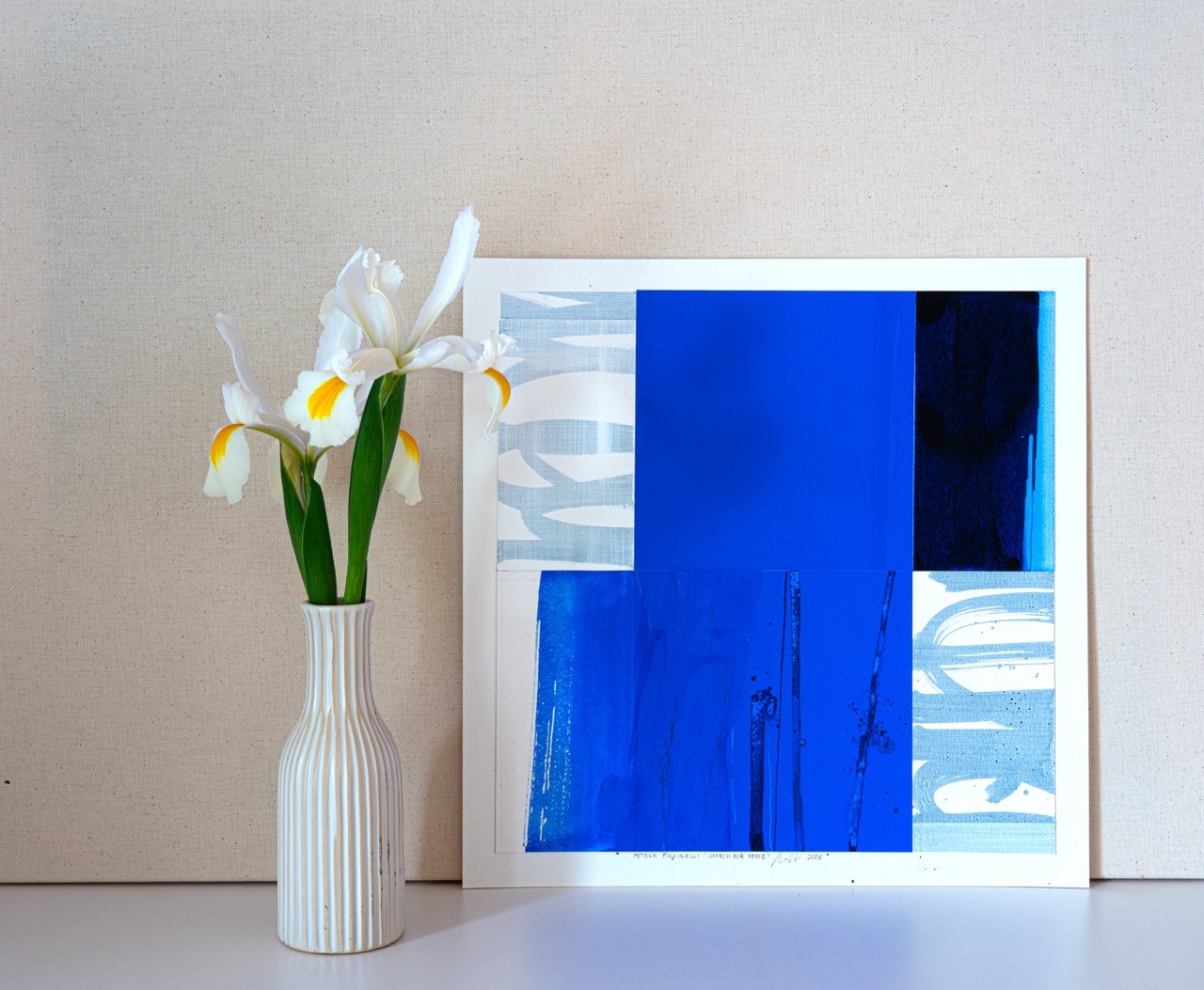
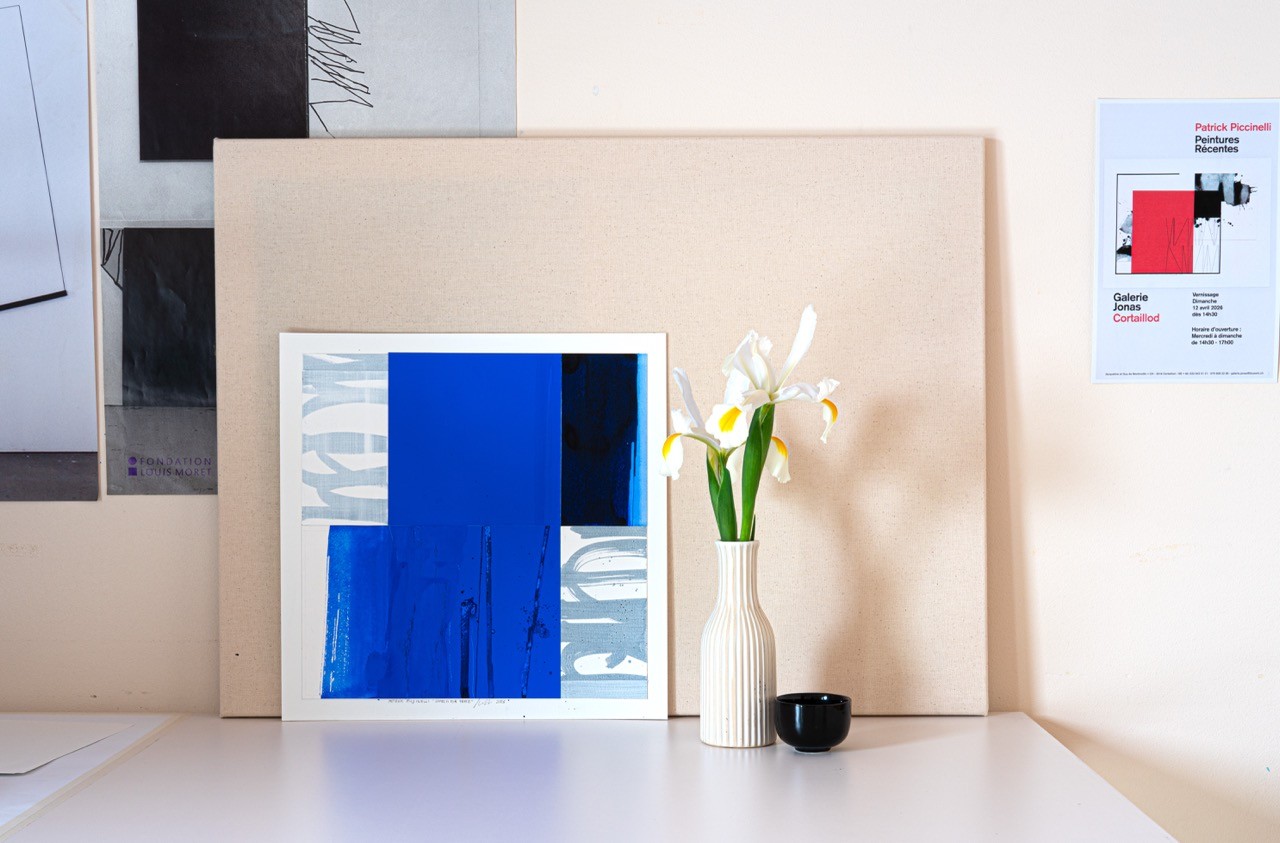
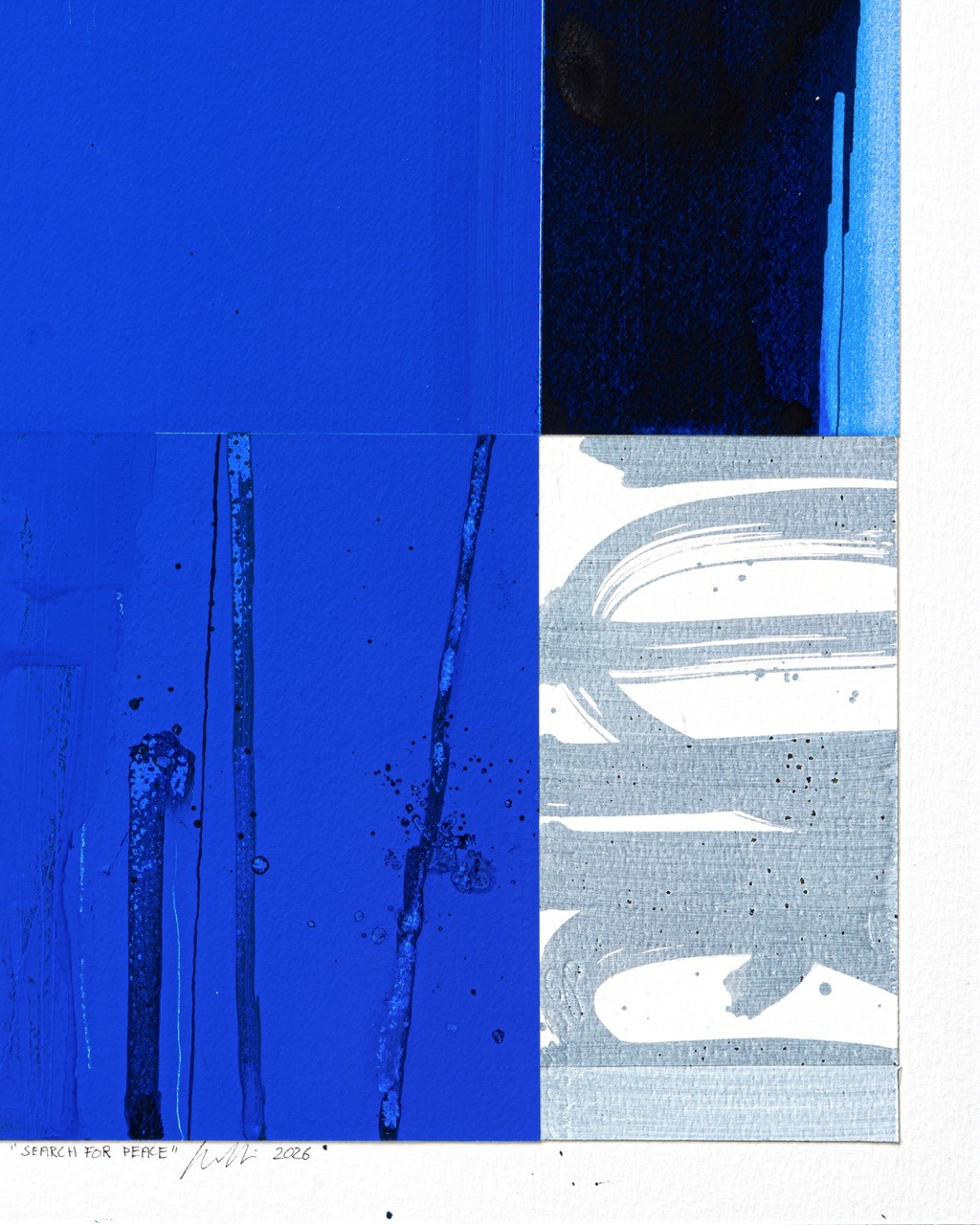
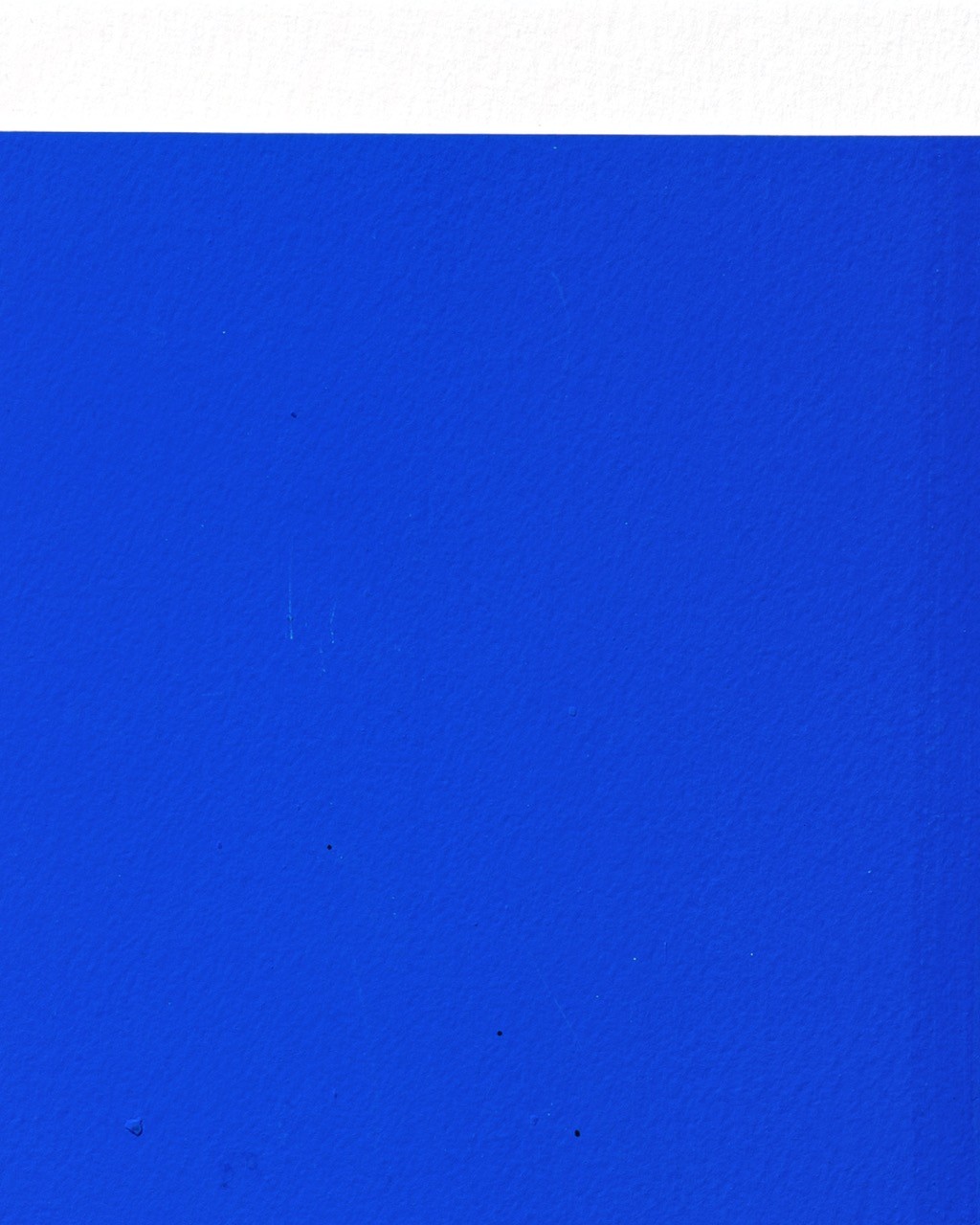
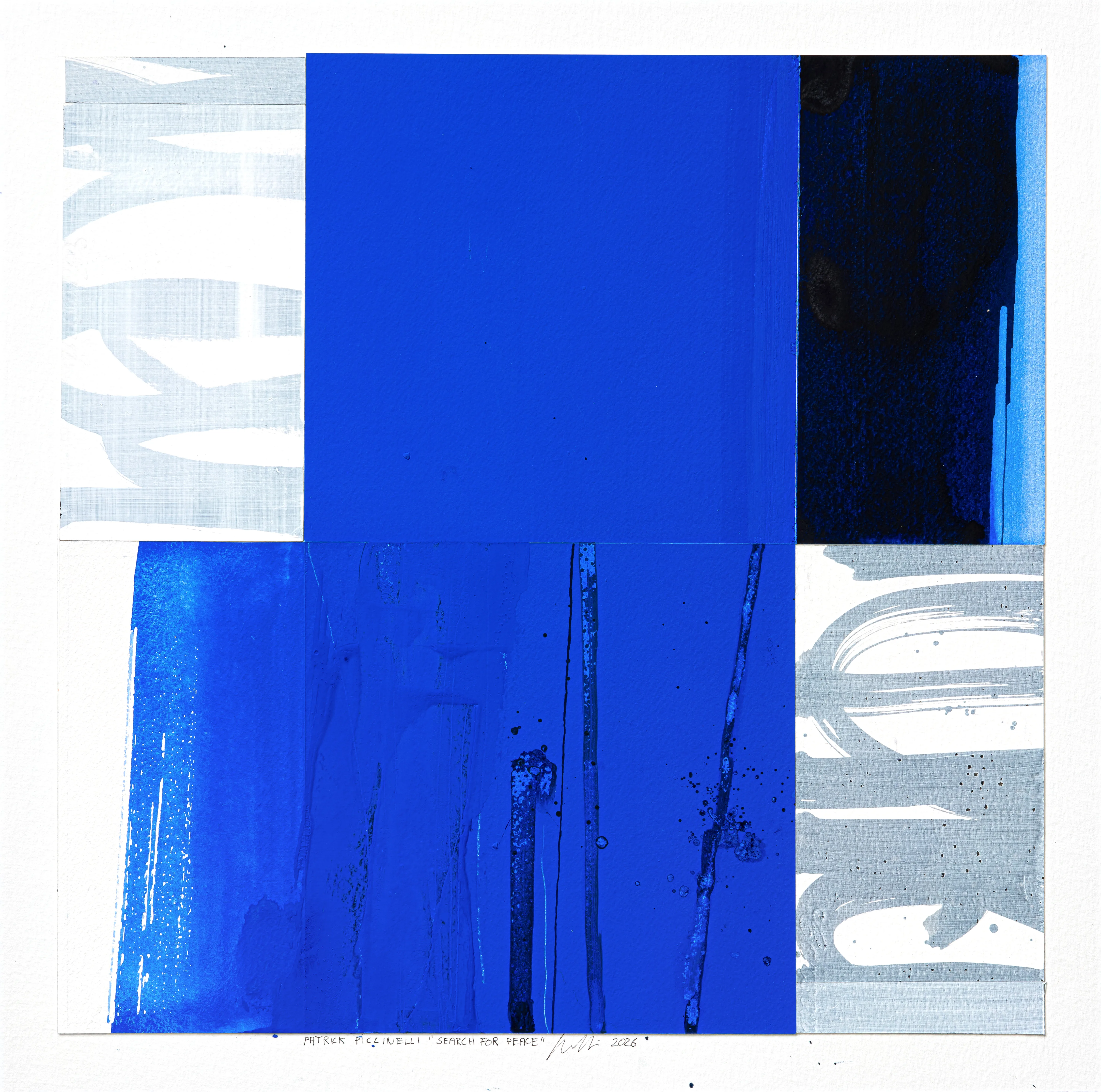
Tyner constructs his piece on a paradox: the melody is soothing, almost serene, but the modal harmony creates a constant sense of instability. We never truly arrive at peace—we search for it. I explored this theme visually: the flat blue at the top seems to have found peace, but the bottom of the canvas is still searching for it, amidst the chaos of drips.
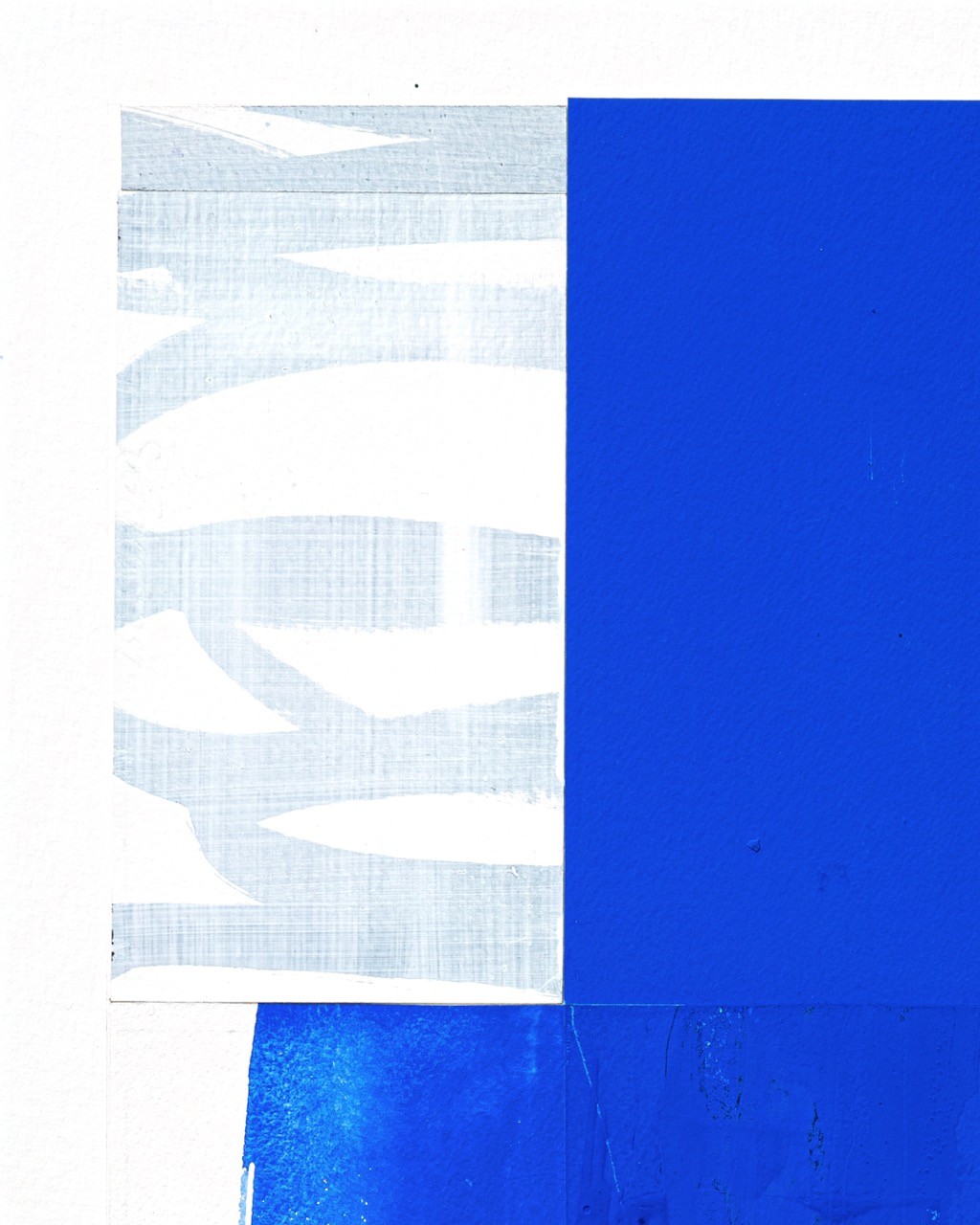
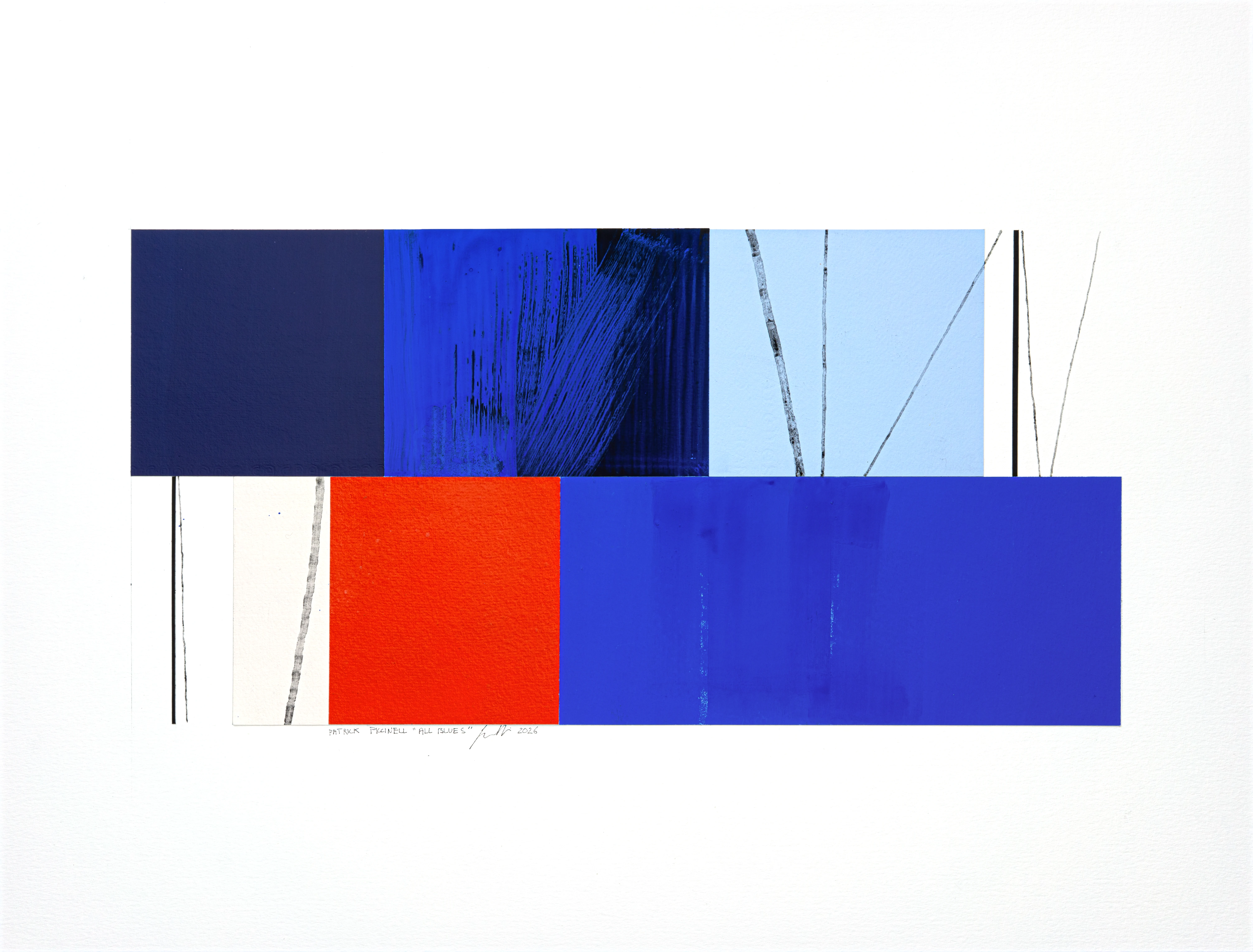
The omnipresent blue is not insignificant—it's the color of the blues, of spiritual melancholy, but also of elevation. Tyner plays within this blue space: between sadness and transcendence. The different shades of blue in my composition (vivid cobalt, dark navy, pale cerulean) function like the harmonic variations of a pianist.
Tyner doesn't define peace—he shows its inner path, laborious, luminous at times. I do the same: peace isn't in the still blue square at the top. It's in the movement below, in the search itself.
"Search For Peace," gouache, ink, pigment, varnish.
This work on paper is inspired by the music of MC Coy Tiner. More specifically, his piece "Search For Peace," which appears on the album The Real McCoy (Blue Note). It's a slow, meditative ballad, almost painful in its beauty—a post-Coltrane modal jazz where the quest takes precedence over resolution.
The tension between calm and turmoil
Tyner constructs his piece on a paradox: the melody is soothing, almost serene, but the modal harmony creates a constant sense of instability. We never truly arrive at peace—we search for it. I explored this theme visually: the flat blue at the top seems to have found peace, but the bottom of the canvas is still searching for it, amidst the chaos of drips.
The omnipresent blue is not insignificant—it's the color of the blues, of spiritual melancholy, but also of elevation. Tyner plays within this blue space: between sadness and transcendence. The different shades of blue in my composition (vivid cobalt, dark navy, pale cerulean) function like the harmonic variations of a pianist.
Tyner doesn't define peace—he shows its inner path, laborious, luminous at times. I do the same: peace isn't in the still blue square at the top. It's in the movement below, in the search itself.