Come Rain Or Come Shine
,
2026
Patrick Piccinelli
Come Rain Or Come Shine
2026
acrylic paint, collage on paper, sold without frame
acrylic paint, collage on paper, sold without frame
50
50
X
X
65
65
Available
€
1,600
shipping worldwide included
Add to card
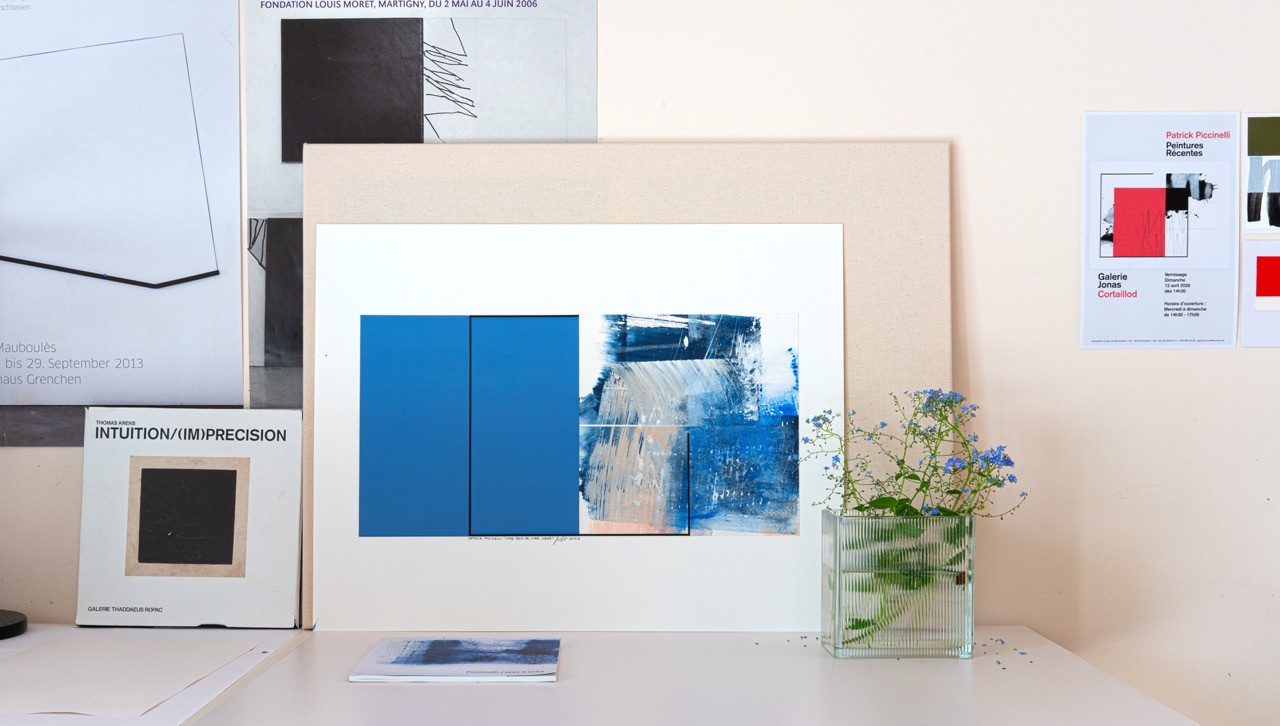
"Come Rain Or Come Shine," acrylic paint, collage, on paper.
Structure as a tension between order and chaos
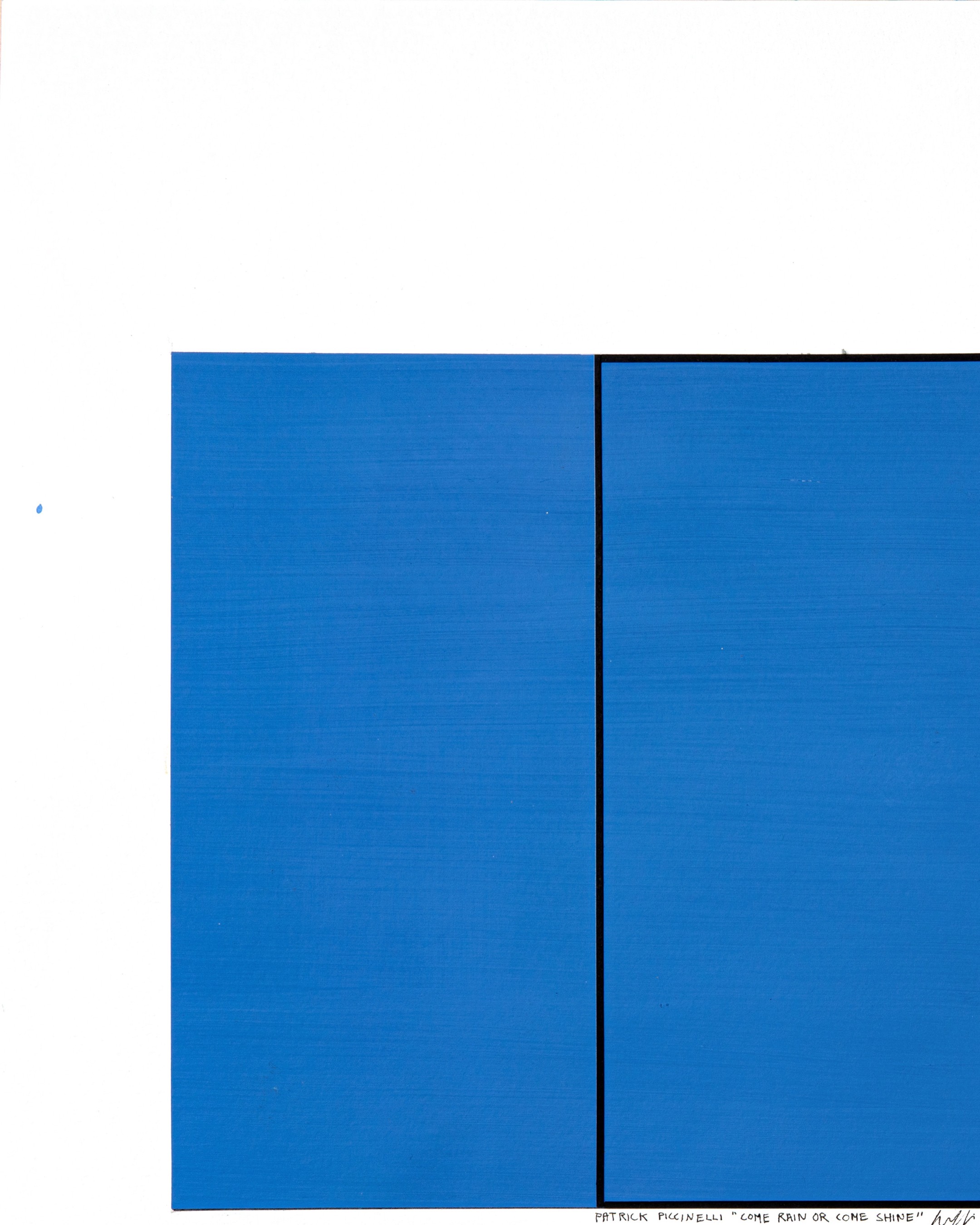
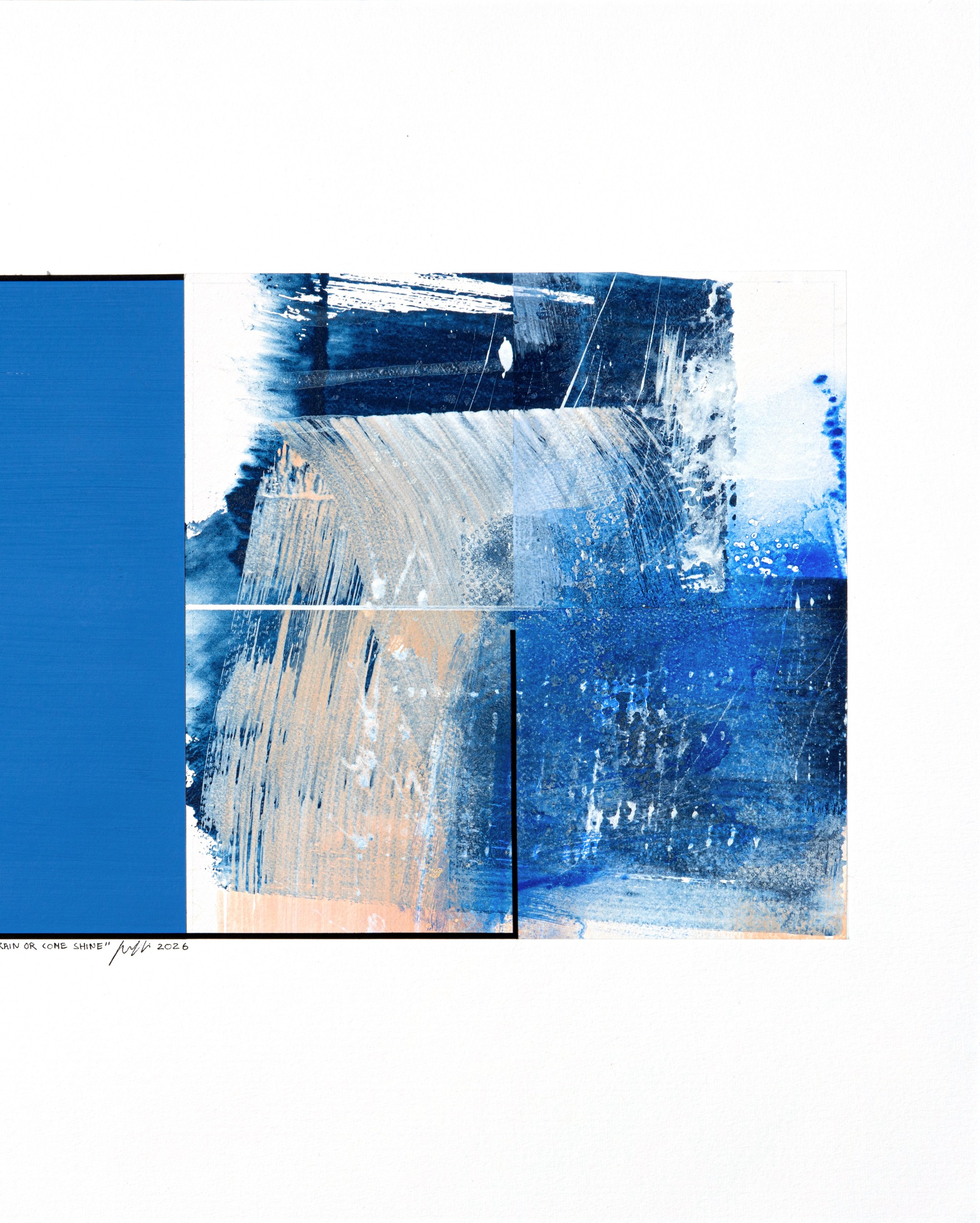
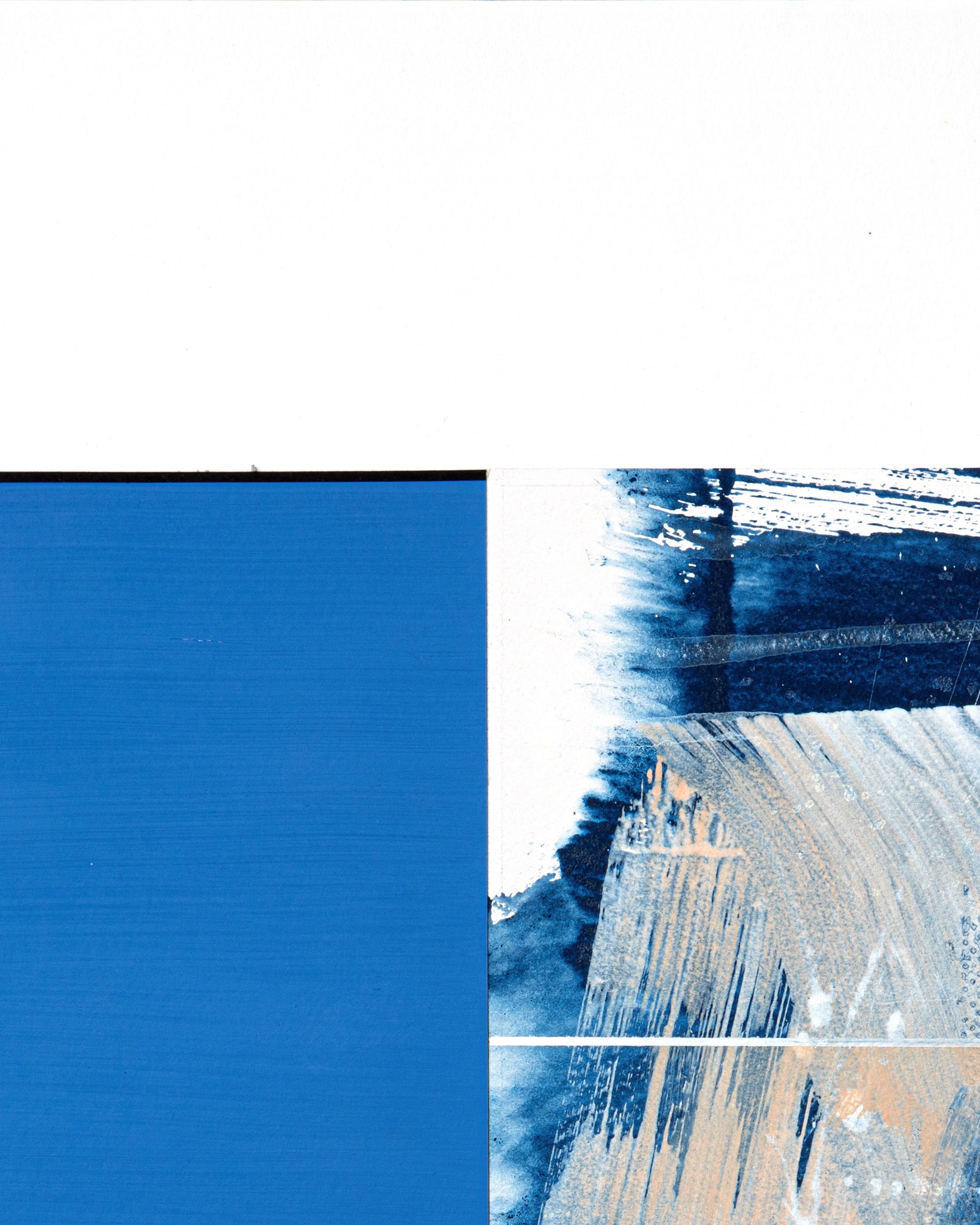
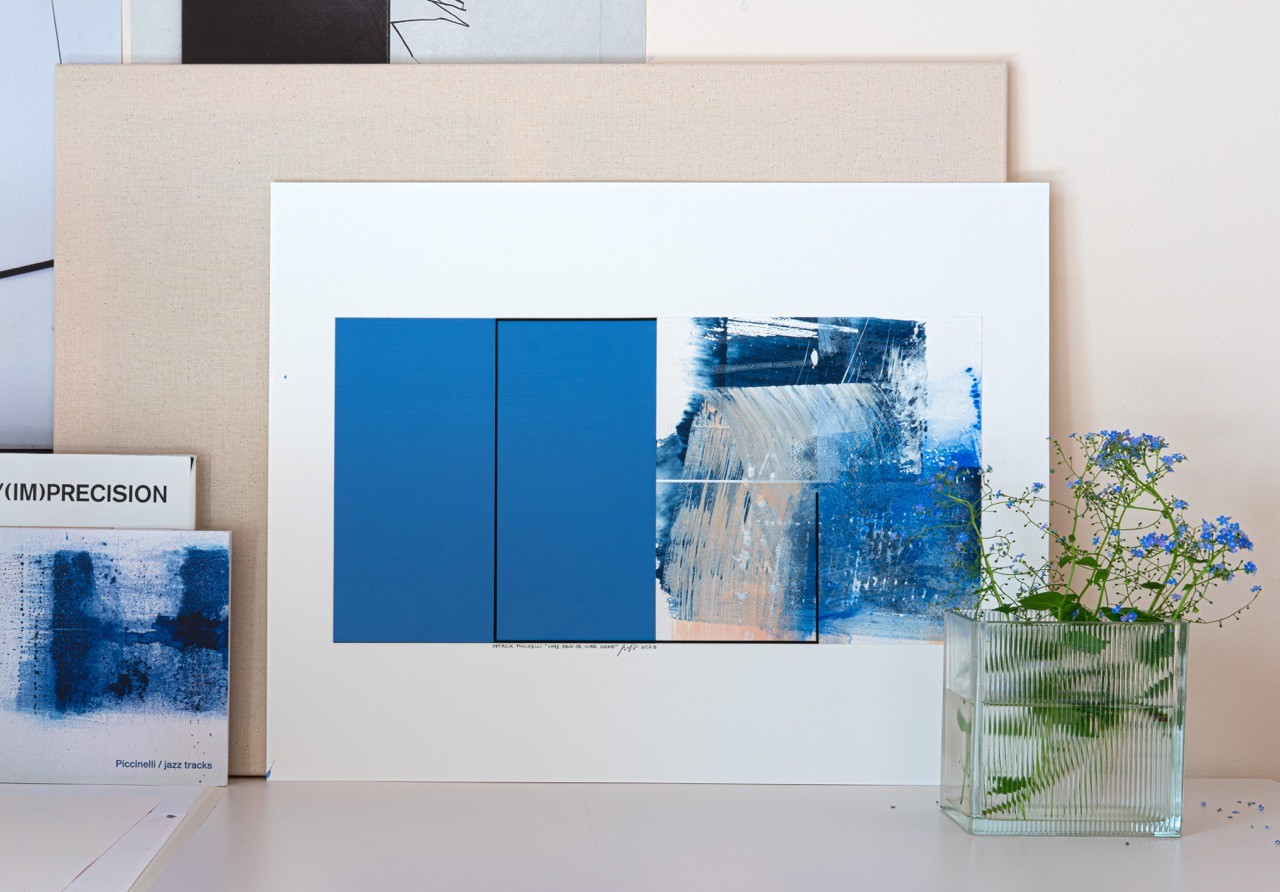
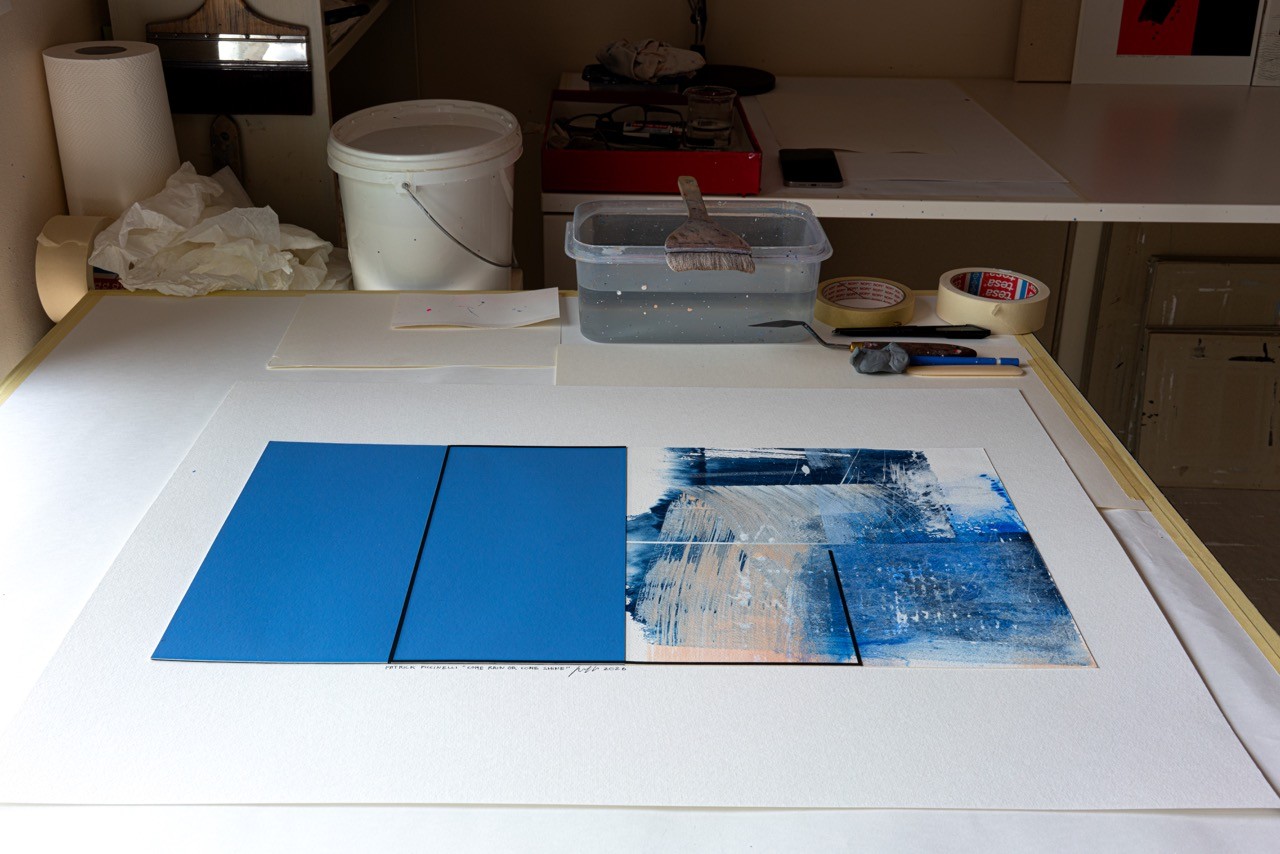
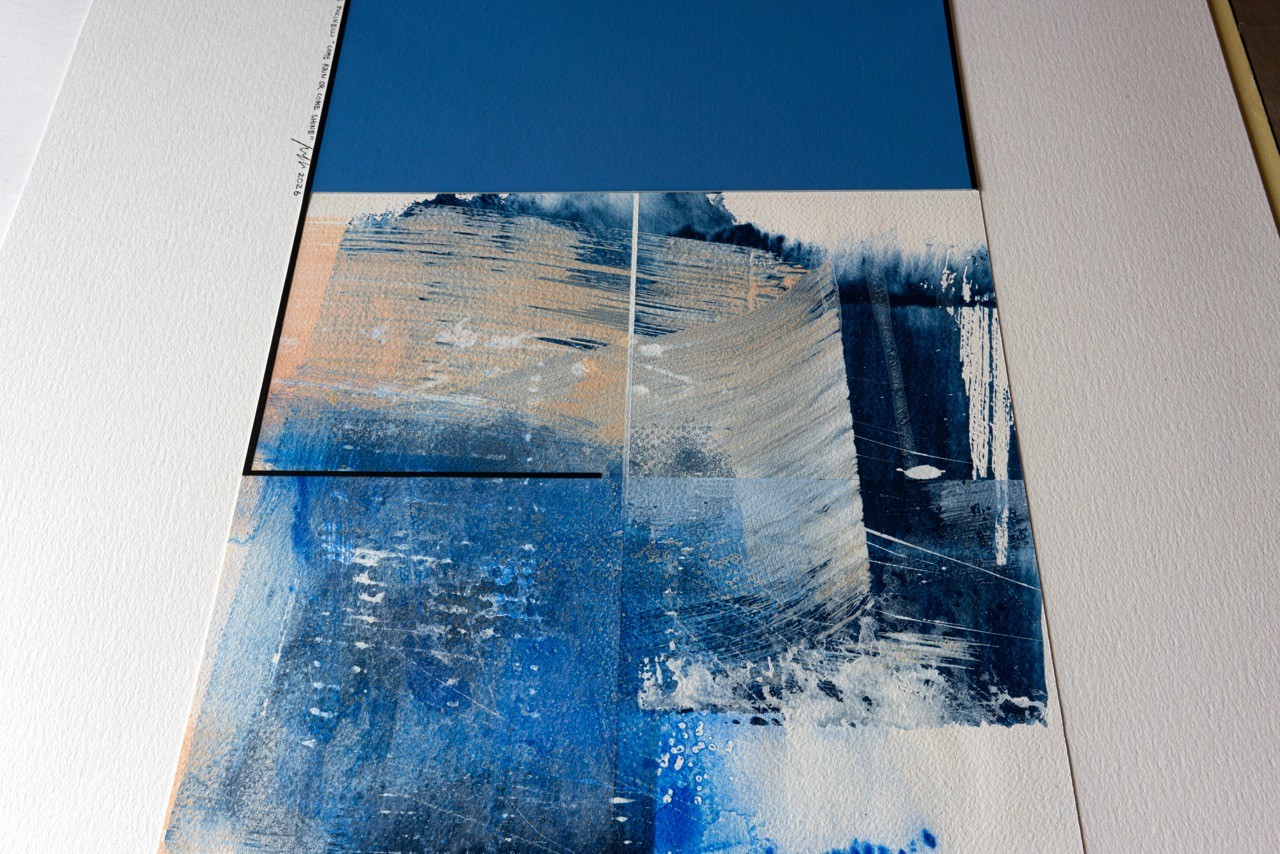
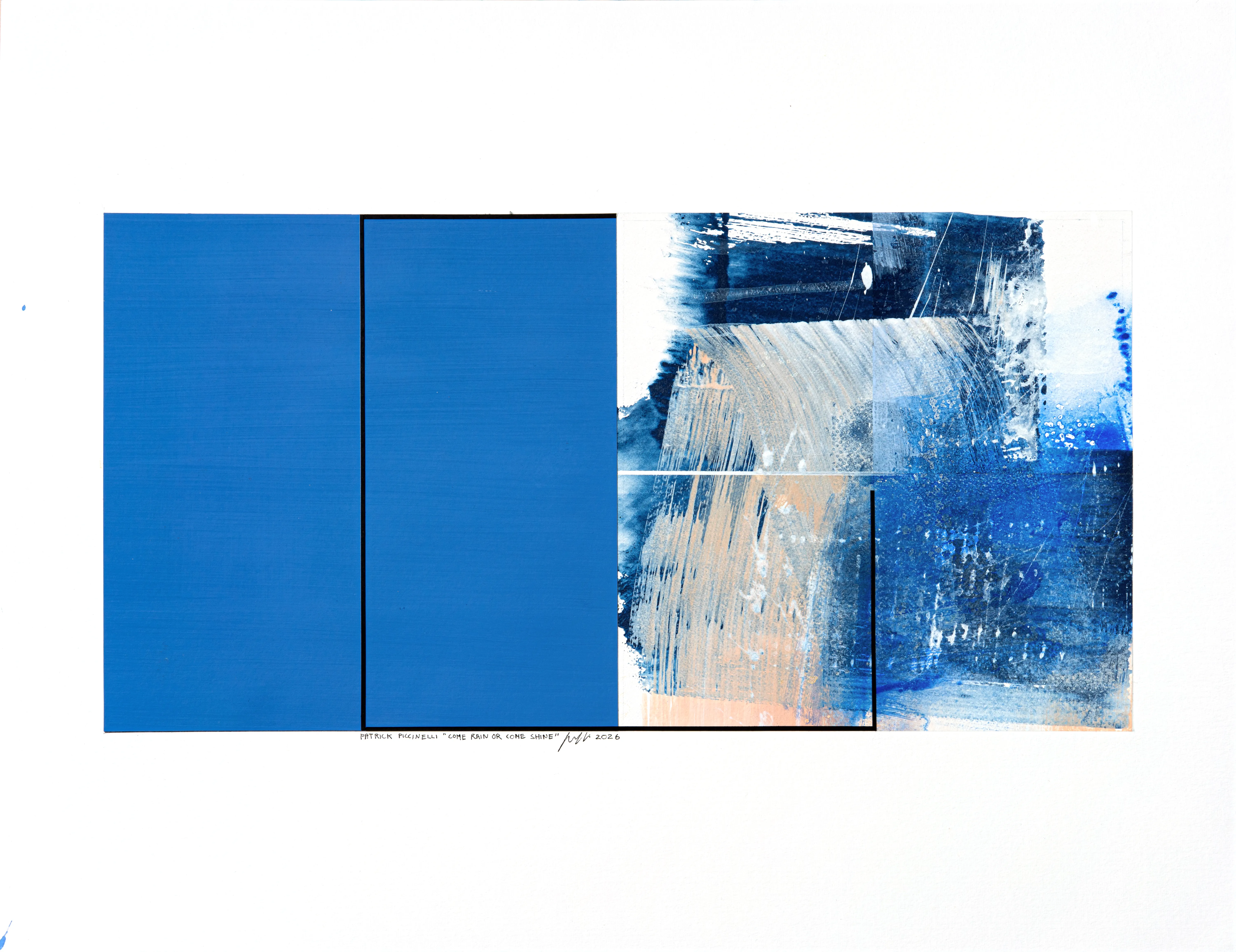
My composition is based on a fundamental division: on the left, a perfectly uniform, matte, almost architectural cerulean blue, delineated by sharp black lines. On the right, a world in explosion—dark washes, beige glazes, white splashes, strata that tear and erode.
This visual duality is a transcription of what Coltrane does musically in "Come Rain Or Come Shine," which is, originally, a sentimental ballad. Coltrane, however, takes this standard as a starting point to fracture it from within.
The blue rectangle on the left is the theme: almost sovereign in its silence. The right half is improvisation: the breath racing, the rain falling in diagonal strokes of torn paint.
The blue inevitably makes me think of "A Love Supreme" or "Blue Train," works where blue is a color of pure emotion, embodying both melancholy and transcendence.
This work belongs to a tradition of painting that listens, in the lineage of the American abstract expressionists who worked with jazz as their horizon (Kline, de Kooning, Mitchell). But the precision of my reference, "Come Rain Or Come Shine," this chosen title, signals a specific intention: to capture not jazz in general, but a version, a breath, a particular way of fulfilling a promise by tearing it apart and reconstructing it.
"Come Rain Or Come Shine," acrylic paint, collage, on paper.
Structure as a tension between order and chaos
My composition is based on a fundamental division: on the left, a perfectly uniform, matte, almost architectural cerulean blue, delineated by sharp black lines. On the right, a world in explosion—dark washes, beige glazes, white splashes, strata that tear and erode.
This visual duality is a transcription of what Coltrane does musically in "Come Rain Or Come Shine," which is, originally, a sentimental ballad. Coltrane, however, takes this standard as a starting point to fracture it from within.
The blue rectangle on the left is the theme: almost sovereign in its silence. The right half is improvisation: the breath racing, the rain falling in diagonal strokes of torn paint.
The blue inevitably makes me think of "A Love Supreme" or "Blue Train," works where blue is a color of pure emotion, embodying both melancholy and transcendence.
This work belongs to a tradition of painting that listens, in the lineage of the American abstract expressionists who worked with jazz as their horizon (Kline, de Kooning, Mitchell). But the precision of my reference, "Come Rain Or Come Shine," this chosen title, signals a specific intention: to capture not jazz in general, but a version, a breath, a particular way of fulfilling a promise by tearing it apart and reconstructing it.