Red Bossa
,
2026
Patrick Piccinelli
Red Bossa
2026
acrylic paint, ink, gouache, pigment, varnish, collage on paper, sold without frame
acrylic paint, ink, gouache, pigment, varnish, collage on paper, sold without frame
32.5
X
32.5
32.5
X
32.5
Available
€
1,100
Shipping and import duties included
Shipping and returns
- Shipping
- Packed in a double-wall box or a wooden crate and shipped from Switzerland by DHL Express within 2 to 3 days. Delivery takes 2 to 15 business days; the tracking number comes by email.
- Import duties
- Shipping, customs duties and import taxes are paid by us, for every country. Nothing is due on delivery.
- Returns
- An original painting cannot be returned or exchanged. A parcel lost or damaged in transit is refunded in full or replaced.
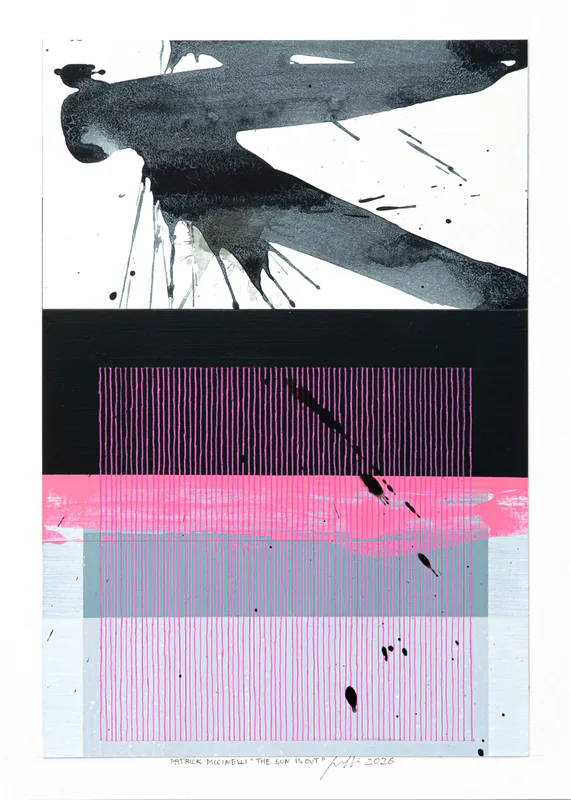
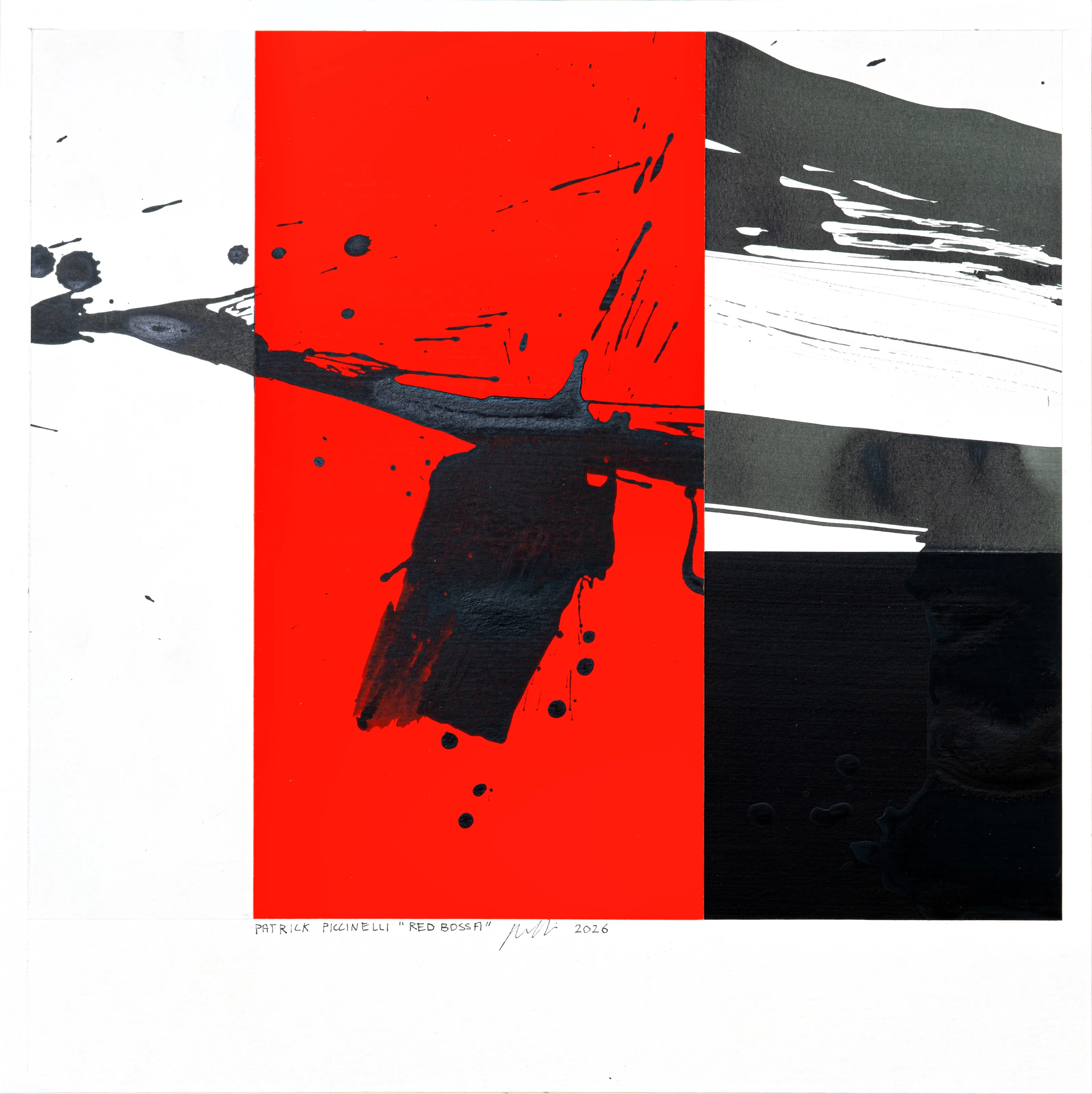
"Red Bossa," acrylic paint, gouache, ink, varnish, collage, pigment on paper.
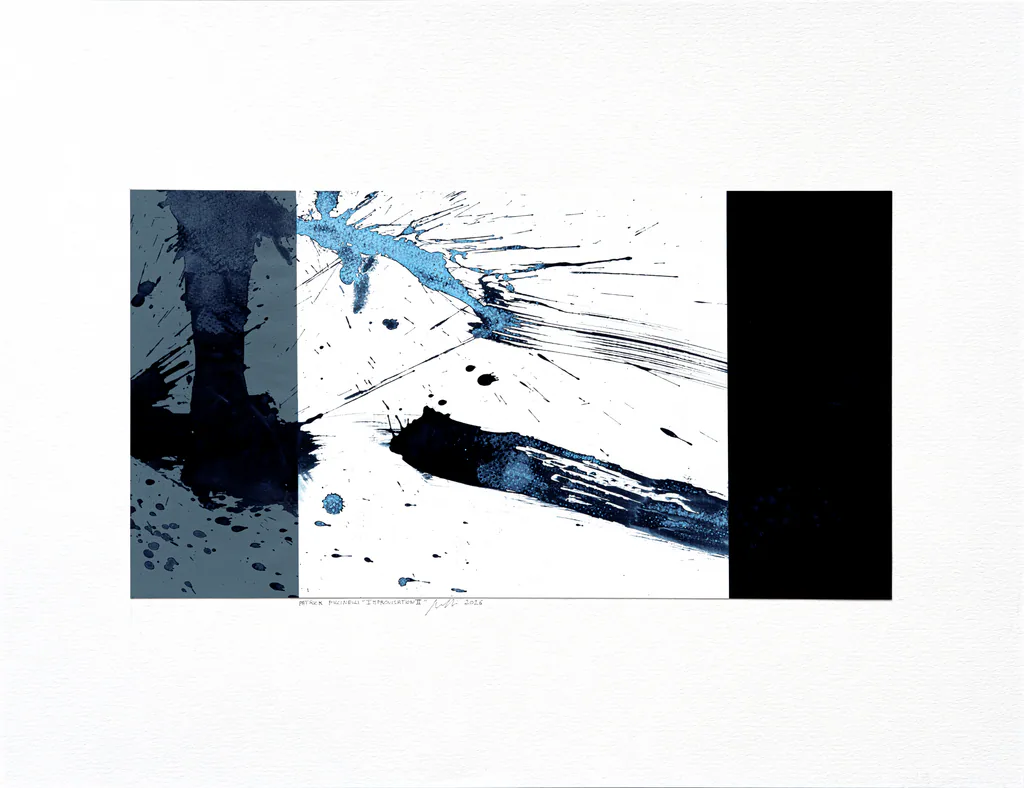
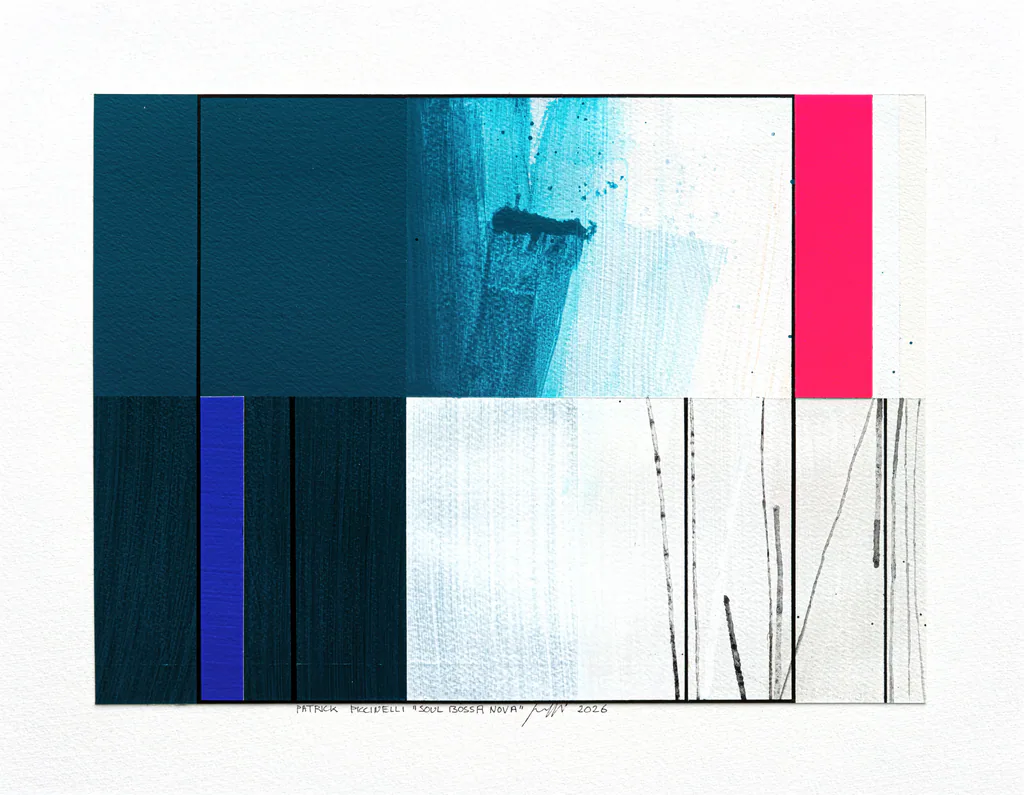
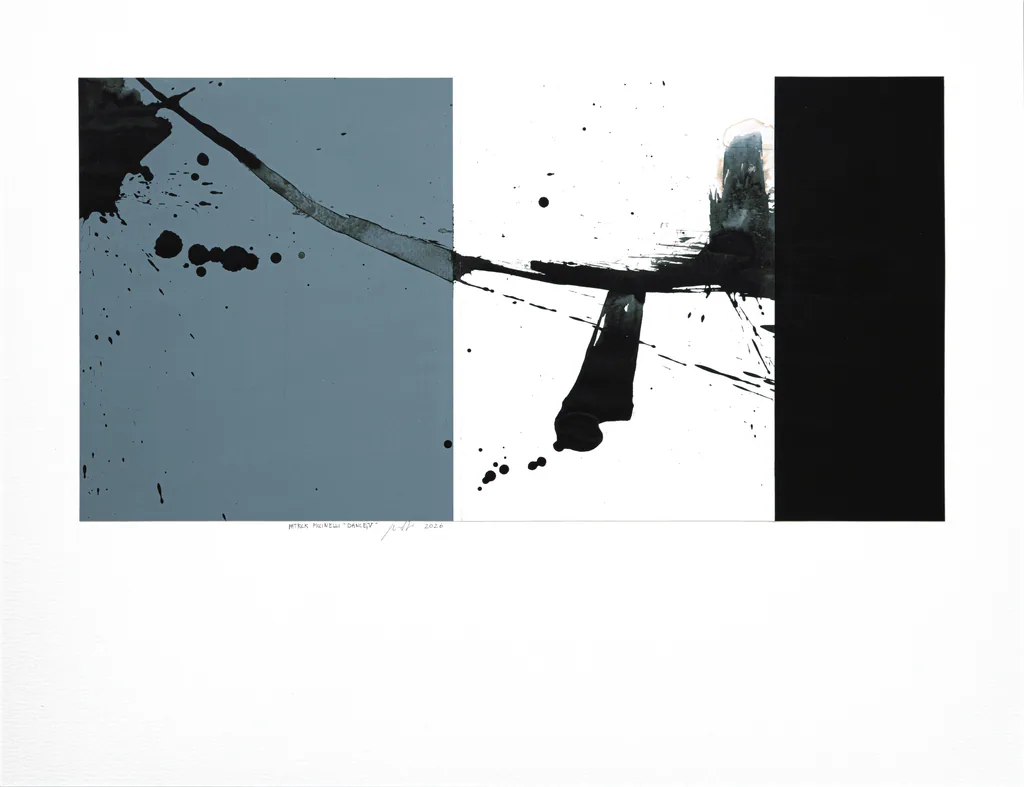
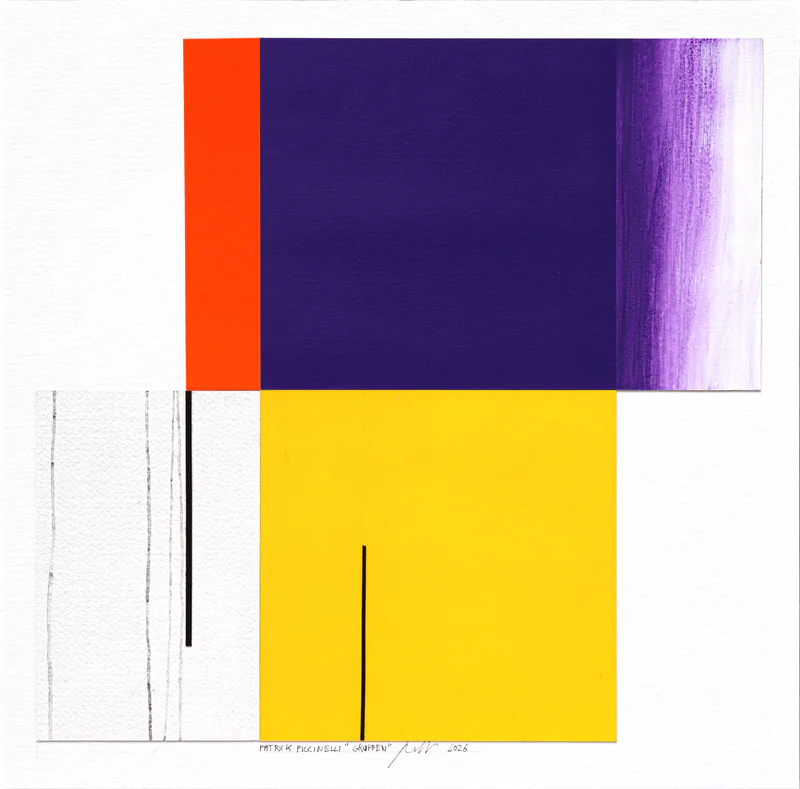
The composition is structured around a fundamental tension: a scarlet red rectangle occupies the center-left of the canvas, like an illuminated stage, while the right side shifts into a register of deep blacks, smoky grays, and slashed whites. This is not a peaceful division, but a collision.
Against this red background, broad, violent black gestures traverse the space: a large, dark flat area crashes diagonally, accompanied by projections, splashes, and suspended drops. For me, this pictorial gesture is jazz in its very essence, seemingly improvised, but profoundly structured in its balance.
"Blue Bossa"—recorded by Joe Henderson on the album "Page One" (1963), composed by Kenny Dorham—is a pivotal piece of modal jazz. Its most striking characteristic is its dual tonality: an unexpected modulation that creates a sensation of slippage, of sudden light in the shadows.
From Blue to Red: A Gesture of Reinterpretation:
The title I gave to the work is an act of semantic transformation: replacing blue with red is to effect an emotional and chromatic mutation. Henderson's blue evokes cool melancholy, contemplation, distance. My red, on the other hand, is all urgency, as if moving from memory to action.
"Red Bossa" is a pictorial transcription of a jazz sensibility, a tension between structure and freedom, between two chromatic spaces that clash and resolve, between the silence of white and the density of black, with red as the blue note, that note that belongs to no scale and yet is the soul of jazz.
"Red Bossa," acrylic paint, gouache, ink, varnish, collage, pigment on paper.
The composition is structured around a fundamental tension: a scarlet red rectangle occupies the center-left of the canvas, like an illuminated stage, while the right side shifts into a register of deep blacks, smoky grays, and slashed whites. This is not a peaceful division, but a collision.
Against this red background, broad, violent black gestures traverse the space: a large, dark flat area crashes diagonally, accompanied by projections, splashes, and suspended drops. For me, this pictorial gesture is jazz in its very essence, seemingly improvised, but profoundly structured in its balance.
"Blue Bossa"—recorded by Joe Henderson on the album "Page One" (1963), composed by Kenny Dorham—is a pivotal piece of modal jazz. Its most striking characteristic is its dual tonality: an unexpected modulation that creates a sensation of slippage, of sudden light in the shadows.
From blue to red: a gesture of reinterpretation:
The title I gave to the work is an act of semantic transformation: replacing blue with red is to effect an emotional and chromatic mutation. Henderson's blue evokes cool melancholy, contemplation, distance. My red, on the other hand, is all urgency, as if moving from memory to action.
"Red Bossa" is a pictorial transcription of a jazz sensitivity, a tension between structure and freedom, between two chromatic spaces that clash and resolve, between the silence of white and the density of black, with red as the blue note, that note that belongs to no scale and yet is the soul of jazz.
"Red Bossa," acrylic paint, gouache, ink, varnish, collage, pigment on paper.
The composition is structured around a fundamental tension: a scarlet red rectangle occupies the center-left of the canvas, like an illuminated stage, while the right side shifts into a register of deep blacks, smoky grays, and slashed whites. This is not a peaceful division, but a collision.
Against this red background, broad, violent black gestures traverse the space: a large, dark flat area crashes diagonally, accompanied by projections, splashes, and suspended drops. For me, this pictorial gesture is jazz in its very essence, seemingly improvised, but profoundly structured in its balance.
"Blue Bossa"—recorded by Joe Henderson on the album "Page One" (1963), composed by Kenny Dorham—is a pivotal piece of modal jazz. Its most striking characteristic is its dual tonality: an unexpected modulation that creates a sensation of slippage, of sudden light in the shadows.
From Blue to Red: A Gesture of Reinterpretation:
The title I gave to the work is an act of semantic transformation: replacing blue with red is to effect an emotional and chromatic mutation. Henderson's blue evokes cool melancholy, contemplation, distance. My red, on the other hand, is all urgency, as if moving from memory to action.
"Red Bossa" is a pictorial transcription of a jazz sensibility, a tension between structure and freedom, between two chromatic spaces that clash and resolve, between the silence of white and the density of black, with red as the blue note, that note that belongs to no scale and yet is the soul of jazz.
"Red Bossa," acrylic paint, gouache, ink, varnish, collage, pigment on paper.
The composition is structured around a fundamental tension: a scarlet red rectangle occupies the center-left of the canvas, like an illuminated stage, while the right side shifts into a register of deep blacks, smoky grays, and slashed whites. This is not a peaceful division, but a collision.
Against this red background, broad, violent black gestures traverse the space: a large, dark flat area crashes diagonally, accompanied by projections, splashes, and suspended drops. For me, this pictorial gesture is jazz in its very essence, seemingly improvised, but profoundly structured in its balance.
"Blue Bossa"—recorded by Joe Henderson on the album "Page One" (1963), composed by Kenny Dorham—is a pivotal piece of modal jazz. Its most striking characteristic is its dual tonality: an unexpected modulation that creates a sensation of slippage, of sudden light in the shadows.
From blue to red: a gesture of reinterpretation:
The title I gave to the work is an act of semantic transformation: replacing blue with red is to effect an emotional and chromatic mutation. Henderson's blue evokes cool melancholy, contemplation, distance. My red, on the other hand, is all urgency, as if moving from memory to action.
"Red Bossa" is a pictorial transcription of a jazz sensitivity, a tension between structure and freedom, between two chromatic spaces that clash and resolve, between the silence of white and the density of black, with red as the blue note, that note that belongs to no scale and yet is the soul of jazz.