Heartsong
,
2026
Patrick Piccinelli
Heartsong
2026
Acrylic paint, colored pencils, collage on paper, sold without frame
Acrylic paint, colored pencils, collage on paper, sold without frame
50
50
X
X
65
65
Available
€
1,600
shipping worldwide included
Add to card
"Heartsong," acrylic paint, colored pencils, collage on Arches paper, 50 x 65 cm, 2026.
The music: a composition for two voices.
"Heartsong" is a composition by Fred Hersch, the centerpiece of his album Heartsongs (Sunnyside, 1990), later included on his solo album Songs Without Words (Nonesuch, 2001), and finally recorded as a duet with Mick Goodrick on Feebles, Fables and Ferns (ECM), a session captured in August 1988 in New York.
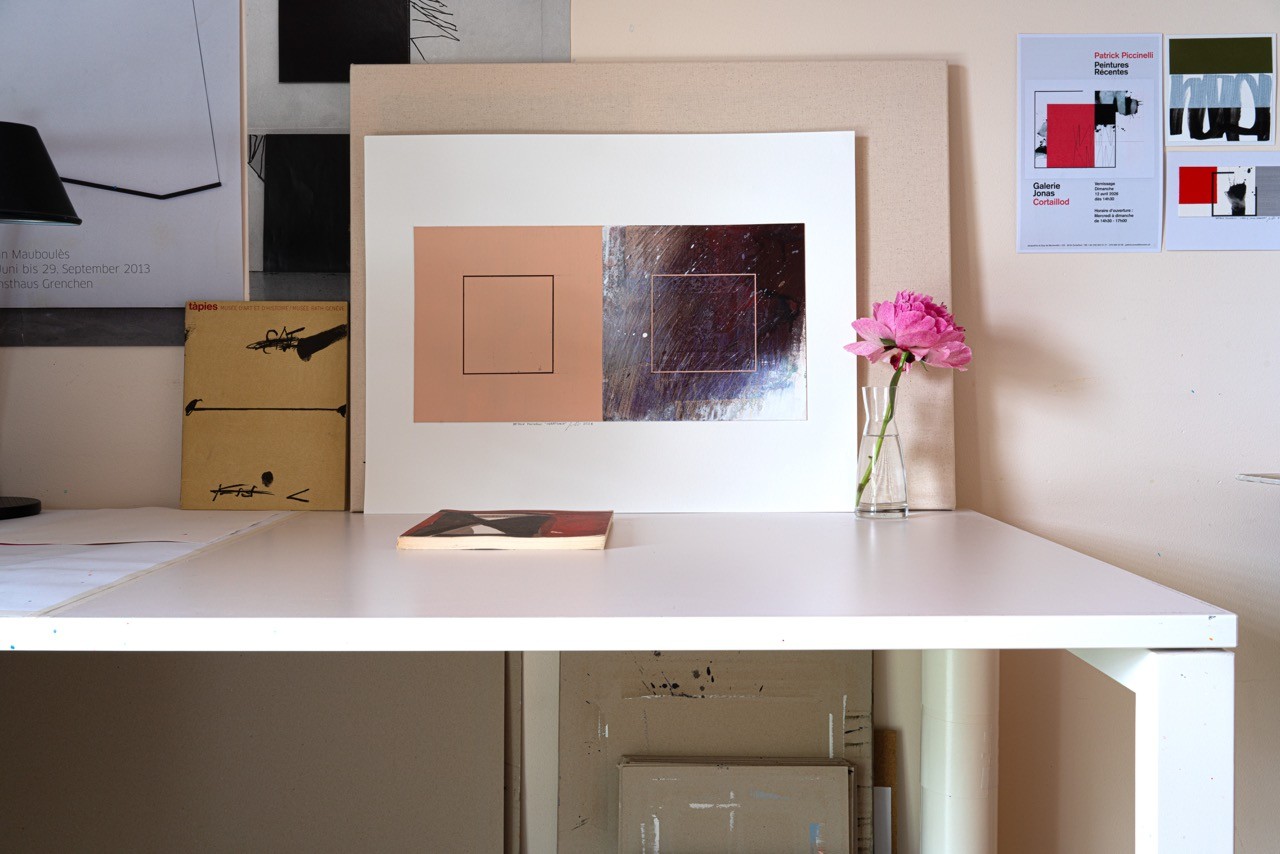
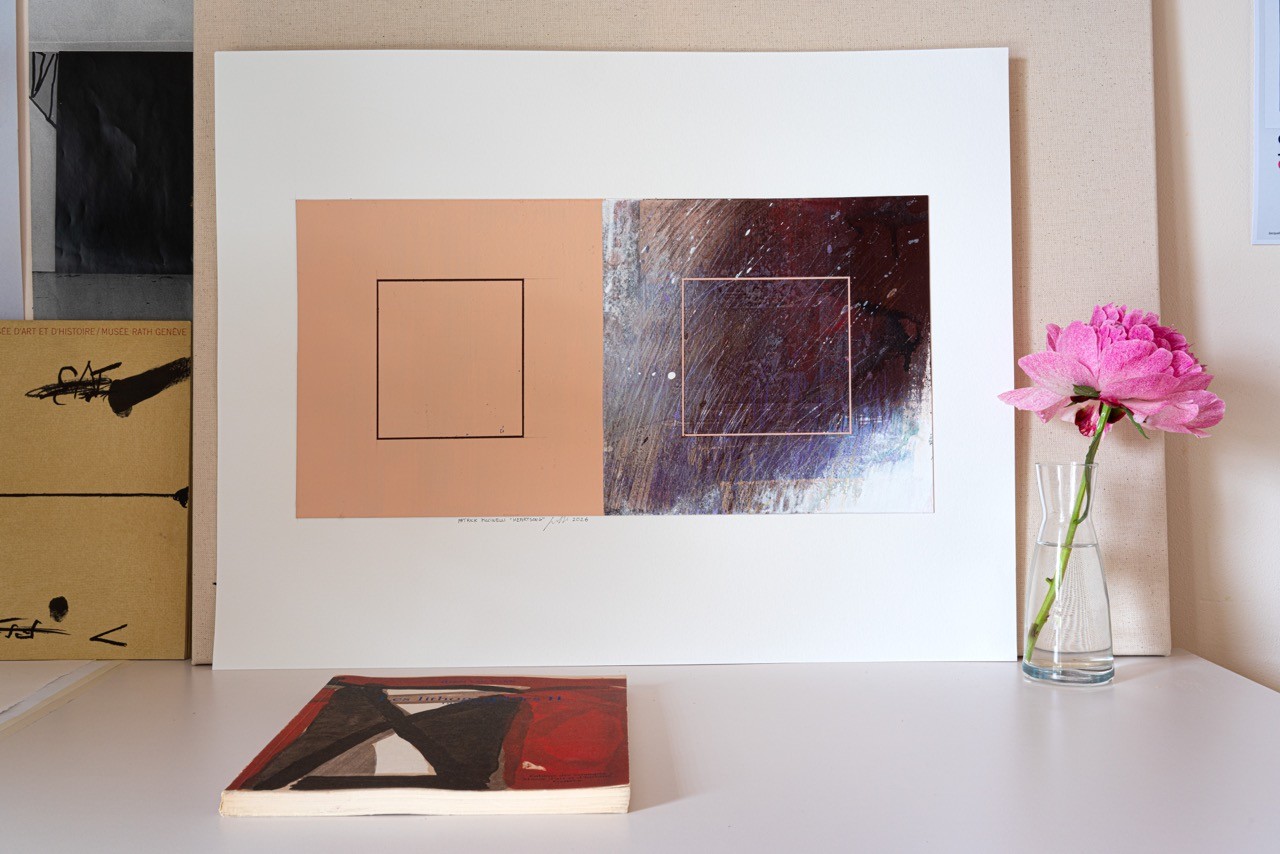
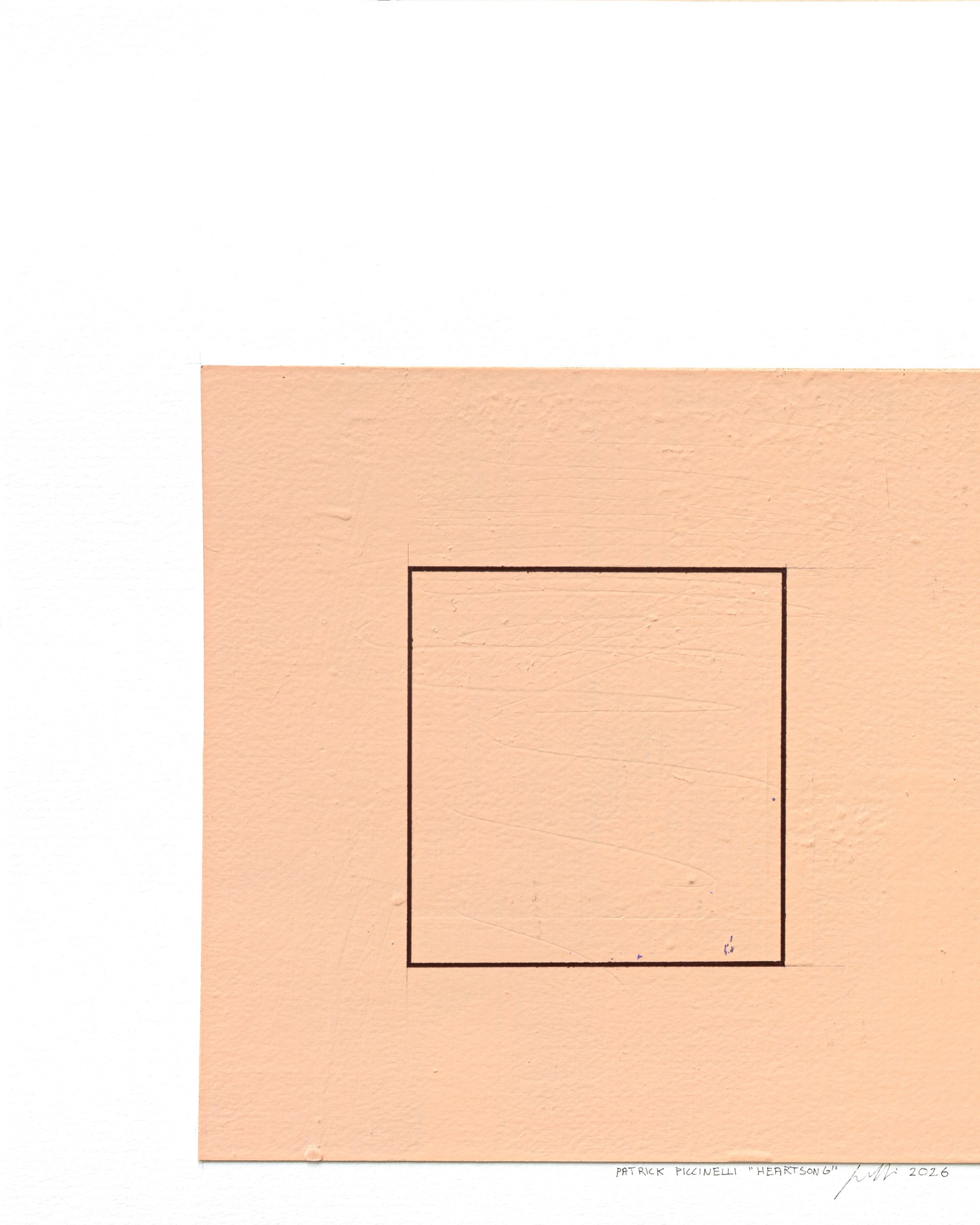
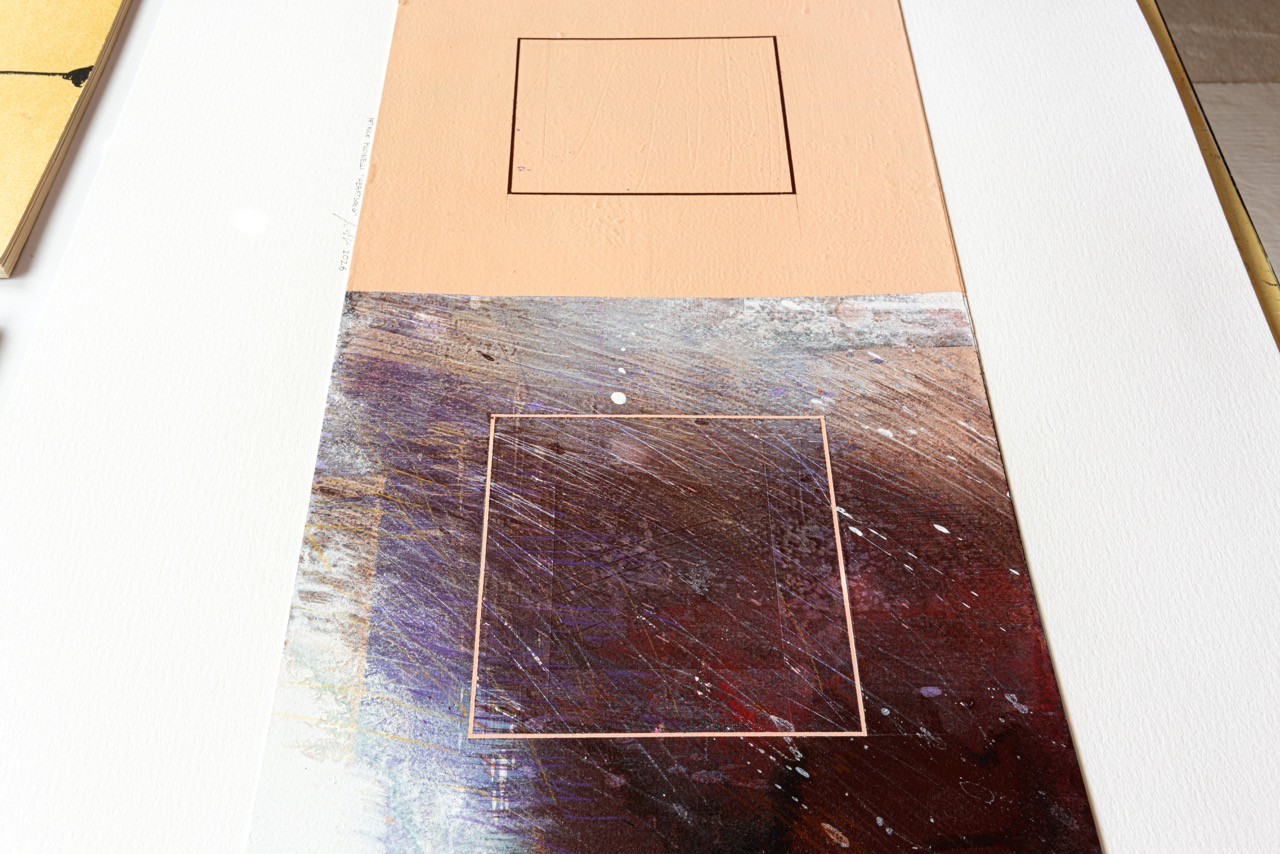
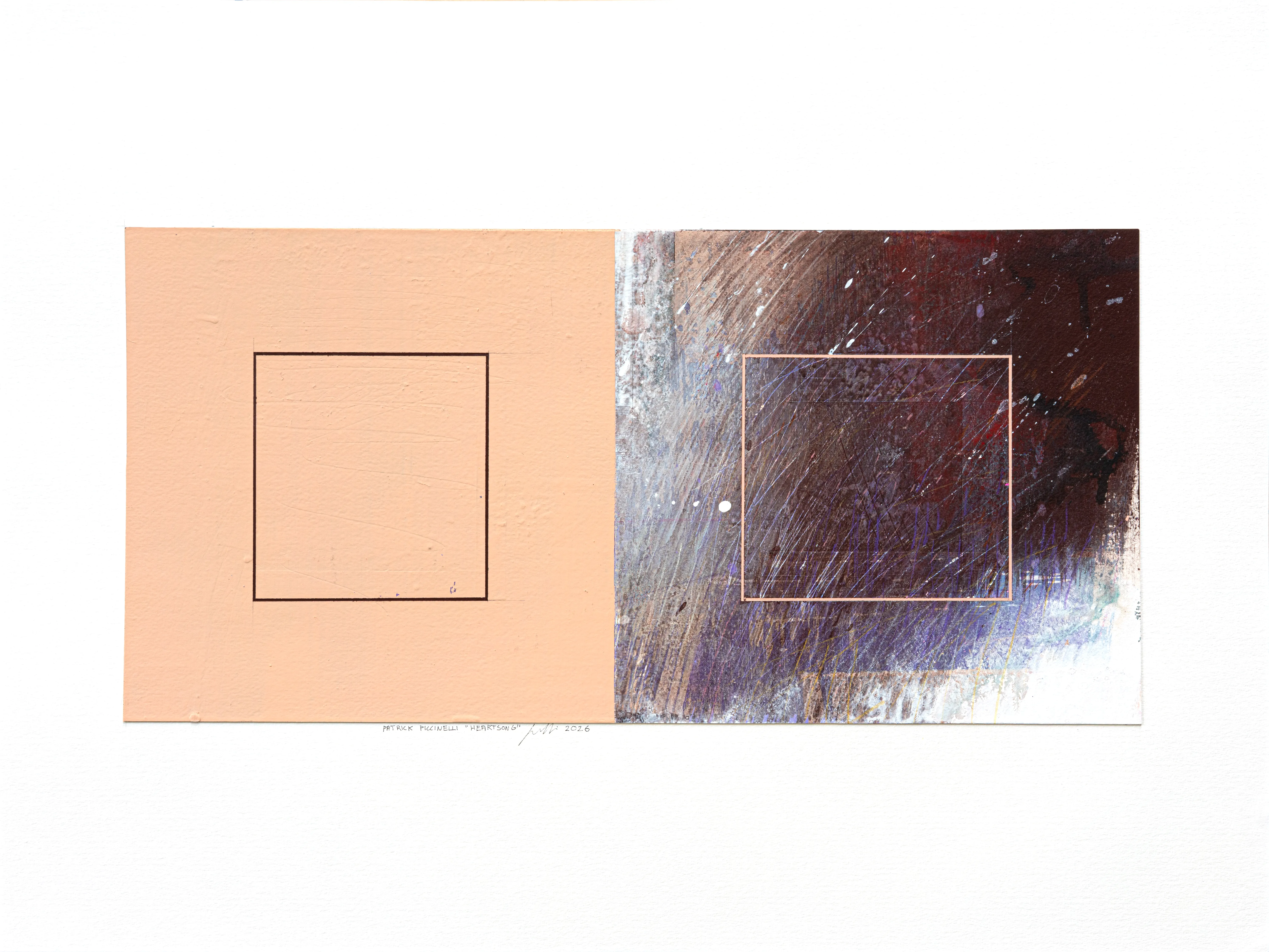
On the left: a monochrome background, beige, smooth, serene. A square drawn with a fine, dark brown line, centered, geometric, restrained. This is the space of restraint, of contained form, like the written melody, the score, the theme.
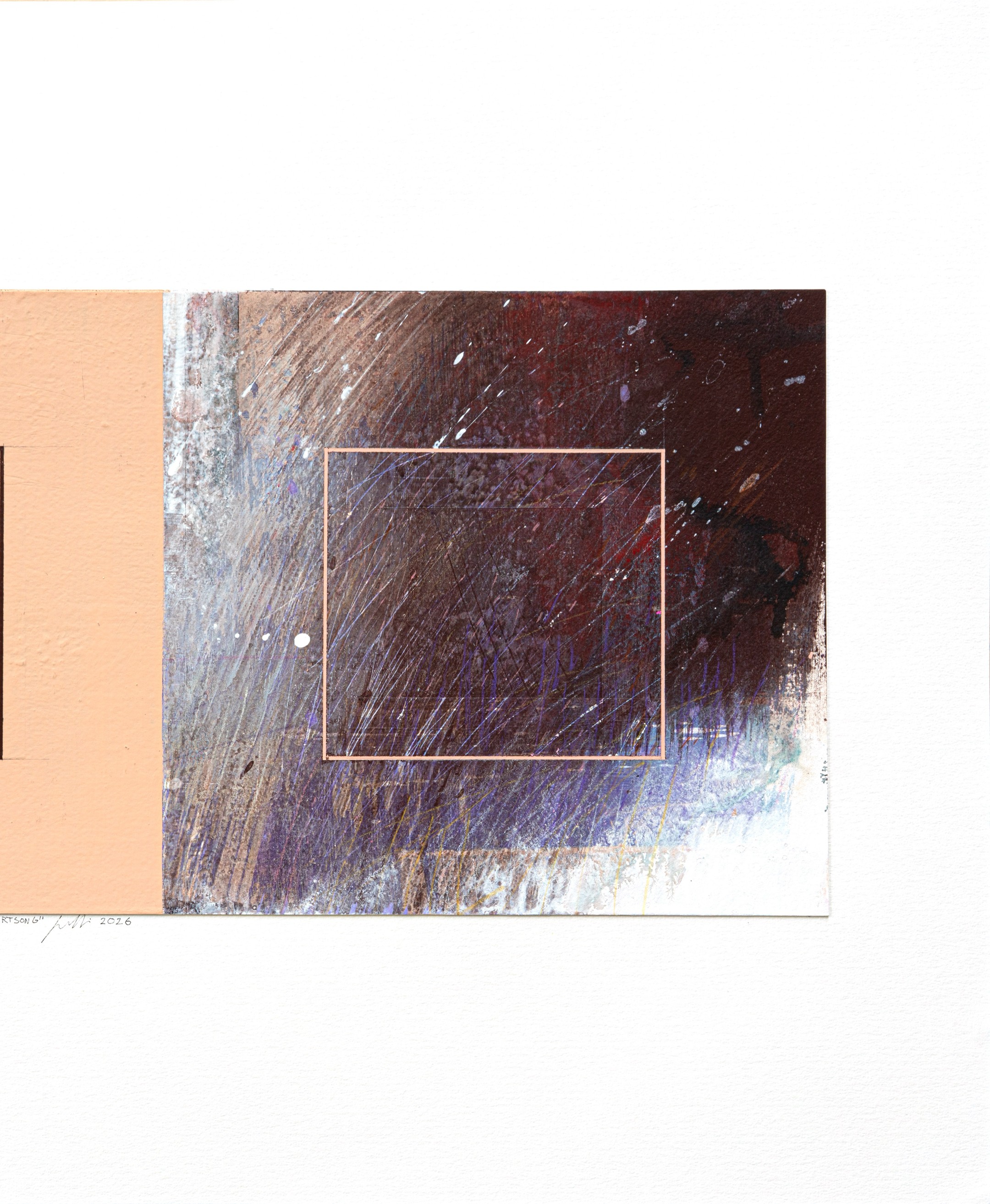
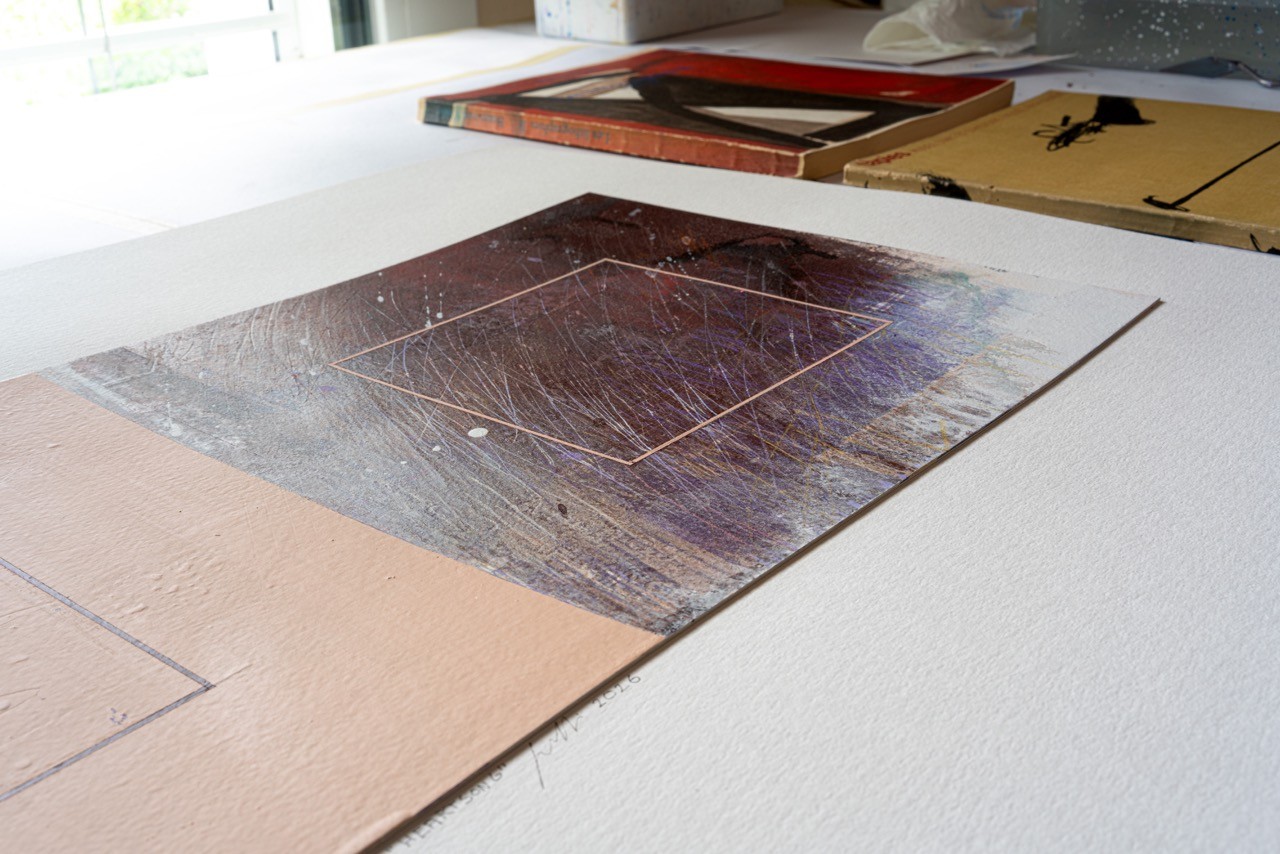
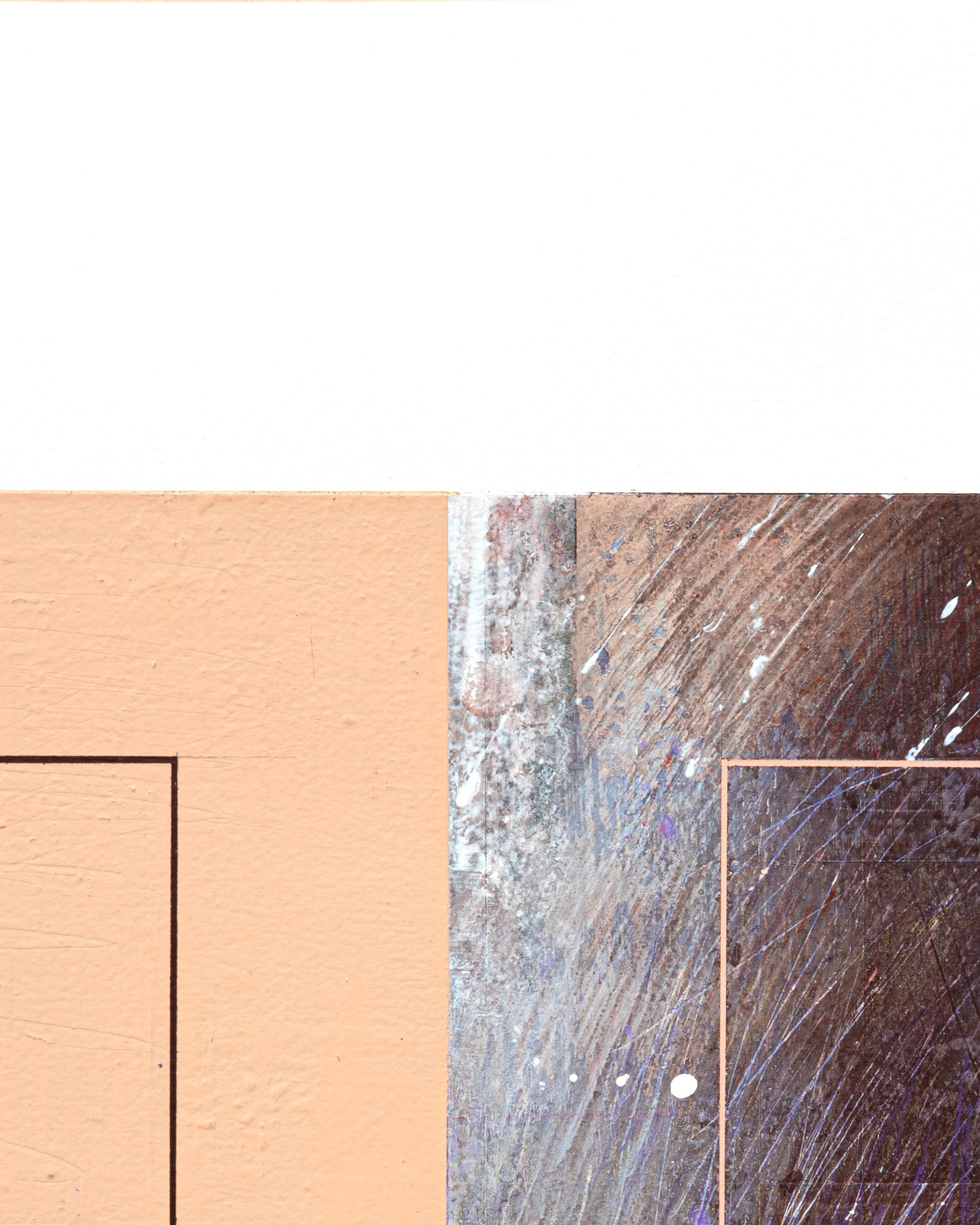
On the right: a textured background, streaks, bursts, deep colors (burgundy, violet, sienna, gray, white) that seem to be lacerated by a centrifugal movement. A clear square stands out within this expressive disorder. It is the space of improvisation, of raw feeling, of what music releases when it is allowed to flow freely.
The square as a musical motif:
The two squares function as a repeated yet transformed musical figure: this is what Hersch does with his Heartsong theme. His playing is characterized by a delicate touch, gentle introspection, and a nostalgic ballad quality, which the left panel embodies in its tranquil flatness. But the same melody, passed through Goodrick's hands and the rough edges of improvisation, is metamorphosed in the turbulence of the right panel.
The fault line: the space of dialogue.
The central area, the junction between the two panels, is the most expressive space in the work. There, one finds drips, superimpositions of materials, an ambiguity between the two worlds. It is the space of the duet, the place of exchange. The entire album is an exercise in listening and responding, a level of ensemble playing that Hersch himself describes as deep listening between the two. This border in my painting is precisely this interstitial space where two subjectivities meet and interpenetrate without merging.
"Heartsong," acrylic paint, colored pencils, collage on Arches paper, 50 x 65 cm, 2026.
The music: a composition for two voices.
"Heartsong" is a composition by Fred Hersch, the centerpiece of his album Heartsongs (Sunnyside, 1990), later included on his solo album Songs Without Words (Nonesuch, 2001), and finally recorded as a duet with Mick Goodrick on Feebles, Fables and Ferns (ECM), a session captured in August 1988 in New York.
On the left: a monochrome background, beige, smooth, serene. A square drawn with a fine, dark brown line, centered, geometric, restrained. This is the space of restraint, of contained form, like the written melody, the score, the theme.
On the right: a textured background, streaks, bursts, deep colors (burgundy, violet, sienna, gray, white) that seem to be lacerated by a centrifugal movement. A clear square stands out within this expressive disorder. It is the space of improvisation, of raw feeling, of what music releases when it is allowed to flow freely.
The square as a musical motif:
The two squares function as a repeated yet transformed musical figure: this is what Hersch does with his Heartsong theme. His playing is characterized by a delicate touch, gentle introspection, and a nostalgic ballad quality, which the left panel embodies in its tranquil flatness. But the same melody, passed through Goodrick's hands and the rough edges of improvisation, is metamorphosed in the turbulence of the right panel.
The fault line: the space of dialogue.
The central area, the junction between the two panels, is the most expressive space in the work. There, one finds drips, superimpositions of materials, an ambiguity between the two worlds. It is the space of the duet, the place of exchange. The entire album is an exercise in listening and responding, a level of ensemble playing that Hersch himself describes as deep listening between the two. This border in my painting is precisely this interstitial space where two subjectivities meet and interpenetrate without merging.