London Blues
,
2026
Patrick Piccinelli
London Blues
2026
acrylic paint, colored pencils, oil pastels, pigment on canvas
acrylic paint, colored pencils, oil pastels, pigment on canvas
60
60
X
X
60
60
Available
€
2,400
shipping worldwide included
Add to card
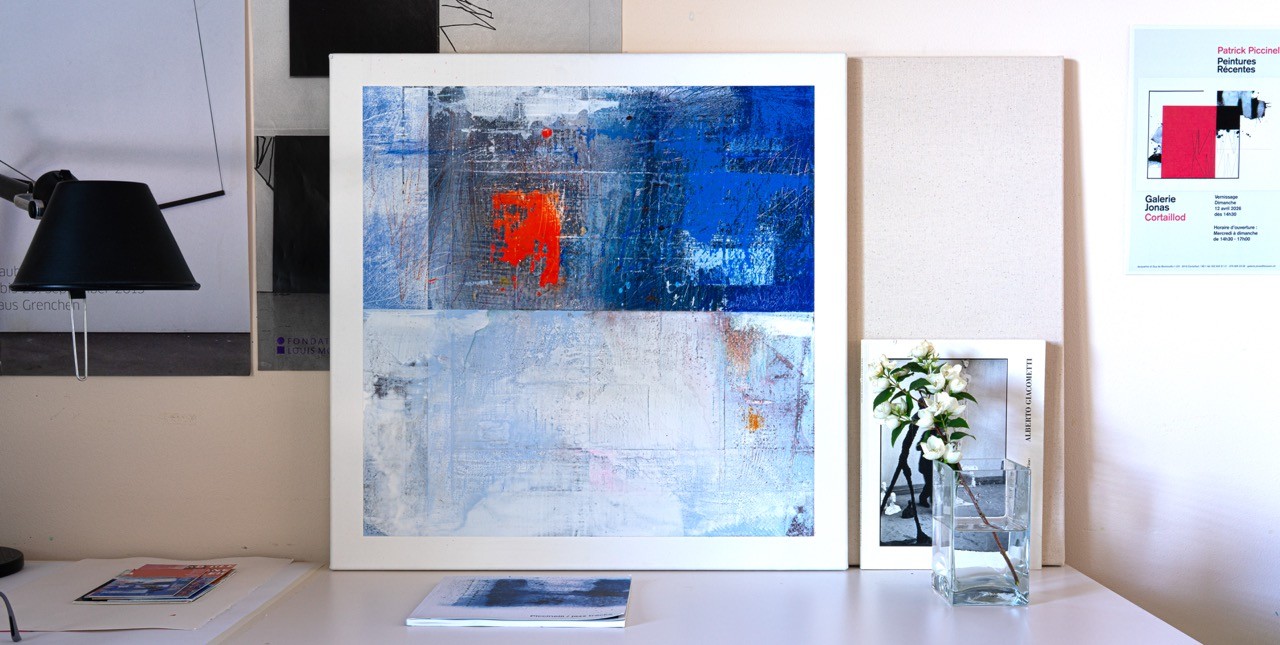
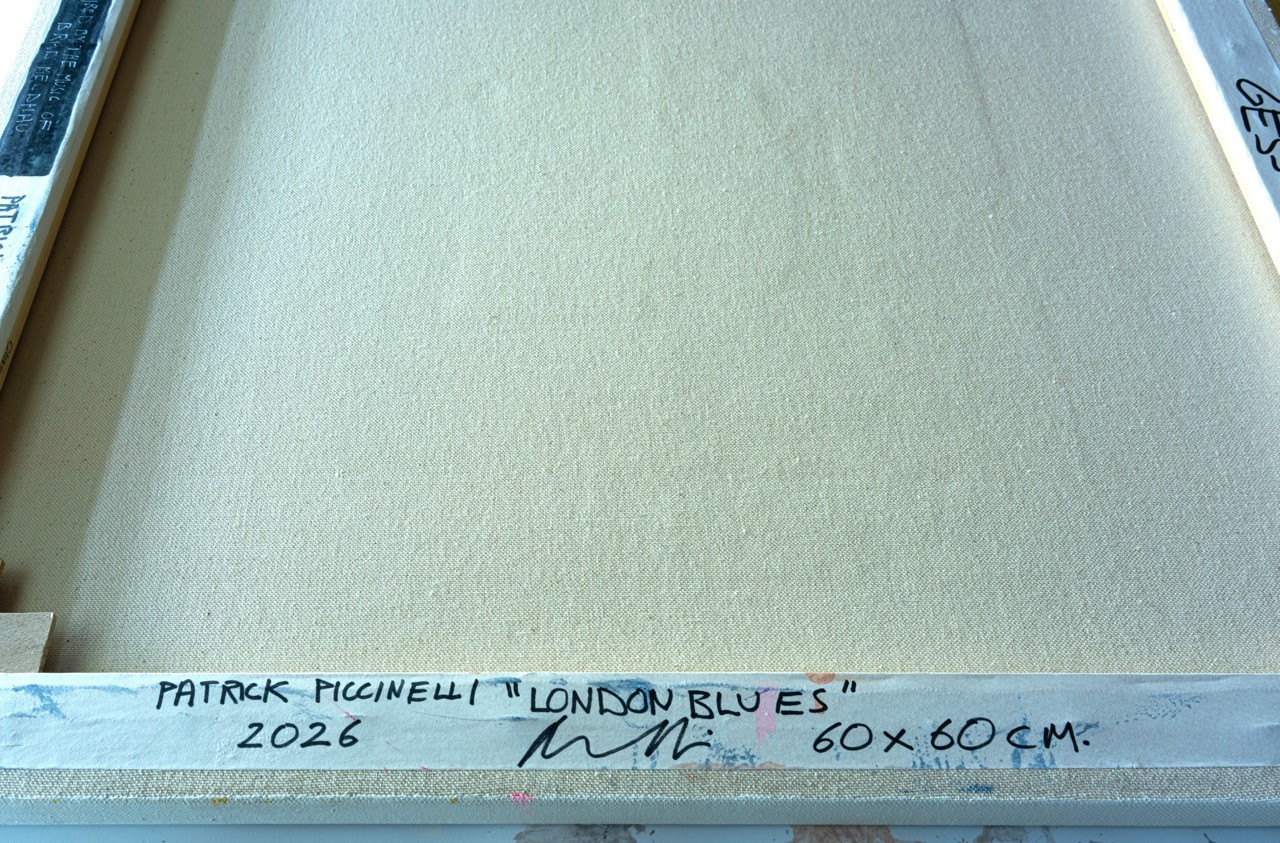
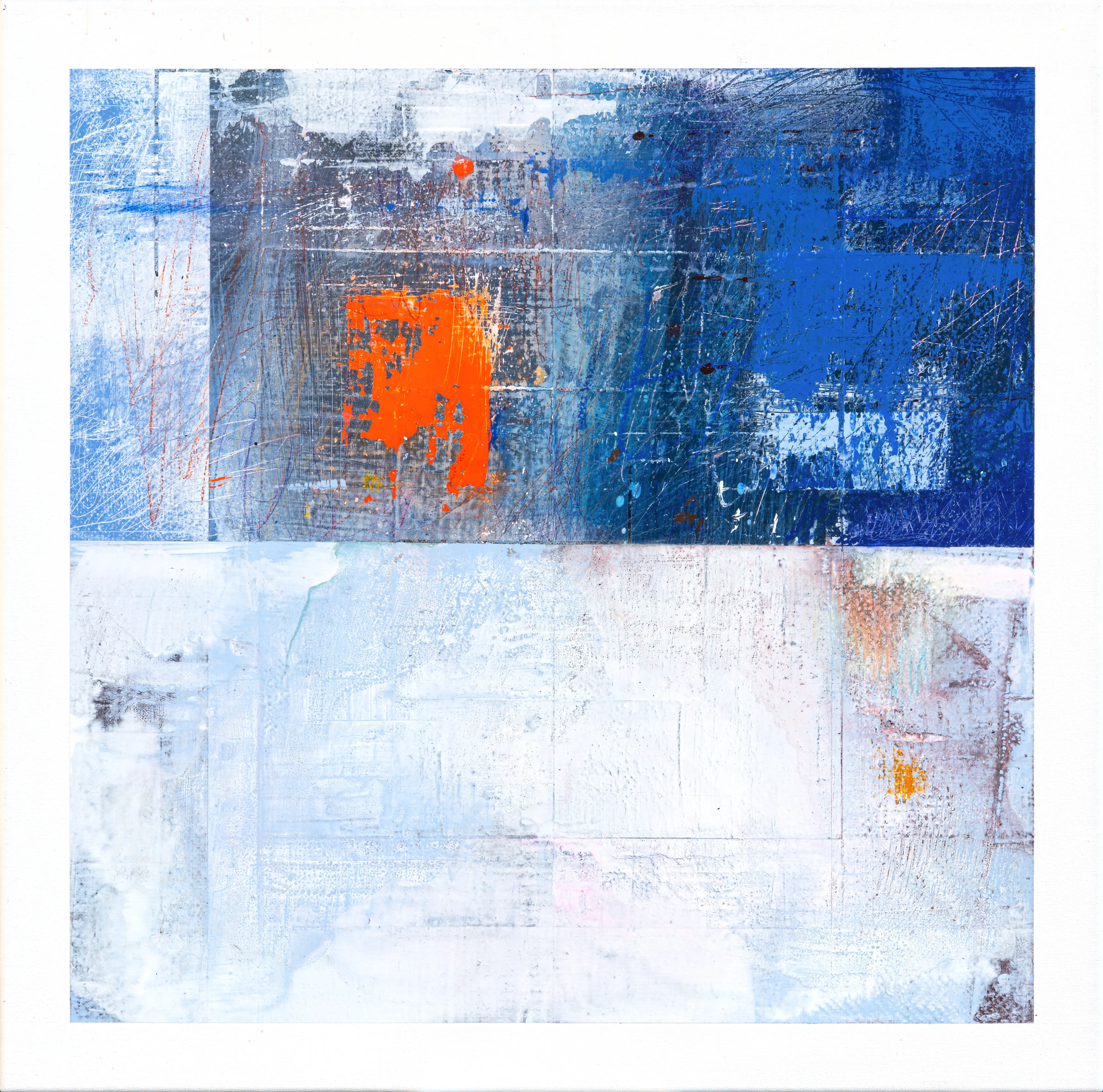
"London Blues," acrylic paint, colored pencils, oil pastel, pigment, on canvas, 60 x 60 cm, 2026.
Inspired by the music of Brad Mehldau.
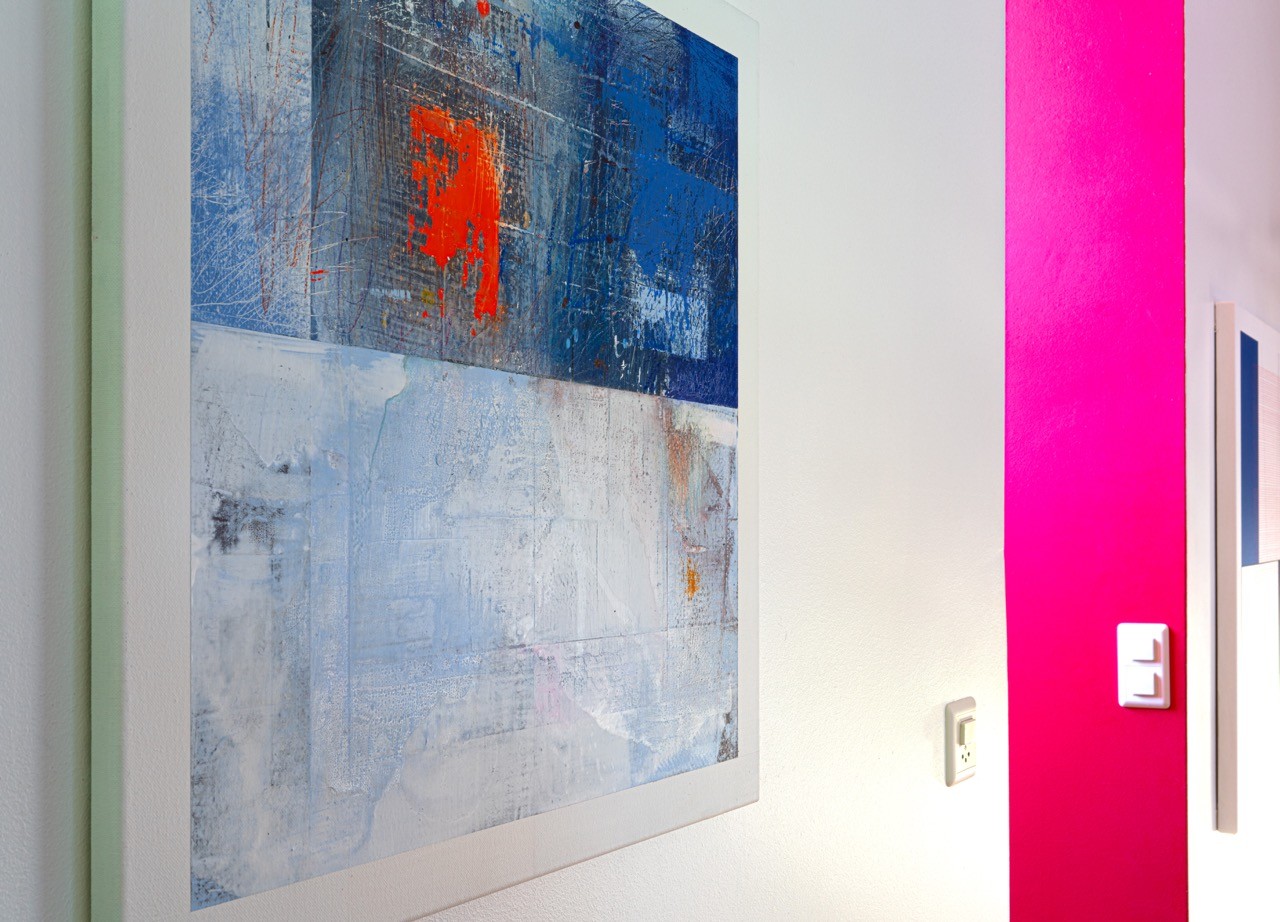
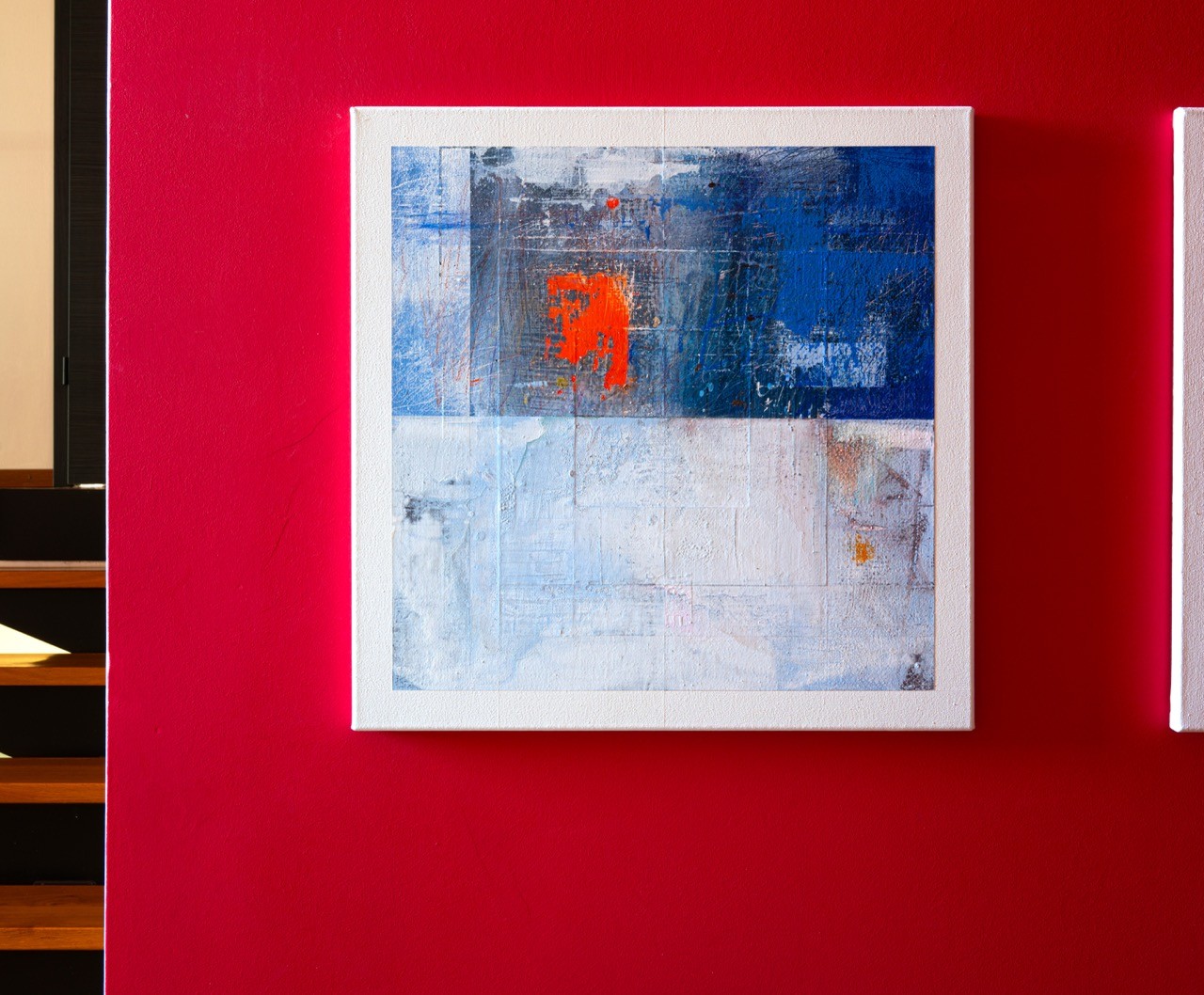
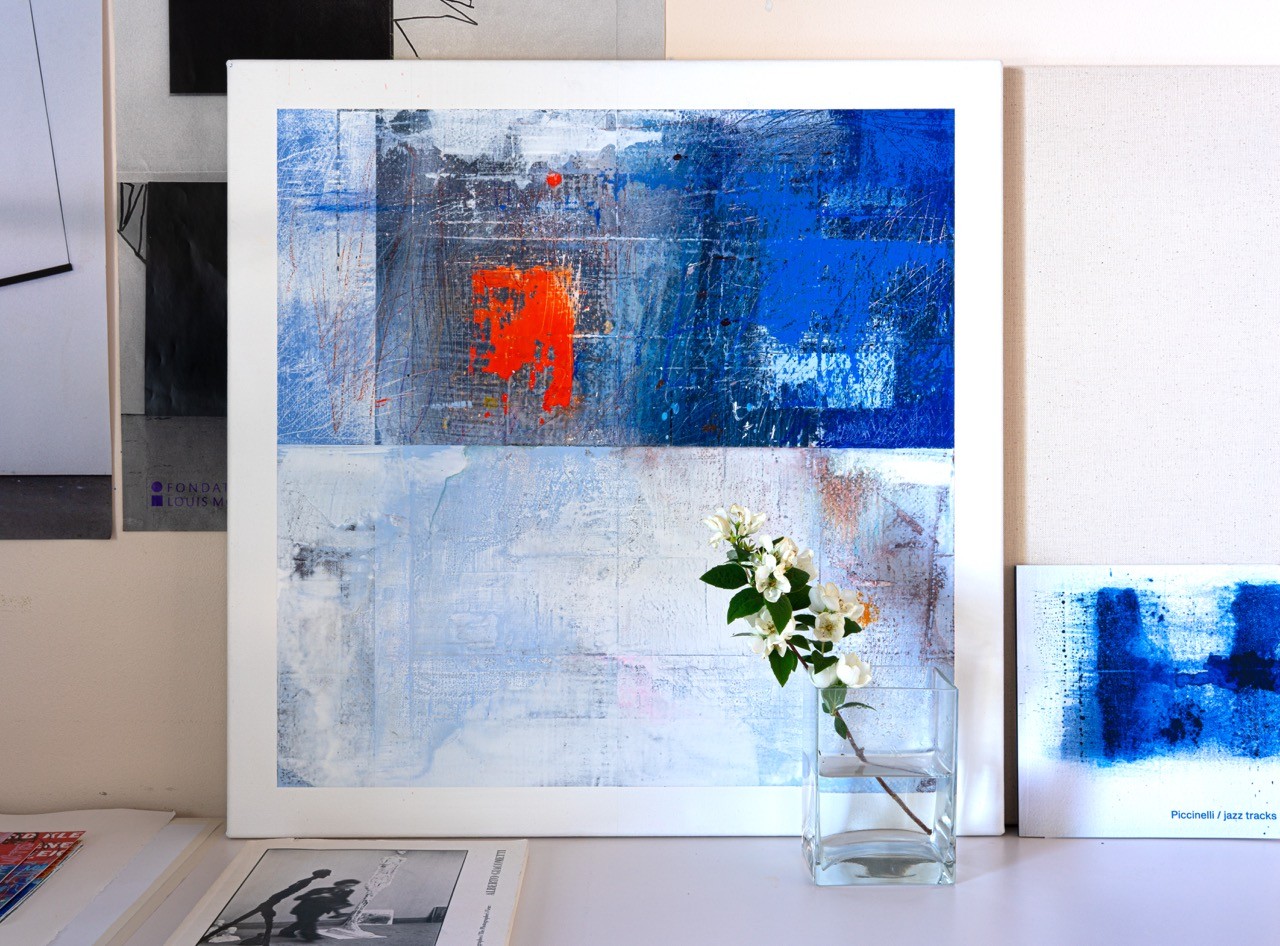
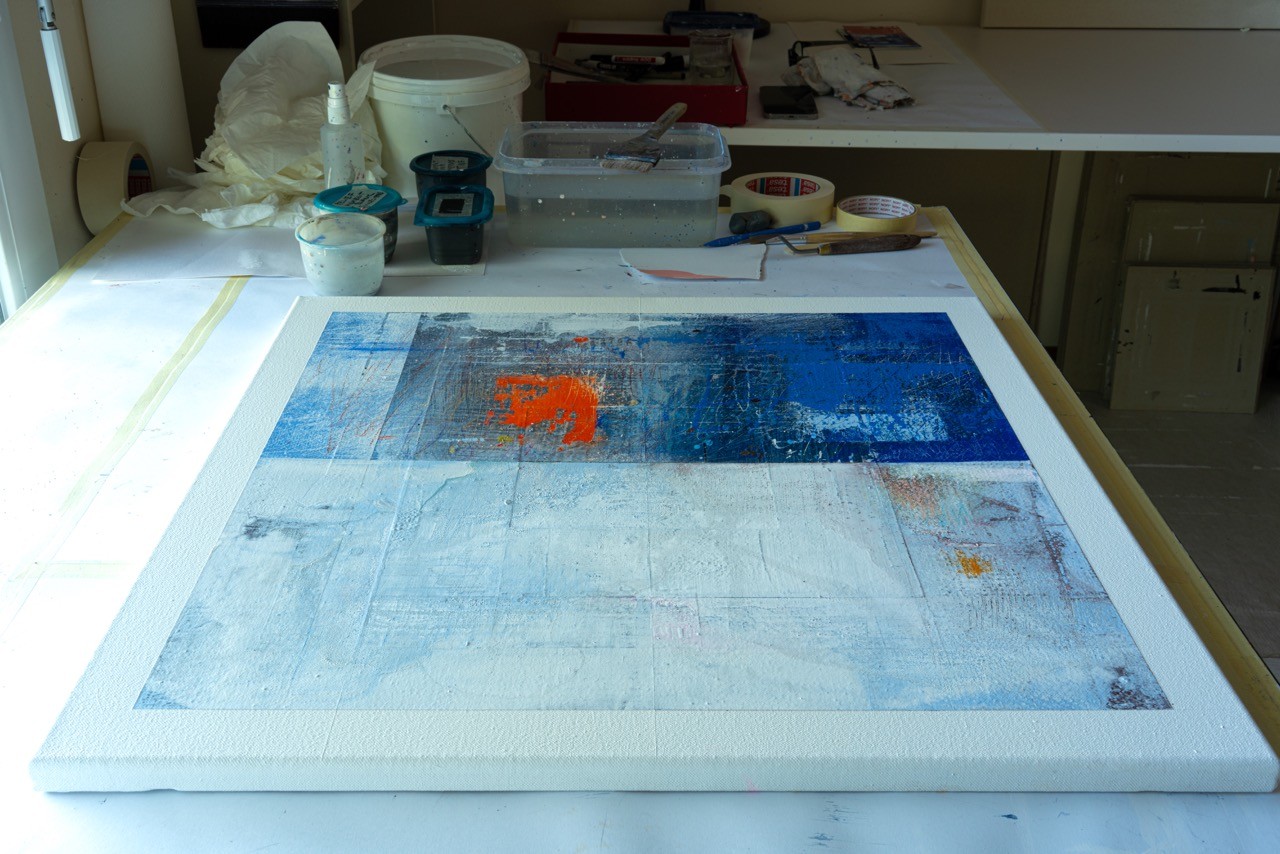
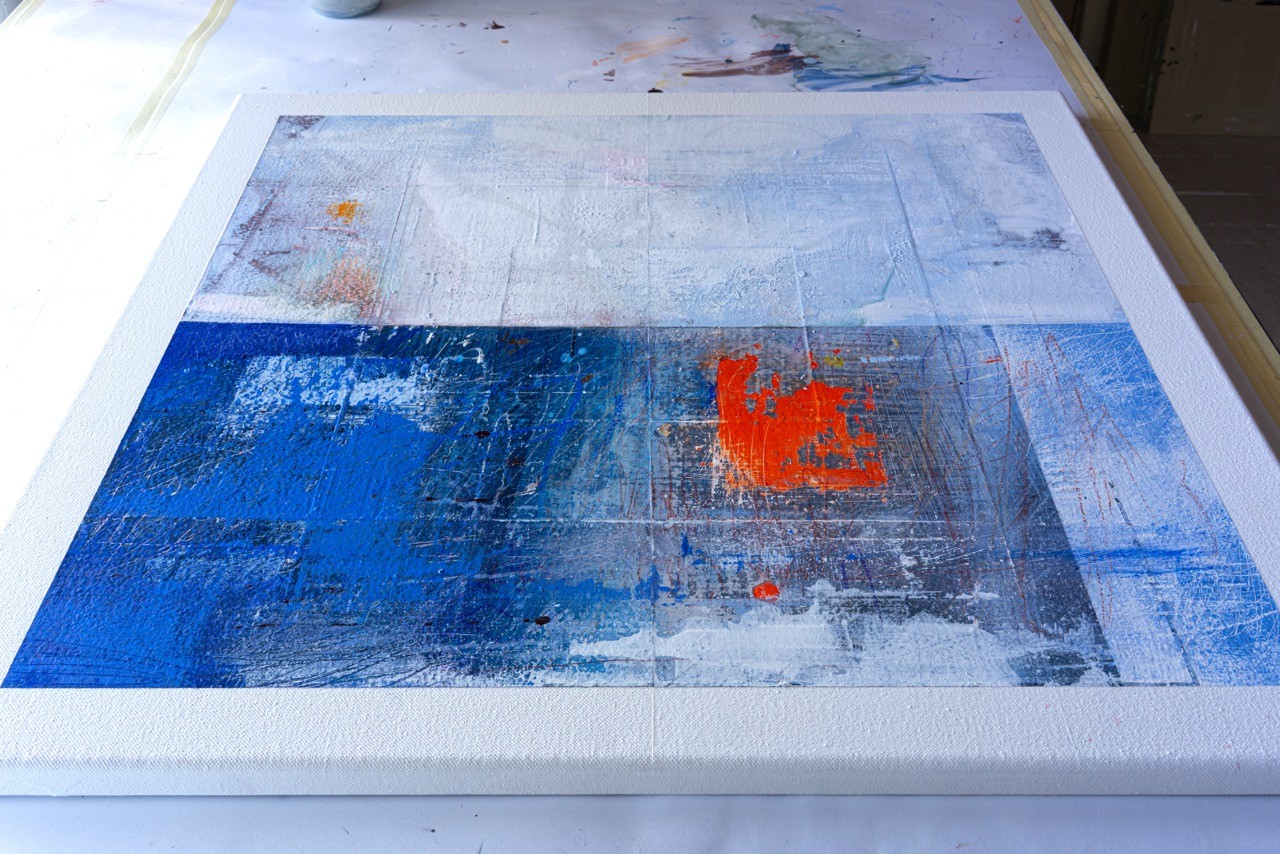
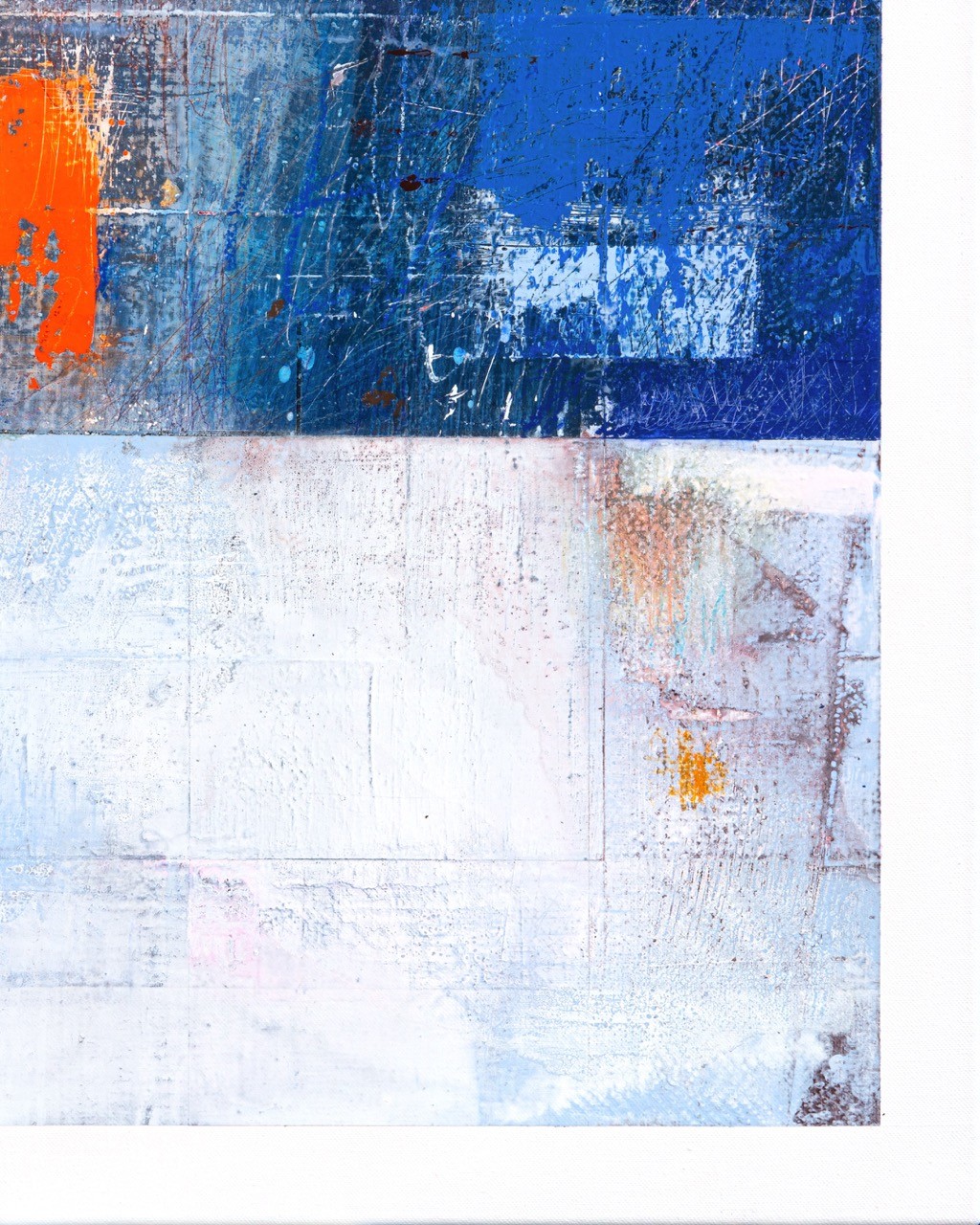
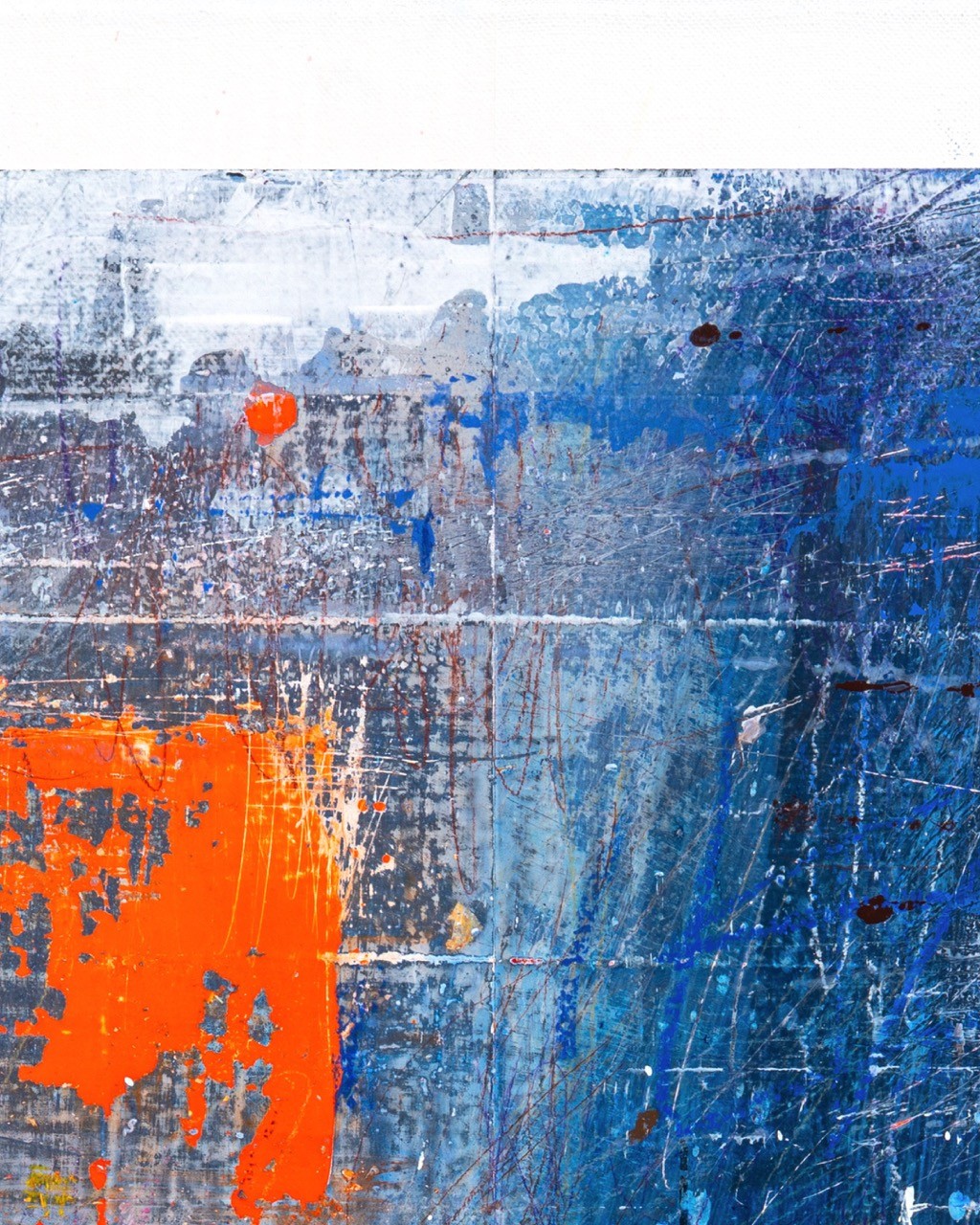
This abstract painting is composed of a structural duality: a dense, charged, almost urban upper section, and a lower section that recedes, breathes, and whitens. The composition is organized into superimposed rectangular blocks, like layers of memory or time.
Brad Mehldau is a pianist whose art rests precisely on this tension between structure and dissolution, between classical form and overflowing improvisation. His piece "London Blues," a title at the crossroads of place and emotion, shares several profound resonances with this painting:
Stratification.
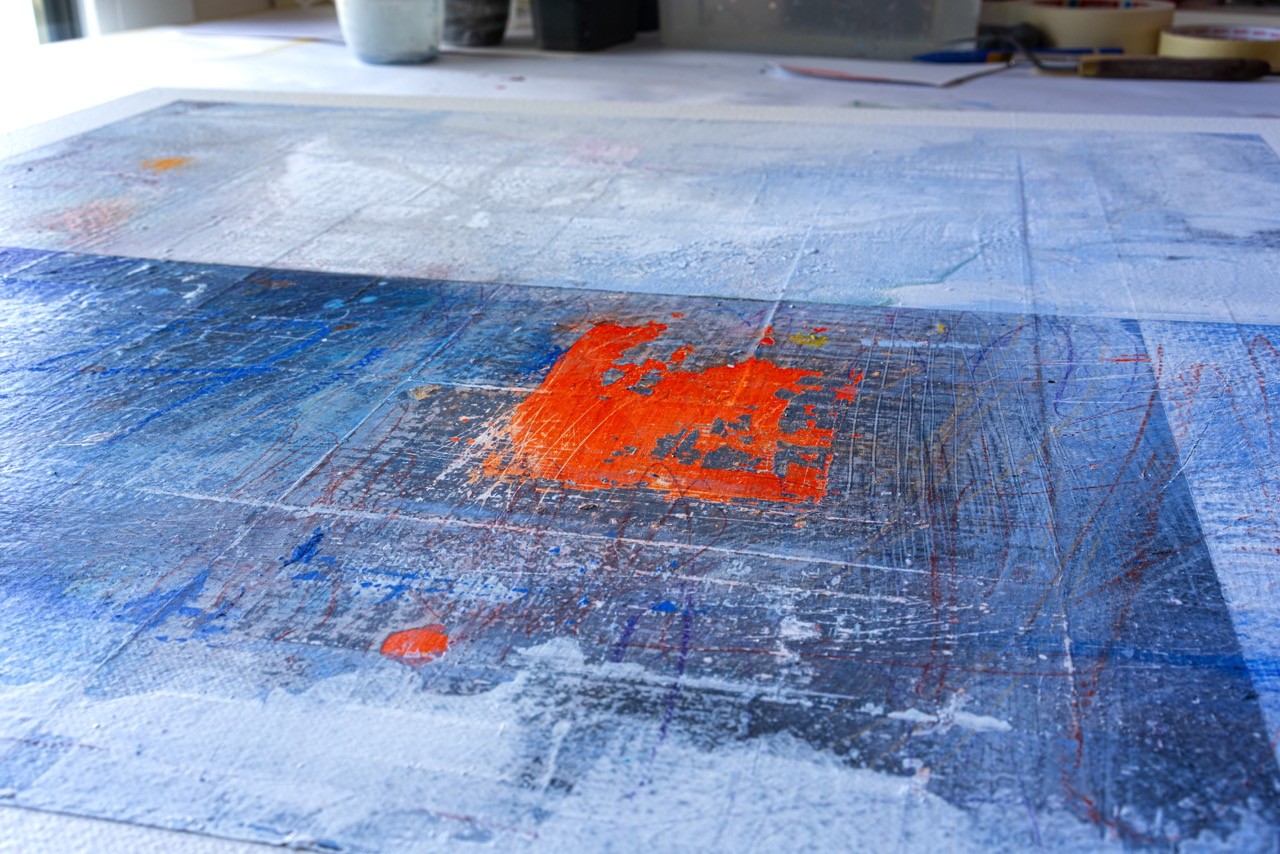
Mehldau constructs his phrases in successive layers: the left hand lays down a solid, almost architectural, harmonic structure, while the right hand wanders, strays, and returns. This logic is reflected in the painting: clean geometric blocks (the structure) covered with scratched material, drips, and accidents (improvisation).
Blue as an emotional tone:
The blues isn't just a genre; it's an inner color, a state between melancholy and lucidity. Mehldau doesn't play the blues literally; he infuses it into a refined, sometimes almost cold, post-bop harmonic language. I do the same: it's not a sentimental or romantic blue, it's an urban, mineral, detached blue.
London as a mental space:
The city isn't represented but felt: grayness, diffuse white light, overlapping fragments of life. The lower part of the painting, almost immaculate with its barely perceptible traces, recalls those London mornings when the city seems suspended, enveloped in mist.
The orange stain... the blue note!
In the vocabulary of the blues, the blue note is that slightly dissonant note that creates all the expressive tension of the genre. The orange patch in the center of the painting plays this role: it is the note that shouldn't be there, the one that hurts just enough, that prevents the work from sinking into an overly tame harmony. My pictorial work "London Blues" and Mehldau's musical work share the same poetics of tense restraint: something intense that is contained, an urban emotion that isn't expressed directly but shines through in texture, color, and structure. One does so with musical time, the other with painted matter, but both inhabit the same gray-blue space, that of a city traversed and never truly left.
"London Blues," acrylic paint, colored pencils, oil pastel, pigment, on canvas, 60 x 60 cm, 2026.
Inspired by the music of Brad Mehldau.
This abstract painting is composed of a structural duality: a dense, charged, almost urban upper section, and a lower section that recedes, breathes, and whitens. The composition is organized into superimposed rectangular blocks, like layers of memory or time.
Brad Mehldau is a pianist whose art rests precisely on this tension between structure and dissolution, between classical form and overflowing improvisation. His piece "London Blues," a title at the crossroads of place and emotion, shares several profound resonances with this painting:
Stratification.
Mehldau constructs his phrases in successive layers: the left hand lays down a solid, almost architectural, harmonic structure, while the right hand wanders, strays, and returns. This logic is reflected in the painting: clean geometric blocks (the structure) covered with scratched material, drips, and accidents (improvisation).
Blue as an emotional tone:
The blues isn't just a genre; it's an inner color, a state between melancholy and lucidity. Mehldau doesn't play the blues literally; he infuses it into a refined, sometimes almost cold, post-bop harmonic language. I do the same: it's not a sentimental or romantic blue, it's an urban, mineral, detached blue.
London as a mental space:
The city isn't represented but felt: grayness, diffuse white light, overlapping fragments of life. The lower part of the painting, almost immaculate with its barely perceptible traces, recalls those London mornings when the city seems suspended, enveloped in mist.
The orange stain... the blue note!
In the vocabulary of the blues, the blue note is that slightly dissonant note that creates all the expressive tension of the genre. The orange patch in the center of the painting plays this role: it is the note that shouldn't be there, the one that hurts just enough, that prevents the work from sinking into an overly tame harmony. My pictorial work "London Blues" and Mehldau's musical work share the same poetics of tense restraint: something intense that is contained, an urban emotion that isn't expressed directly but shines through in texture, color, and structure. One does so with musical time, the other with painted matter, but both inhabit the same gray-blue space, that of a city traversed and never truly left.