In Your Quiet Place
,
2026
Patrick Piccinelli
In Your Quiet Place
2026
acrylic paint, oil pastel, pigment on canvas.
acrylic paint, oil pastel, pigment on canvas.
70
70
X
X
100
100
Available
€
3,000
shipping worldwide included
Add to card
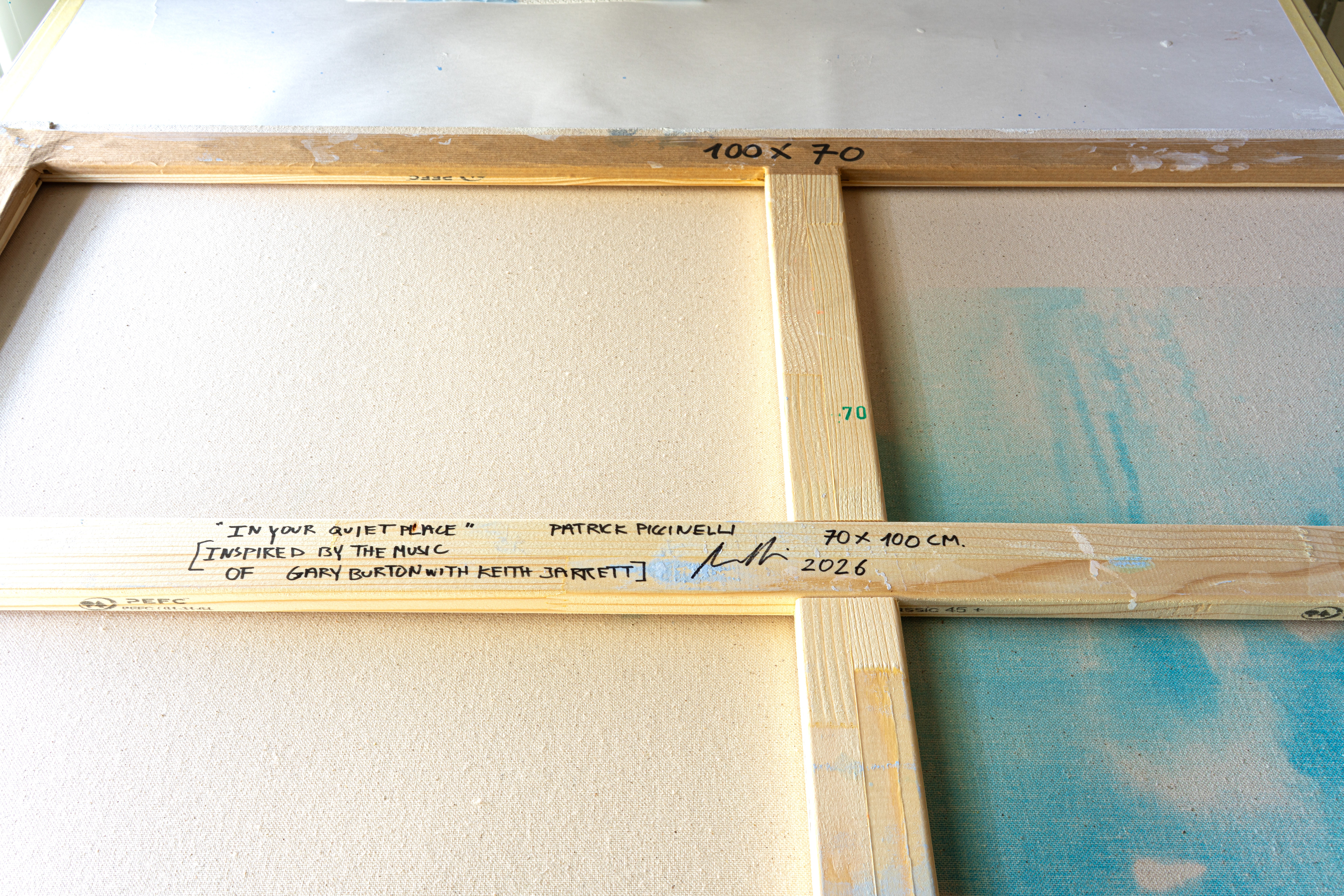
"In Your Haven of Peace," acrylic paint, marker, Neocolor on canvas, 70 x 100 cm, 2026.
Inspired by the music of Gary Burton and Keith Jarrett.
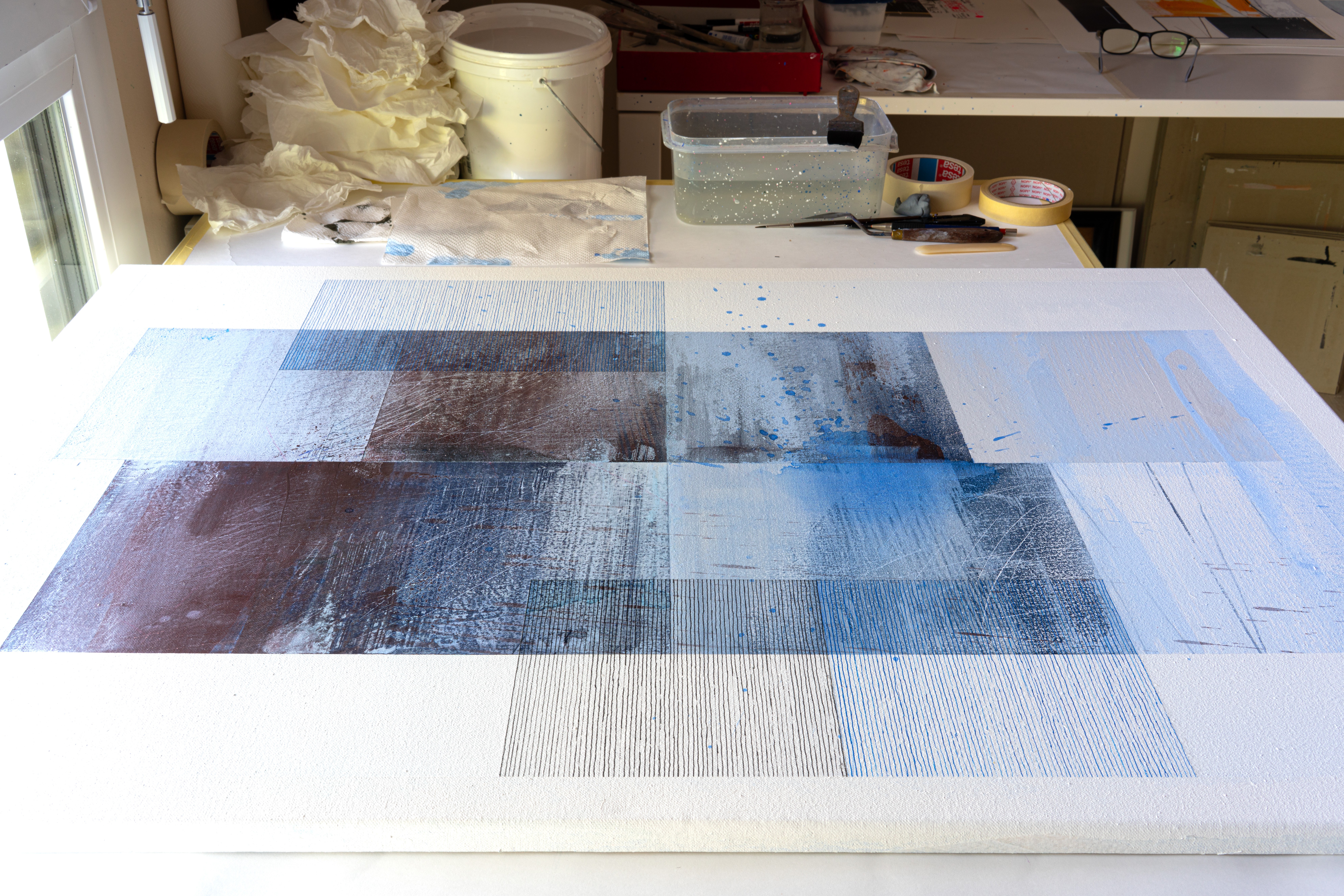
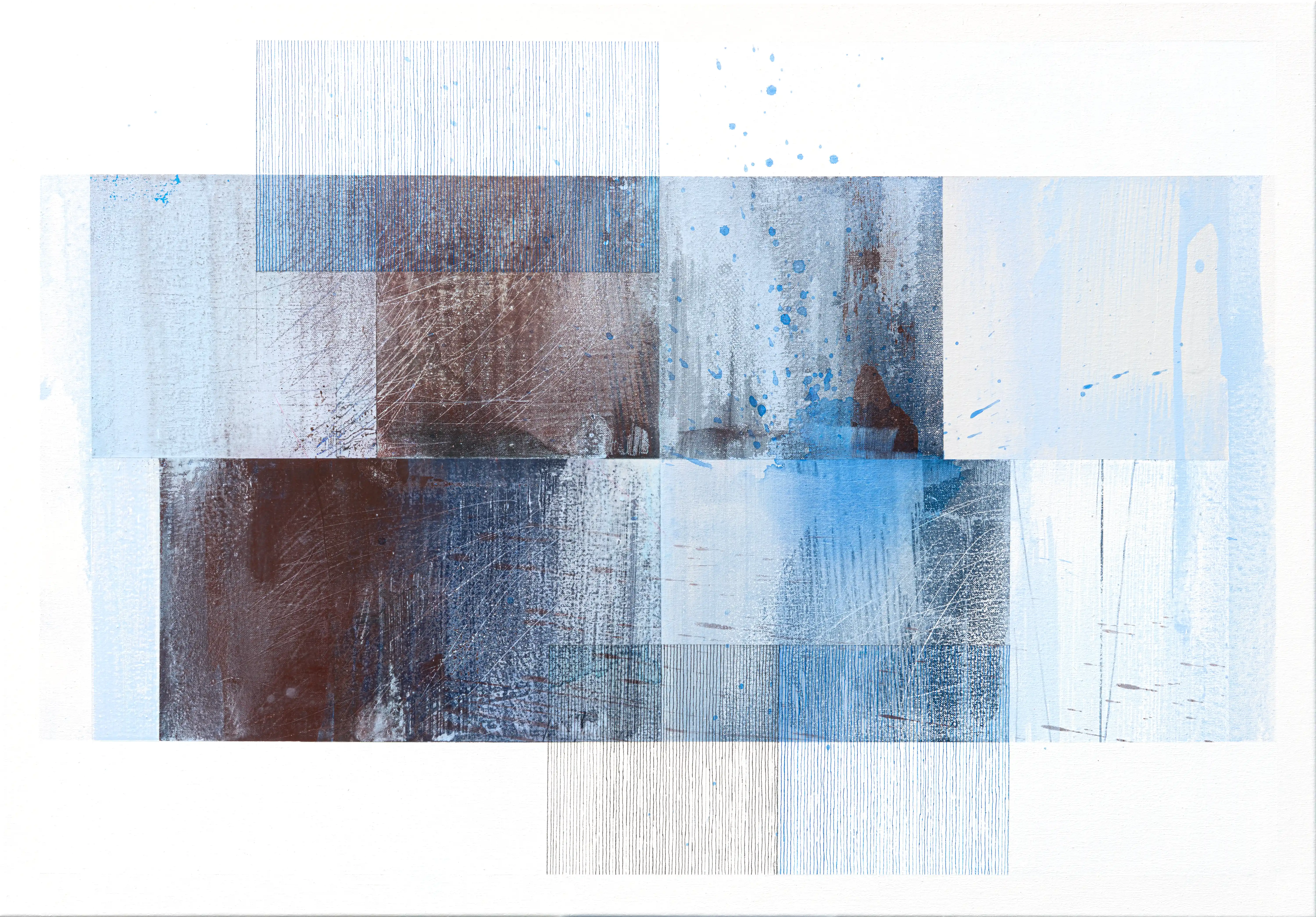
The painting is constructed as a structure of offset rectangles and squares.
I defined several families of materials:
Large areas of pale blue and off-white, like breaths, "empty" surfaces, silences.
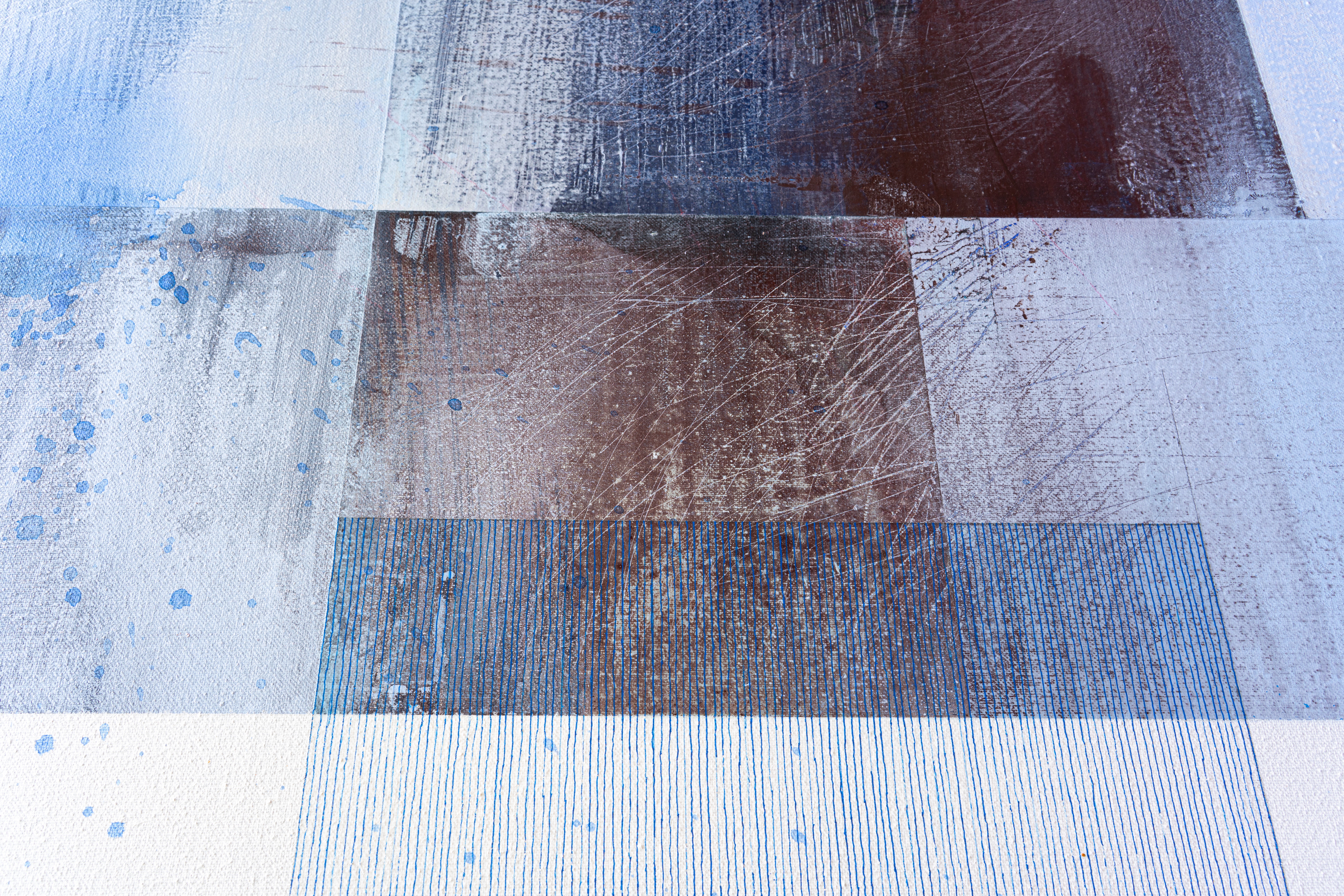
Areas of rust/dark brown, scratched, rubbed, almost eroded, a substantial texture, a memory of gesture.
Fine vertical hatching, blue and black, arranged in blocks, a regular graphic pattern within the organic chaos.
A few isolated touches of blue, like solitary notes cast into the silence.
The composition does not seek symmetry: the blocks overlap, sliding seamlessly beneath one another, and the white background of the support remains visible all around, like a margin of silence framing the entire work. "In Your Quiet Place" is a composition by Keith Jarrett, first released in 1971 on the album recorded with vibraphonist Gary Burton.
The piano and the scraped material. The rust-brown areas, rubbed and scraped down to the bare canvas, bear the imprint of Jarrett's percussive and nervous piano playing, an intensity that, according to critics of the time, expresses a constant agitation that leaves no respite for the other musicians, even in the slowest passages. The duo as superimposition. Two instruments converse, answer each other, overlap without merging: this is precisely the logic of the painting's semi-transparent rectangles, where one block is discernible through the other, two voices coexisting without erasing each other, like blue and brown intersecting without completely merging.
Silence as subject. The true subject of the title, "Your Quiet Place," is not sound, but the space surrounding it, the inner sanctuary where one retreats. In the painting, it is this large white background that is never entirely covered, this margin that breathes all around the blocks of color: the canvas, like music, preserves its silences, a space for retreat.
"In Your Haven of Peace," acrylic paint, marker, Neocolor on canvas, 70 x 100 cm, 2026.
Inspired by the music of Gary Burton and Keith Jarrett.
The painting is constructed as a structure of offset rectangles and squares.
I defined several families of materials:
Large areas of pale blue and off-white, like breaths, "empty" surfaces, silences.
Areas of rust/dark brown, scratched, rubbed, almost eroded, a substantial texture, a memory of gesture.
Fine vertical hatching, blue and black, arranged in blocks, a regular graphic pattern within the organic chaos.
A few isolated touches of blue, like solitary notes cast into the silence.
The composition does not seek symmetry: the blocks overlap, sliding seamlessly beneath one another, and the white background of the support remains visible all around, like a margin of silence framing the entire work. "In Your Quiet Place" is a composition by Keith Jarrett, first released in 1971 on the album recorded with vibraphonist Gary Burton.
The piano and the scraped material. The rust-brown areas, rubbed and scraped down to the bare canvas, bear the imprint of Jarrett's percussive and nervous piano playing, an intensity that, according to critics of the time, expresses a constant agitation that leaves no respite for the other musicians, even in the slowest passages. The duo as superimposition. Two instruments converse, answer each other, overlap without merging: this is precisely the logic of the painting's semi-transparent rectangles, where one block is discernible through the other, two voices coexisting without erasing each other, like blue and brown intersecting without completely merging.
Silence as subject. The true subject of the title, "Your Quiet Place," is not sound, but the space surrounding it, the inner sanctuary where one retreats. In the painting, it is this large white background that is never entirely covered, this margin that breathes all around the blocks of color: the canvas, like music, preserves its silences, a space for retreat.