Movin' And Groovin'
,
2026
Patrick Piccinelli
Movin' And Groovin'
2026
avrylic paint, collage, paint marker, spray paint on paper, sold without frame
avrylic paint, collage, paint marker, spray paint on paper, sold without frame
30
30
X
X
24
24
Available
€
400
shipping worldwide included
Add to card
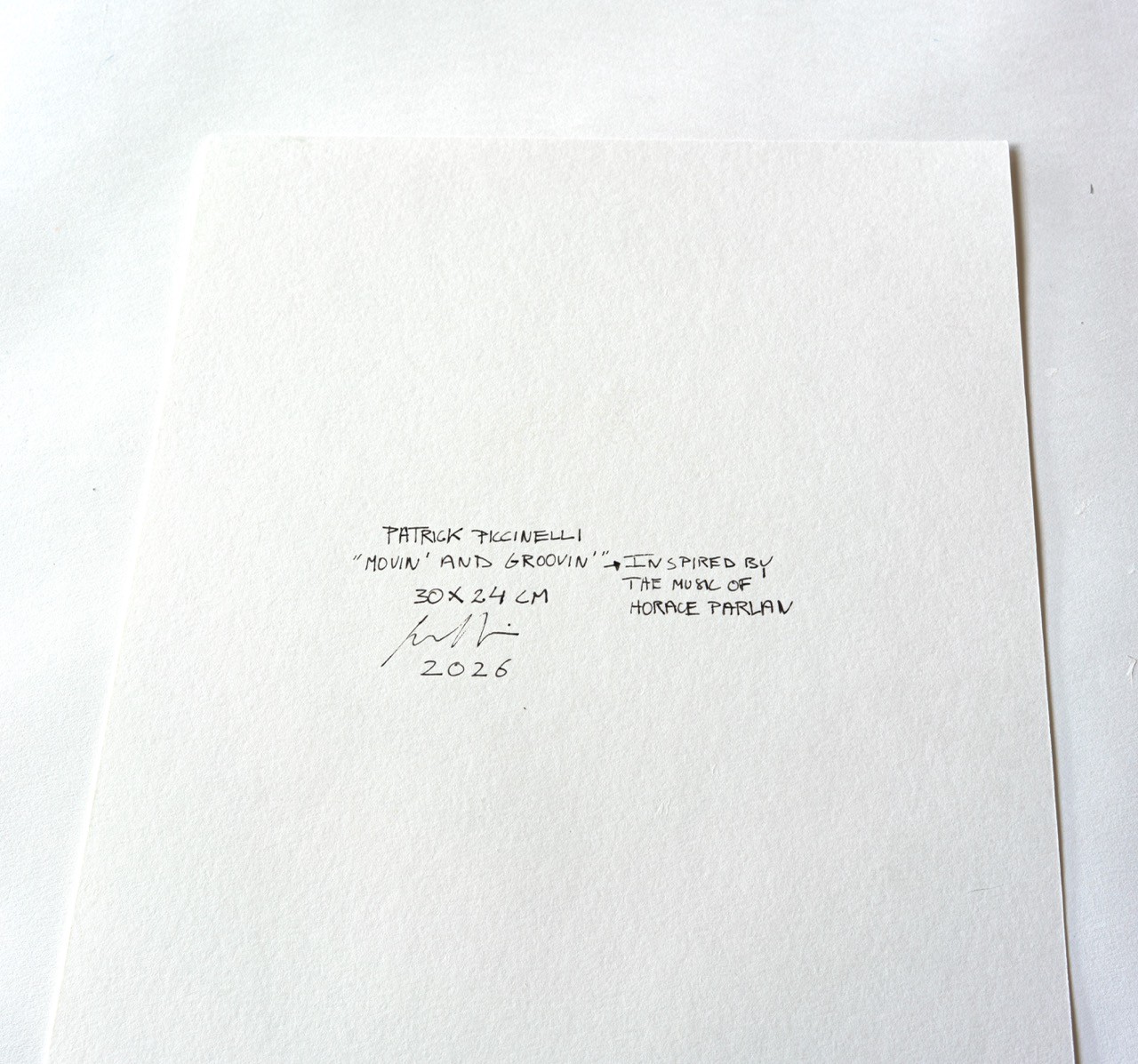
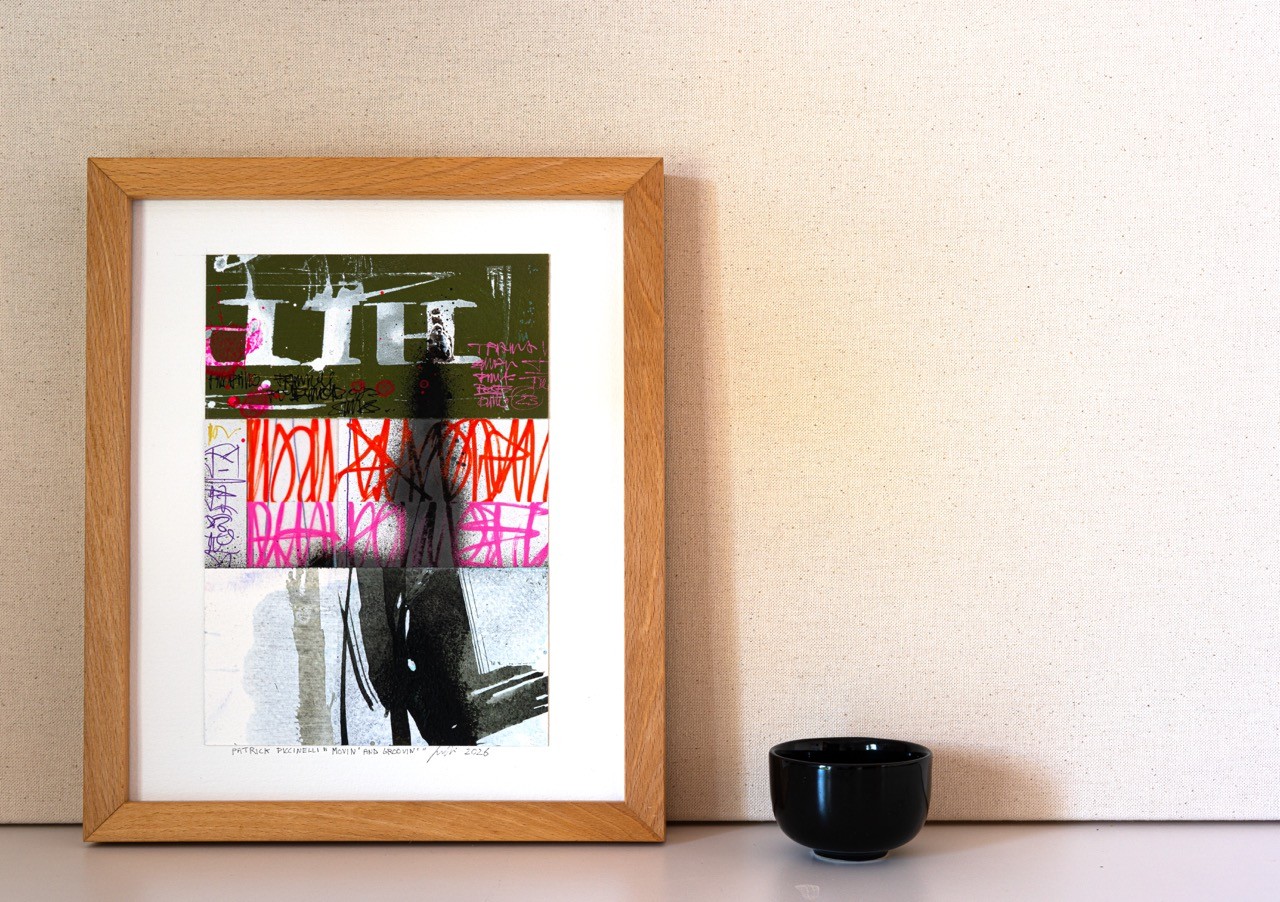
"Movin' And Groovin'", acrylic paint, collage, paint marker, spray paint on paper, 30 x 24 cm, 2026.
Inspired by the music of Horace Parlan.
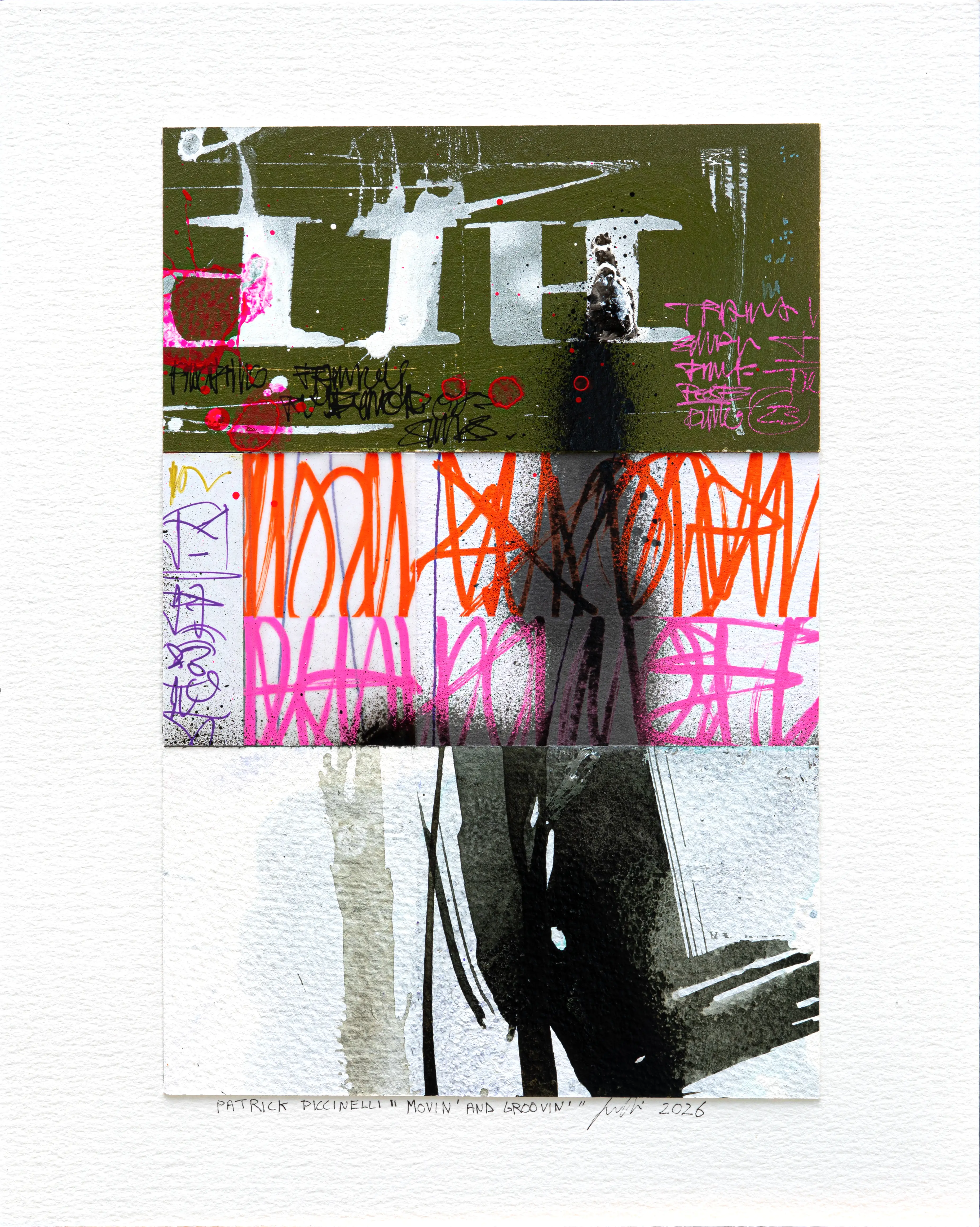
The trio format as a visual structure. The 1960 album is a Blue Note trio record, piano (Parlan), double bass (Sam Jones), drums (Al Harewood), recorded on February 29, 1960, with Horace Parlan on piano, Sam Jones on double bass, and Al Harewood on drums. A formal echo can be seen in the three horizontal bands of the work: three distinct "voices" in texture and color, which nevertheless function together, like three instruments that intertwine without ever merging into one another.
The press of the time described the record in very physical terms: the "movement" and "groove" achieved on this record have an earthy, percussive quality. This same raw, urban energy is reflected in the visual vocabulary of my composition: spray paint, tags, drips—a street language that carries the same "funky" charge as Parlan's piano, transposed from sound to matter.
The relationship to standards. The album revisits jazz standards (Ellington, Milt Jackson, Tadd Dameron) that Parlan reinterprets through his personal style, an eclectic mix interpreting Tadd Dameron, Duke Ellington, Milt Jackson, plus an original Parlan composition. A similar approach can be seen in the accumulation of tags, signatures, and graphic quotations that overlap in the work: like visual "standards," other forms of writing, other hands, which I absorb and cover with my own gesture.
The Blue Note graphic nod. Finally, the bottom band, in grainy black and white, directly evokes the photographic aesthetic characteristic of Blue Note album covers from that era (contrasting photographs by Francis Wolff, layouts by Reid Miles), while the top band, with its bold white typography on a solid color background, recalls the label's iconic typographic covers.
The rhythmic layering, the thread running through the composition, and the repetitive, physical energy of the material make my work a kind of visual transposition of the same principle that animates Parlan's album: an initial constraint transformed into a pulse, into "movin'" and "groovin'."
"Movin' And Groovin'", acrylic paint, collage, paint marker, spray paint on paper, 30 x 24 cm, 2026.
Inspired by the music of Horace Parlan.
The trio format as a visual structure. The 1960 album is a Blue Note trio record, piano (Parlan), double bass (Sam Jones), drums (Al Harewood), recorded on February 29, 1960, with Horace Parlan on piano, Sam Jones on double bass, and Al Harewood on drums. A formal echo can be seen in the three horizontal bands of the work: three distinct "voices" in texture and color, which nevertheless function together, like three instruments that intertwine without ever merging into one another.
The press of the time described the record in very physical terms: the "movement" and "groove" achieved on this record have an earthy, percussive quality. This same raw, urban energy is reflected in the visual vocabulary of my composition: spray paint, tags, drips—a street language that carries the same "funky" charge as Parlan's piano, transposed from sound to matter.
The relationship to standards. The album revisits jazz standards (Ellington, Milt Jackson, Tadd Dameron) that Parlan reinterprets through his personal style, an eclectic mix interpreting Tadd Dameron, Duke Ellington, Milt Jackson, plus an original Parlan composition. A similar approach can be seen in the accumulation of tags, signatures, and graphic quotations that overlap in the work: like visual "standards," other forms of writing, other hands, which I absorb and cover with my own gesture.
The Blue Note graphic nod. Finally, the bottom band, in grainy black and white, directly evokes the photographic aesthetic characteristic of Blue Note album covers from that era (contrasting photographs by Francis Wolff, layouts by Reid Miles), while the top band, with its bold white typography on a solid color background, recalls the label's iconic typographic covers.
The rhythmic layering, the thread running through the composition, and the repetitive, physical energy of the material make my work a kind of visual transposition of the same principle that animates Parlan's album: an initial constraint transformed into a pulse, into "movin'" and "groovin'."