Gruppen
,
2026
Patrick Piccinelli
Gruppen
2026
acrylic paint, collage, pigment, varnish on paper, sold without frame
acrylic paint, collage, pigment, varnish on paper, sold without frame
32.5
32.5
X
X
32.5
32.5
Available
€
800
shipping worldwide included
Add to card
"Gruppen," acrylic paint, collage, pigment, varnish.
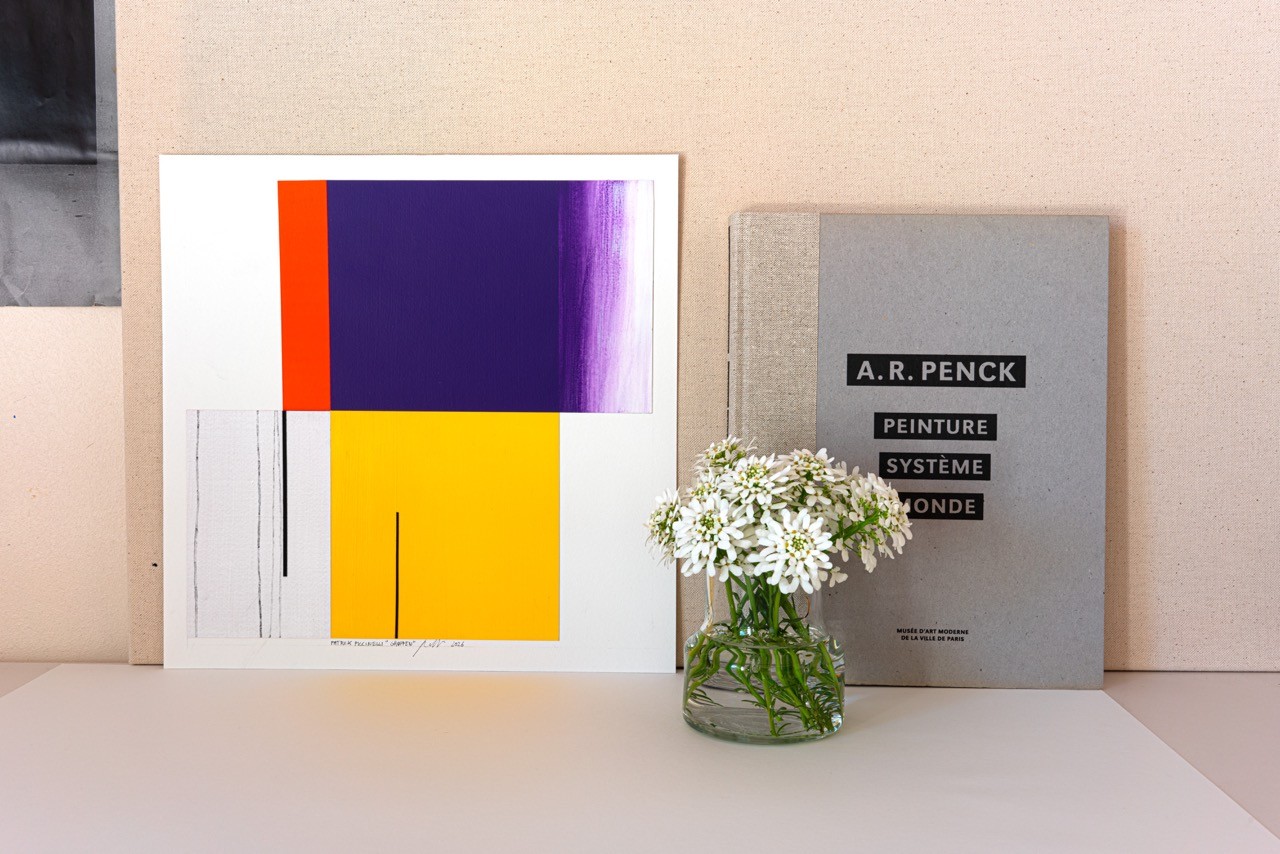
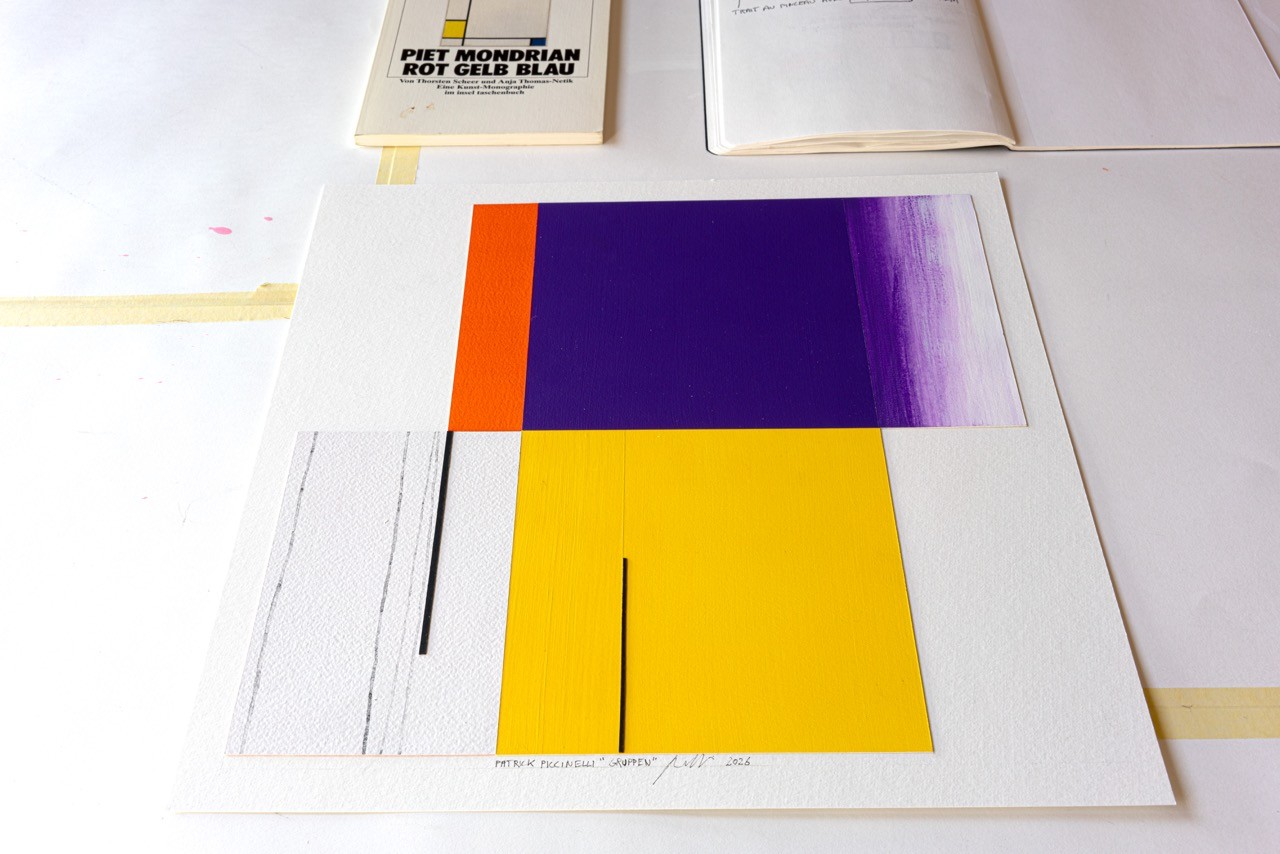
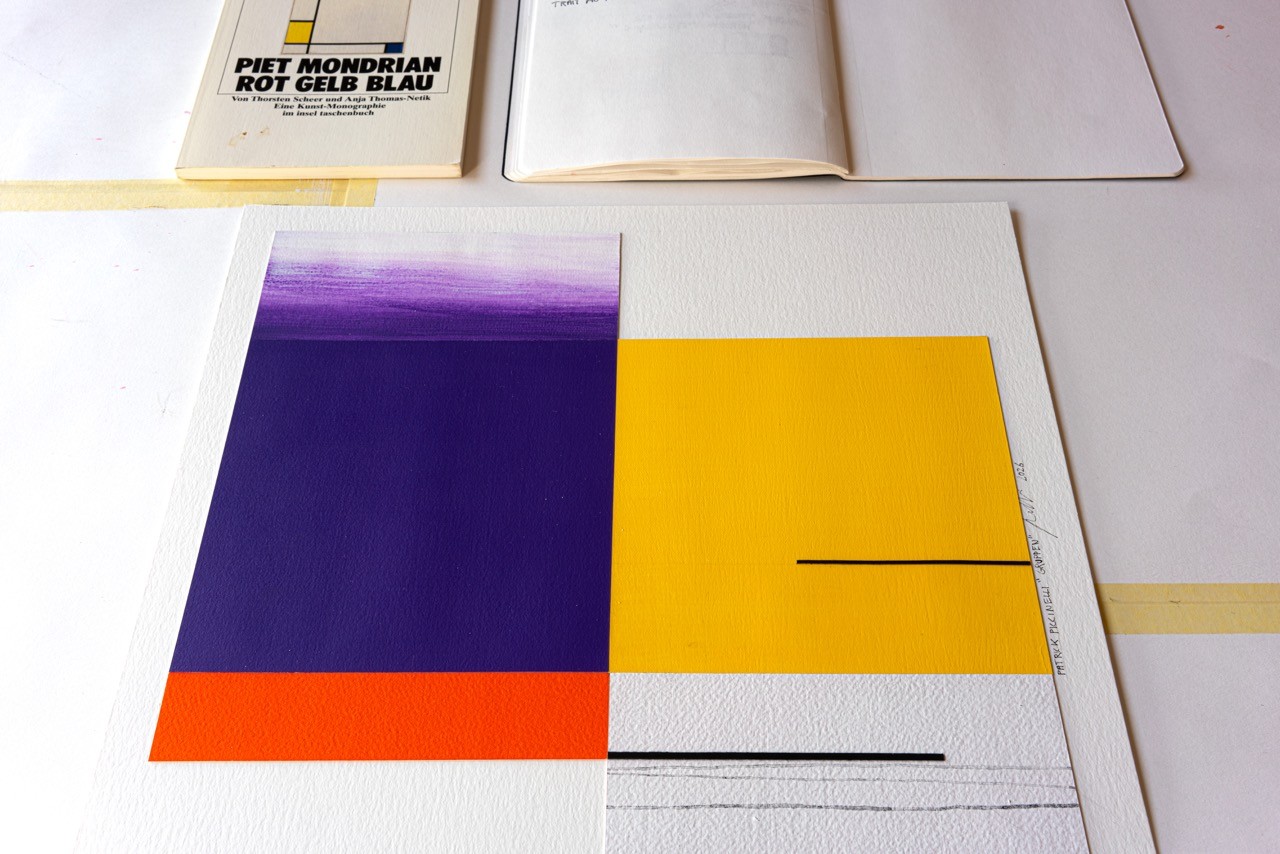
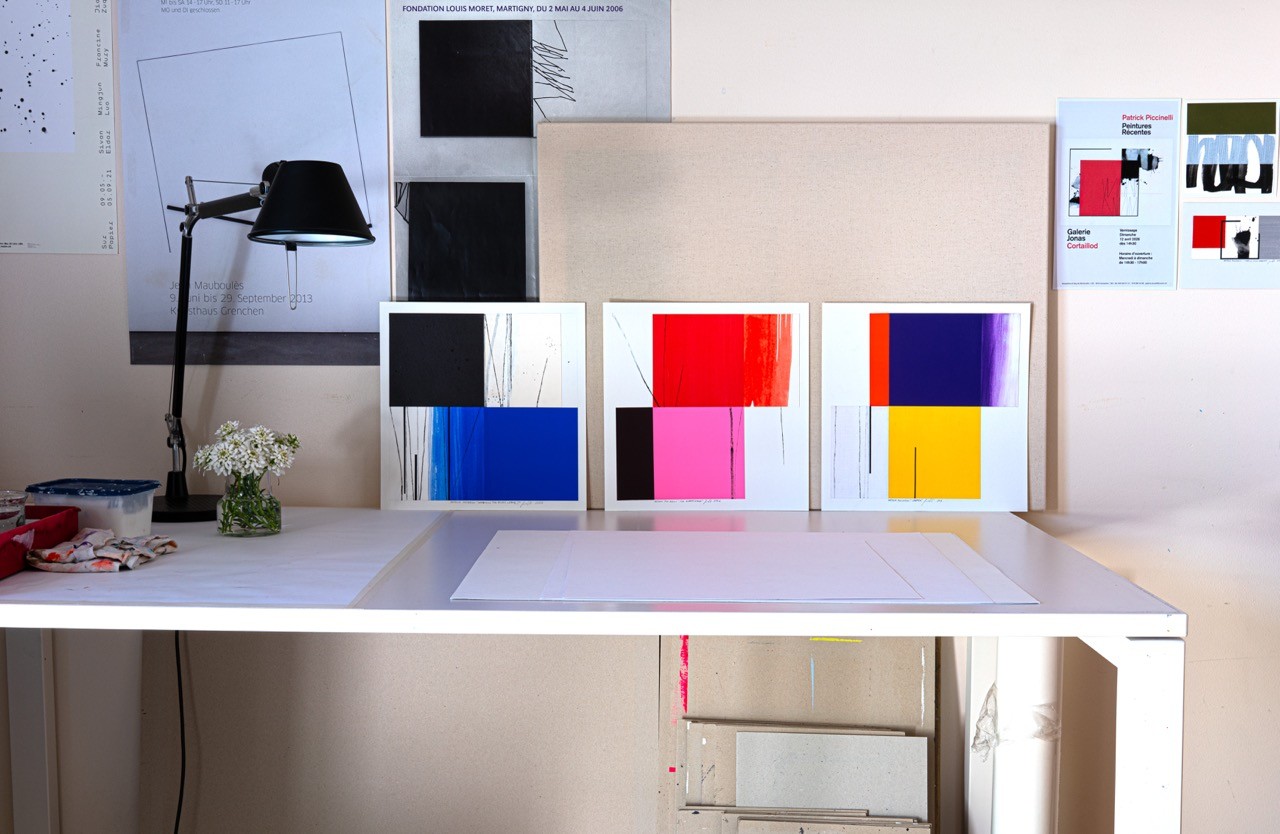
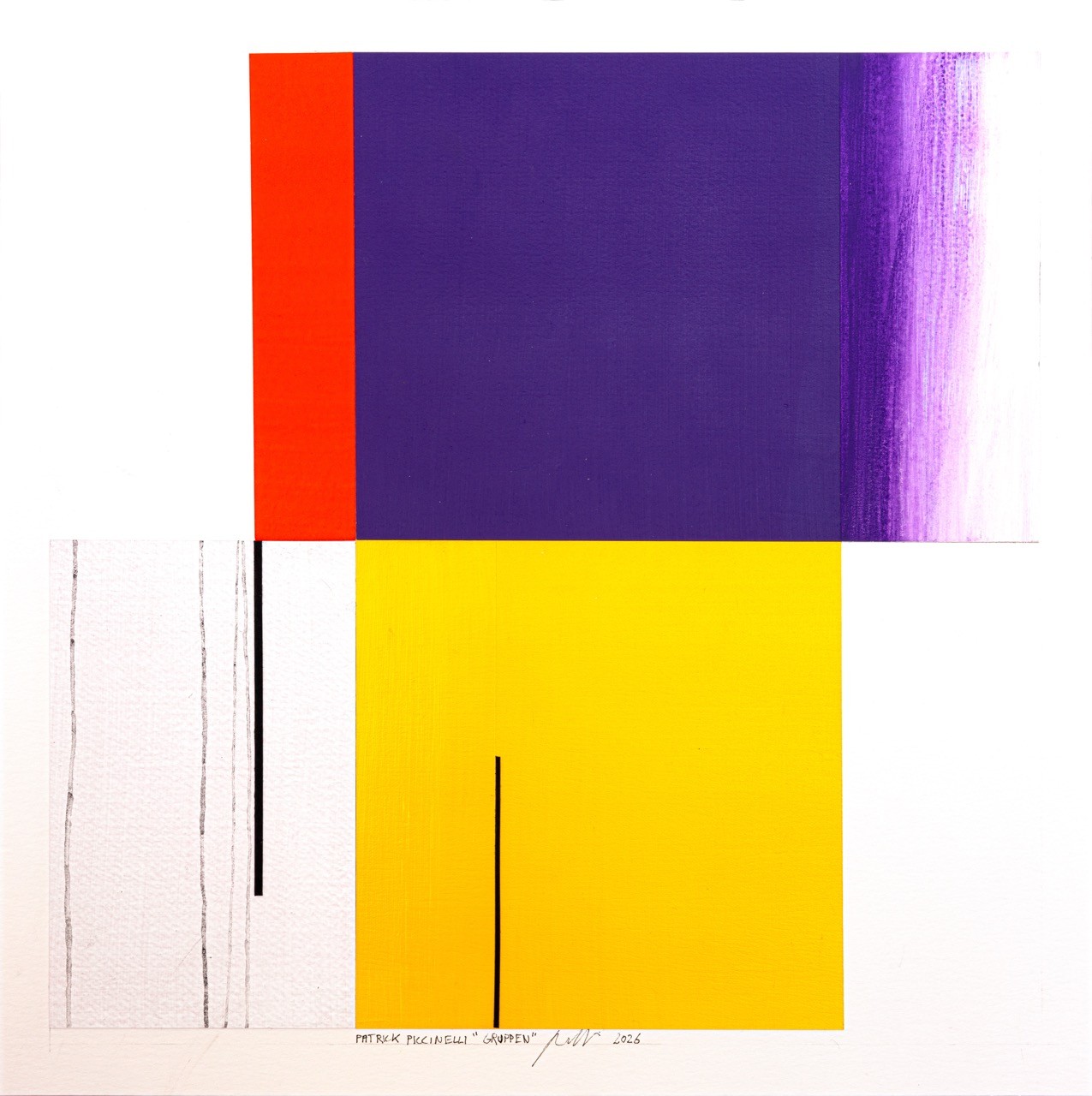
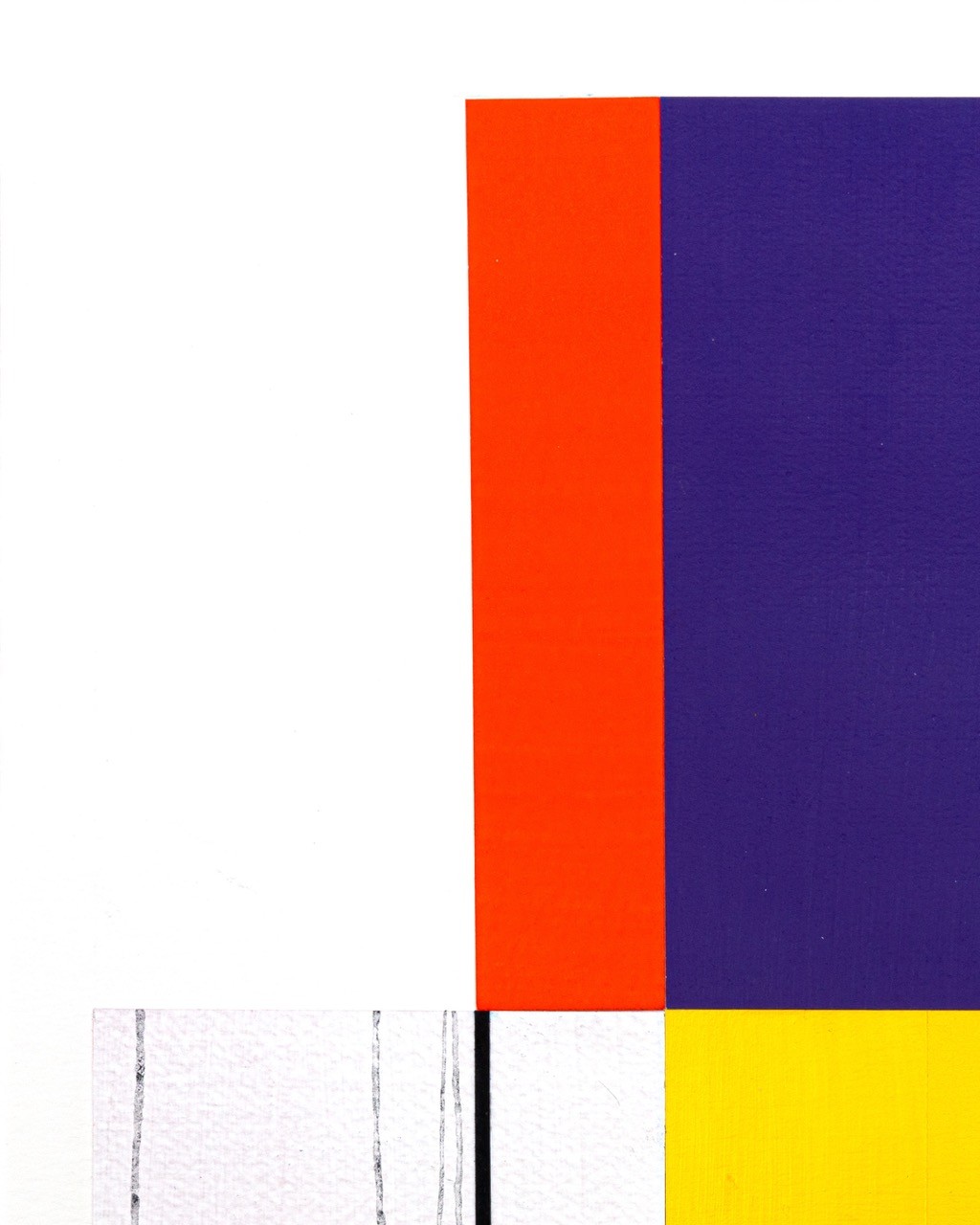
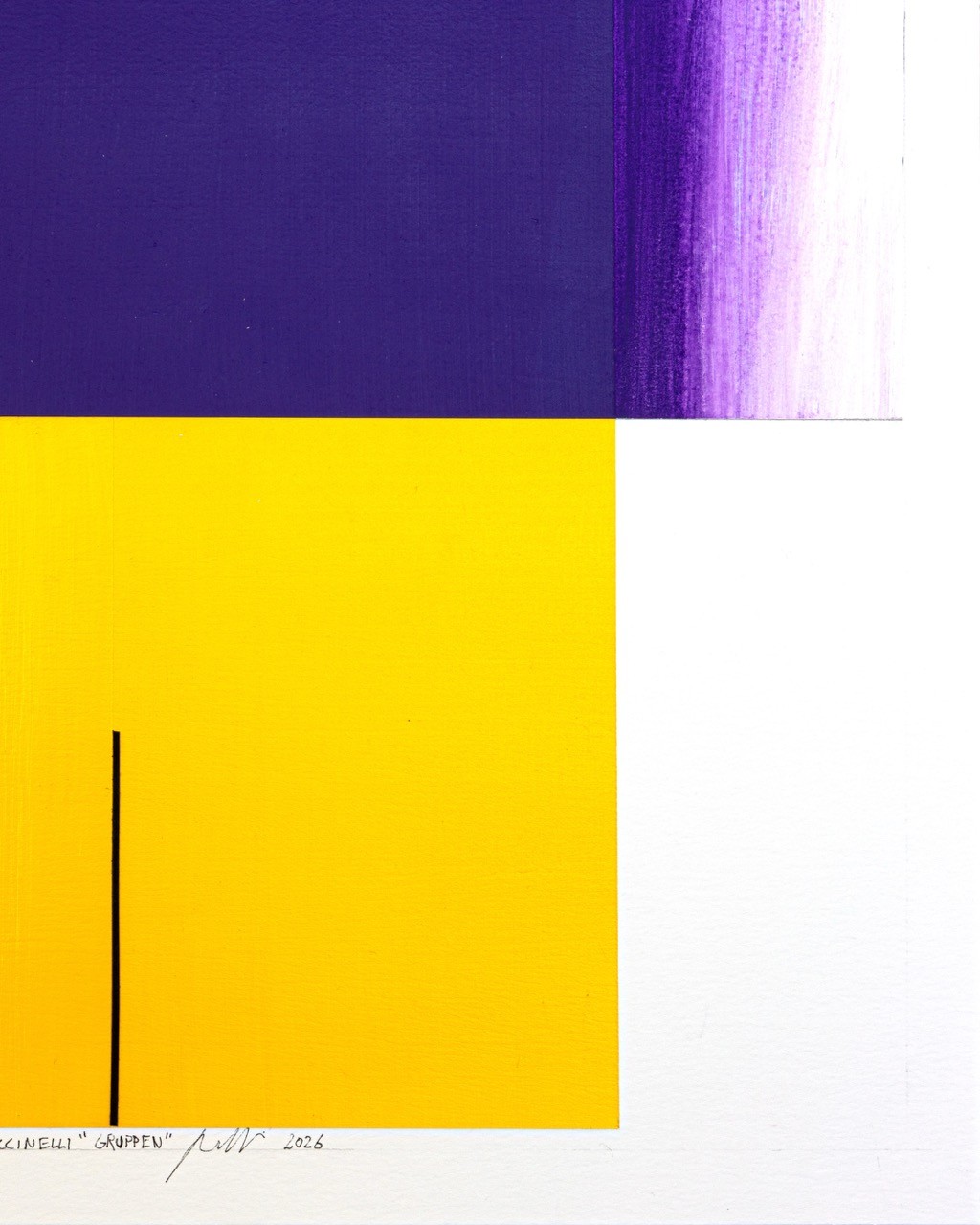
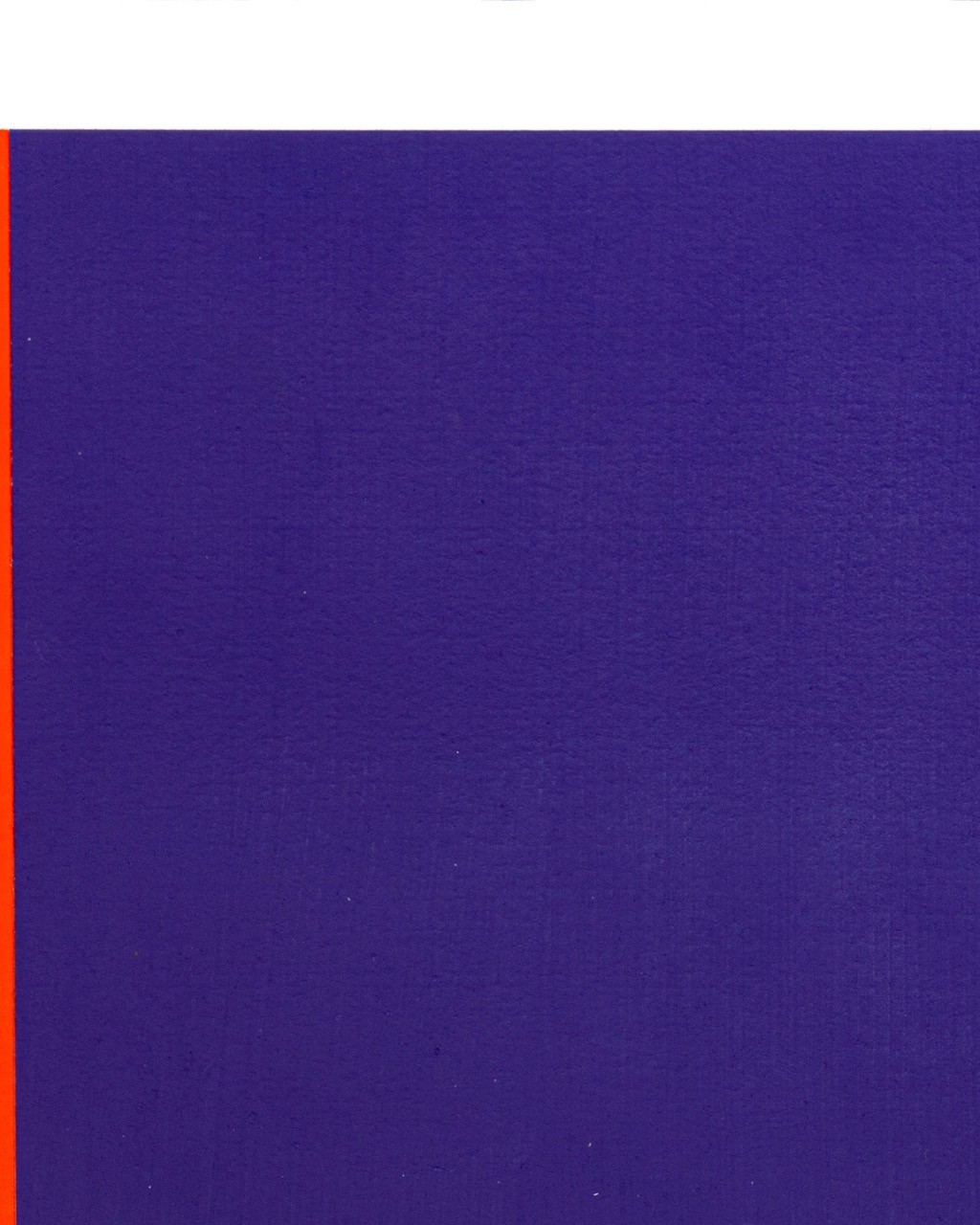
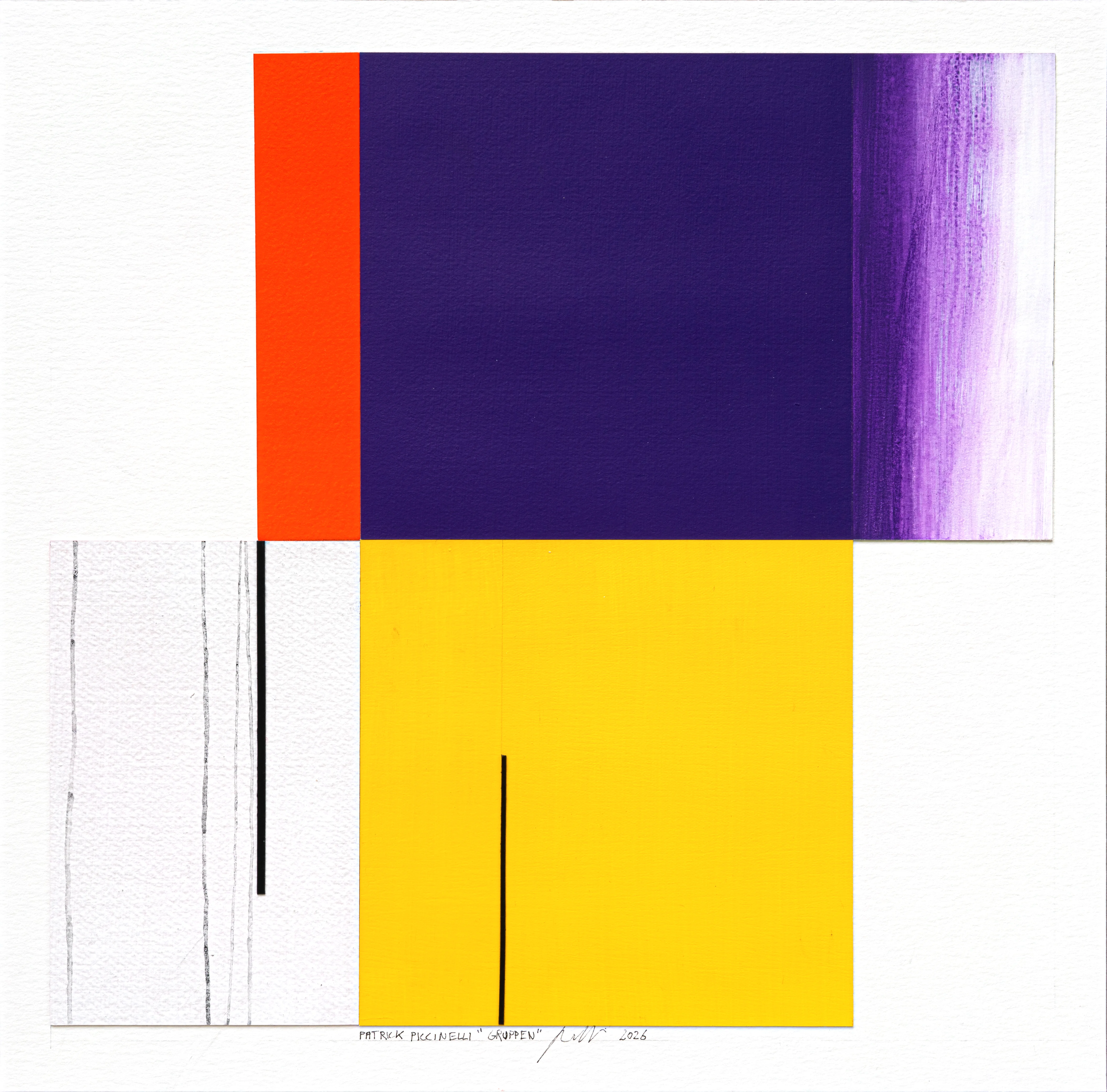
This work bears a title that is not without significance: Gruppen (2026) explicitly engages in dialogue with Karlheinz Stockhausen's monumental piece Gruppen für drei Orchester (1955–57), one of the foundational works of 20th-century post-serial music. The correspondences are profound and structural. Stockhausen serializes everything: pitches, durations, timbres, intensities. The work is constructed from 126 sequences organized into a rigorous tableau, a mathematical architecture of absolute precision, in which the listener nevertheless perceives only movement, energy, life. I proceed in the same way with geometry. The rectangles fit together according to strict proportions. The three pictorial parameters—color, gesture, line—are distributed in space like the terms of a series: each appears only once in its pure form, but their interactions generate a richness that the rule alone could not have predicted. The vertical black line in the yellow is the accident that breaks the series—just as Stockhausen introduces tempo changes between orchestras.
"Gruppen," acrylic paint, collage, pigment, varnish.
This work bears a title that is not without significance: Gruppen (2026) explicitly engages in dialogue with Karlheinz Stockhausen's monumental piece Gruppen für drei Orchester (1955–57), one of the foundational works of 20th-century post-serial music. The correspondences are profound and structural. Stockhausen serializes everything: pitches, durations, timbres, intensities. The work is constructed from 126 sequences organized into a rigorous tableau, a mathematical architecture of absolute precision, in which the listener nevertheless perceives only movement, energy, life. I proceed in the same way with geometry. The rectangles fit together according to strict proportions. The three pictorial parameters—color, gesture, line—are distributed in space like the terms of a series: each appears only once in its pure form, but their interactions generate a richness that the rule alone could not have predicted. The vertical black line in the yellow is the accident that breaks the series—just as Stockhausen introduces tempo changes between orchestras.