Impressions
,
2026
Patrick Piccinelli
Impressions
2026
acrylic paint, oil stick, pigment, collage on paper, sold without frame
acrylic paint, oil stick, pigment, collage on paper, sold without frame
50
50
X
X
65
65
Available
€
1,600
shipping worldwide included
Add to card
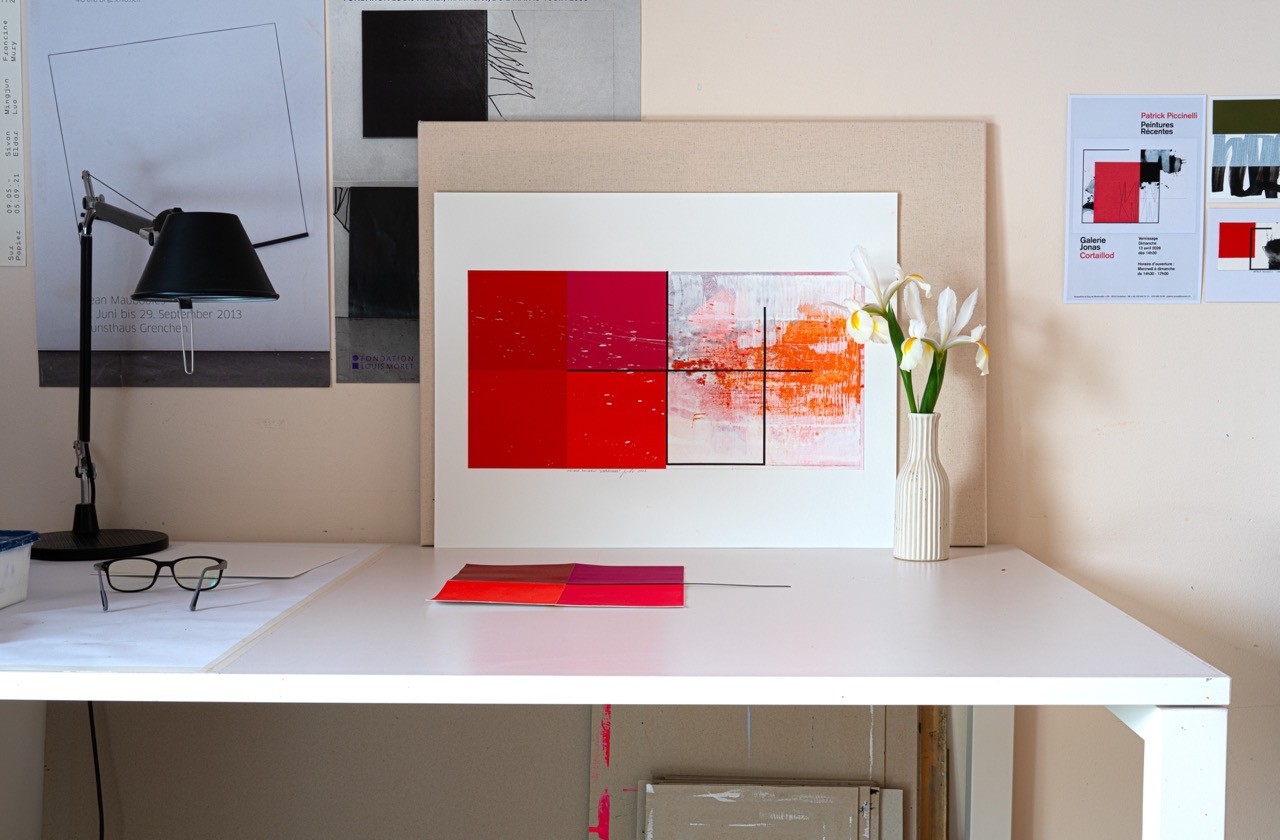
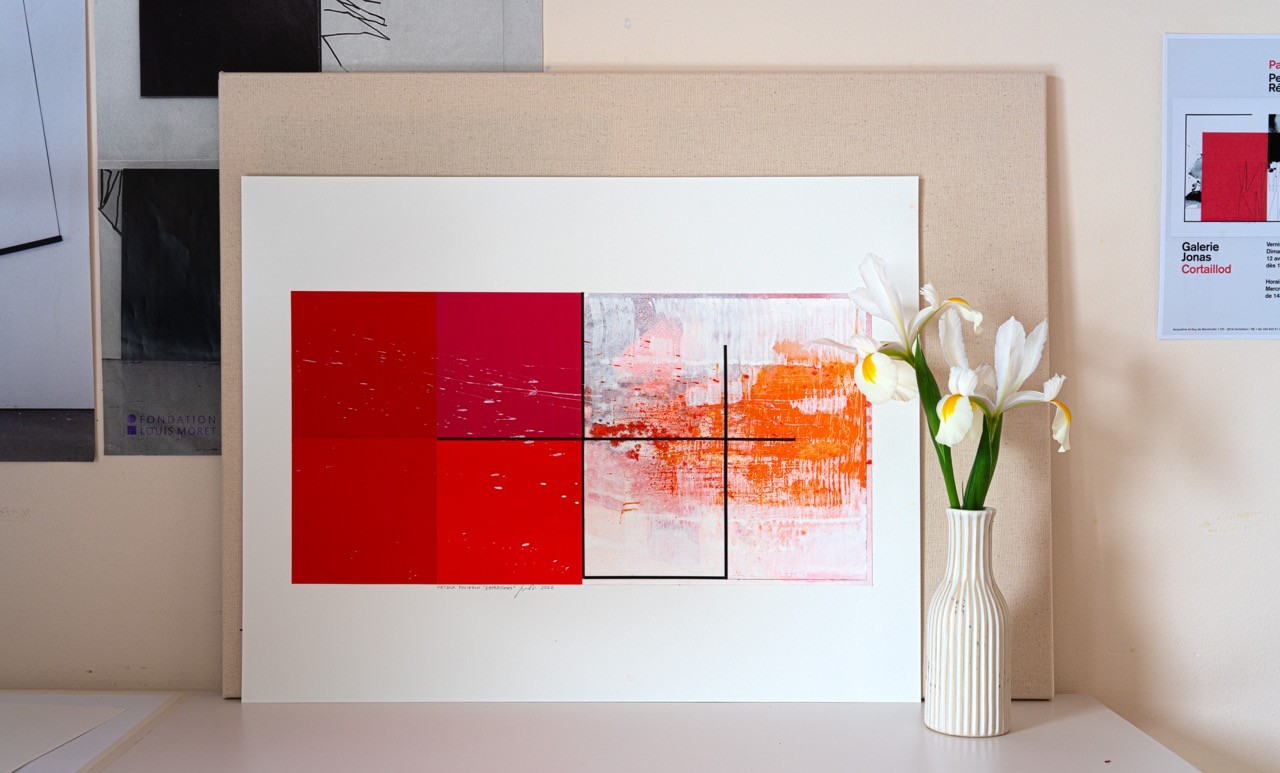
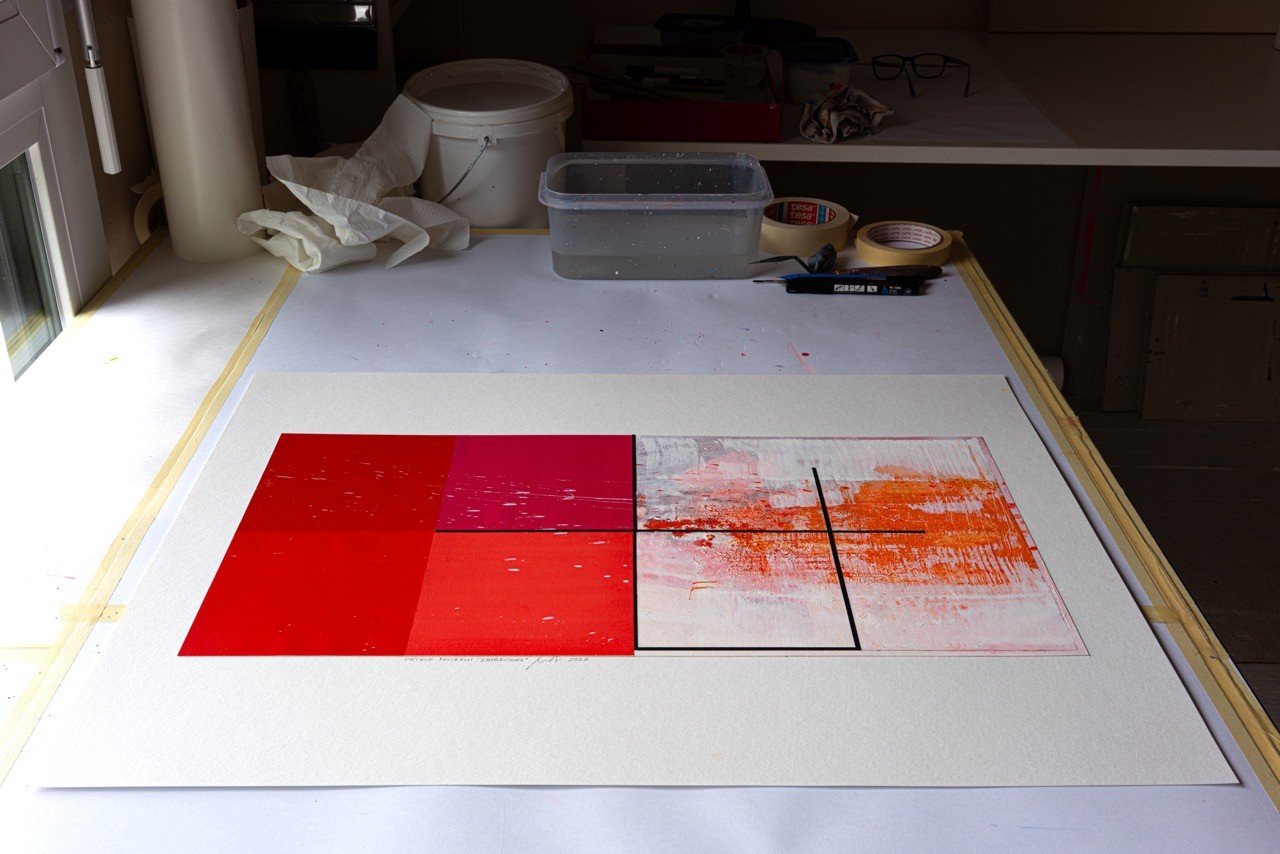
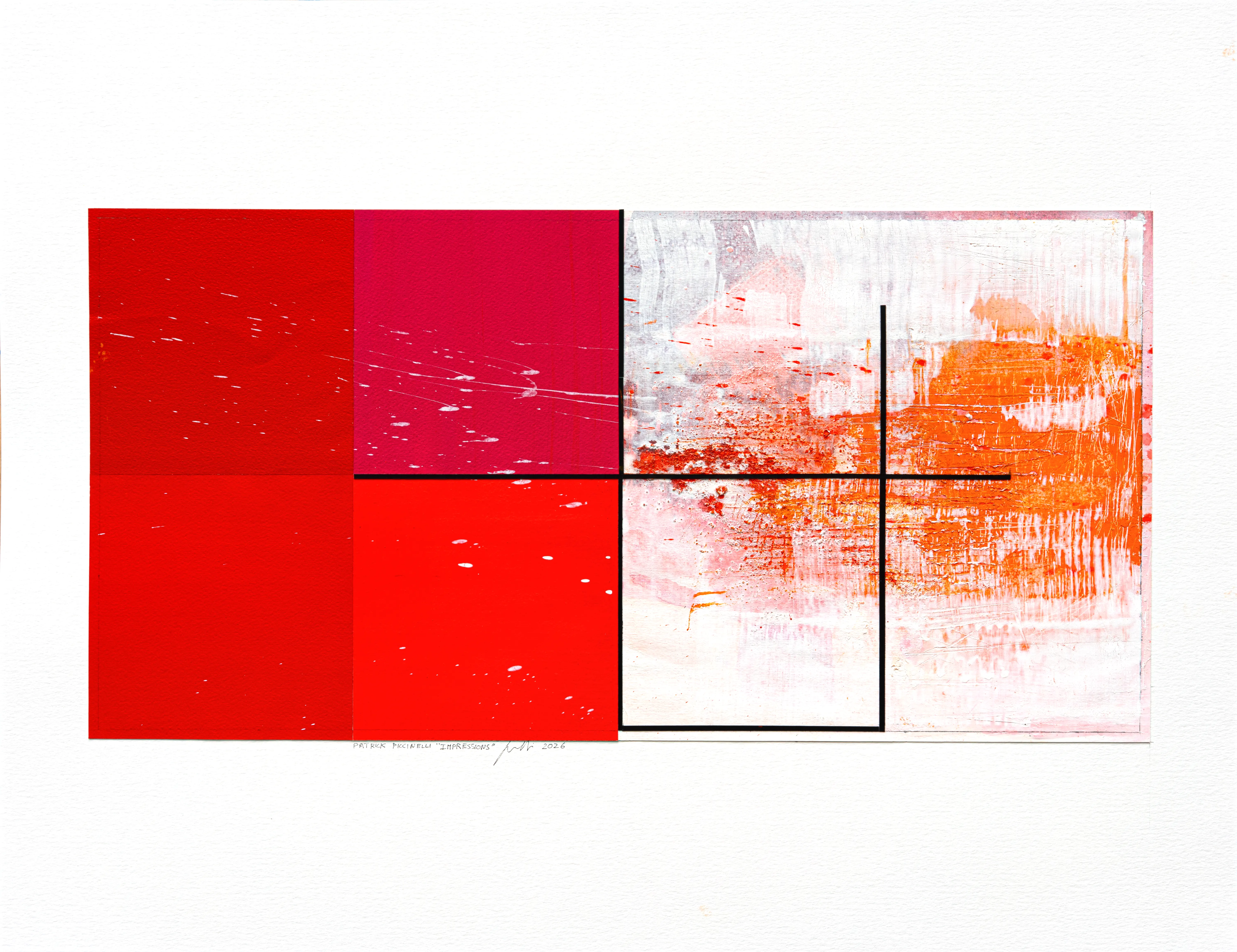
"Impressions," acrylic paint, oil pastel, pigment, collage on paper, 50 x 65 cm, 2026.
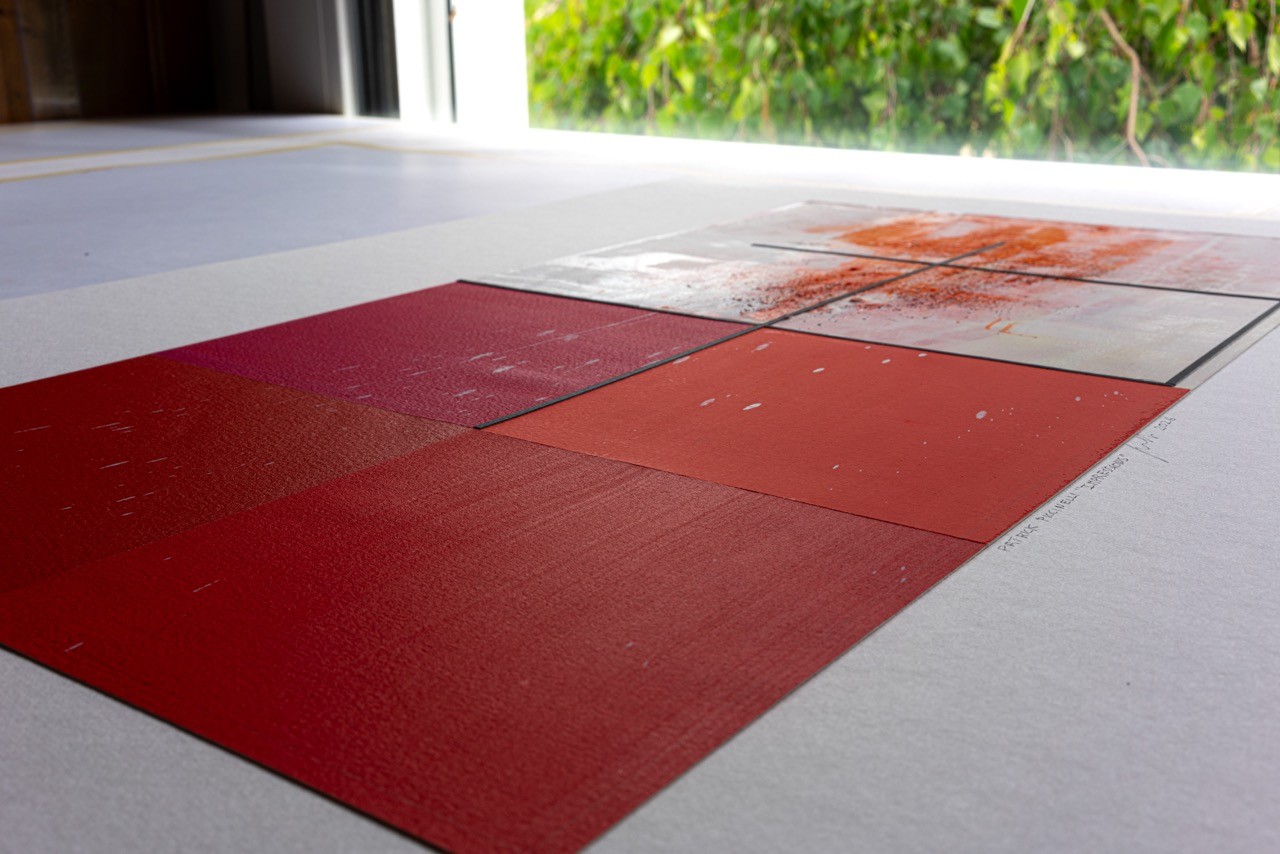
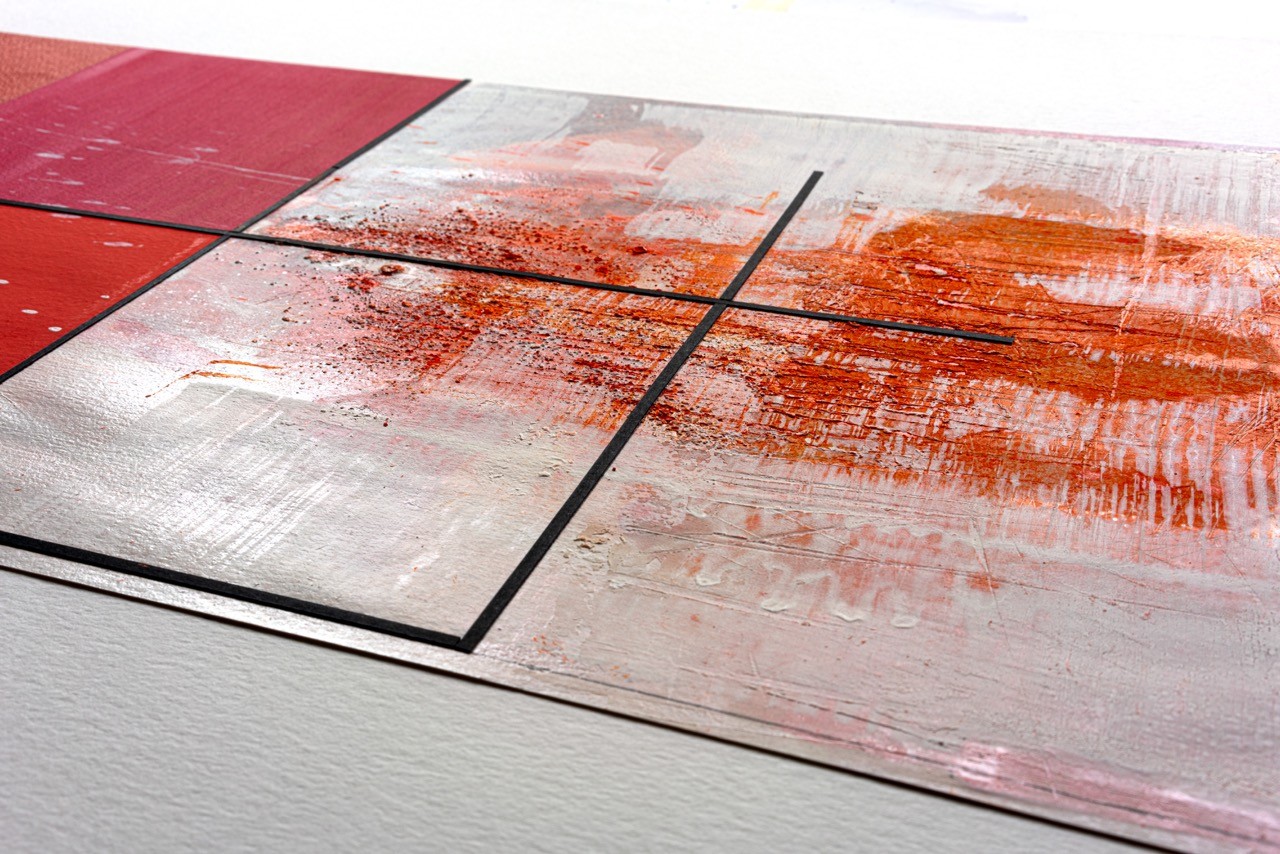
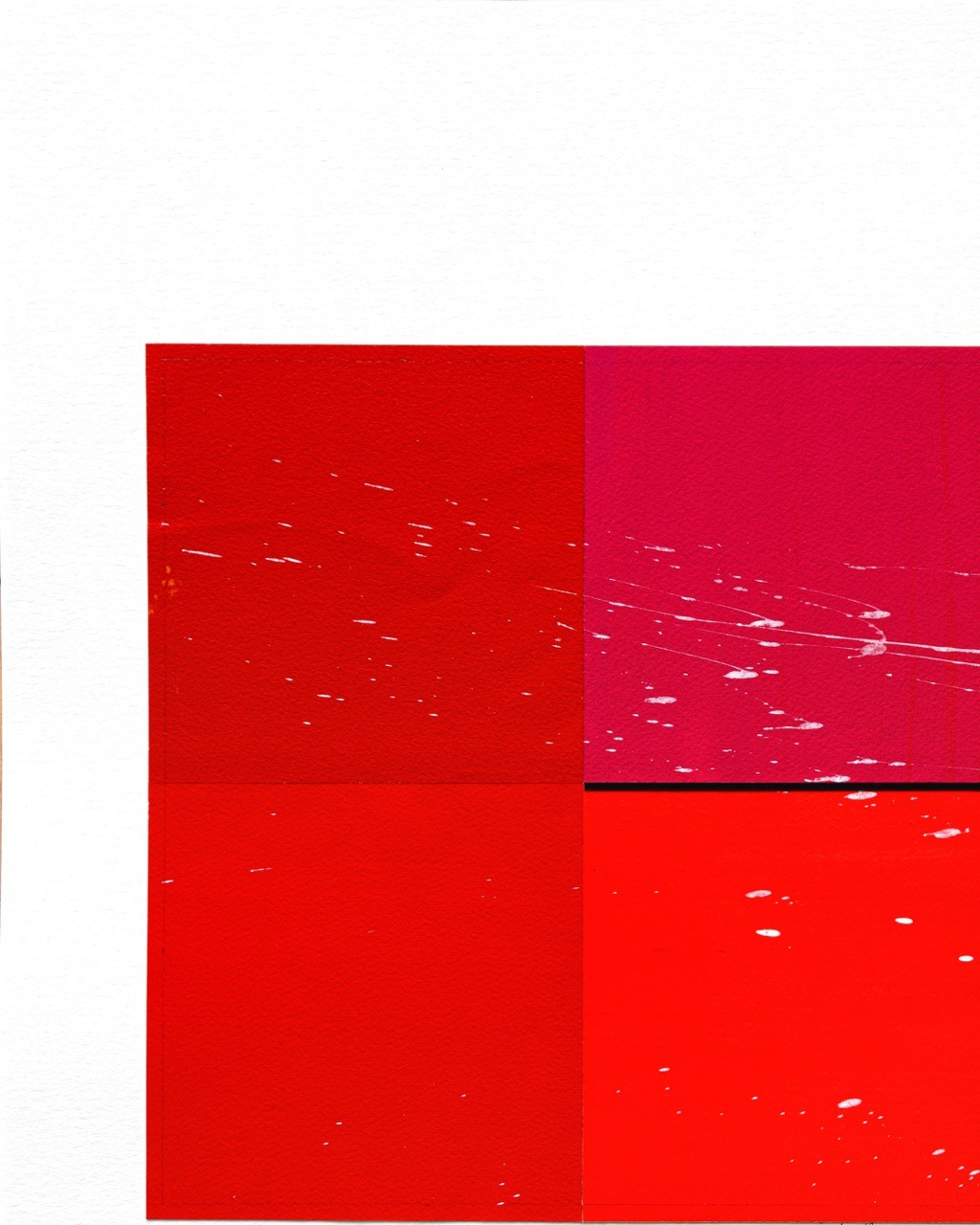
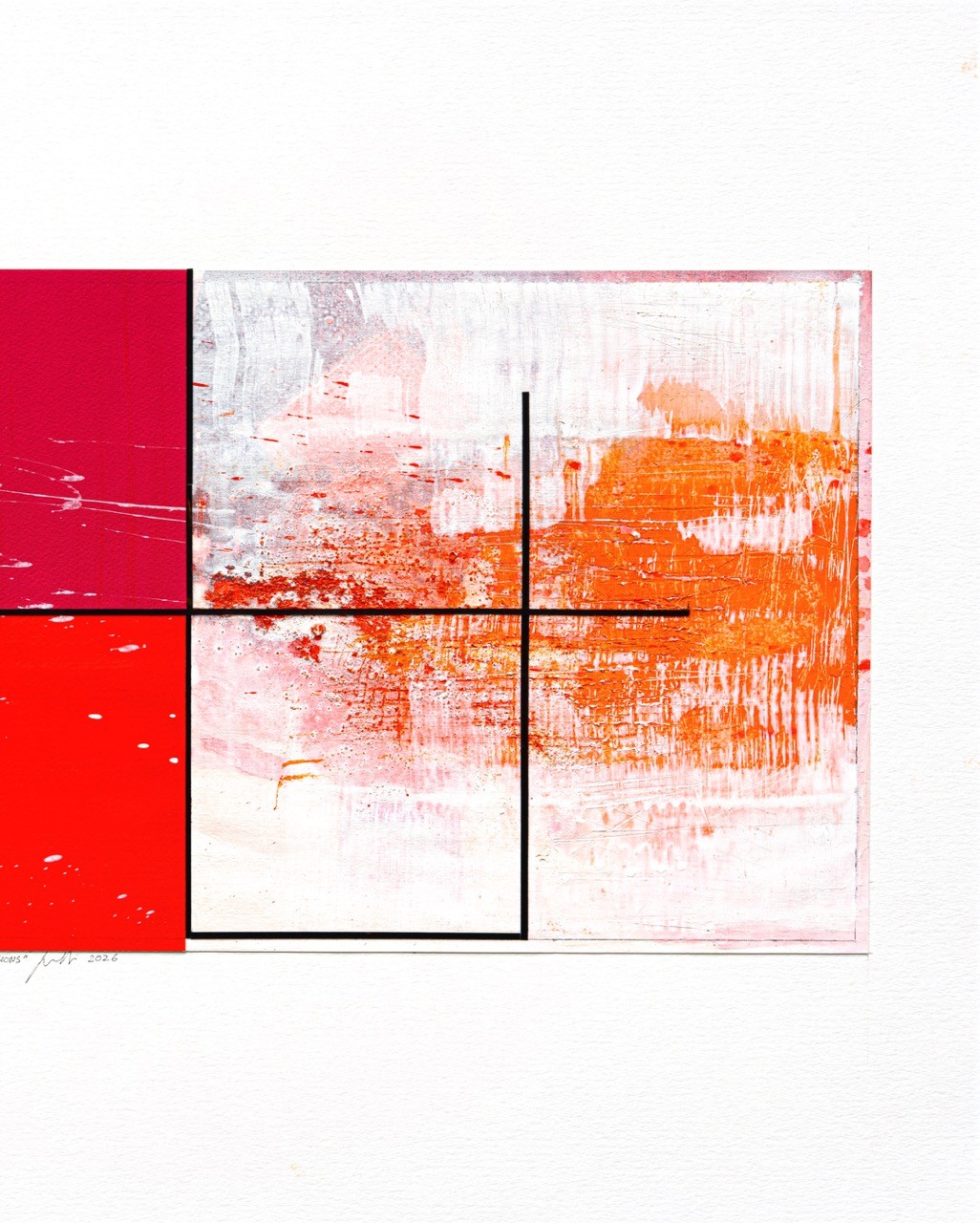
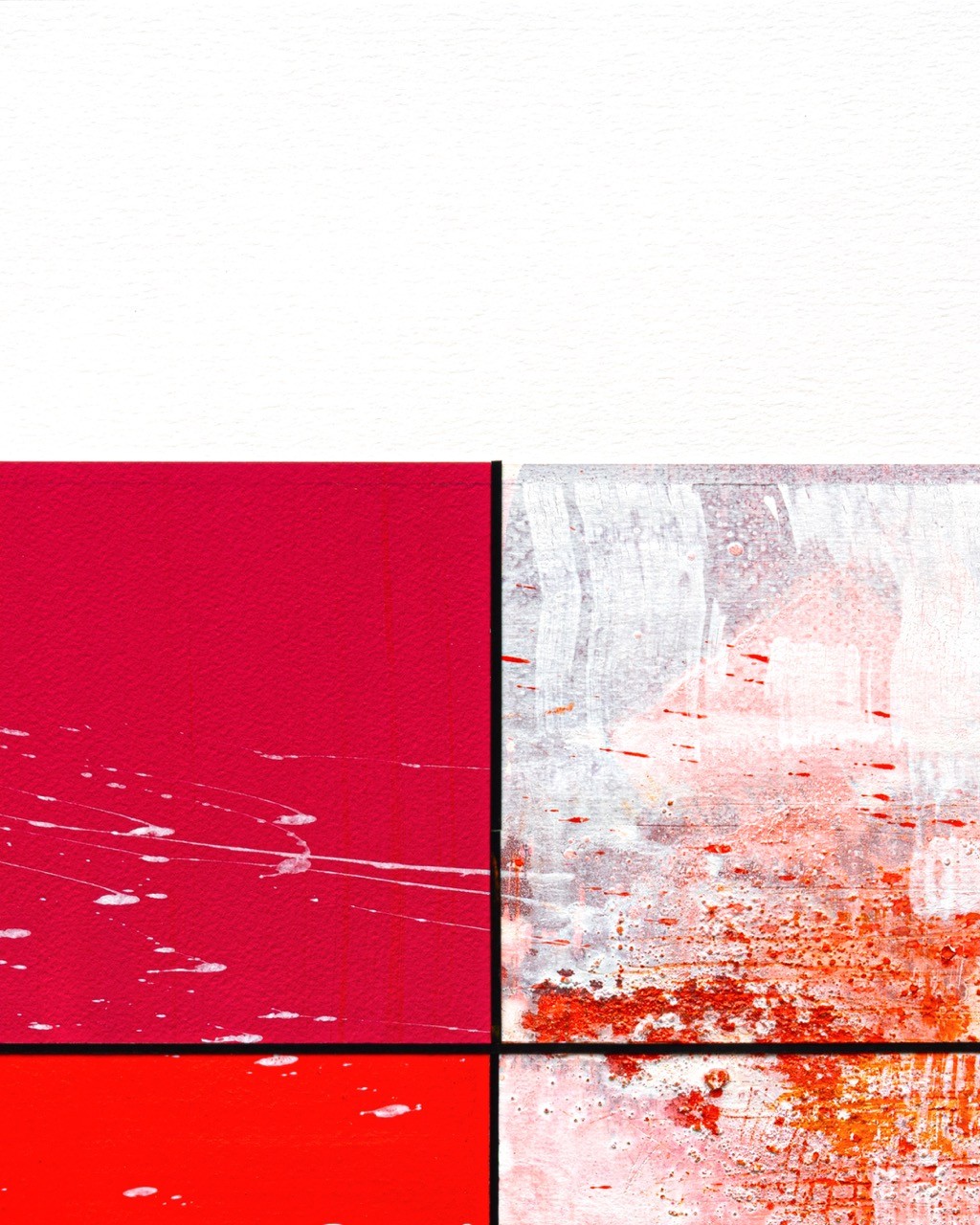
On the left, four flat areas of different shades of red coexist in relative restraint. On the right, the space explodes: splashed white, burning orange, scratched textures, drips, streaks. This transition from left to right evokes Coltrane's musical approach. His long, searching melodic lines create a ceaseless sense of quest and discovery—modal jazz as a spiritual quest, a tension that never quite resolves itself in traditional harmonic structure.
The smooth flat areas on the left represent the theme, the initial, recognizable melody. The luminous chaos on the right represents the solo, Coltrane's famous "sheets of sound," those swathes of notes that crash over the harmonic structure like a wave on a shore.
The title: Impressions, or Freedom Within the Frame:
Coltrane's choice to title his piece "Impressions" conveys something essential: it is not a description, nor a narrative, but an imprint, a trace left by the musical experience. This is what I attempted to materialize on the canvas through gestures, scrapings, and projections of material.
Duration and Material:
The album's title track lasts nearly fifteen minutes of Coltrane's solo. This duration is not excessive: it is the time it takes to experience something, for the experience to be imprinted. The pictorial material in the right-hand area of the work—thick, scraped, and poured—also bears this trace of time passed, of repeated gestures, of accumulation. This surface is not created in an instant. We inhabit it, we return to it, just as Coltrane revisited his motifs to delve deeper and transform them.
The fifteen-minute solo in Impressions resembles a stolen glimpse of eternity. Coltrane was profoundly animated by a spiritual dimension, his music as prayer, as meditation. The painted work, with its incandescent reds that evoke both blood and fire, and its white light that radiates from beneath the orange matter, shares this same tension between the immanent and the transcendent, between what burns here below and what aspires to rise.
"Impressions," acrylic paint, oil pastel, pigment, collage on paper, 50 x 65 cm, 2026.
On the left, four flat areas of different shades of red coexist in relative restraint. On the right, the space explodes: splashed white, burning orange, scratched textures, drips, streaks. This transition from left to right evokes Coltrane's musical approach. His long, searching melodic lines create a ceaseless sense of quest and discovery—modal jazz as a spiritual quest, a tension that never quite resolves itself in traditional harmonic structure.
The smooth flat areas on the left represent the theme, the initial, recognizable melody. The luminous chaos on the right represents the solo, Coltrane's famous "sheets of sound," those swathes of notes that crash over the harmonic structure like a wave on a shore.
The title: Impressions, or Freedom Within the Frame:
Coltrane's choice to title his piece "Impressions" conveys something essential: it is not a description, nor a narrative, but an imprint, a trace left by the musical experience. This is what I attempted to materialize on the canvas through gestures, scrapings, and projections of material.
Duration and Material:
The album's title track lasts nearly fifteen minutes of Coltrane's solo. This duration is not excessive: it is the time it takes to experience something, for the experience to be imprinted. The pictorial material in the right-hand area of the work—thick, scraped, and poured—also bears this trace of time passed, of repeated gestures, of accumulation. This surface is not created in an instant. We inhabit it, we return to it, just as Coltrane revisited his motifs to delve deeper and transform them.
The fifteen-minute solo in Impressions resembles a stolen glimpse of eternity. Coltrane was profoundly animated by a spiritual dimension, his music as prayer, as meditation. The painted work, with its incandescent reds that evoke both blood and fire, and its white light that radiates from beneath the orange matter, shares this same tension between the immanent and the transcendent, between what burns here below and what aspires to rise.