Sans Titre no 41
,
2020
Patrick Piccinelli
Sans Titre no 41
2020
Acrylic, Lacquer on Canvas
Acrylic, Lacquer on Canvas
57
57
X
X
57
57
Available
€
2,400
shipping worldwide included
Add to card
Untitled No. 41, acrylic paint, pigment on canvas.
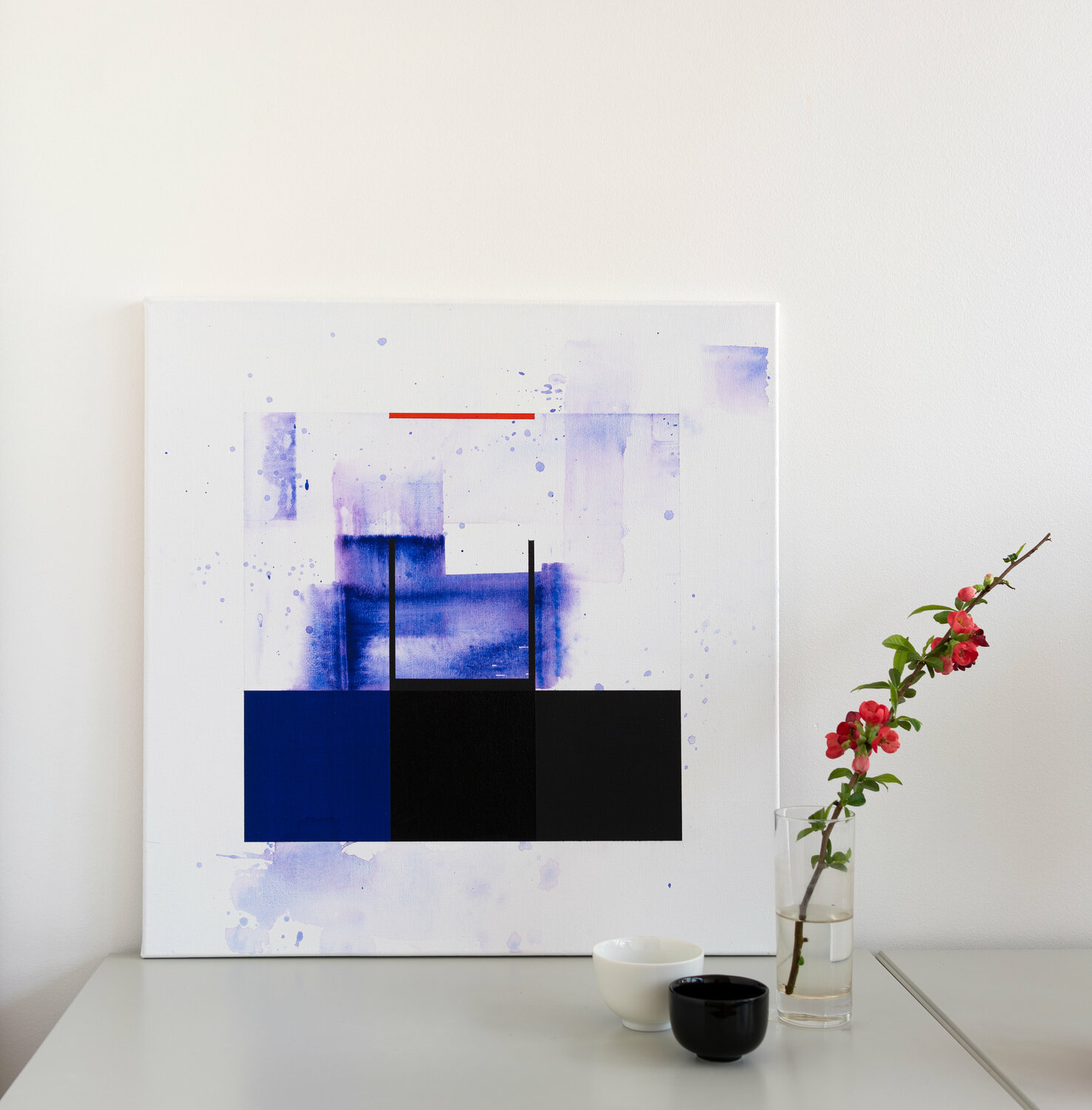
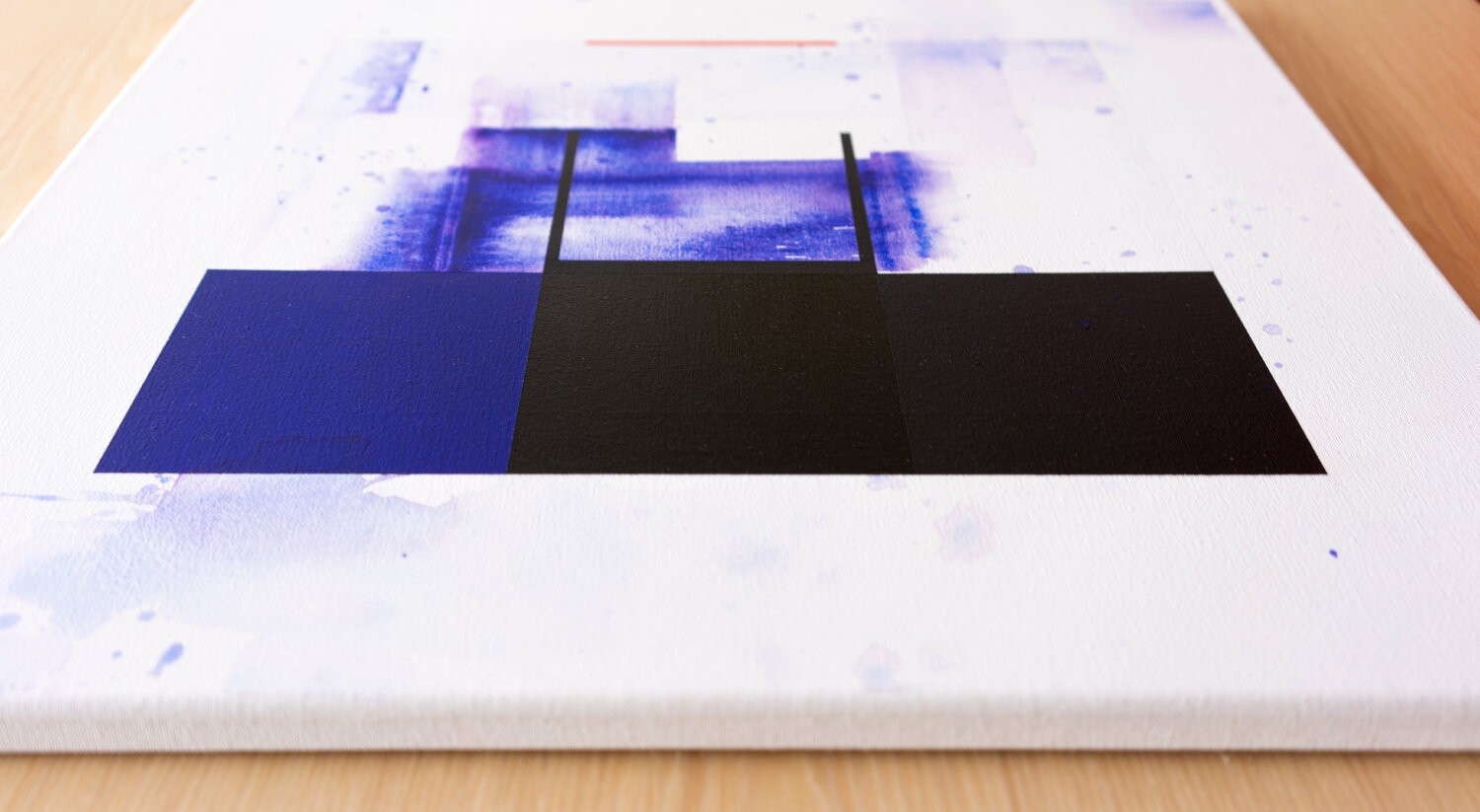
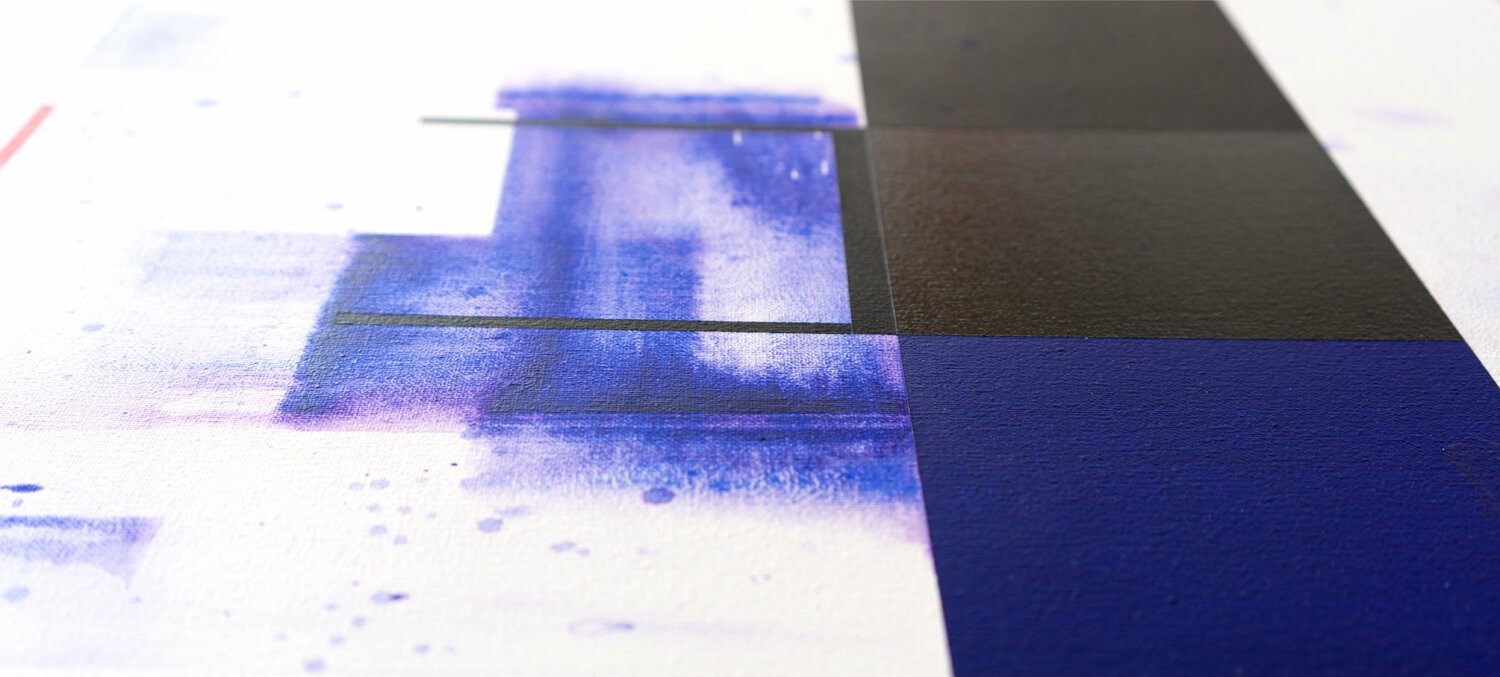
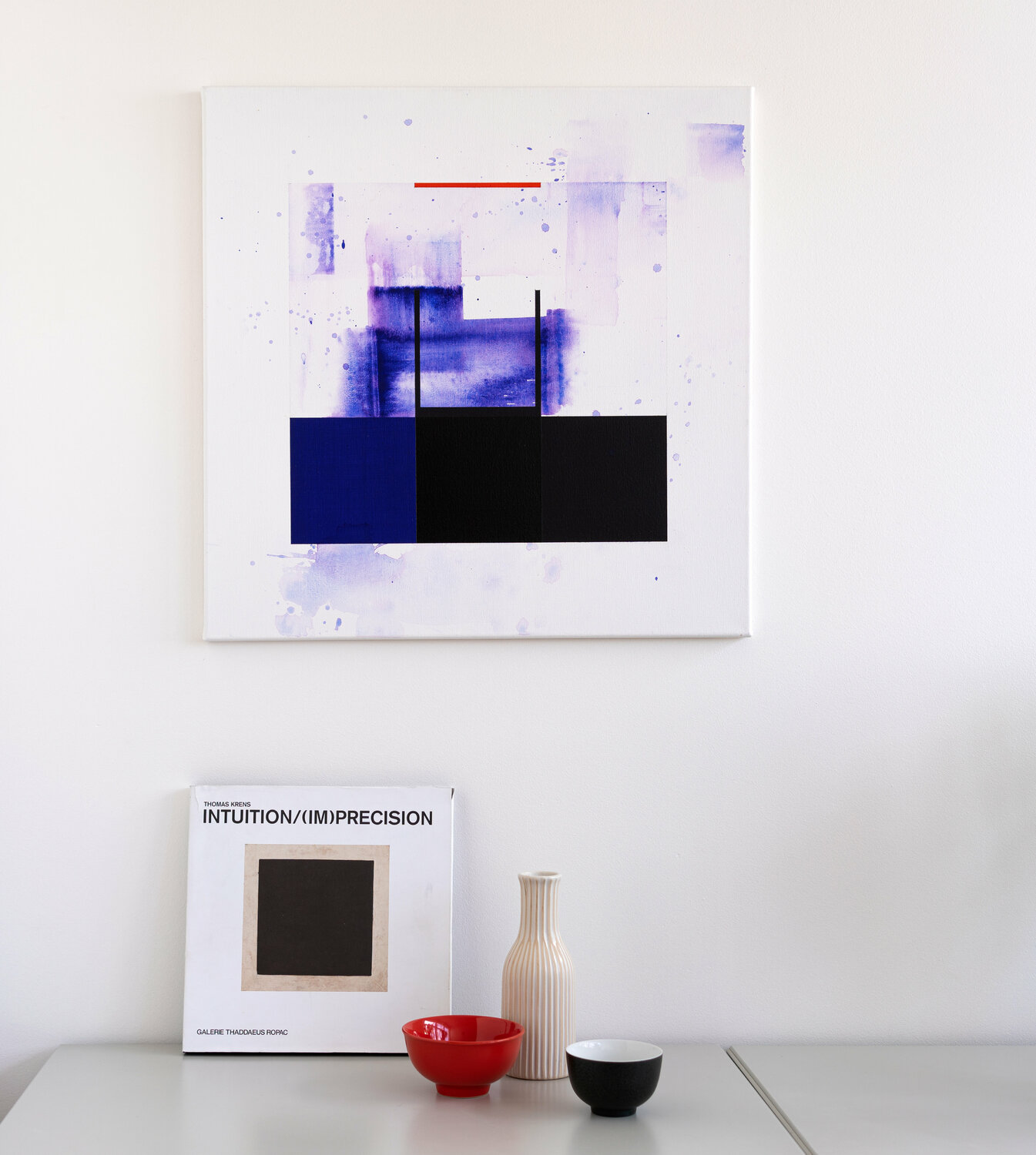
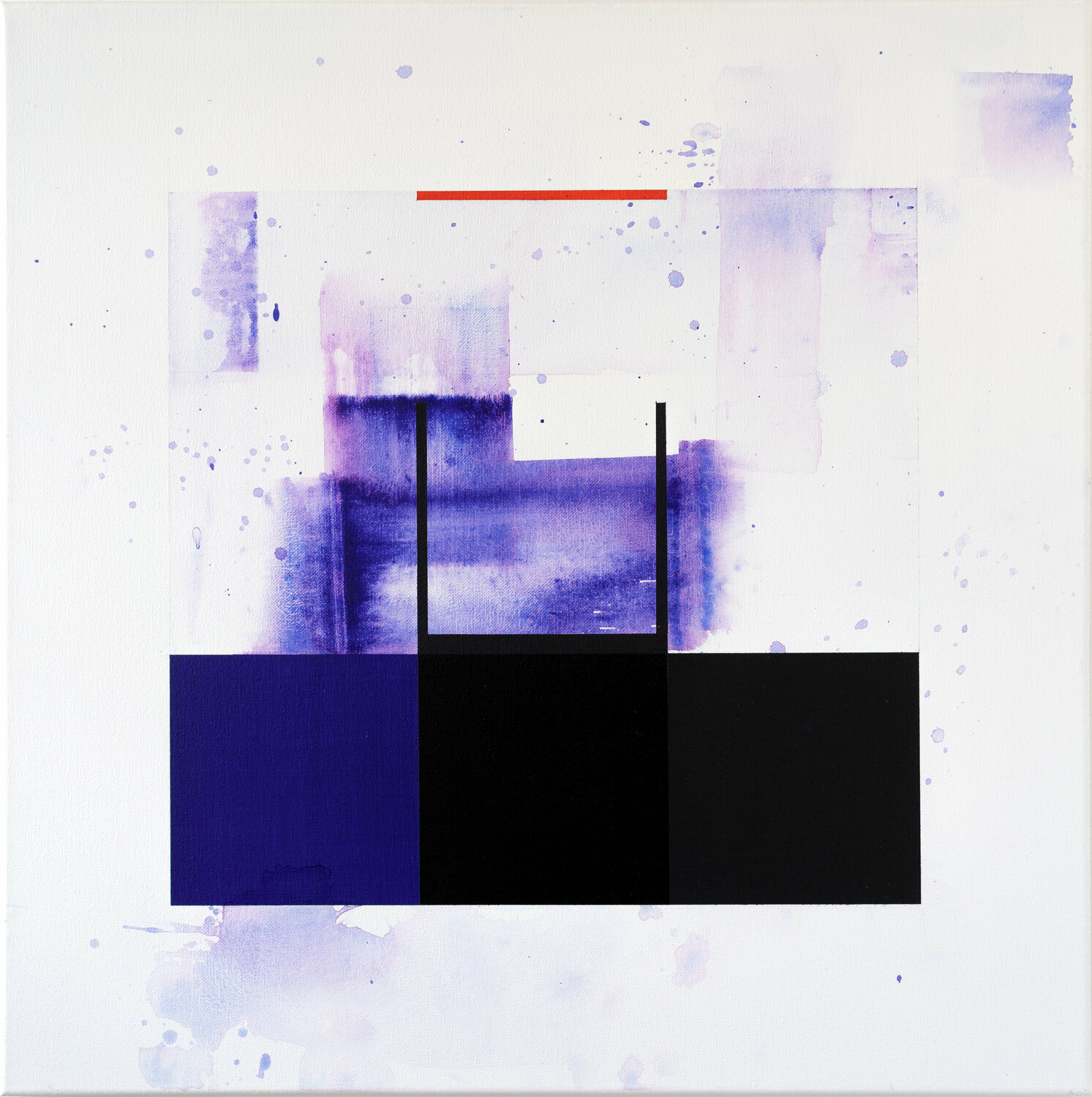
My composition plays on the tension between two very different visual registers: watercolor blur and geometric sharpness.
The blurred register: atmospheric breathing:
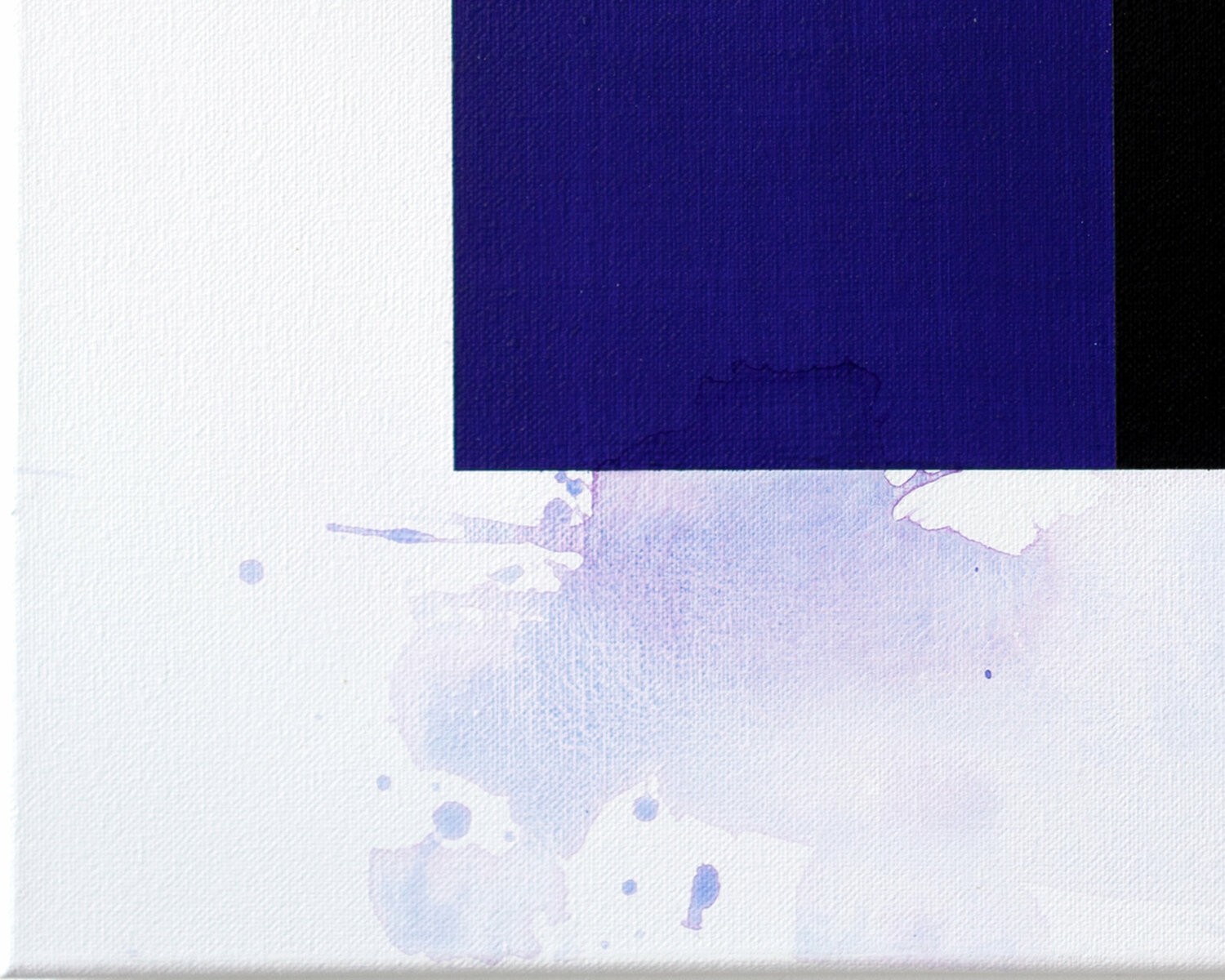
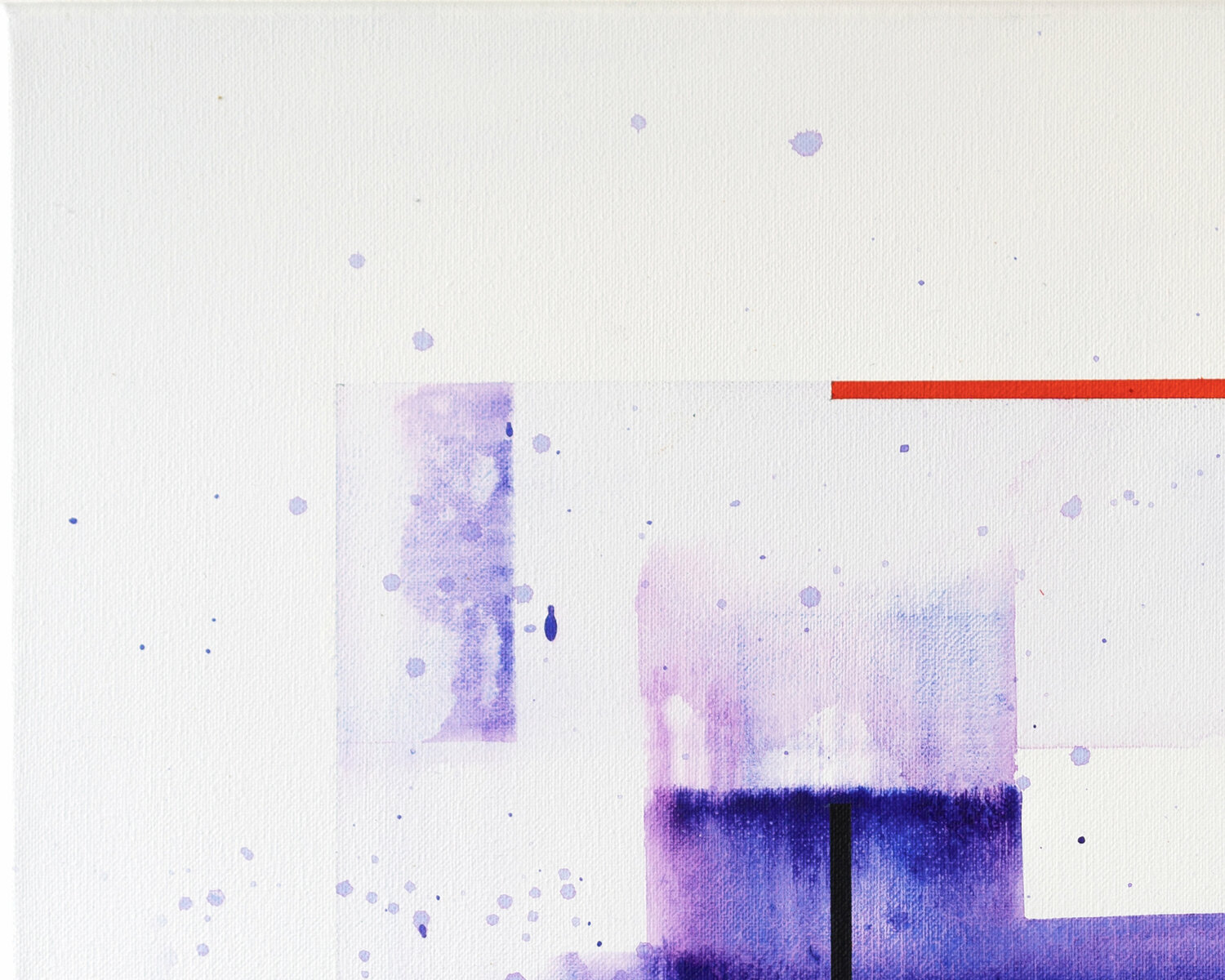
The upper part and the general background of the canvas are occupied by washes of violet, mauve, and pink that diffuse freely into the canvas fibers. These washes have no defined edges; they spread, overlap, and create areas of varying density where the pigment accumulates (darker in the center) and dilutes toward the edges (almost translucent). The splashes indicate the spontaneity of the painterly gesture.
The sharp register: the architectural structure:
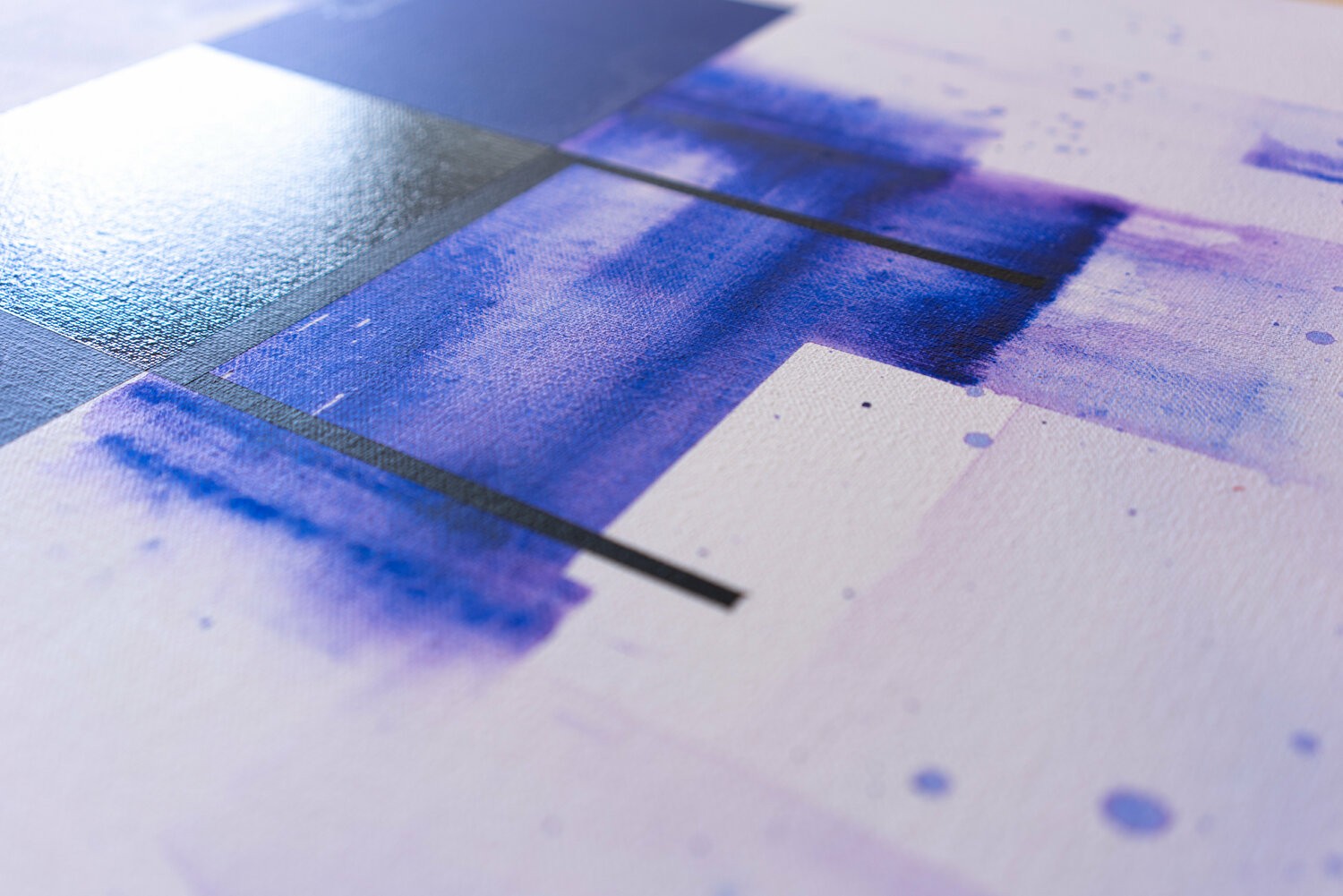
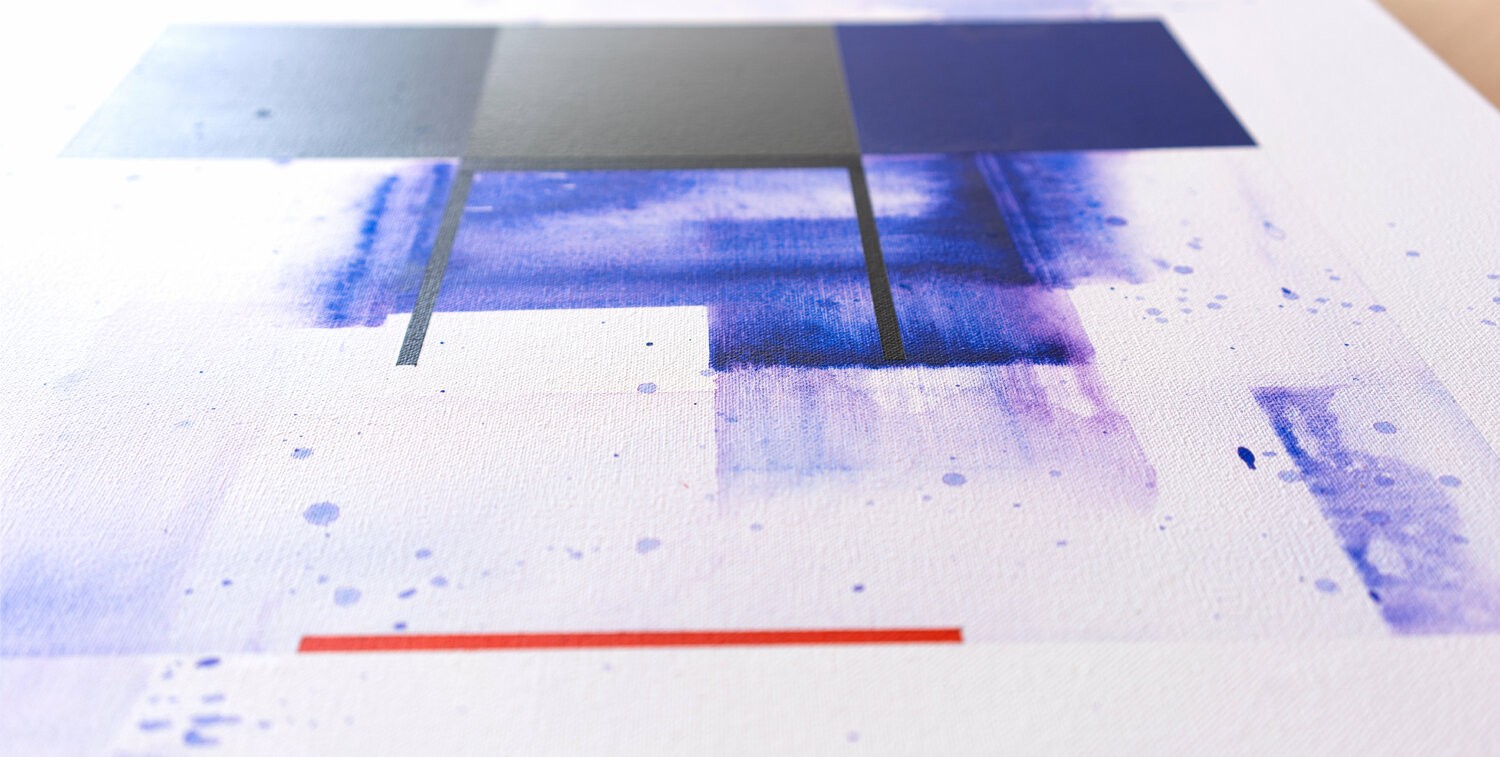
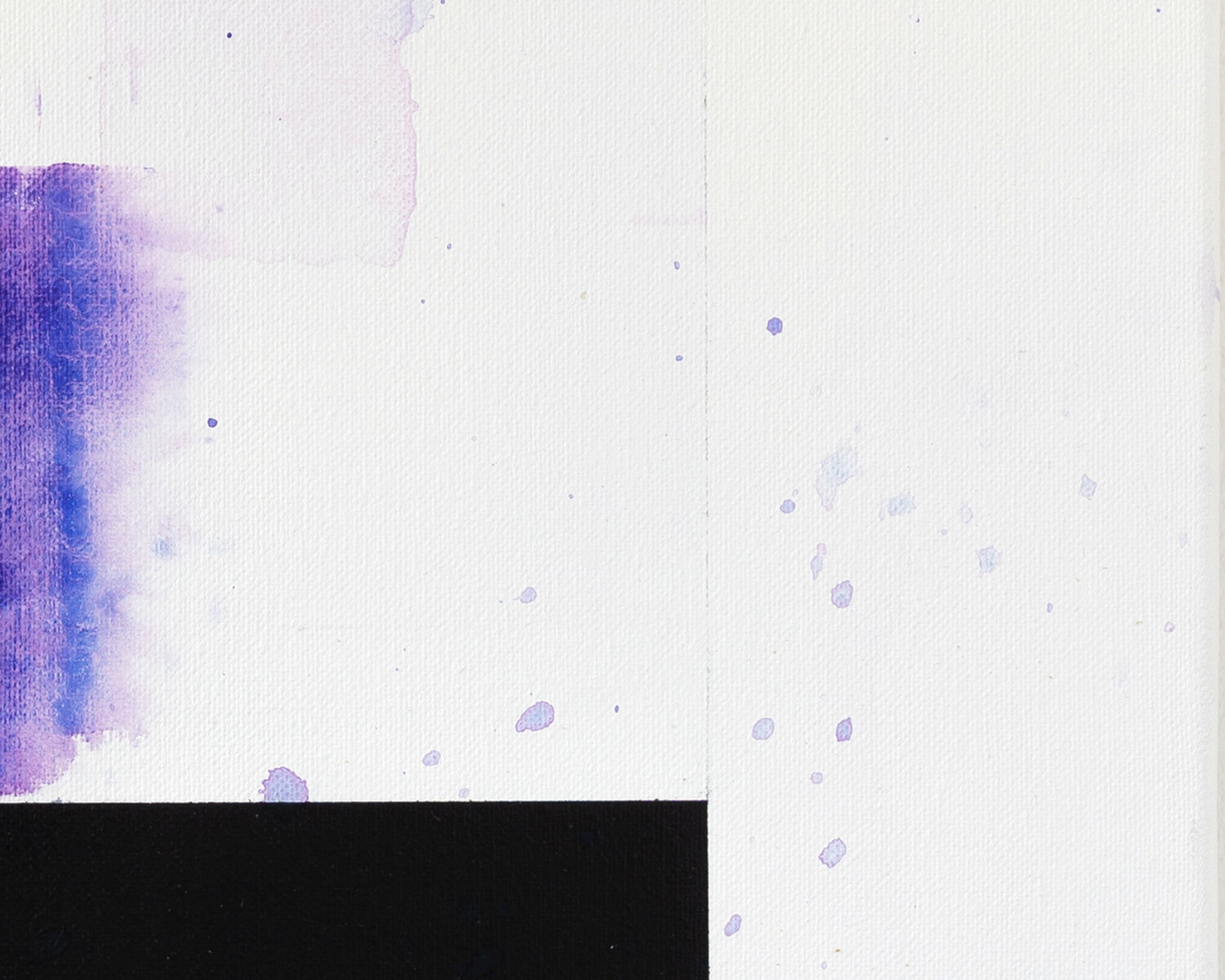
In stark contrast, the lower part of the canvas is occupied by geometric planes with rigorously defined edges: a large indigo blue rectangle on the left, and two deep black rectangles in the center and on the right.
The two visual languages do not remain separate; they influence each other. The central purple wash seems "contained" by the two vertical black lines, as if the blur were searching for a form, a boundary, without ever fully reaching it (it overflows slightly, dries unevenly). Conversely, the flat black and blue areas at the bottom impose a gravity, an almost architectural stability that anchors the entire upper, more vaporous section.
Untitled No. 41, acrylic paint, pigment on canvas.
My composition plays on the tension between two very different visual registers: watercolor blur and geometric sharpness.
The blurred register: atmospheric breathing:
The upper part and the general background of the canvas are occupied by washes of violet, mauve, and pink that diffuse freely into the canvas fibers. These washes have no defined edges; they spread, overlap, and create areas of varying density where the pigment accumulates (darker in the center) and dilutes toward the edges (almost translucent). The splashes indicate the spontaneity of the painterly gesture.
The sharp register: the architectural structure:
In stark contrast, the lower part of the canvas is occupied by geometric planes with rigorously defined edges: a large indigo blue rectangle on the left, and two deep black rectangles in the center and on the right.
The two visual languages do not remain separate; they influence each other. The central purple wash seems "contained" by the two vertical black lines, as if the blur were searching for a form, a boundary, without ever fully reaching it (it overflows slightly, dries unevenly). Conversely, the flat black and blue areas at the bottom impose a gravity, an almost architectural stability that anchors the entire upper, more vaporous section.