Seven Haïku
,
2026
Patrick Piccinelli
Seven Haïku
2026
Acrylic paint, paint marker on canvas
Acrylic paint, paint marker on canvas
70
70
X
X
90
90
Not available
Structural correspondences:
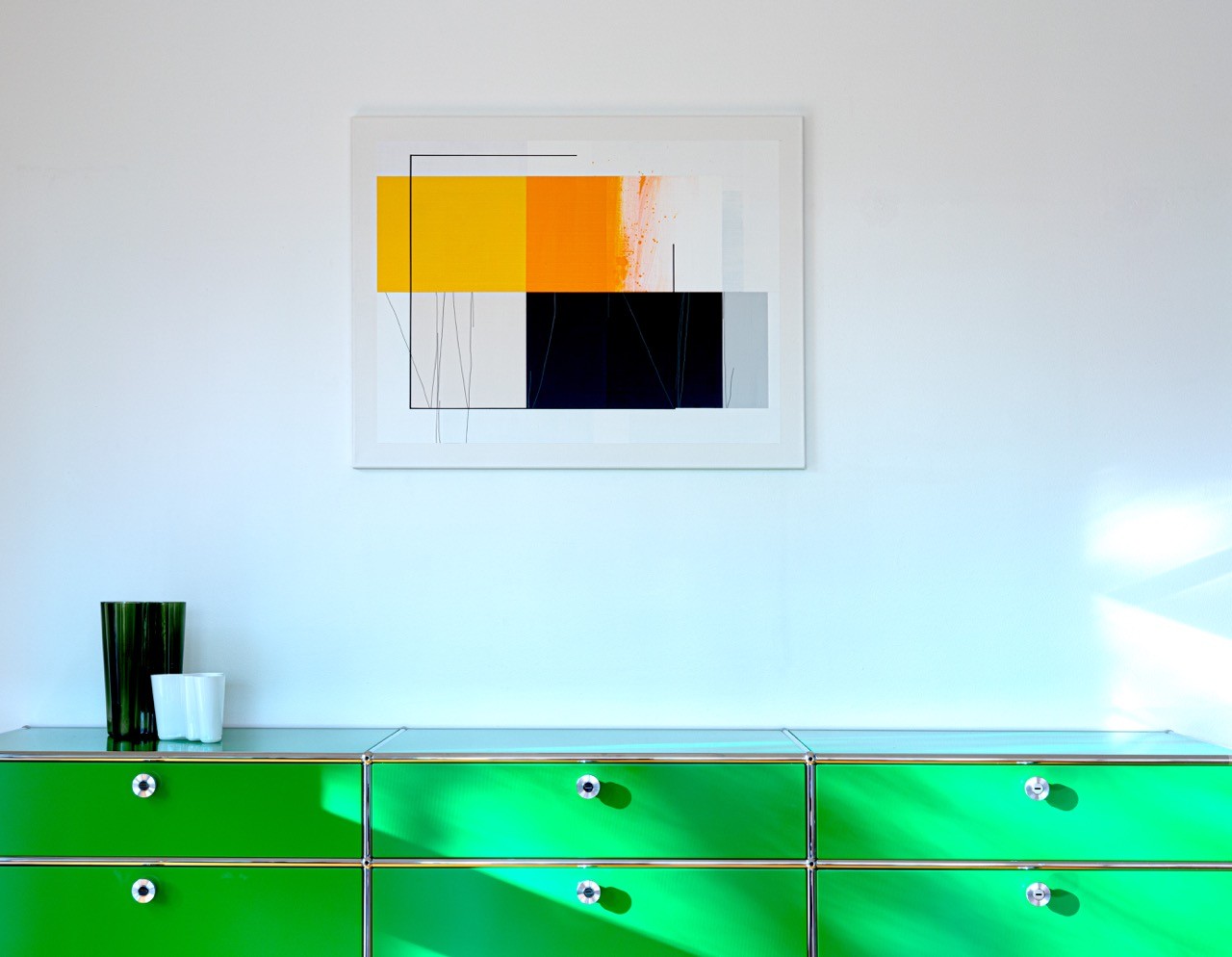
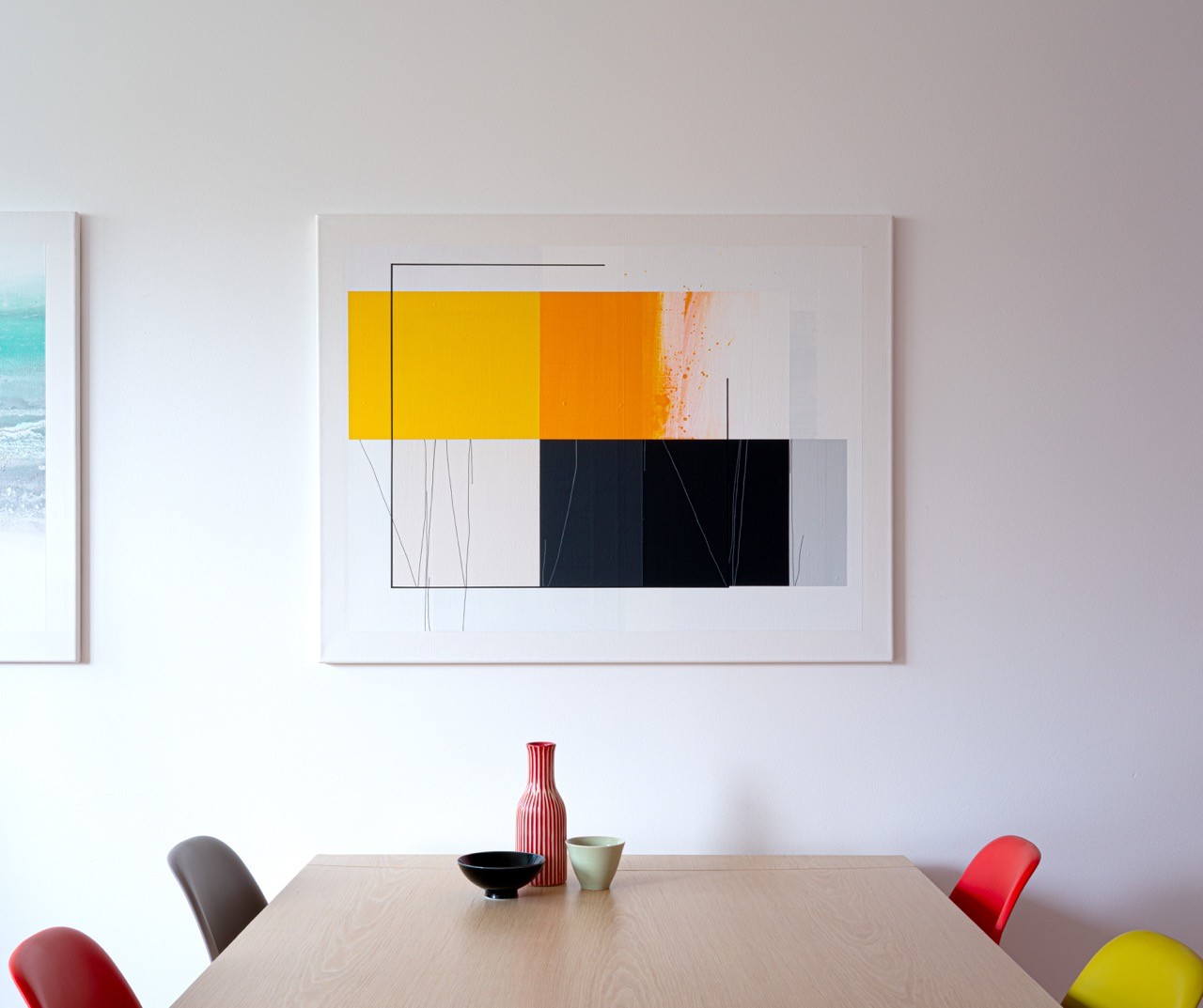
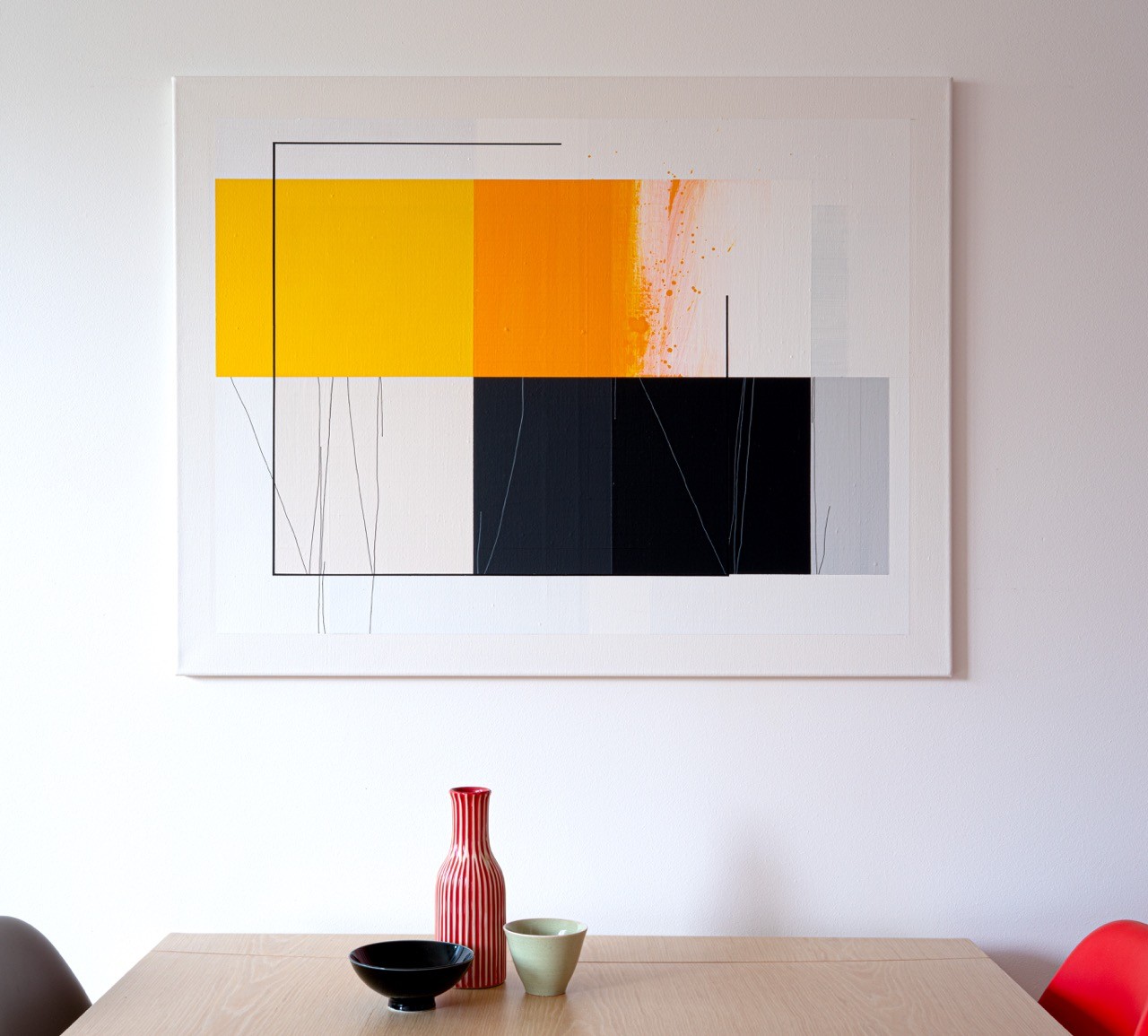
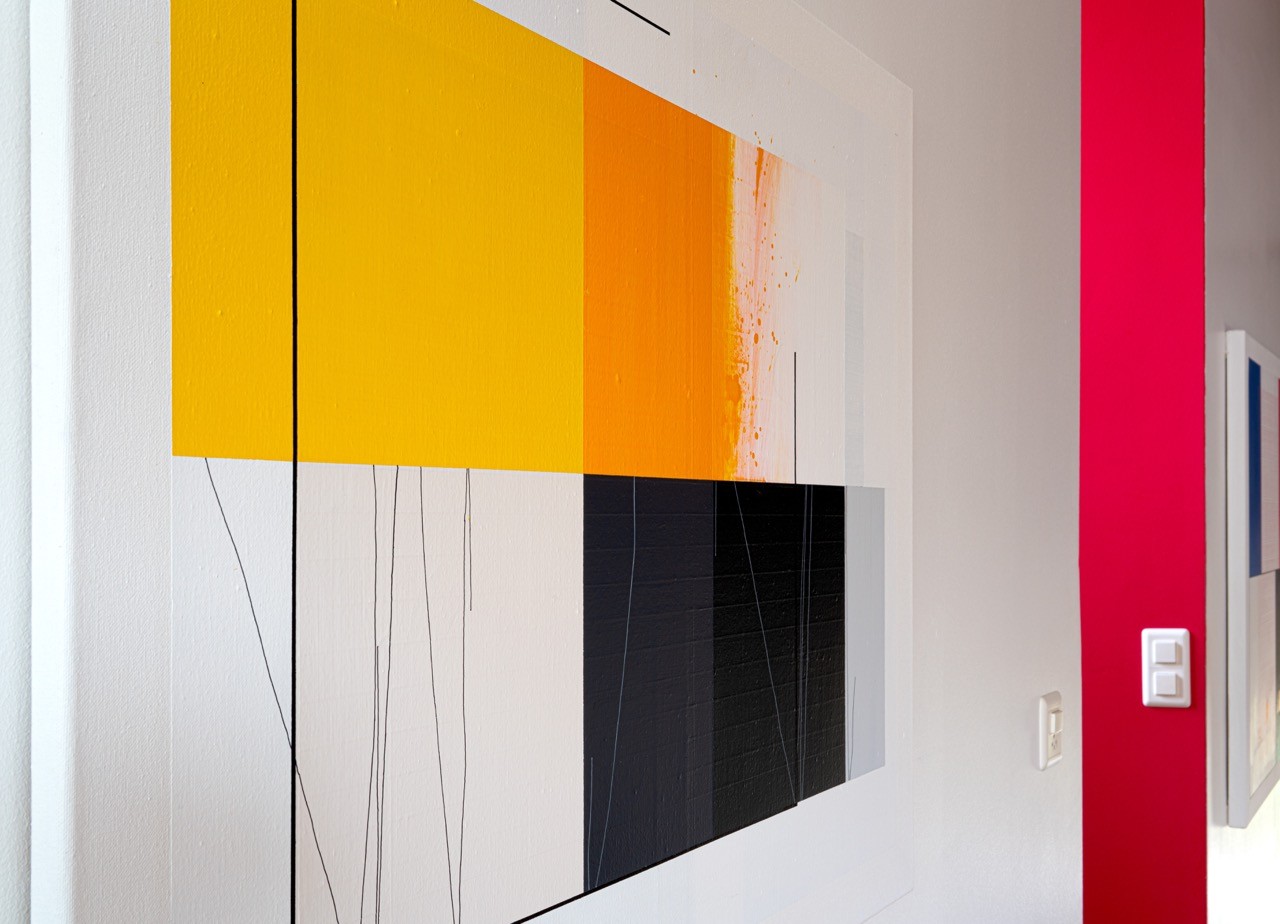
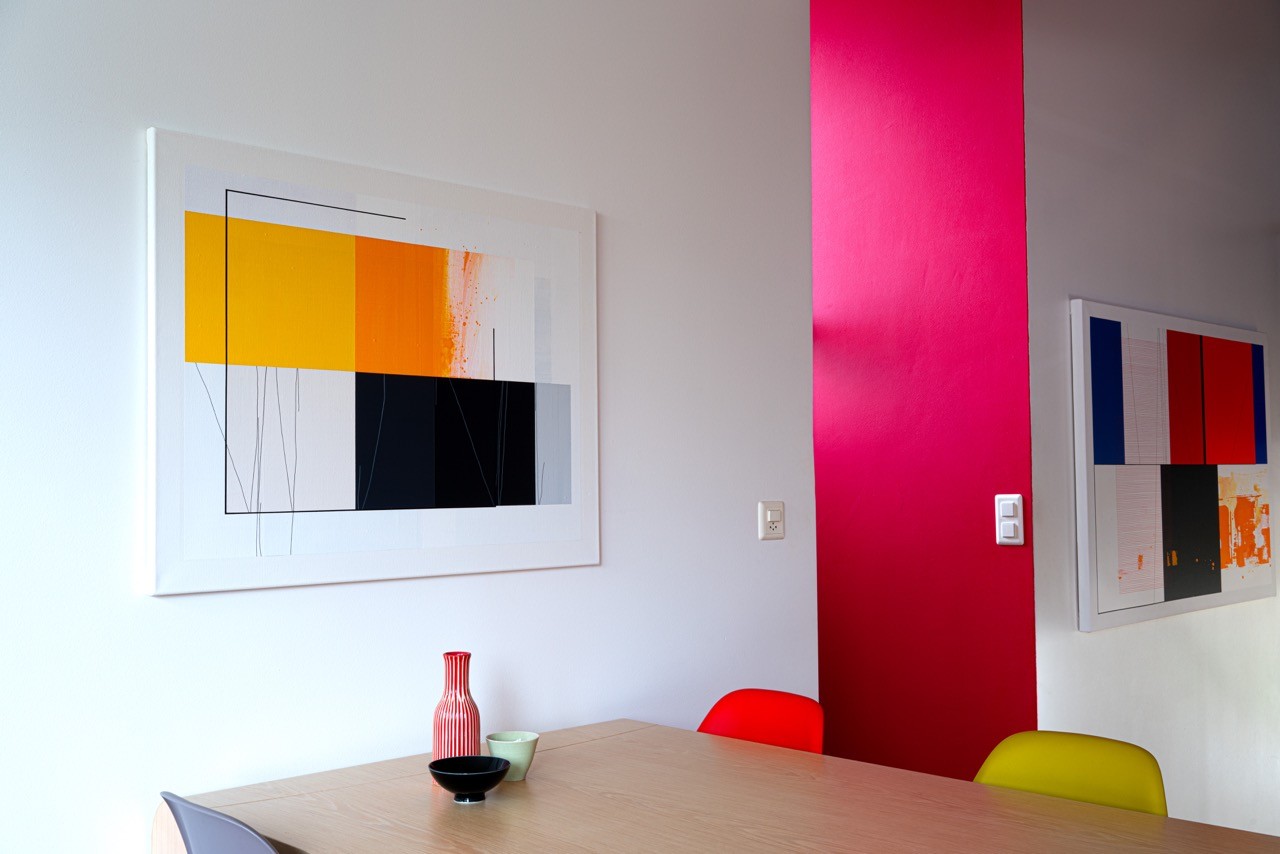
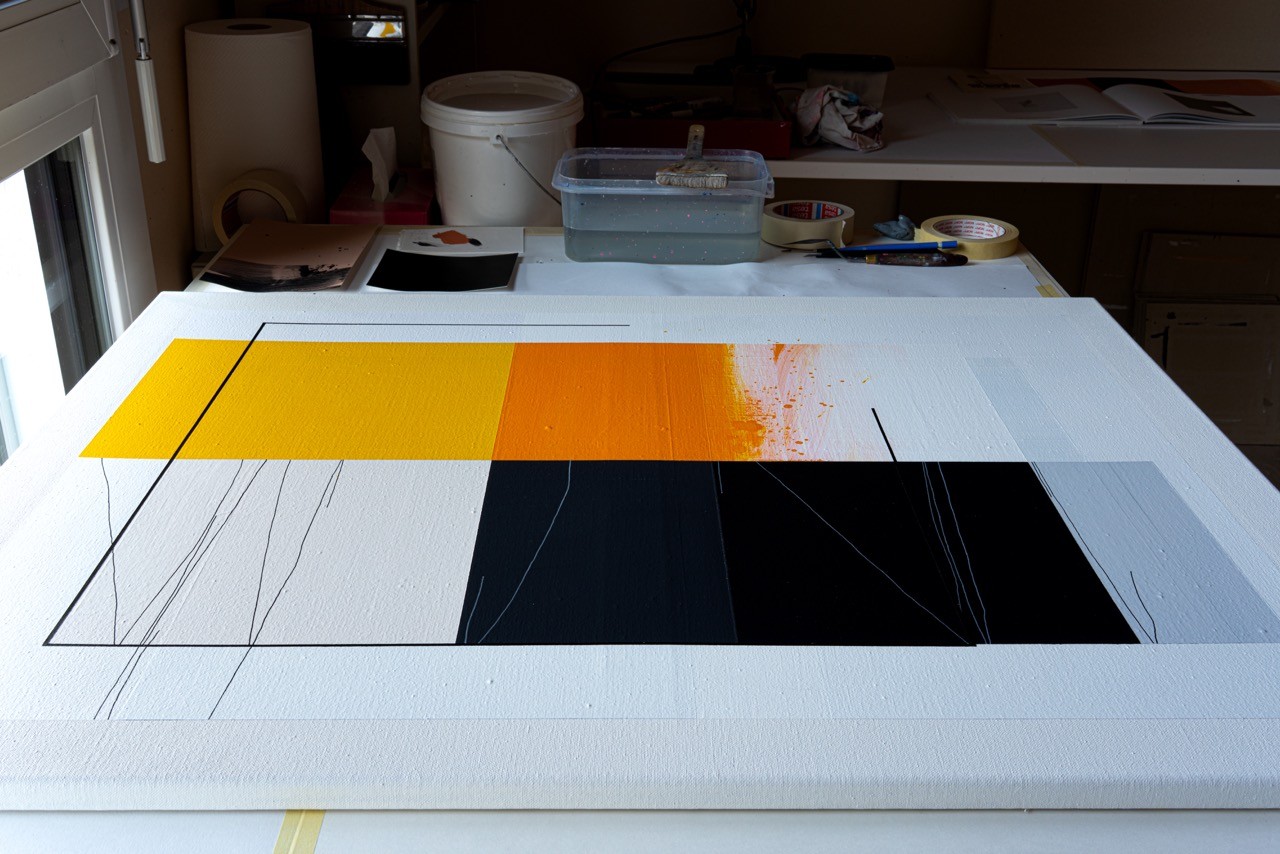
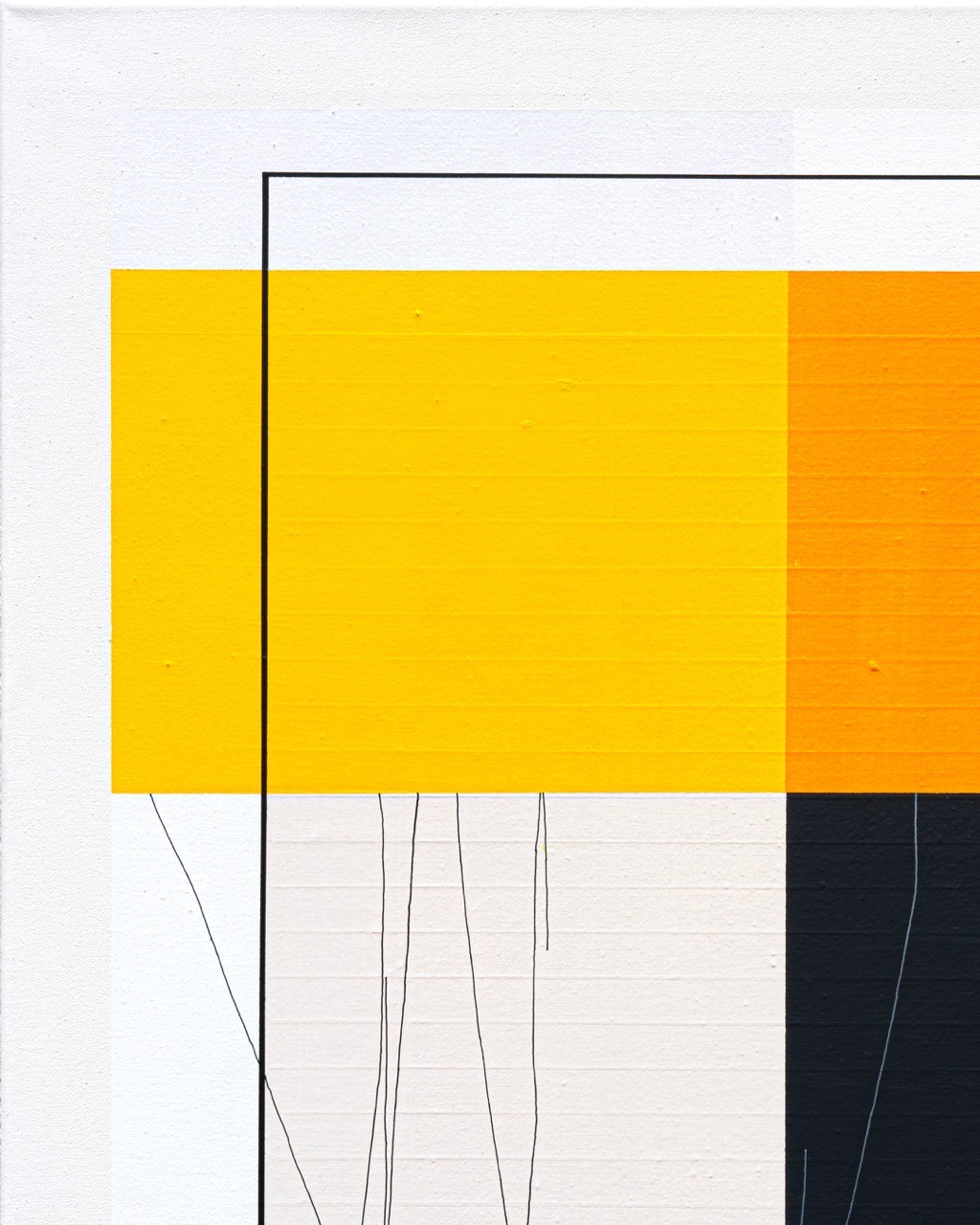
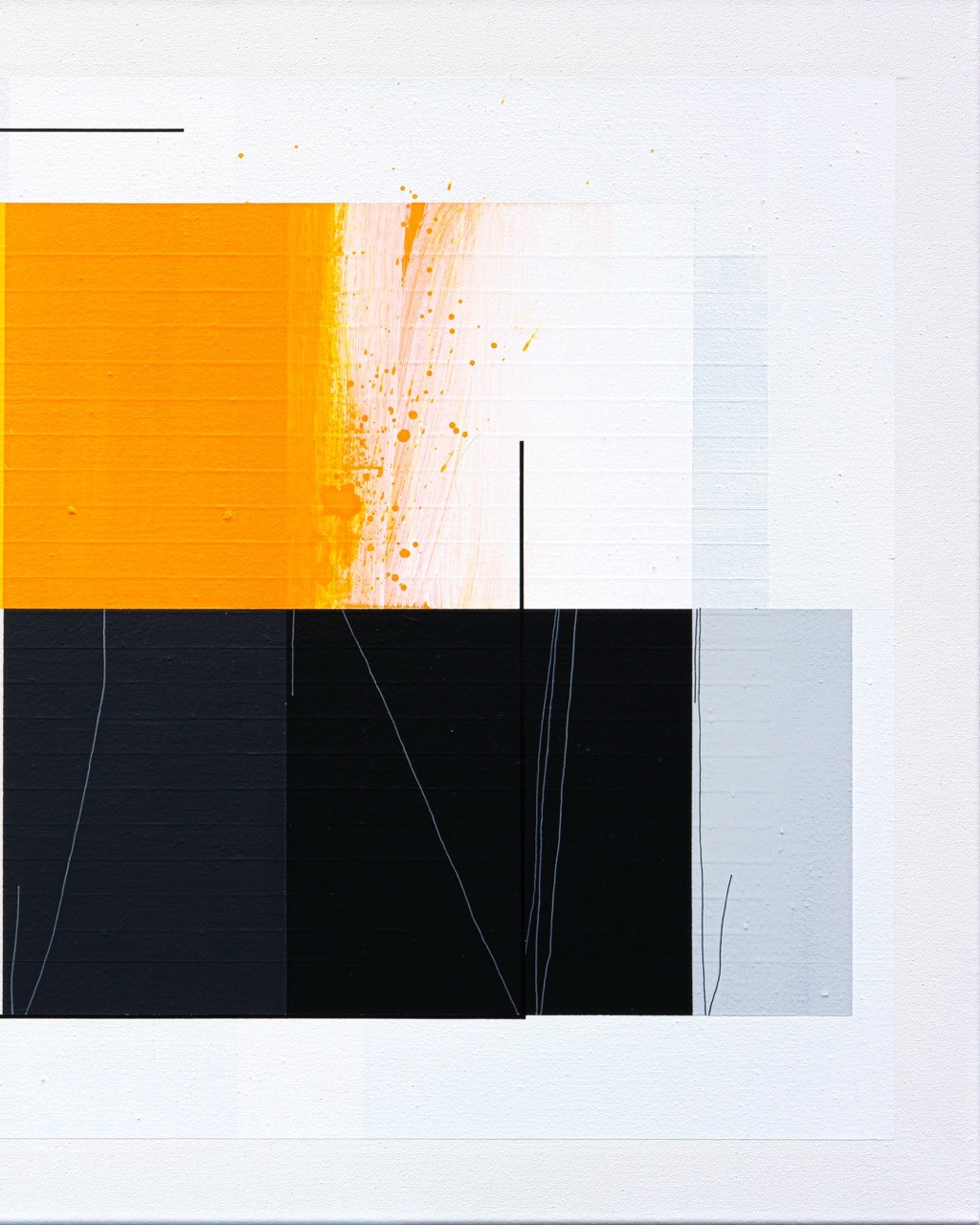
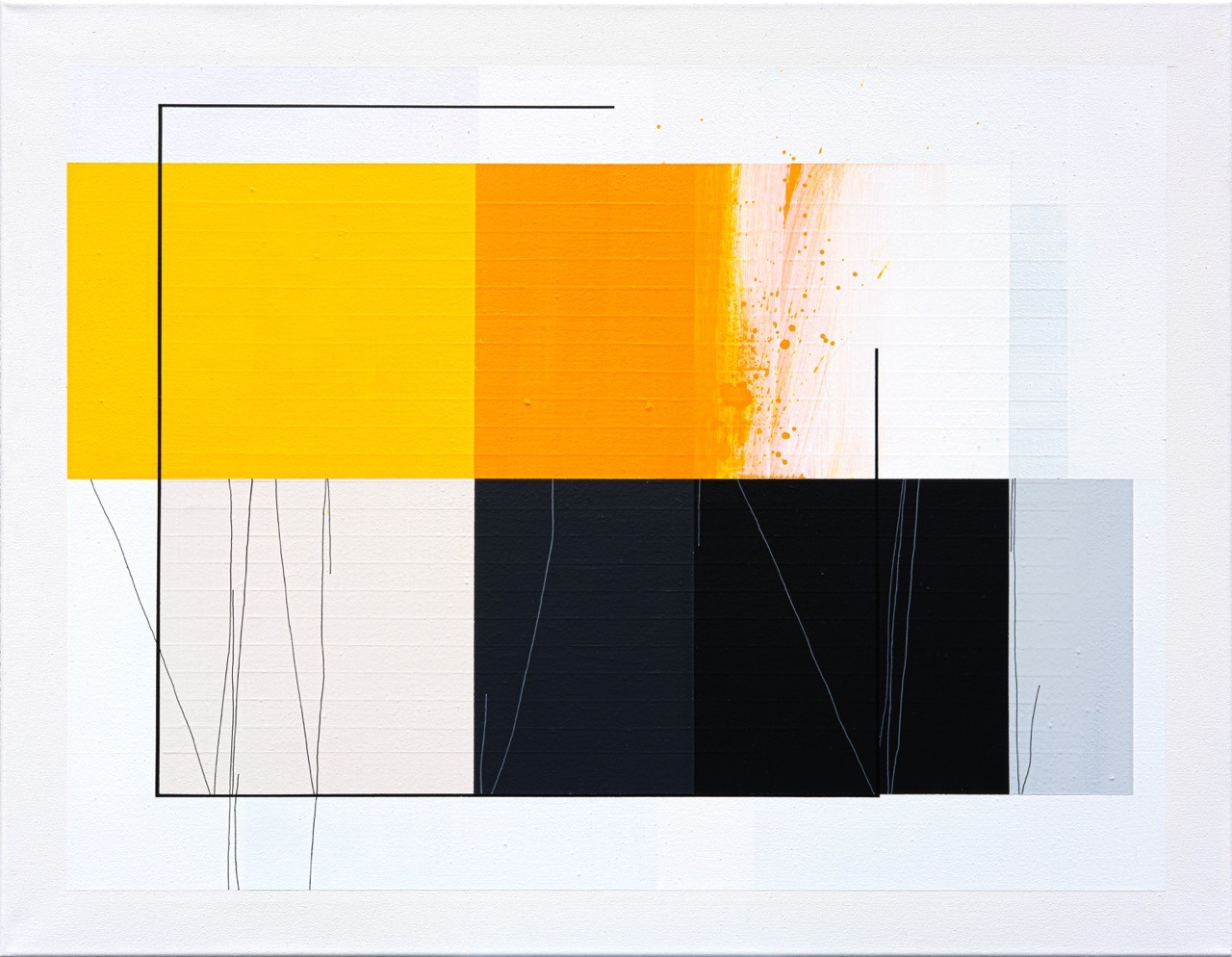
This abstract work establishes a dialogue between John Cage's music and my painting. The visual composition plastically translates Cage's principles. There are seven areas: the blocks of color (bright yellow, orange, deep black, gray-blue) and the spaces between them create a segmentation that evokes Cage's seven haikus.
Chance and emptiness:
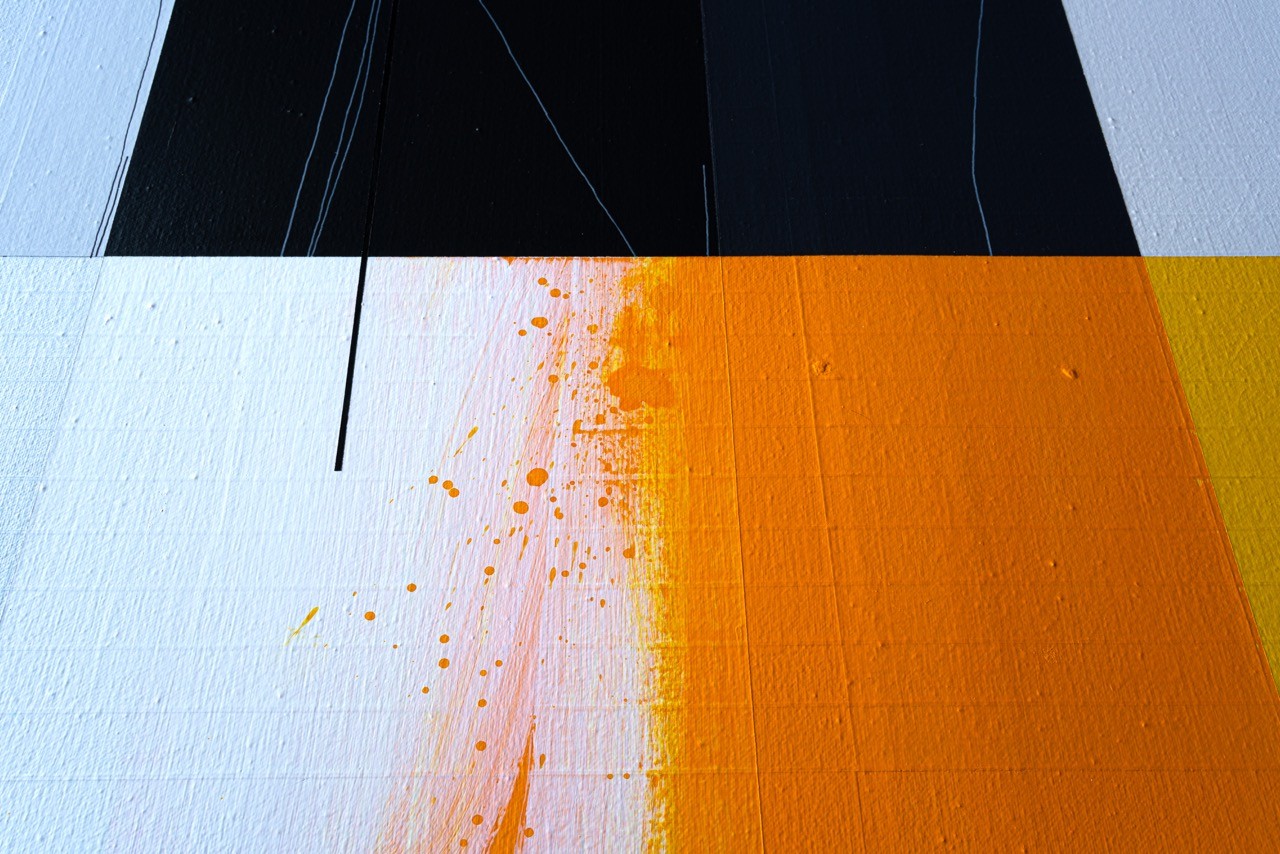
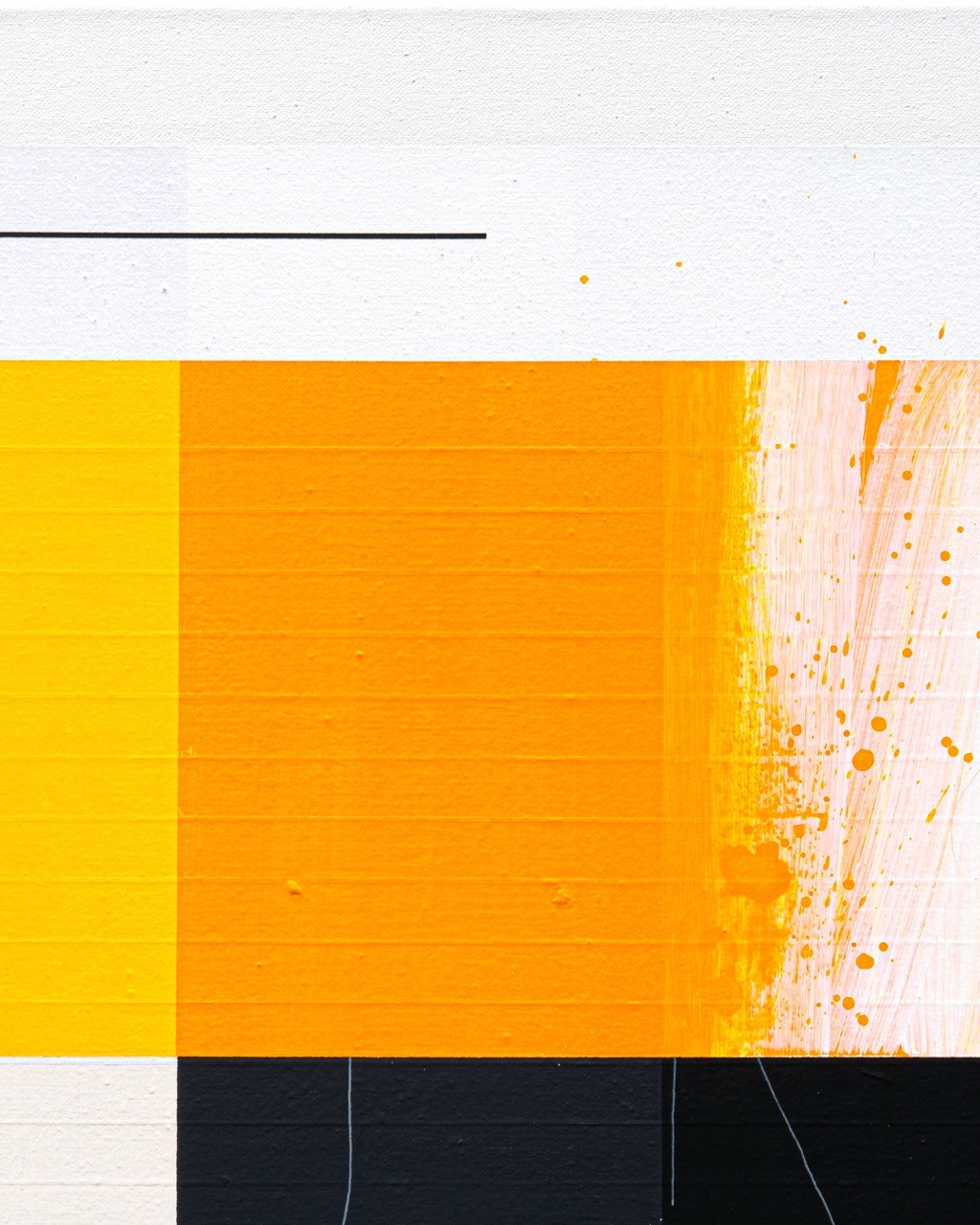
Each section has its own density and silence, like the brief, spaced-out movements of the musical piece. Cage incorporated random operations into his composition. Here, the fine lines that cross the work seem unpredictable, almost accidental. The orange splashes that dissolve the boundary between yellow and black evoke the element of indeterminacy so dear to the composer. The large empty areas (beige, white) function like the essential silences in Cage's work—not as absence, but as active presence.
Structural correspondences:
This abstract work establishes a dialogue between John Cage's music and my painting. The visual composition plastically translates Cage's principles. There are seven areas: the blocks of color (bright yellow, orange, deep black, gray-blue) and the spaces between them create a segmentation that evokes Cage's seven haikus.
Chance and emptiness:
Each section has its own density and silence, like the brief, spaced-out movements of the musical piece. Cage incorporated random operations into his composition. Here, the fine lines that cross the work seem unpredictable, almost accidental. The orange splashes that dissolve the boundary between yellow and black evoke the element of indeterminacy so dear to the composer. The large empty areas (beige, white) function like the essential silences in Cage's work—not as absence, but as active presence.