The Shape Of Jazz To Come
,
2026
Patrick Piccinelli
The Shape Of Jazz To Come
2026
Acrylic paint, ink, pigment, varnish, collage on paper, sold without frame
Acrylic paint, ink, pigment, varnish, collage on paper, sold without frame
50
X
65
50
X
65
Available
€
1,600
Shipping and import duties included
Shipping and returns
- Shipping
- Packed in a double-wall box or a wooden crate and shipped from Switzerland by DHL Express within 2 to 3 days. Delivery takes 2 to 15 business days; the tracking number comes by email.
- Import duties
- Shipping, customs duties and import taxes are paid by us, for every country. Nothing is due on delivery.
- Returns
- An original painting cannot be returned or exchanged. A parcel lost or damaged in transit is refunded in full or replaced.
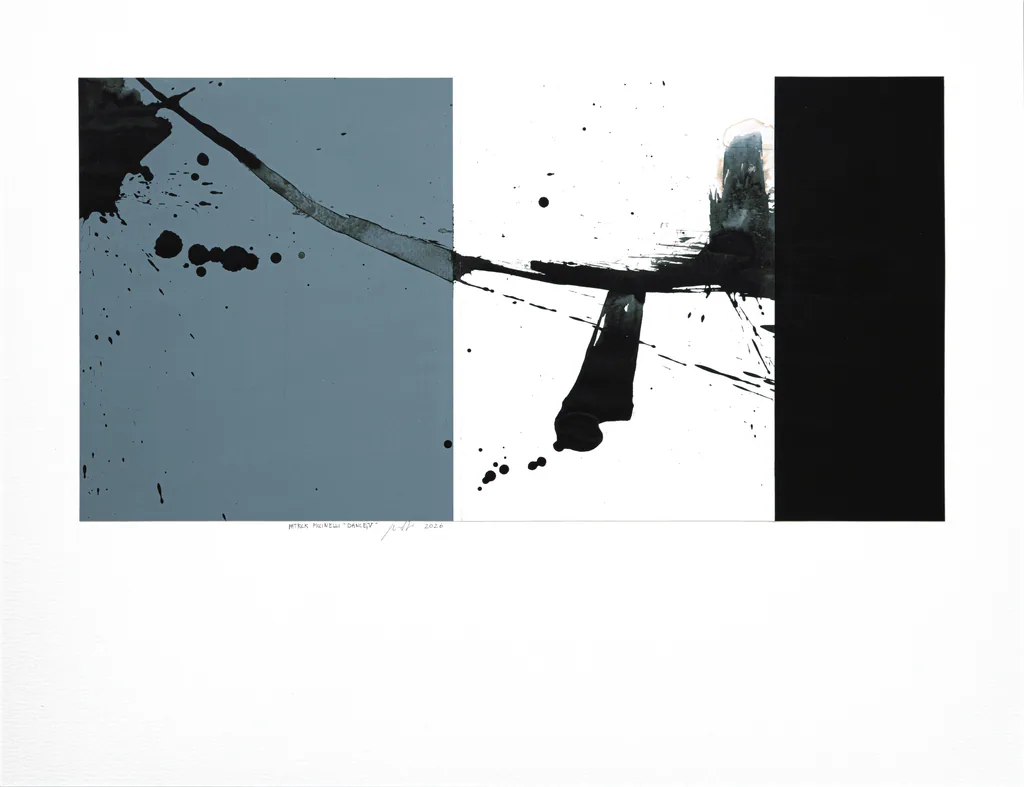
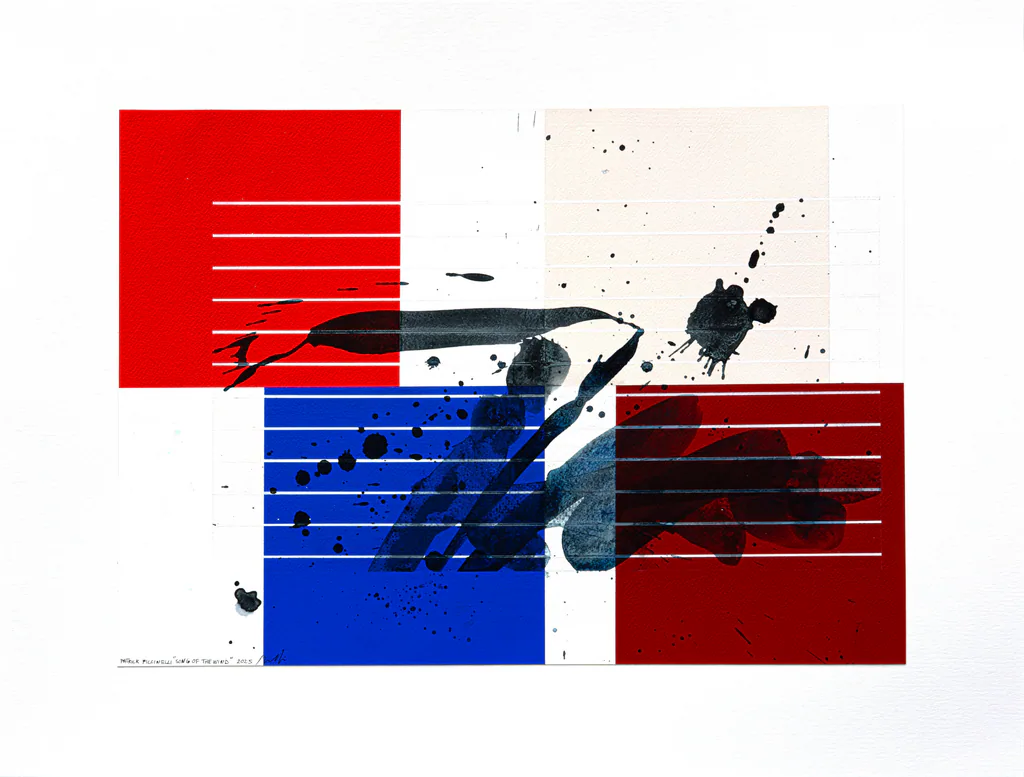
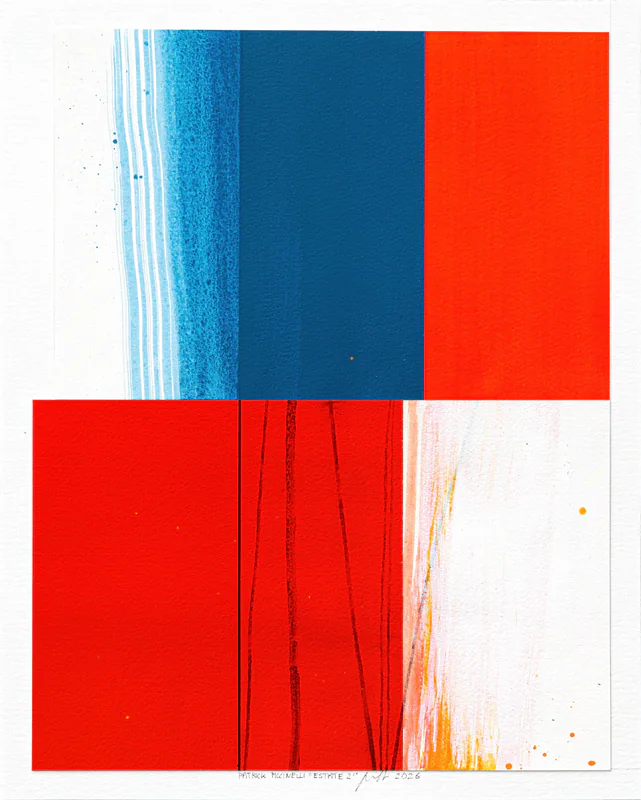
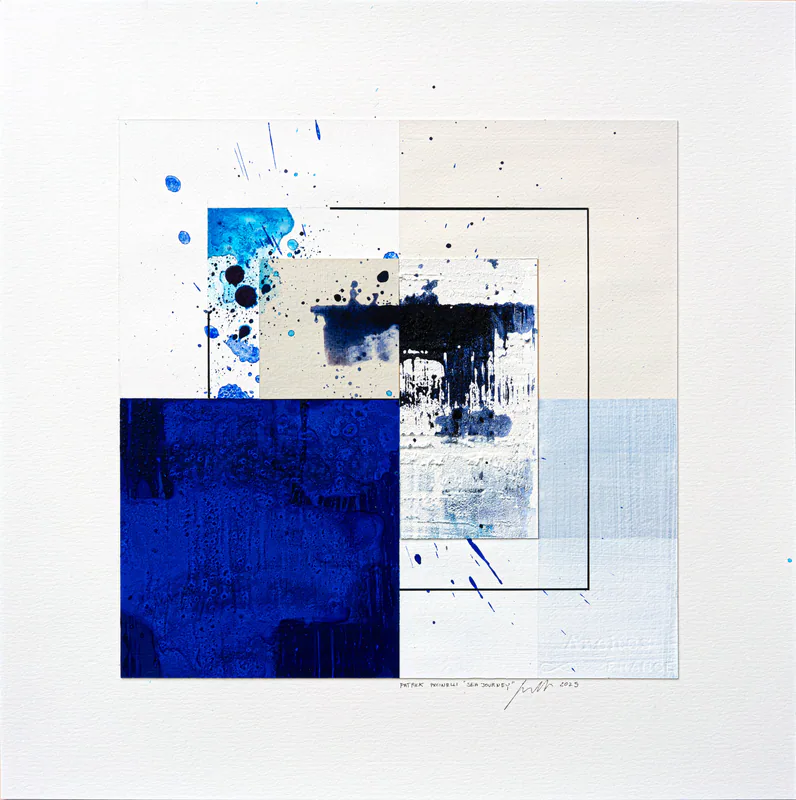
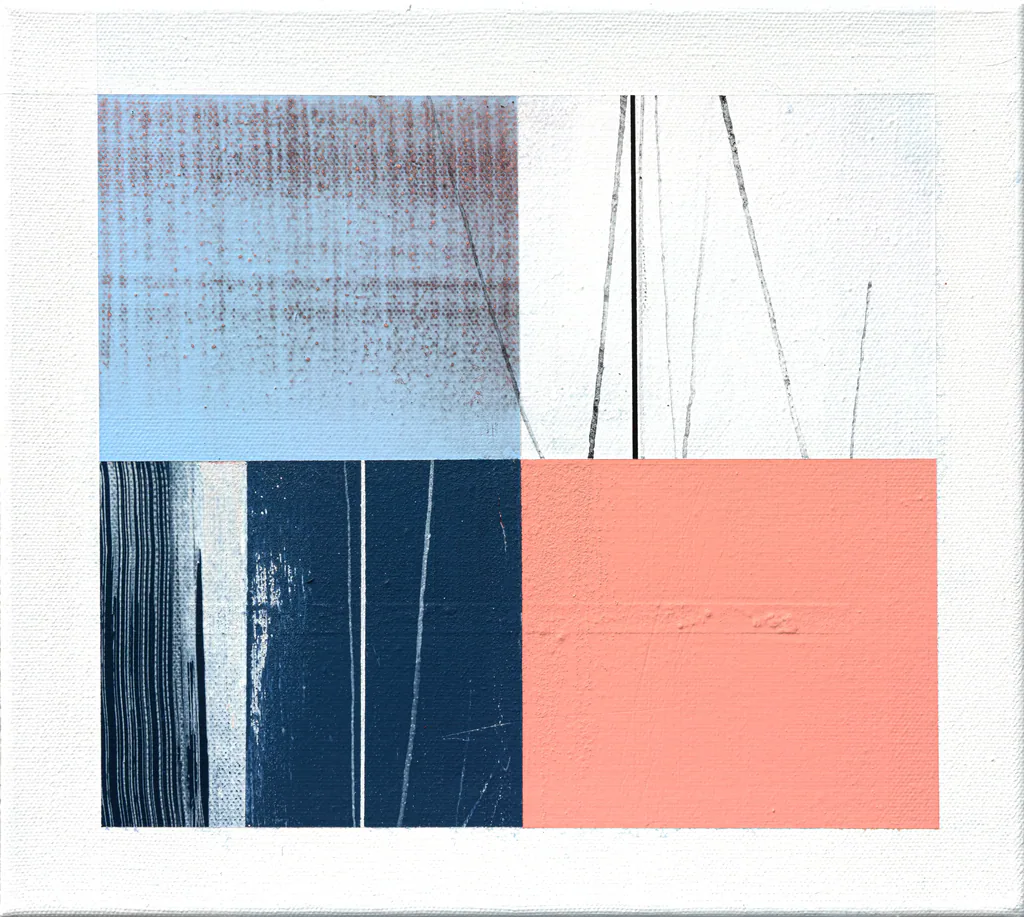
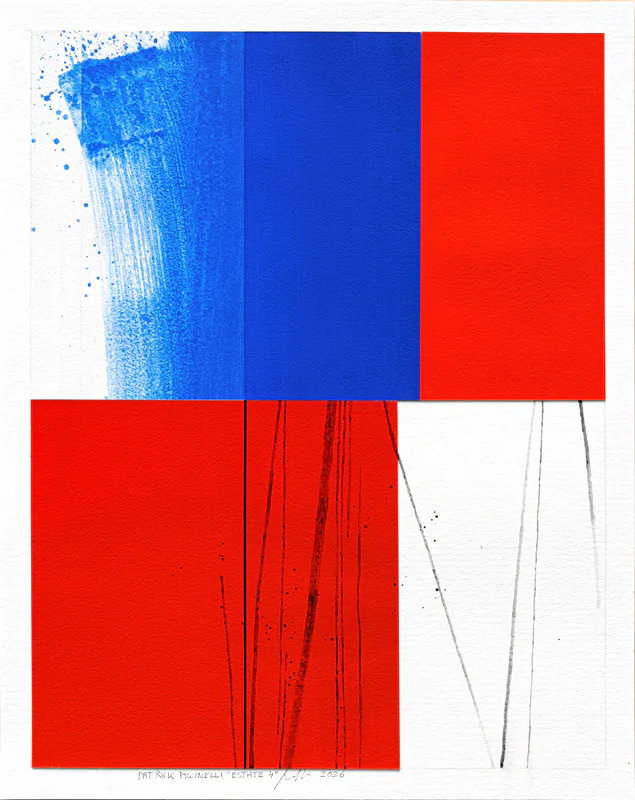
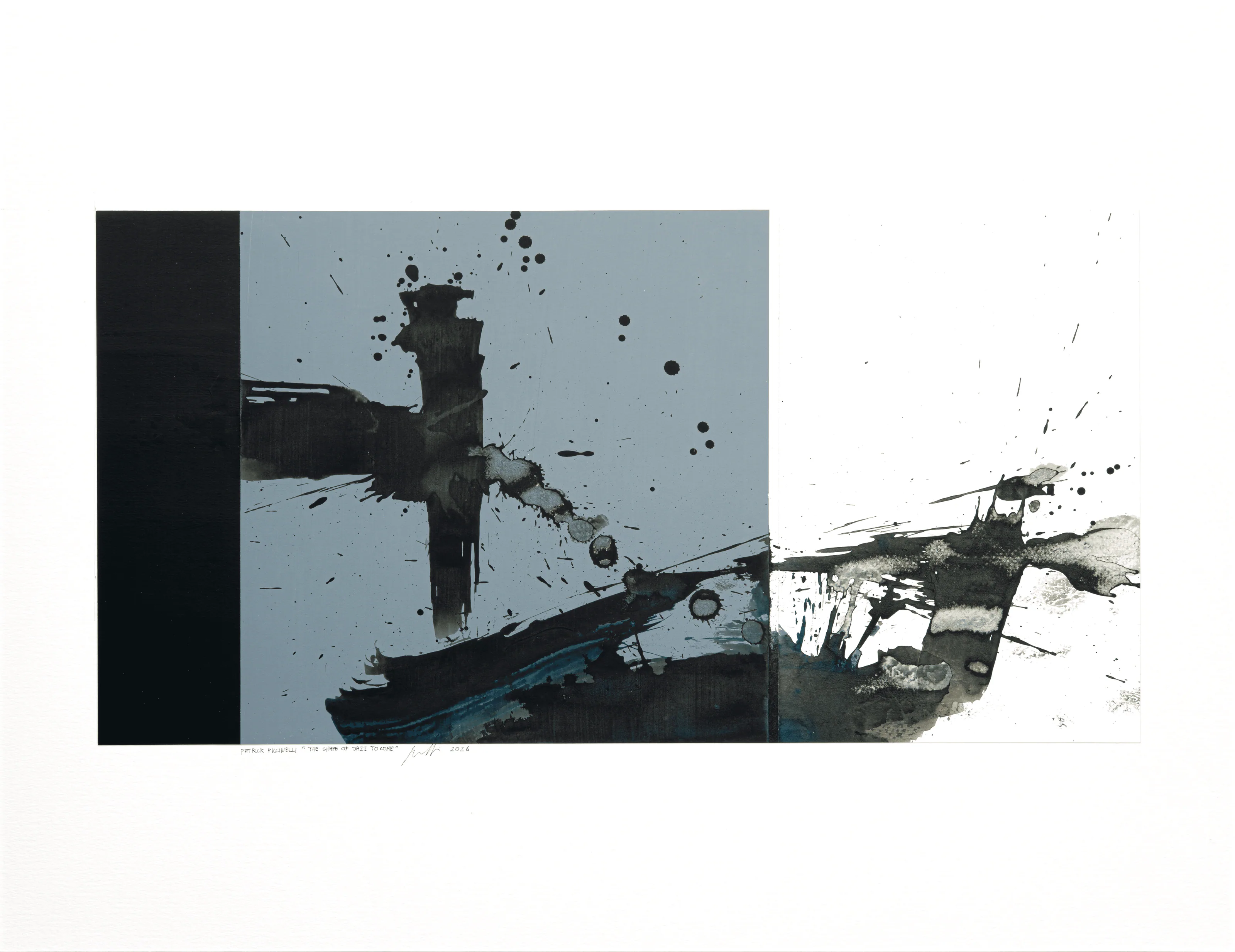
This work on paper is inspired by Ornette Coleman’s album *The Shape of Jazz to Come*.
The album *The Shape of Jazz to Come* (Atlantic, 1959) is groundbreaking because it abandons the harmonic grid as a mandatory structure.
In my painting, we find this same logic: there is no classical perspective, no centered or balanced composition. The brushstroke traverses the surface just as Coleman’s melody traverses the chords—freely, sometimes ignoring them, sometimes grazing them.
The ink splatters are the pictorial equivalent of Coleman’s broken ornaments on the saxophone: those little cries, those rubs, those notes that land beside the beat and yet are spot-on in their expressiveness.
I share the same stance as Coleman: that of an artist who trusts the initial gesture, who accepts that form emerges from impulse rather than calculation.