When Will The Blues Leave ?
,
2026
Patrick Piccinelli
When Will The Blues Leave ?
2026
Acrylic paint, pigment, varnish on paper, sold without frame
Acrylic paint, pigment, varnish on paper, sold without frame
32.5
32.5
X
X
32.5
32.5
Available
€
800
shipping worldwide included
Add to card
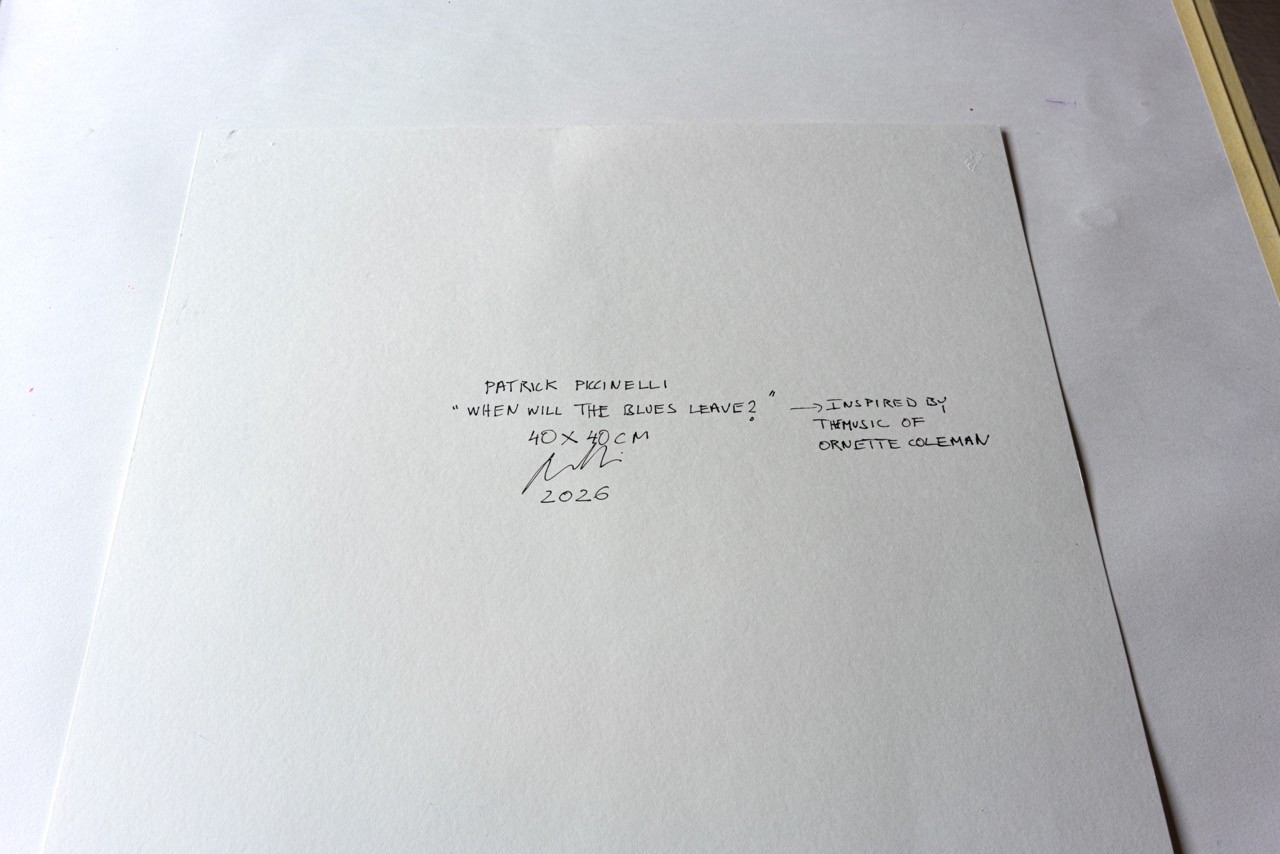
This work on Arches paper is inspired by the title of a song by Ornette Coleman, the great jazz musician.
A painting that thinks like Coleman.
The visual structure: a grammar of the fragment
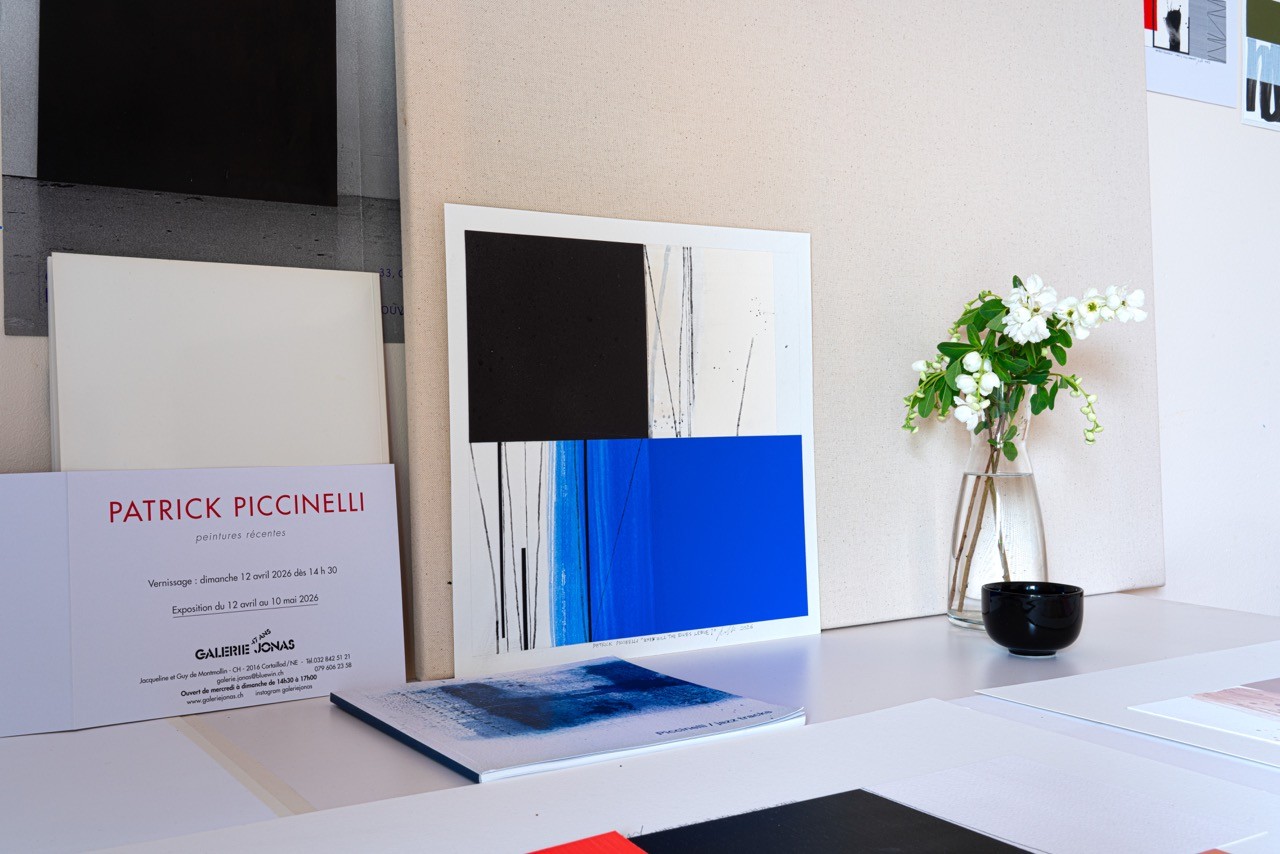
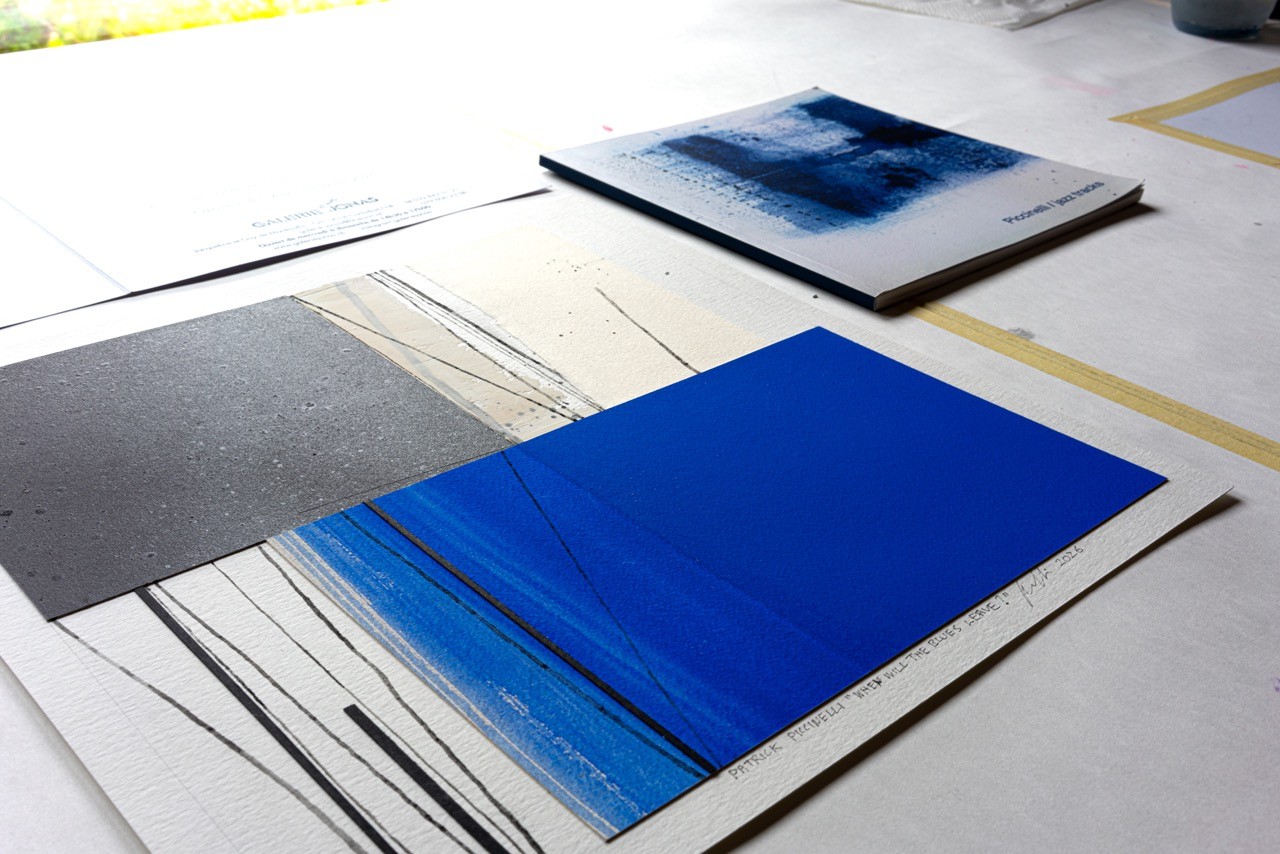
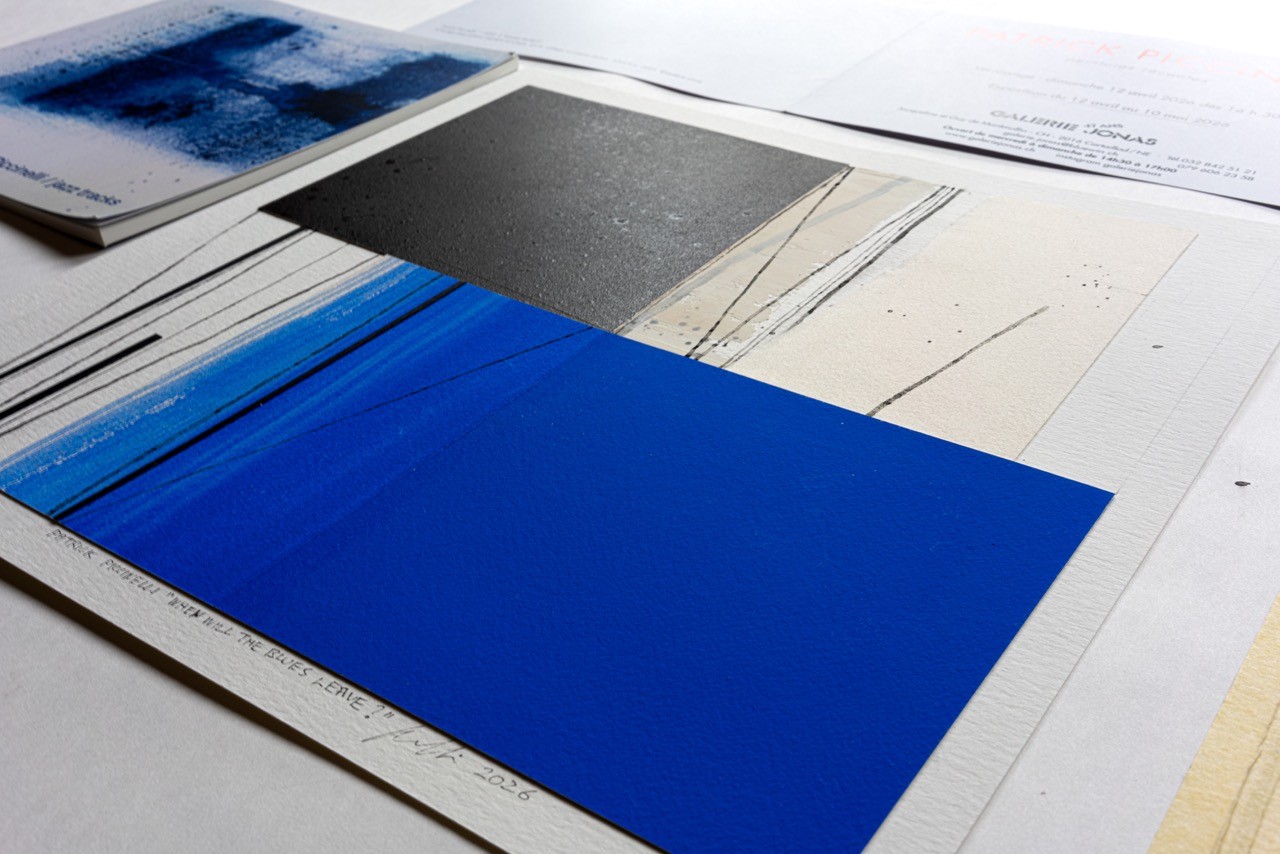
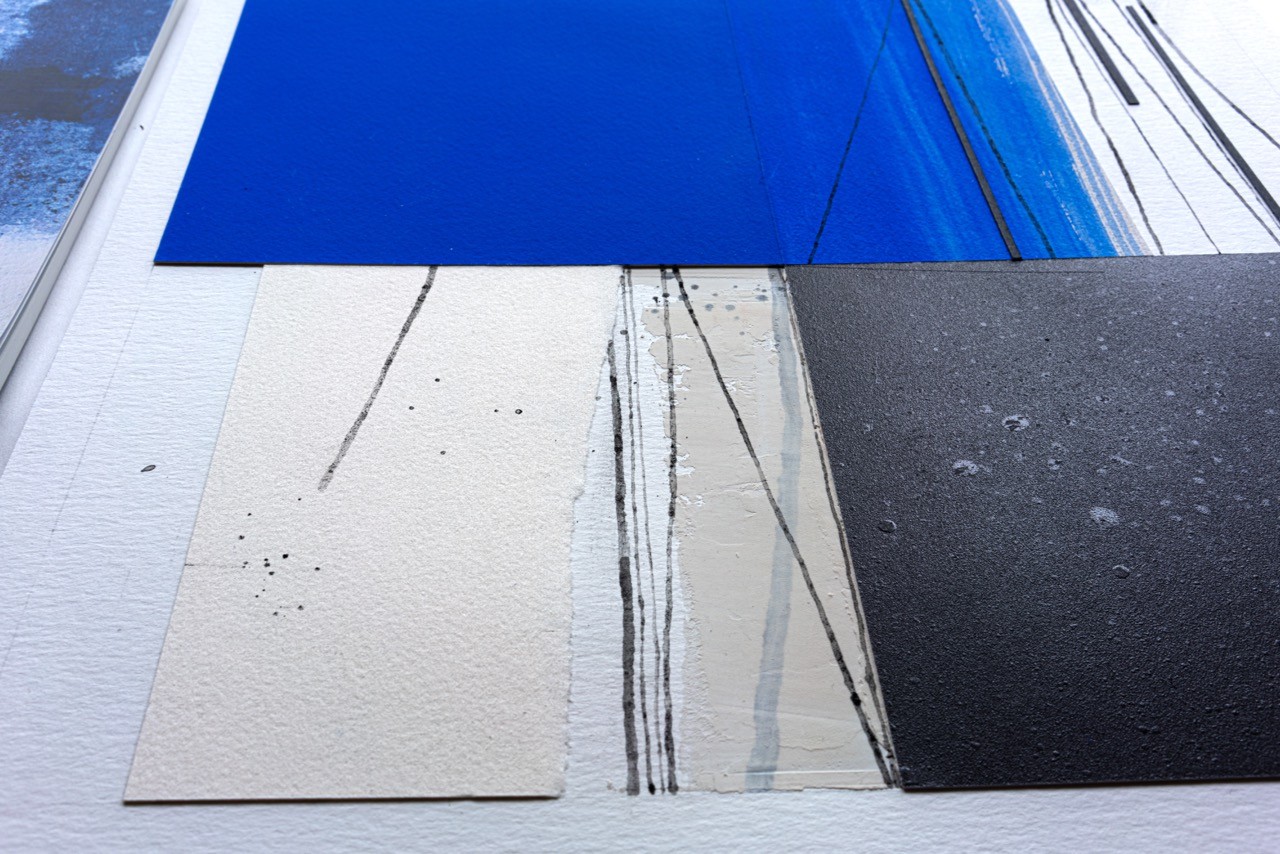
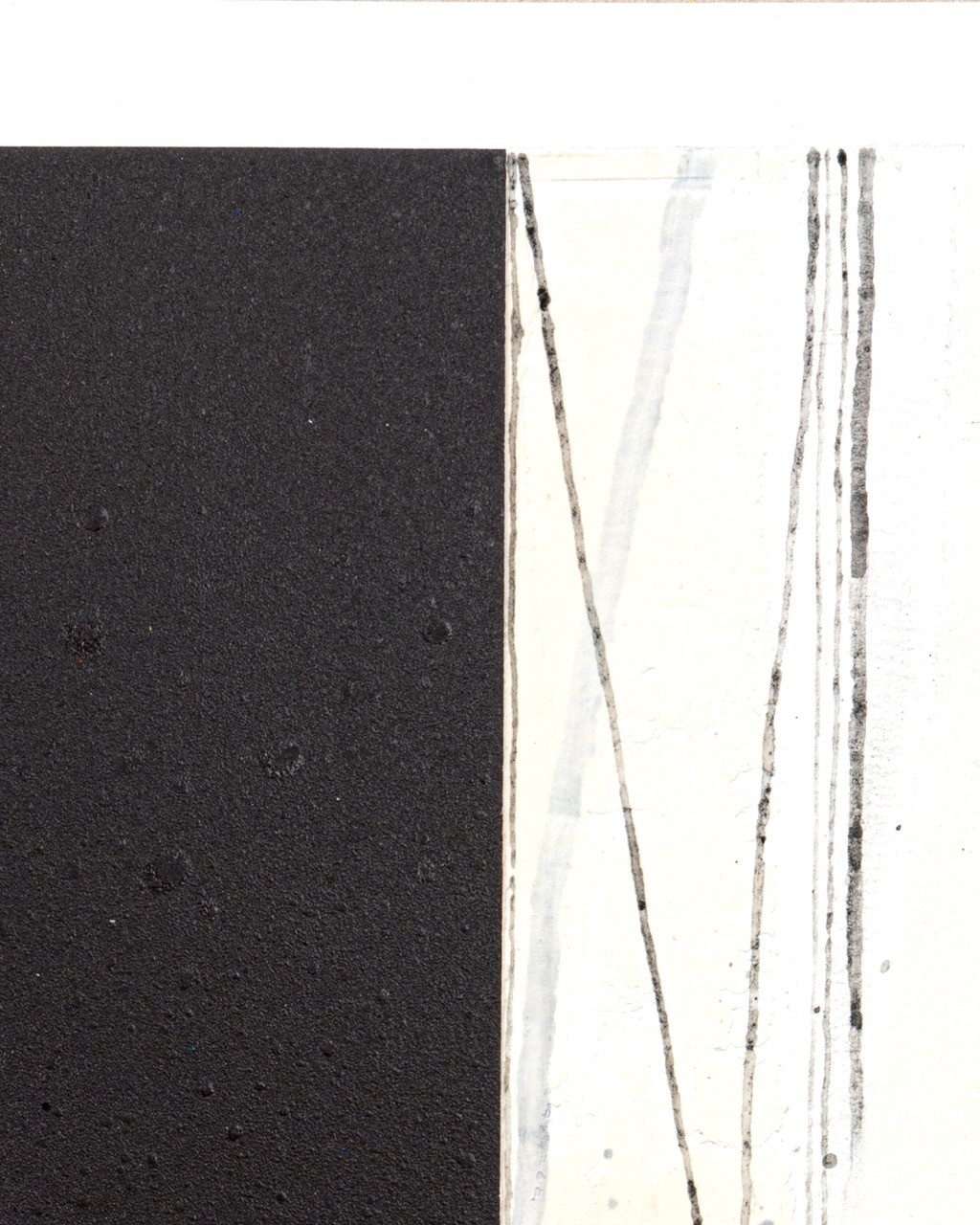
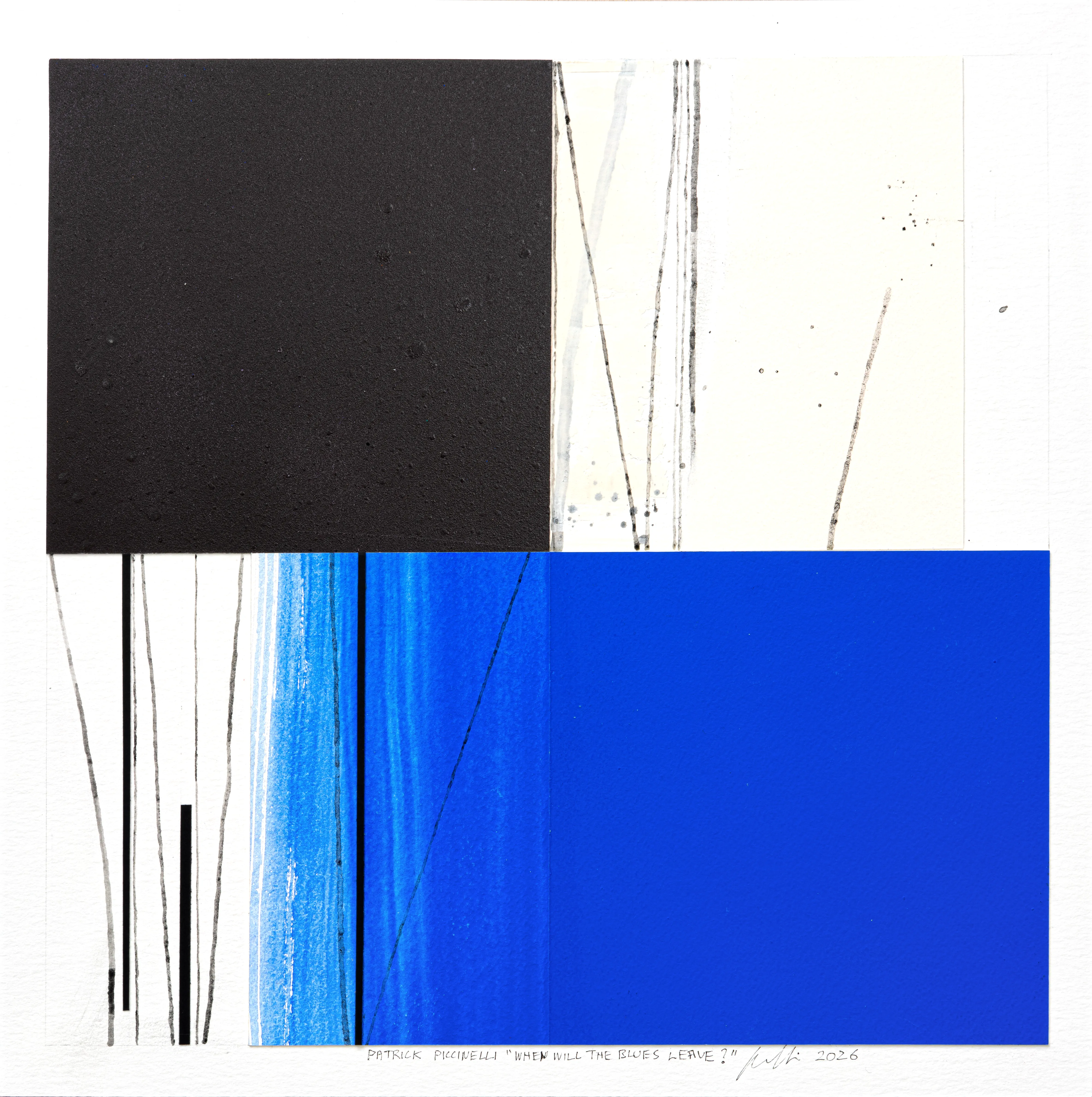
The composition is based on four cardinal blocks—black, white, cerulean blue, Klein blue—separated and traversed by thin, taut, slightly oblique lines. It is not a rigid grid: the blocks do not align perfectly; there are shifts, glides. The paper itself remains visible, like an active silence, a breath between the masses.
This is the logic of Coleman's free jazz: autonomous melodic cells that coexist without submitting to a central tonality. In When Will The Blues Leave? (album The Shape of Jazz to Come, 1959), Don Cherry's line and Ornette's saxophone sometimes seem to play alongside each other—not in opposition, but in a parallel freedom.
Blue: The Unanswered Question
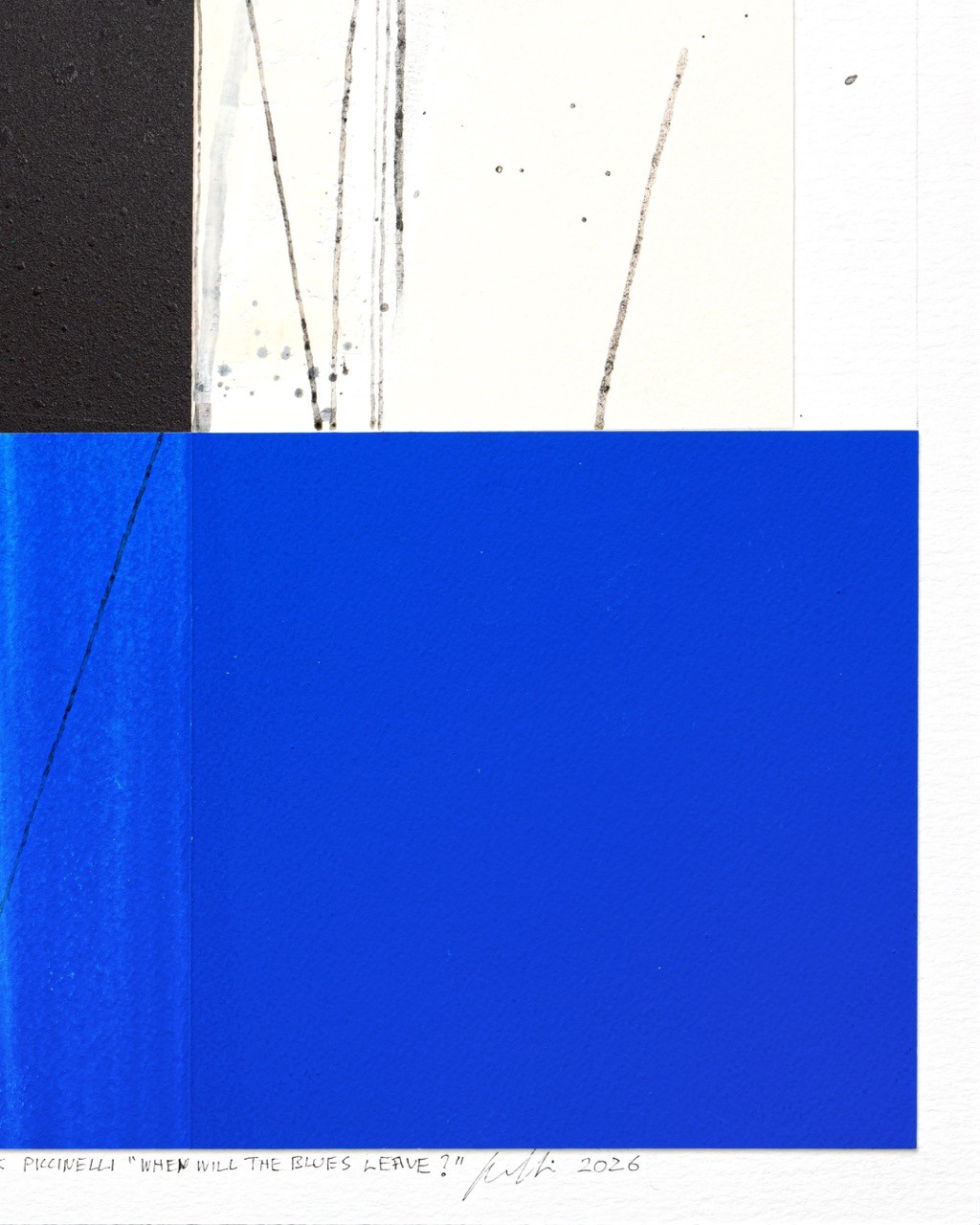
The title is a question without a resolved interrogation point—and the blue in this painting is not an answer either. There are two blues (which are actually made from the same blue applied in different shades defined by dilutions).
The striated, agitated, vertical blue on the left—almost anxious, vibratory, the blue of the blues as a state of the body, as a lament.
The flat, sovereign, electric blue on the right—almost Klein, almost metaphysical, blue as horizon.
Coleman doesn't resolve the blues: he traverses it, he questions it. The title of the composition is itself a suspension—not the blues will leave, but when will it leave? I do the same: the blue doesn't disappear from the painting; it occupies, it insists, it even takes up more space than the black.
The lines: the blue notes of painting.
The fine lines, which cross the surface from one side to the other, are the most Colemanian detail of the work. They don't delimit the blocks; they pierce them. They move from white to blue, from black to white, without stopping at chromatic boundaries.
It is the very gesture of Coleman: the traditional blue note (that expressive flat inherited from gospel and Delta) is, in his work, liberated from its harmonic function. It no longer resolves, it traverses. These pictorial lines possess the same independence: they do not construct perspective, they lead nowhere—they exist along the way.
Matte black: the silence of Charlie Parker
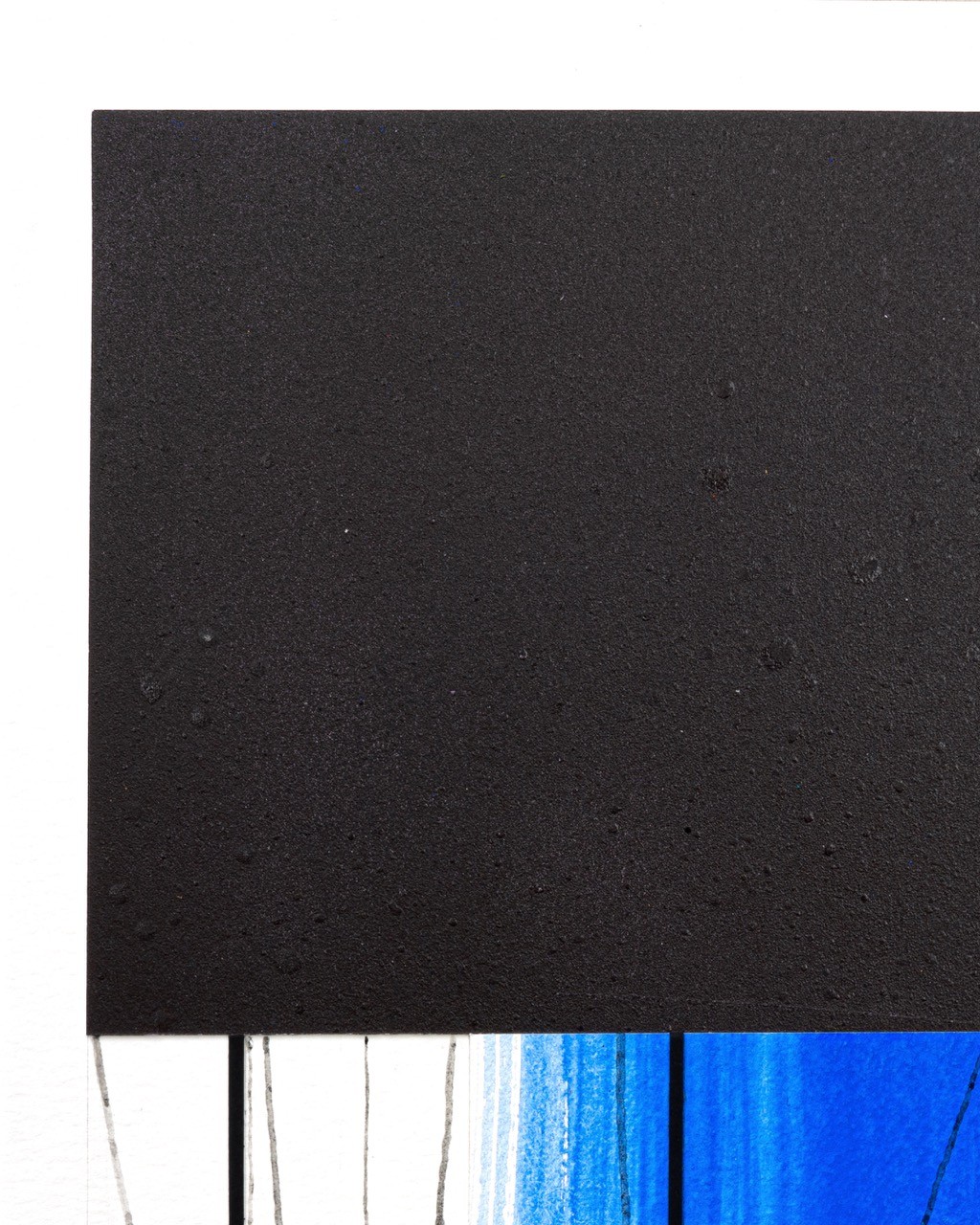
The large black block in the upper left is almost too dense, too absorbing. It does not play. It weighs. One can read in it the weight of tradition—bebop, Charlie Parker, harmonic convention—against which Coleman defined himself. A silence that is not absence, but a bygone presence.
This work on Arches paper is inspired by the title of a song by Ornette Coleman, the great jazz musician.
A painting that thinks like Coleman.
The visual structure: a grammar of the fragment
The composition is based on four cardinal blocks—black, white, cerulean blue, Klein blue—separated and traversed by thin, taut, slightly oblique lines. It is not a rigid grid: the blocks do not align perfectly; there are shifts, glides. The paper itself remains visible, like an active silence, a breath between the masses.
This is the logic of Coleman's free jazz: autonomous melodic cells that coexist without submitting to a central tonality. In When Will The Blues Leave? (album The Shape of Jazz to Come, 1959), Don Cherry's line and Ornette's saxophone sometimes seem to play alongside each other—not in opposition, but in a parallel freedom.
Blue: The Unanswered Question
The title is a question without a resolved interrogation point—and the blue in this painting is not an answer either. There are two blues (which are actually made from the same blue applied in different shades defined by dilutions).
The striated, agitated, vertical blue on the left—almost anxious, vibratory, the blue of the blues as a state of the body, as a lament.
The flat, sovereign, electric blue on the right—almost Klein, almost metaphysical, blue as horizon.
Coleman doesn't resolve the blues: he traverses it, he questions it. The title of the composition is itself a suspension—not the blues will leave, but when will it leave? I do the same: the blue doesn't disappear from the painting; it occupies, it insists, it even takes up more space than the black.
The lines: the blue notes of painting.
The fine lines, which cross the surface from one side to the other, are the most Colemanian detail of the work. They don't delimit the blocks; they pierce them. They move from white to blue, from black to white, without stopping at chromatic boundaries.
It is the very gesture of Coleman: the traditional blue note (that expressive flat inherited from gospel and Delta) is, in his work, liberated from its harmonic function. It no longer resolves, it traverses. These pictorial lines possess the same independence: they do not construct perspective, they lead nowhere—they exist along the way.
Matte black: the silence of Charlie Parker
The large black block in the upper left is almost too dense, too absorbing. It does not play. It weighs. One can read in it the weight of tradition—bebop, Charlie Parker, harmonic convention—against which Coleman defined himself. A silence that is not absence, but a bygone presence.