Improvisation IV
,
2026
Patrick Piccinelli
Improvisation IV
2026
Acrylic paint, gouache, ink, pigment, collage on paper, sold without frame
Acrylic paint, gouache, ink, pigment, collage on paper, sold without frame
50
50
X
X
65
65
Available
€
1,600
shipping worldwide included
Add to card
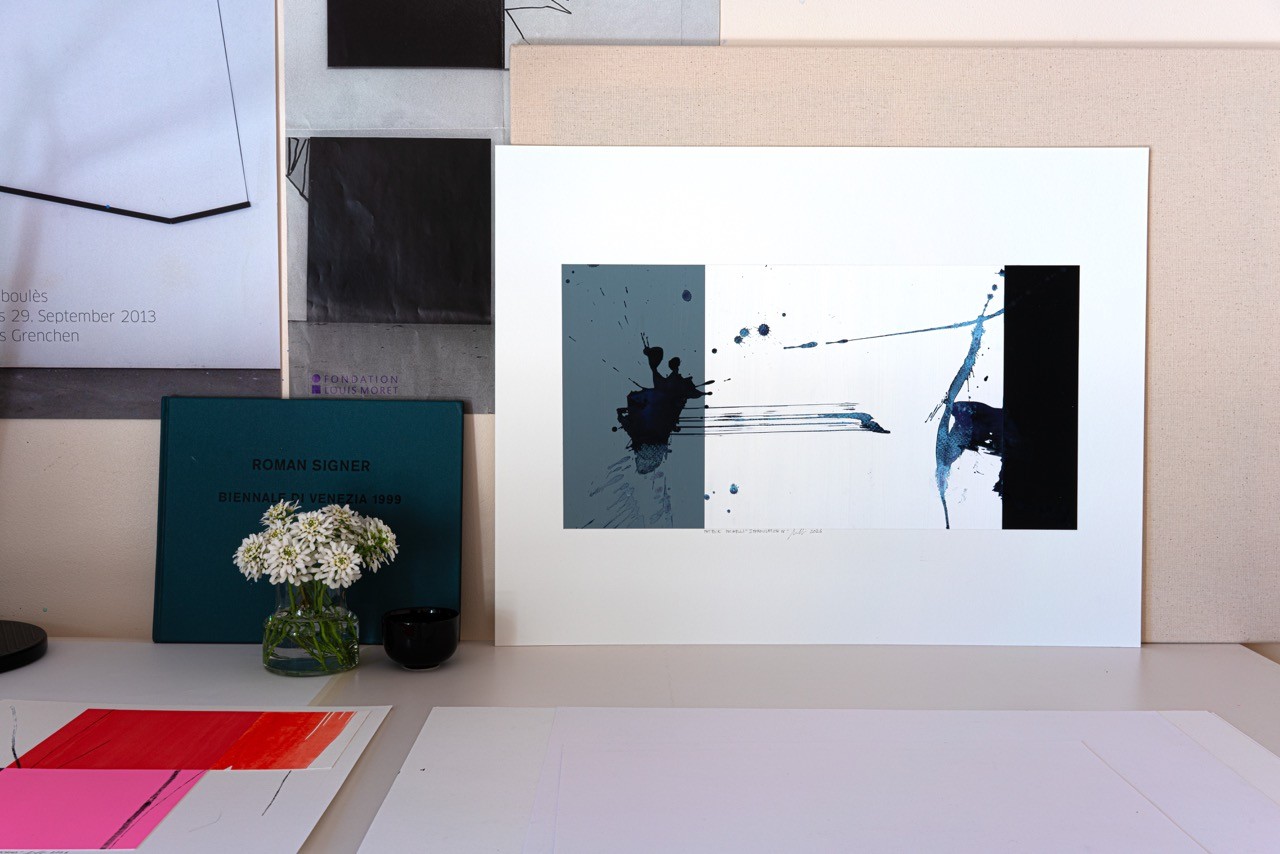
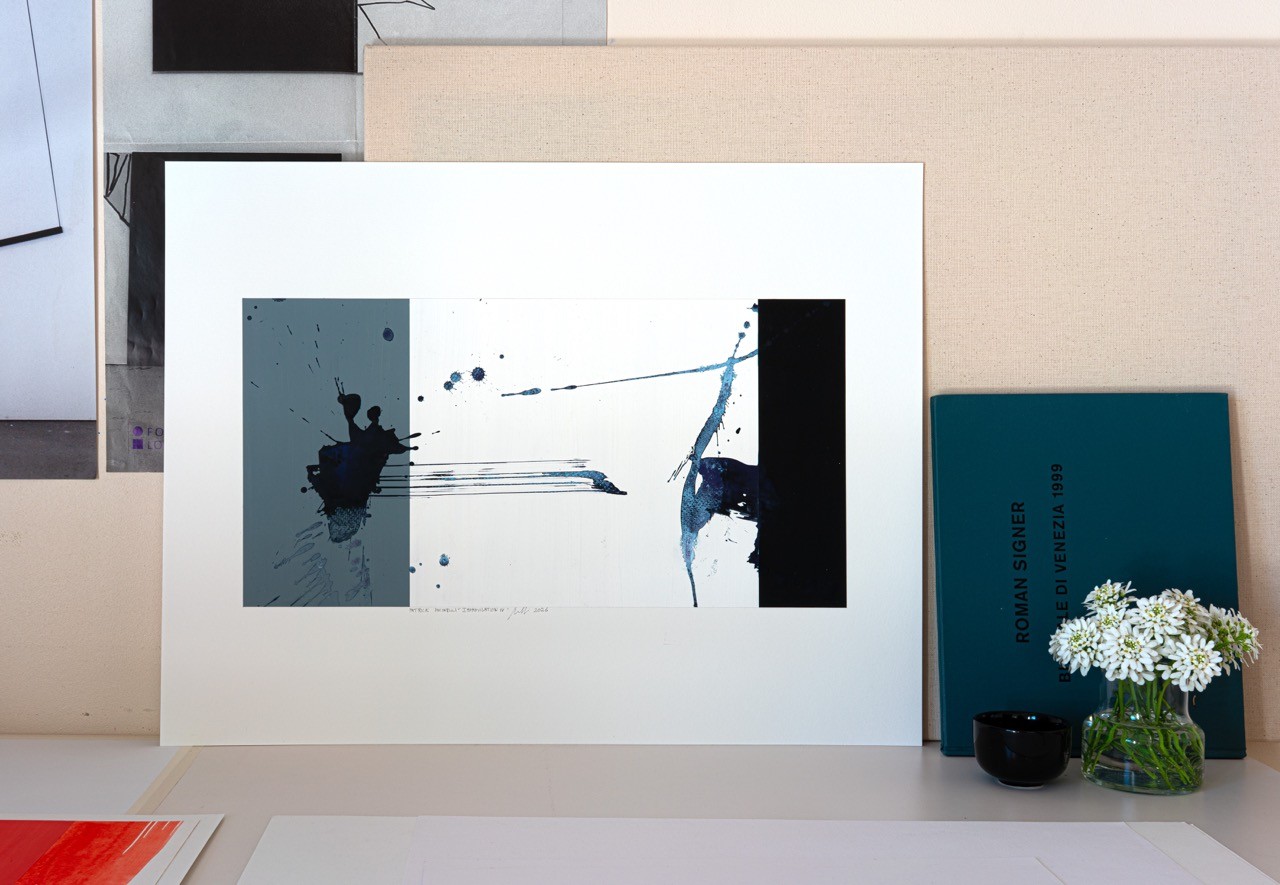
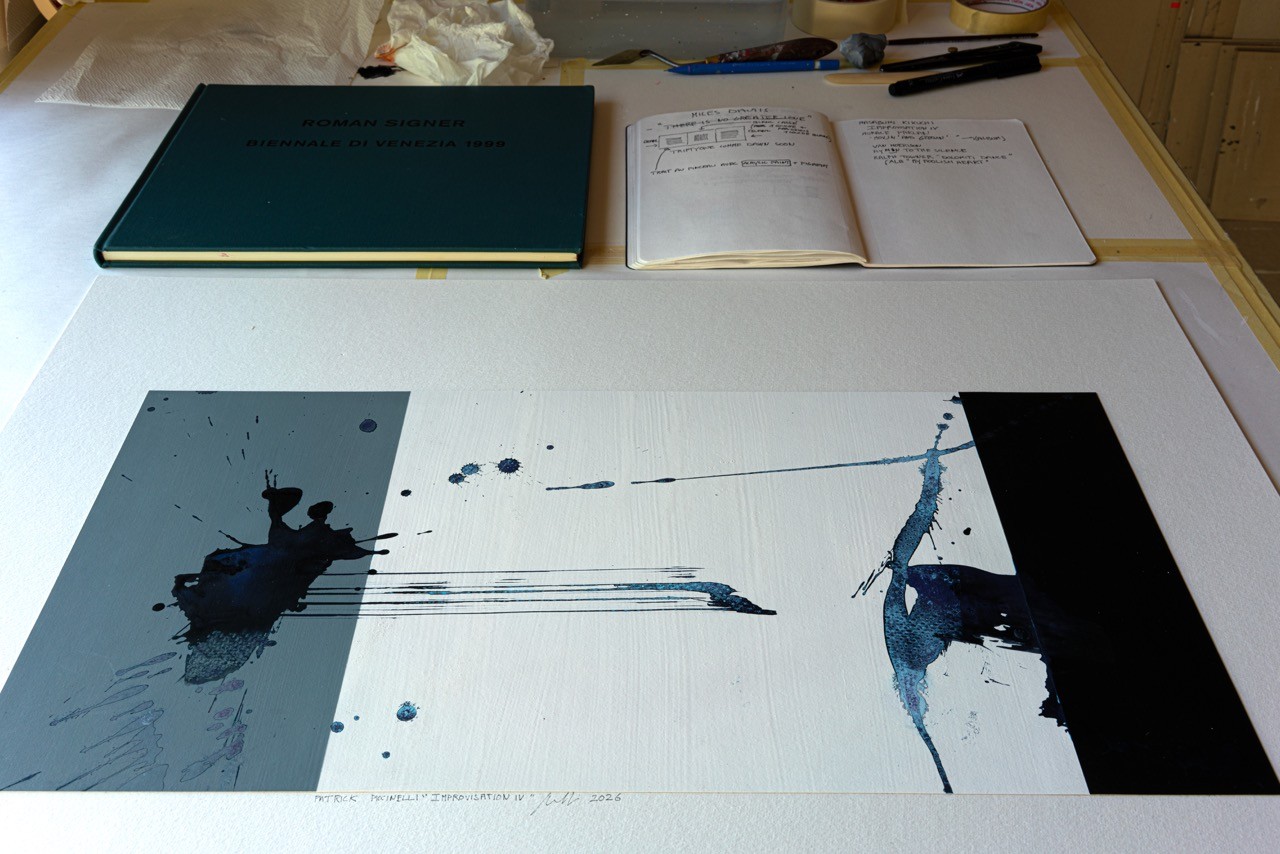
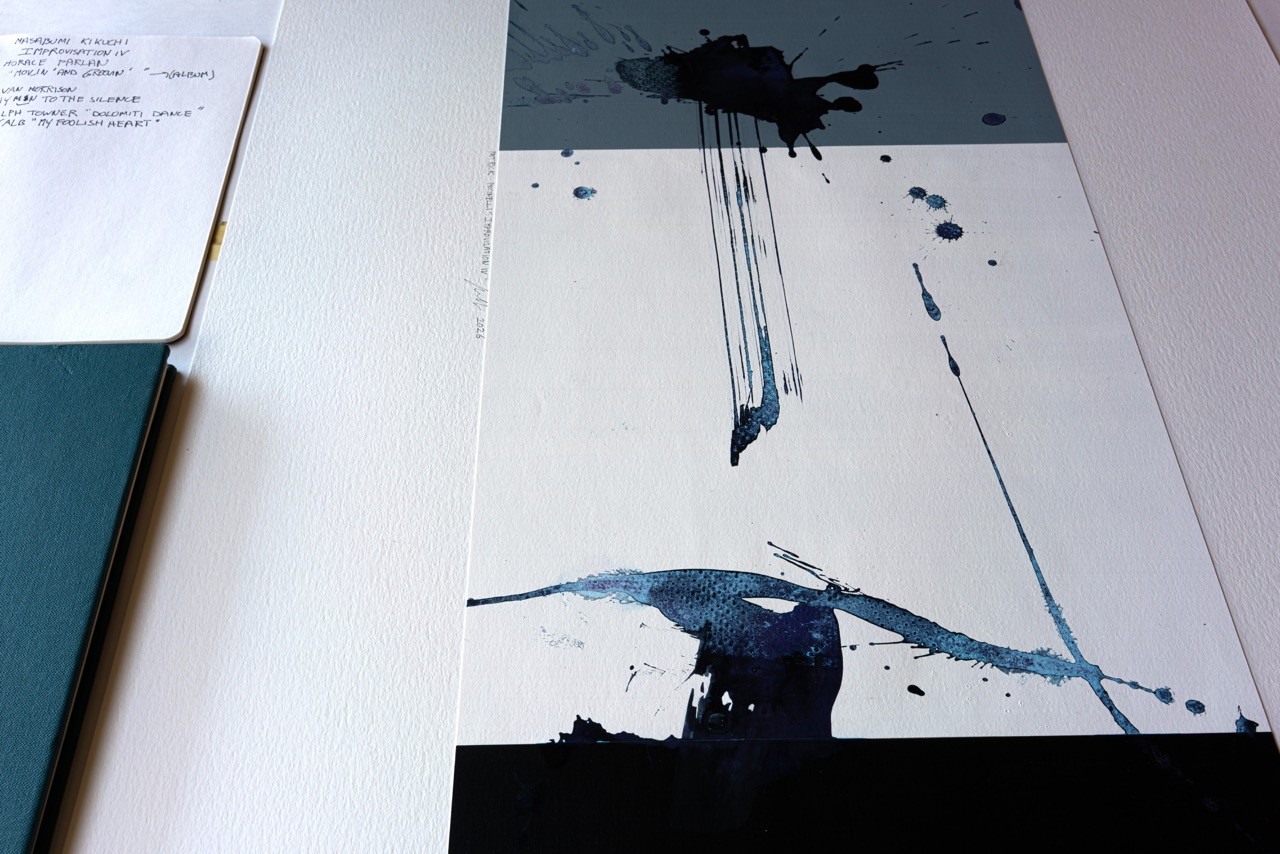
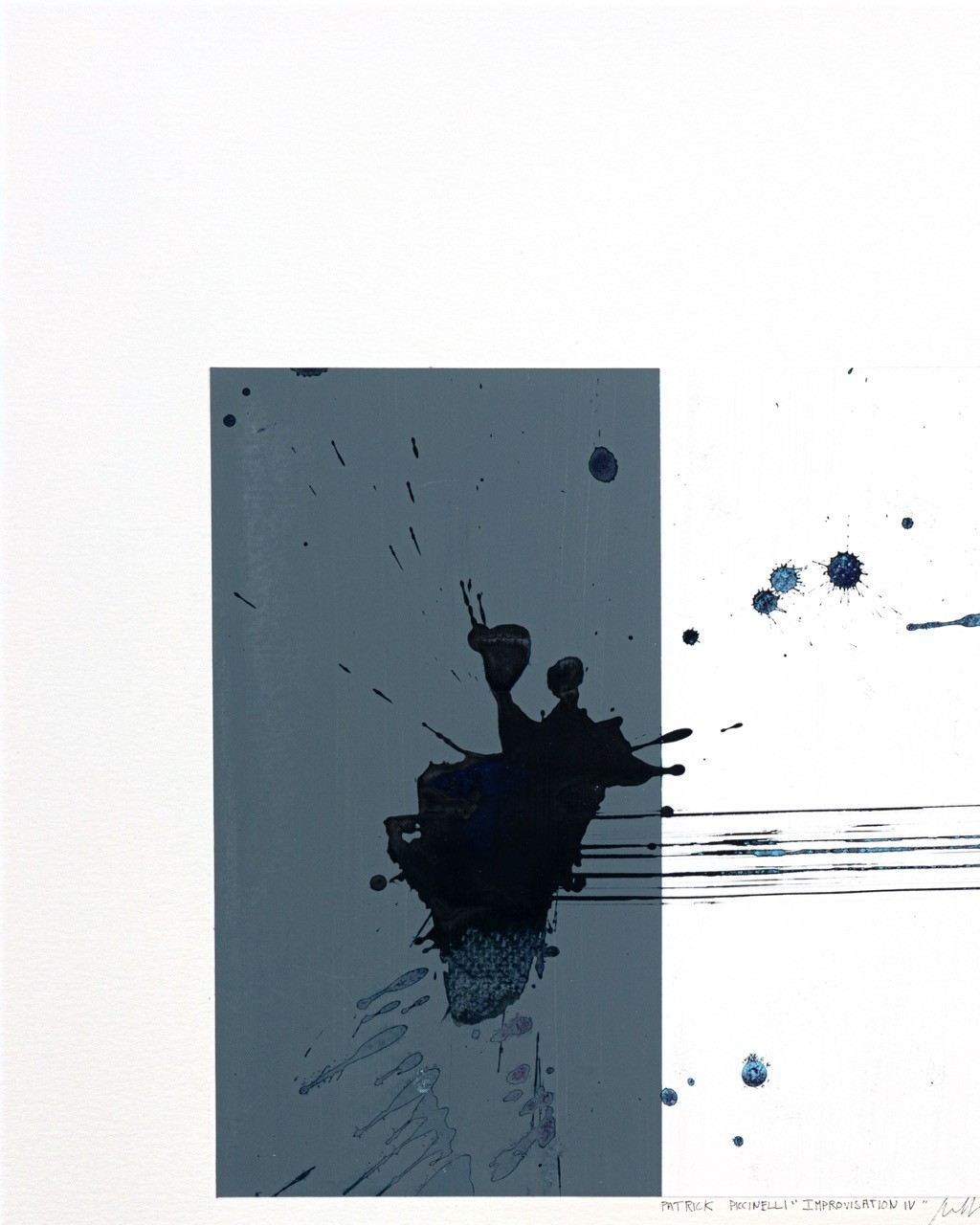
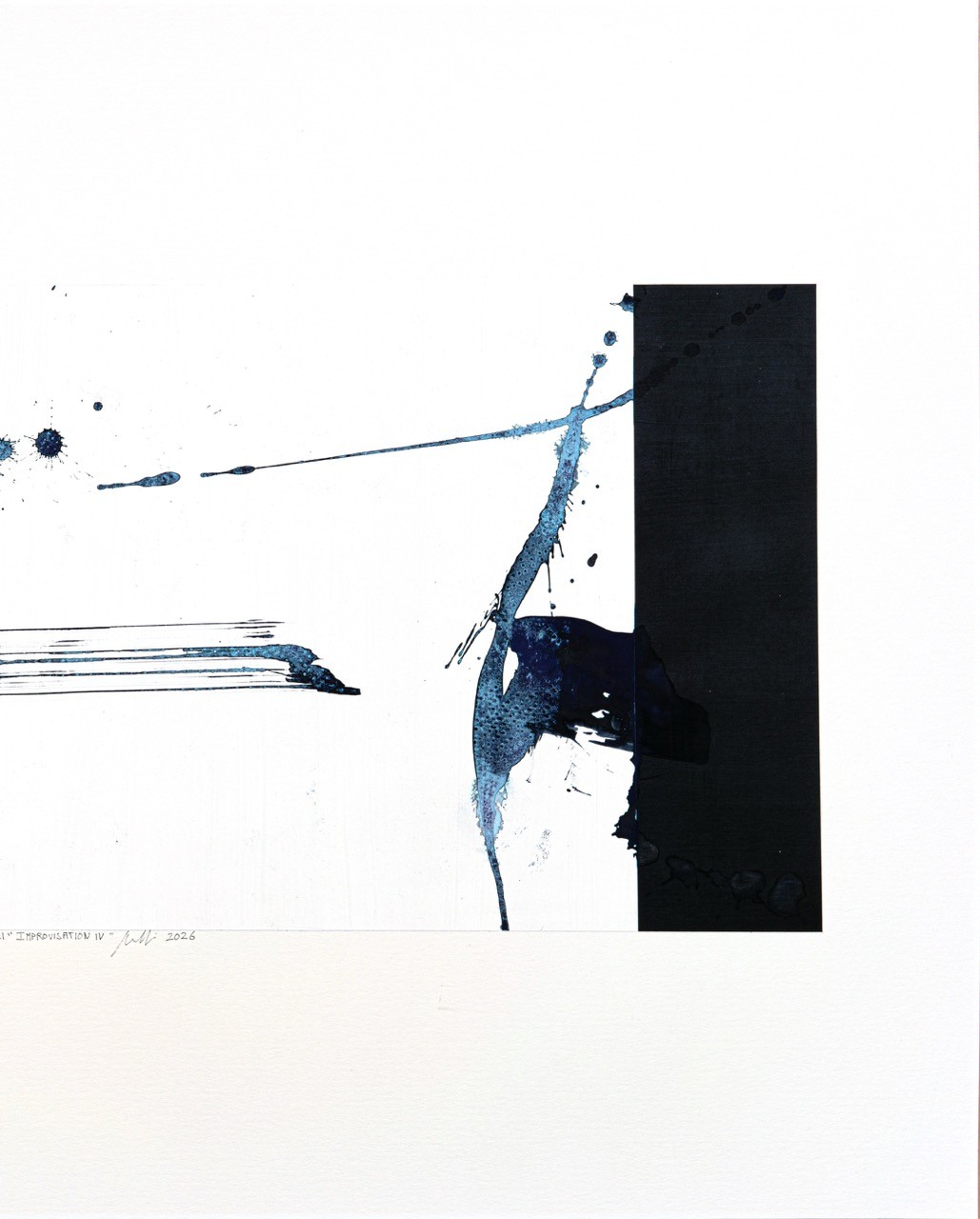
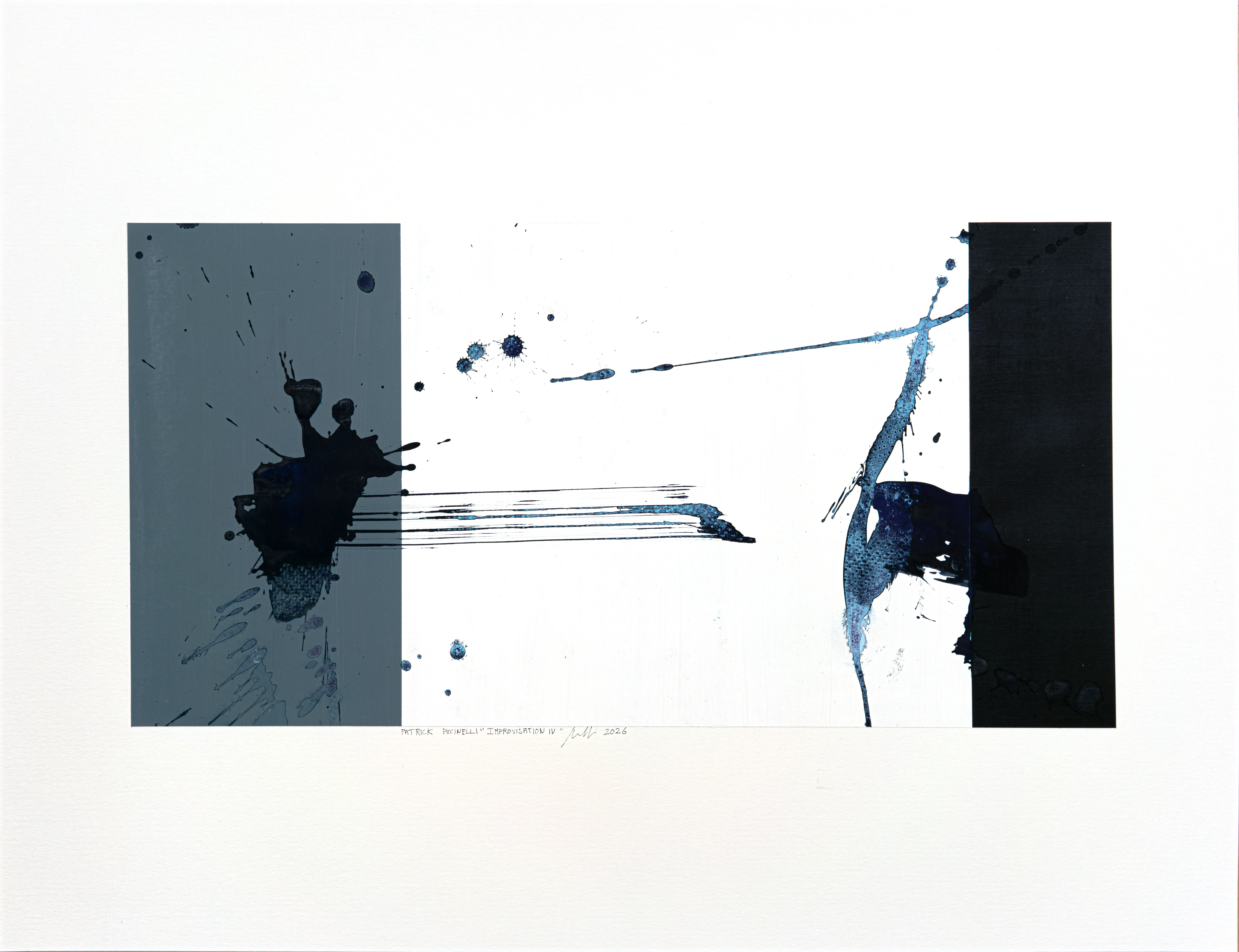
Improvisation IV (2026) is a work on Arches paper inspired by the music of Masabumi Kikuchi. It is a collage of wallpapers painted with acrylic and gouache. I also used ink, varnish, and pigments. This painting unfolds in a landscape format across three distinct zones:
On the left, a rectangle of matte anthracite gray—a stretch of structured silence, a frame. A splash of black explodes violently within it, from which parallel lines escape, running to the right like torn musical staves.
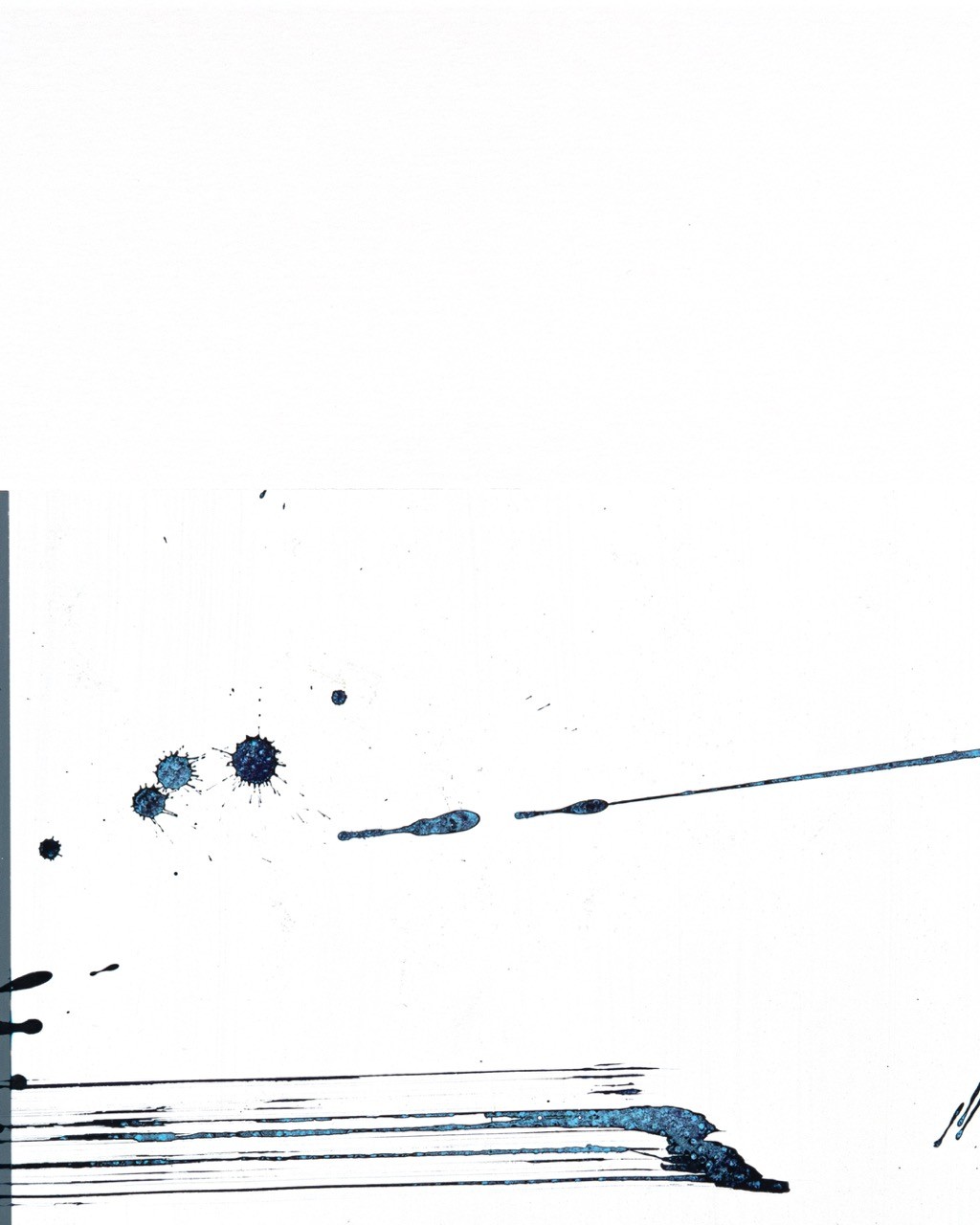
In the center, the white of the paper reigns supreme—empty space, suspension, breath. Splashes of midnight blue wander there, isolated, and a thin, swift horizontal line cuts through the air like an arrow or a conductor's baton.
On the right, a dense, absolute black rectangle, beyond the frame—the abyss, the unspoken. A cobalt blue drip crashes and bounces, organic, almost alive.
My approach can be defined in explicitly musical terms: I am interested in the visual dialogue between structure and chance, a field explored by jazz musicians who improvise within a melody. In "Improvisation IV," the rectangles are the harmonic grid; the splashes, traces, drips, and splatters are the improvised solo.
"Improvisation IV" appears on Hanamichi – The Final Studio Recording Vol. II, a posthumous album by the Japanese pianist Kikuchi, from the December 2013 sessions at the Klavierhaus in New York.
Kikuchi approaches his improvisations with what he called a "compartmentalized originality," playing his notes sparingly and slowly—a stripped-down approach, in which restraint is not hesitation but revelation.
Structure as territory, accident as truth.
In my artistic exploration, geometric rectangles provide a framework—but it is the splash that reveals the truth. In Kikuchi's work, the reference tonality (even when absent) is the framework—and it is the deviated note, the suspended chord, the unexpected silence that conveys the essence. Both works inhabit this tension between the order we impose and the disorder that emerges. My blue, somewhere between black and ultramarine, is reminiscent of Kikuchi's sonic palette: dark, rich harmonies, never strident. His improvisations possess a quality of exploration driven by his inquisitive nature, a "compartmentalized originality"—music that came from his soul. My blue, I hope, has this same introspective depth.
The central white area of Improvisation IV is not a void—it is a space where the gaze suspends its movement, just as Kikuchi does with the silence between the notes. Silence is an essential component of Kikuchi's music—he pays close attention to how each note sounds individually.
The lines that emerge from the black splash cannot be repeated—they were drawn in a single gesture. Similarly, Kikuchi always resisted closure; he preferred the question to the answer, the gesture to the statement, silence to the resolution. Both works reject repetition and explanation: they are, in their entirety, a single gesture. My work on paper, "Improvisation IV," and Kikuchi's Improvisation IV share the same ethic of the moment: accepting that beauty arises from rupture, that structure is not a prison but an invitation, and that improvisation is not the absence of form—but its most honest form. I paint what Masabumi plays: an unstable, luminous, never-resolved equilibrium.
Improvisation IV (2026) is a work on Arches paper inspired by the music of Masabumi Kikuchi. It is a collage of wallpapers painted with acrylic and gouache. I also used ink, varnish, and pigments. This painting unfolds in a landscape format across three distinct zones:
On the left, a rectangle of matte anthracite gray—a stretch of structured silence, a frame. A splash of black explodes violently within it, from which parallel lines escape, running to the right like torn musical staves.
In the center, the white of the paper reigns supreme—empty space, suspension, breath. Splashes of midnight blue wander there, isolated, and a thin, swift horizontal line cuts through the air like an arrow or a conductor's baton.
On the right, a dense, absolute black rectangle, beyond the frame—the abyss, the unspoken. A cobalt blue drip crashes and bounces, organic, almost alive.
My approach can be defined in explicitly musical terms: I am interested in the visual dialogue between structure and chance, a field explored by jazz musicians who improvise within a melody. In "Improvisation IV," the rectangles are the harmonic grid; the splashes, traces, drips, and splatters are the improvised solo.
"Improvisation IV" appears on Hanamichi – The Final Studio Recording Vol. II, a posthumous album by the Japanese pianist Kikuchi, from the December 2013 sessions at the Klavierhaus in New York.
Kikuchi approaches his improvisations with what he called a "compartmentalized originality," playing his notes sparingly and slowly—a stripped-down approach, in which restraint is not hesitation but revelation.
Structure as territory, accident as truth.
In my artistic exploration, geometric rectangles provide a framework—but it is the splash that reveals the truth. In Kikuchi's work, the reference tonality (even when absent) is the framework—and it is the deviated note, the suspended chord, the unexpected silence that conveys the essence. Both works inhabit this tension between the order we impose and the disorder that emerges. My blue, somewhere between black and ultramarine, is reminiscent of Kikuchi's sonic palette: dark, rich harmonies, never strident. His improvisations possess a quality of exploration driven by his inquisitive nature, a "compartmentalized originality"—music that came from his soul. My blue, I hope, has this same introspective depth.
The central white area of Improvisation IV is not a void—it is a space where the gaze suspends its movement, just as Kikuchi does with the silence between the notes. Silence is an essential component of Kikuchi's music—he pays close attention to how each note sounds individually.
The lines that emerge from the black splash cannot be repeated—they were drawn in a single gesture. Similarly, Kikuchi always resisted closure; he preferred the question to the answer, the gesture to the statement, silence to the resolution. Both works reject repetition and explanation: they are, in their entirety, a single gesture. My work on paper, "Improvisation IV," and Kikuchi's Improvisation IV share the same ethic of the moment: accepting that beauty arises from rupture, that structure is not a prison but an invitation, and that improvisation is not the absence of form—but its most honest form. I paint what Masabumi plays: an unstable, luminous, never-resolved equilibrium.