With Gratitude
,
2026
Patrick Piccinelli
With Gratitude
2026
acrylic paint, varnish, pigment, glass particles
acrylic paint, varnish, pigment, glass particles
40
40
X
X
40
40
Available
€
1,200
shipping worldwide included
Add to card
A work inspired by a Steve Kuhn Trio title.
The title: gratitude as a state of light:
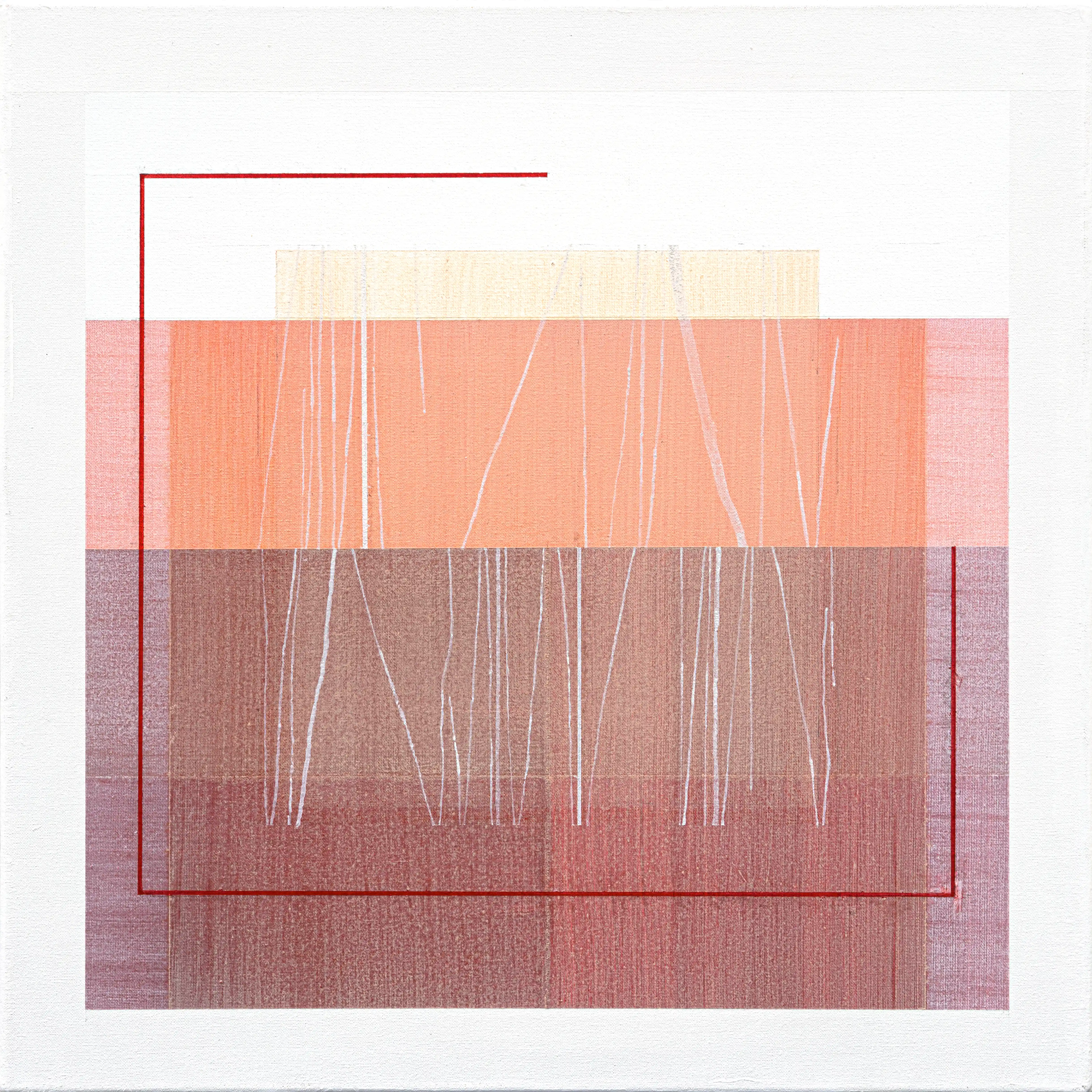
The painting evokes gratitude and creates its atmosphere. Several elements relate to this:
The warmth of the colors: the transition from pale yellow to coral and then to burgundy calls to mind a sunset—that moment when one looks back with appreciation.
The open frame: it suggests an attitude of receptivity rather than enclosure. We welcome what comes.
The white lines: their delicacy evokes what flows through and connects us—tiny gestures, memories, presences.
The white void: it gives space to silence, a prerequisite for gratitude.
The art of Kuhn—a lyrical pianist and heir to a sensibility akin to Bill Evans’s—is characterized by suspended harmonies and a fondness for silence. There are numerous parallels with the canvas:
Harmonic layers and translucent flat color areas. Kuhn’s chords overlap and blend rather than clash, much like my own chromatic overlays.
The red line and the trio’s structure. It plays the role of the bass line or the shape of the theme: a clear yet open framework within which improvisation can flow.
The white lines and the pianist’s playing. Their fragile, slightly irregular tracing resembles improvised phrases that descend, rise, and intertwine.
The white margins and the silences. In Kuhn’s work, as in mine, what remains unsaid or unpainted matters just as much as what is expressed.
The twilight warmth. Kuhn’s ballad-style jazz evokes the mood of a tranquil evening—a melancholy devoid of bitterness—much like a coral-to-burgundy color gradient.
Ultimately, in both works, the sense of gratitude is contemplative and understated, defined by restraint and light.
A work inspired by a Steve Kuhn Trio title.
The title: gratitude as a state of light:
The painting evokes gratitude and creates its atmosphere. Several elements relate to this:
The warmth of the colors: the transition from pale yellow to coral and then to burgundy calls to mind a sunset—that moment when one looks back with appreciation.
The open frame: it suggests an attitude of receptivity rather than enclosure. We welcome what comes.
The white lines: their delicacy evokes what flows through and connects us—tiny gestures, memories, presences.
The white void: it gives space to silence, a prerequisite for gratitude.
The art of Kuhn—a lyrical pianist and heir to a sensibility akin to Bill Evans’s—is characterized by suspended harmonies and a fondness for silence. There are numerous parallels with the canvas:
Harmonic layers and translucent flat color areas. Kuhn’s chords overlap and blend rather than clash, much like my own chromatic overlays.
The red line and the trio’s structure. It plays the role of the bass line or the shape of the theme: a clear yet open framework within which improvisation can flow.
The white lines and the pianist’s playing. Their fragile, slightly irregular tracing resembles improvised phrases that descend, rise, and intertwine.
The white margins and the silences. In Kuhn’s work, as in mine, what remains unsaid or unpainted matters just as much as what is expressed.
The twilight warmth. Kuhn’s ballad-style jazz evokes the mood of a tranquil evening—a melancholy devoid of bitterness—much like a coral-to-burgundy color gradient.
Ultimately, in both works, the sense of gratitude is contemplative and understated, defined by restraint and light.