India
,
2026
Patrick Piccinelli
India
2026
acrylic paint, paint marker, pigment, collage on paper, sold without frame
acrylic paint, paint marker, pigment, collage on paper, sold without frame
29
29
X
X
25.5
25.5
Available
€
400
shipping worldwide included
Add to card
Inspired by the music of John Coltrane.
The work and its sonic counterpart:
The connection with John Coltrane and his album India (recorded in 1961, released on Impressions in 1963) is key to understanding the work.
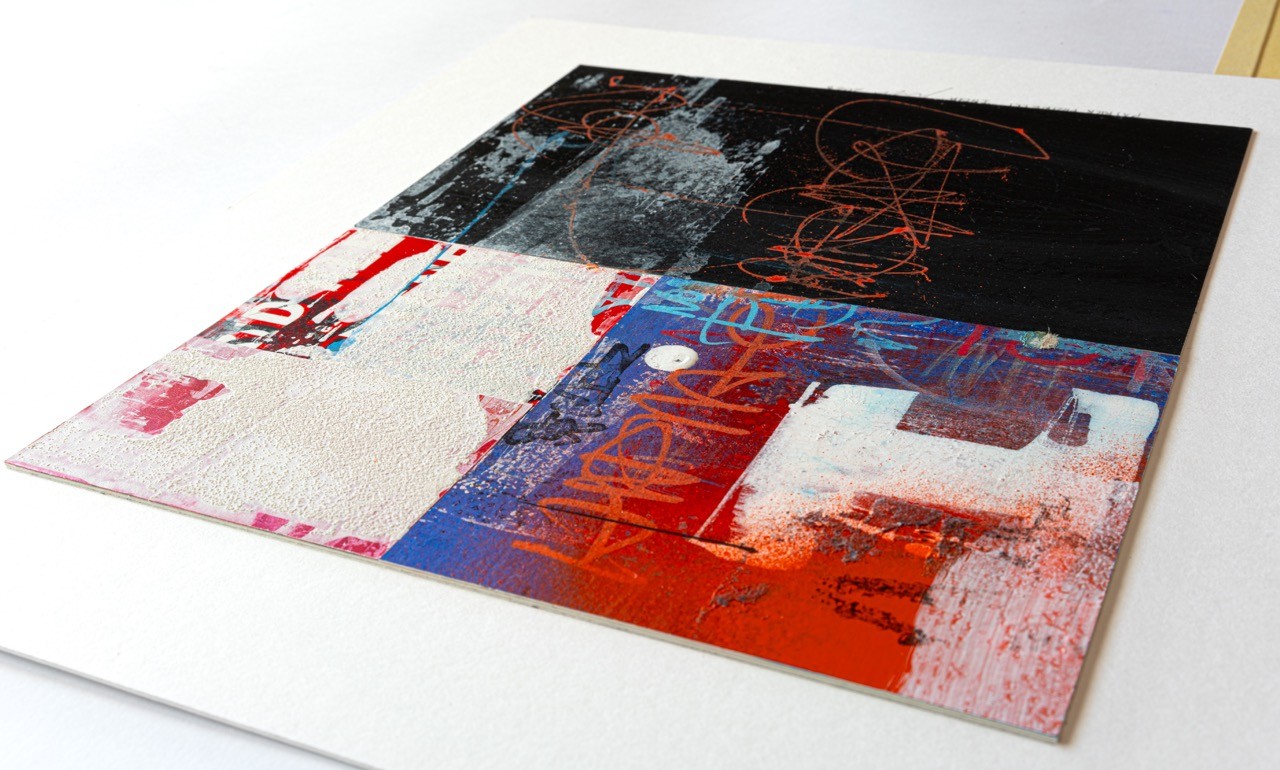
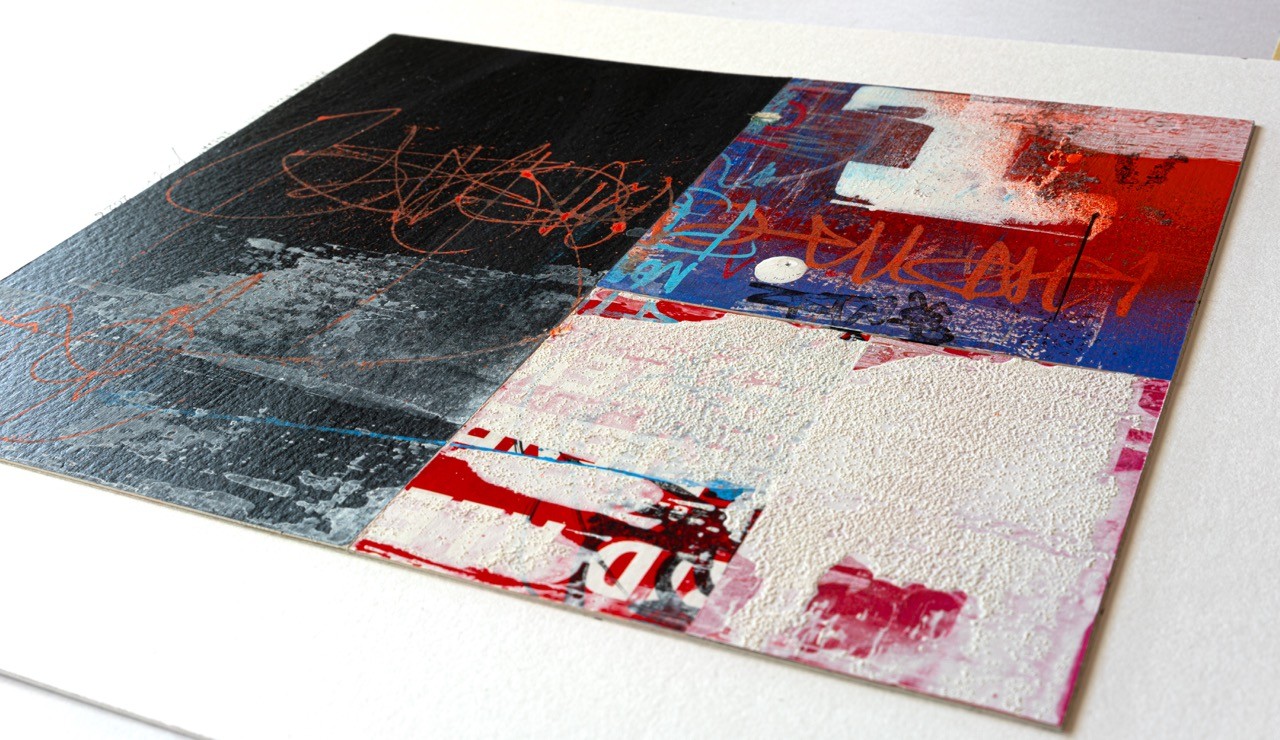
The piece is structured in four squares, like the four beats of a piece, or the four musicians of a quartet. This division is not rigid: the colors and gestures constantly transgress it, just as Coltrane transgressed the harmonic structure of the standard.
With India, Coltrane goes beyond Western jazz. The melody is based on an almost hypnotic bass line (played on the English horn and bass clarinet), while the saxophone explores freely above it.
I sought this same dialogue on a visual level; the black background at the bottom is the bass line. The orange graffiti on top is improvisation.
Inspired by the music of John Coltrane.
The work and its sonic counterpart:
The connection with John Coltrane and his album India (recorded in 1961, released on Impressions in 1963) is key to understanding the work.
The piece is structured in four squares, like the four beats of a piece, or the four musicians of a quartet. This division is not rigid: the colors and gestures constantly transgress it, just as Coltrane transgressed the harmonic structure of the standard.
With India, Coltrane goes beyond Western jazz. The melody is based on an almost hypnotic bass line (played on the English horn and bass clarinet), while the saxophone explores freely above it.
I sought this same dialogue on a visual level; the black background at the bottom is the bass line. The orange graffiti on top is improvisation.