The Day Breaks
,
2023
Patrick Piccinelli
The Day Breaks
2023
Acrylic, Ink on Canvas
Acrylic, Ink on Canvas
80
X
80
80
X
80
Available
€
2,900
Shipping and import duties included
Shipping and returns
- Shipping
- Packed in a double-wall box or a wooden crate and shipped from Switzerland by DHL Express within 2 to 3 days. Delivery takes 2 to 15 business days; the tracking number comes by email.
- Import duties
- Shipping, customs duties and import taxes are paid by us, for every country. Nothing is due on delivery.
- Returns
- An original painting cannot be returned or exchanged. A parcel lost or damaged in transit is refunded in full or replaced.
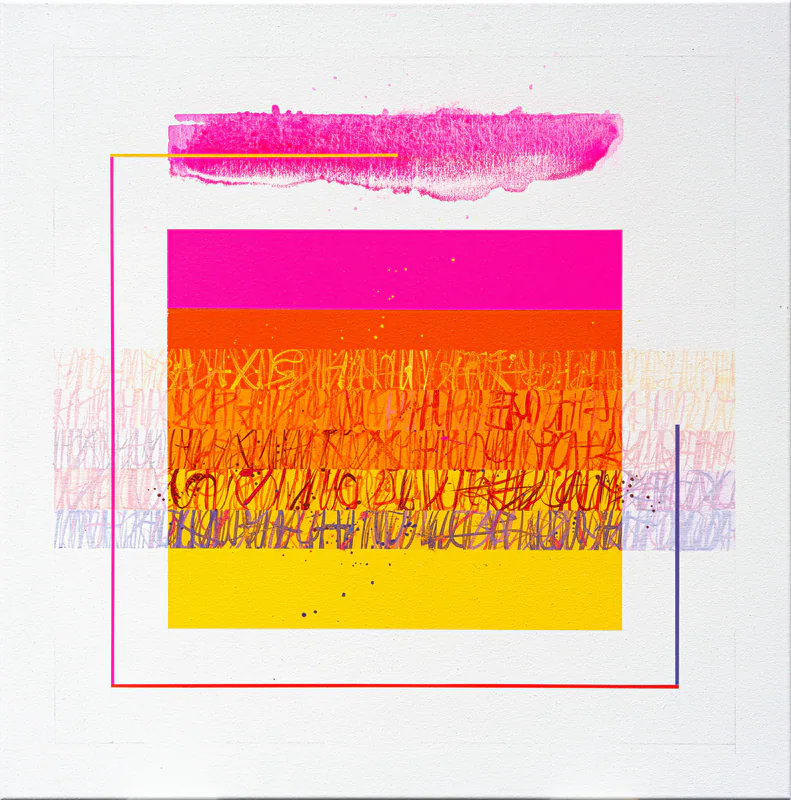
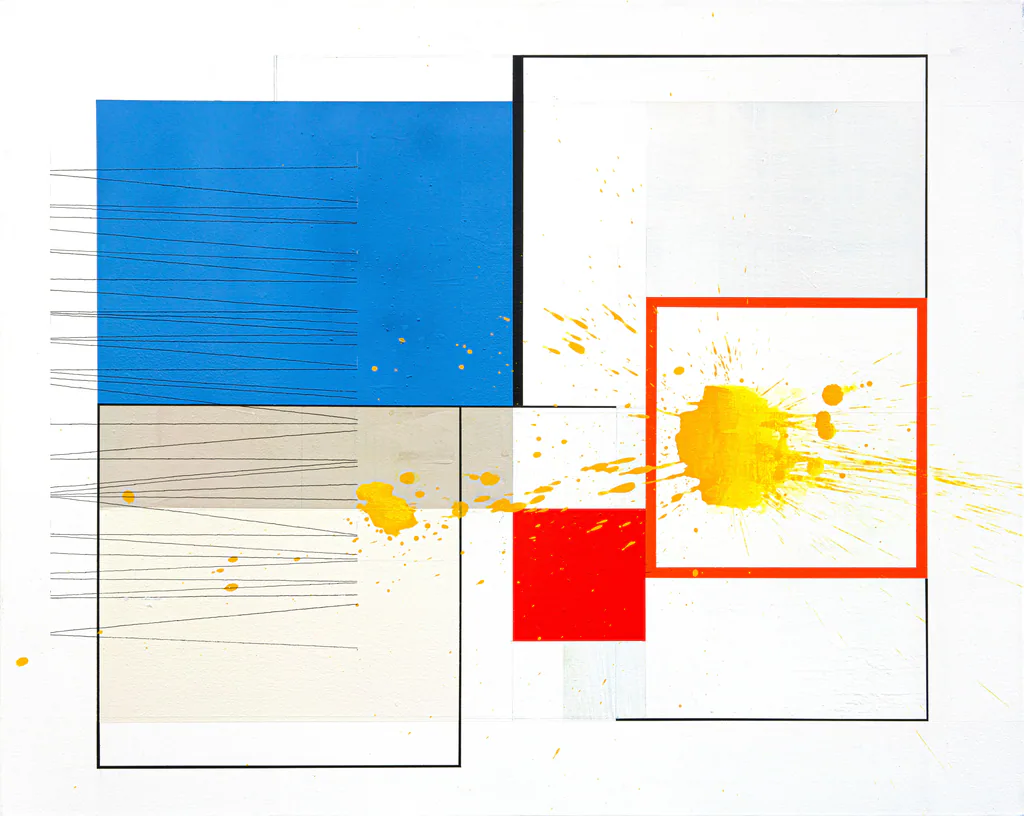
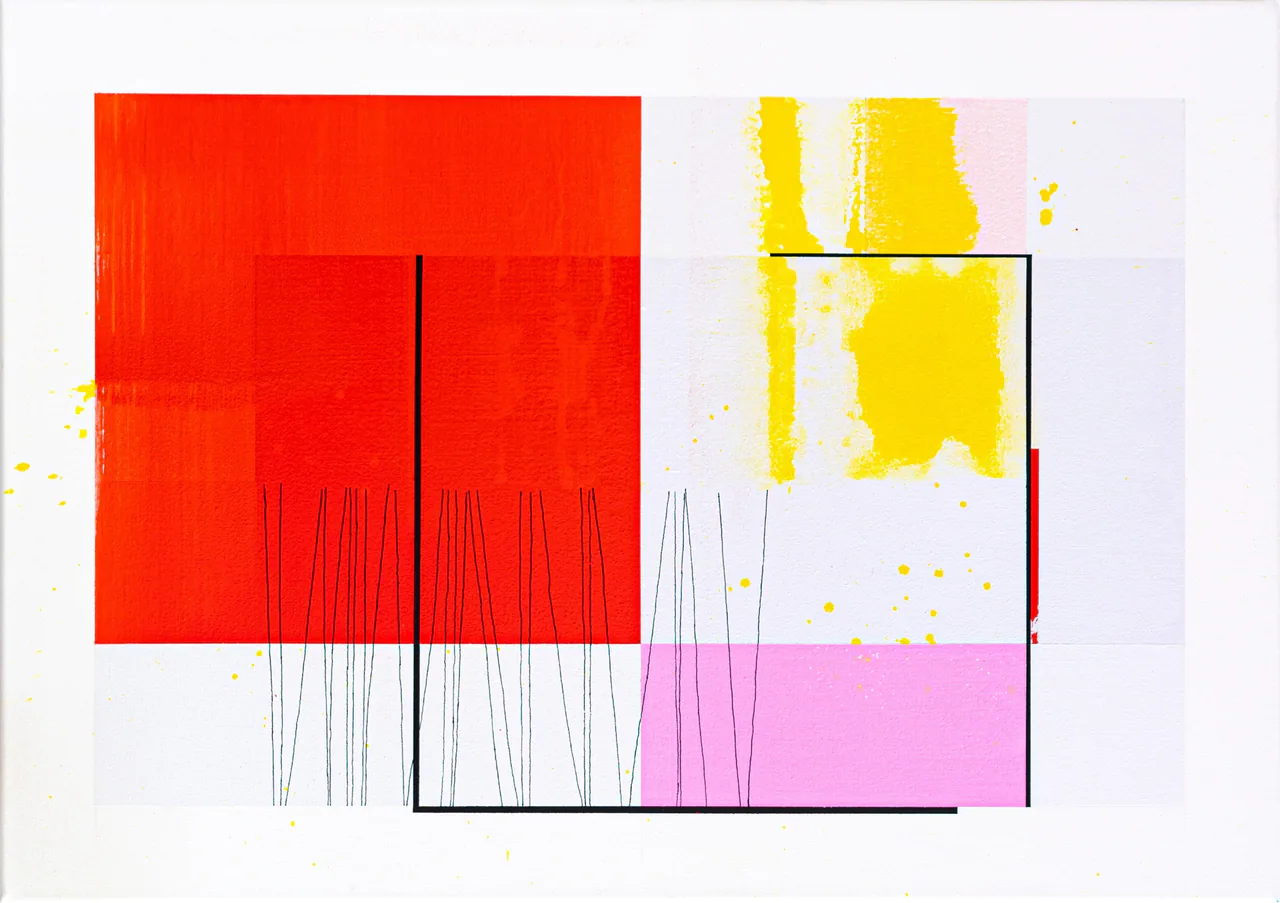
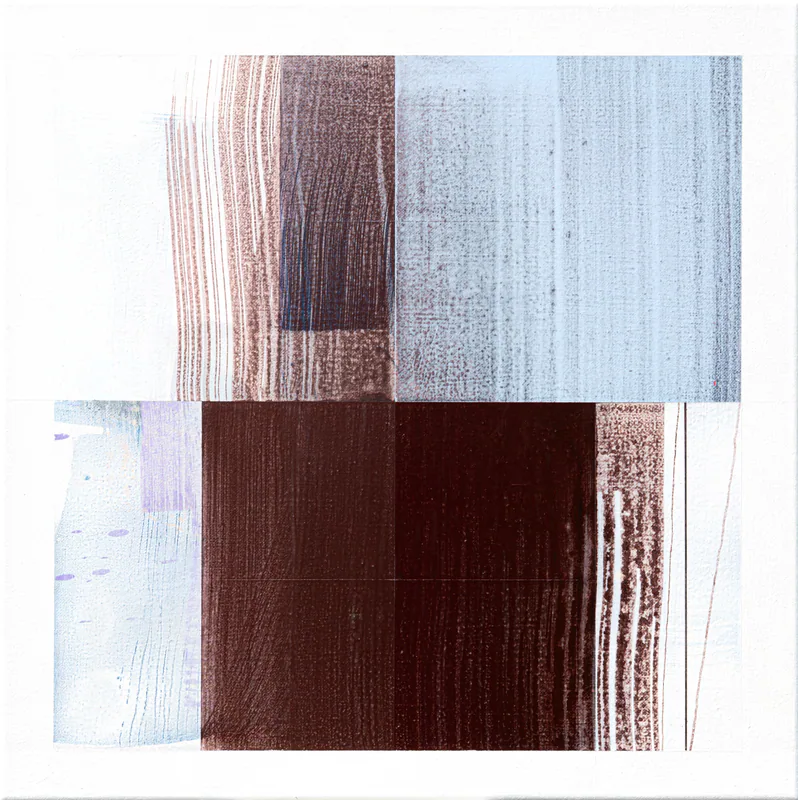
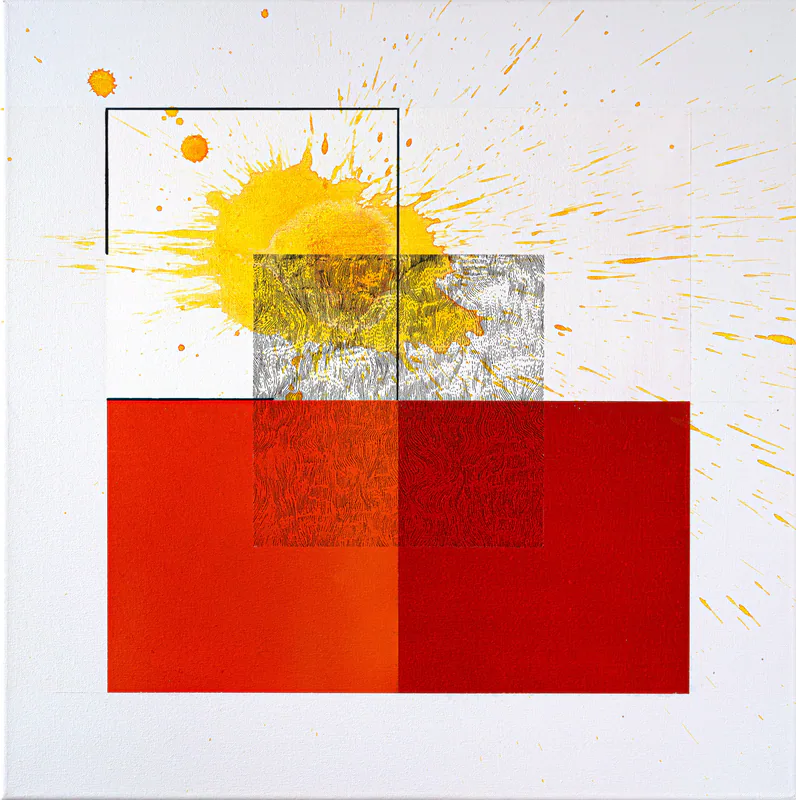
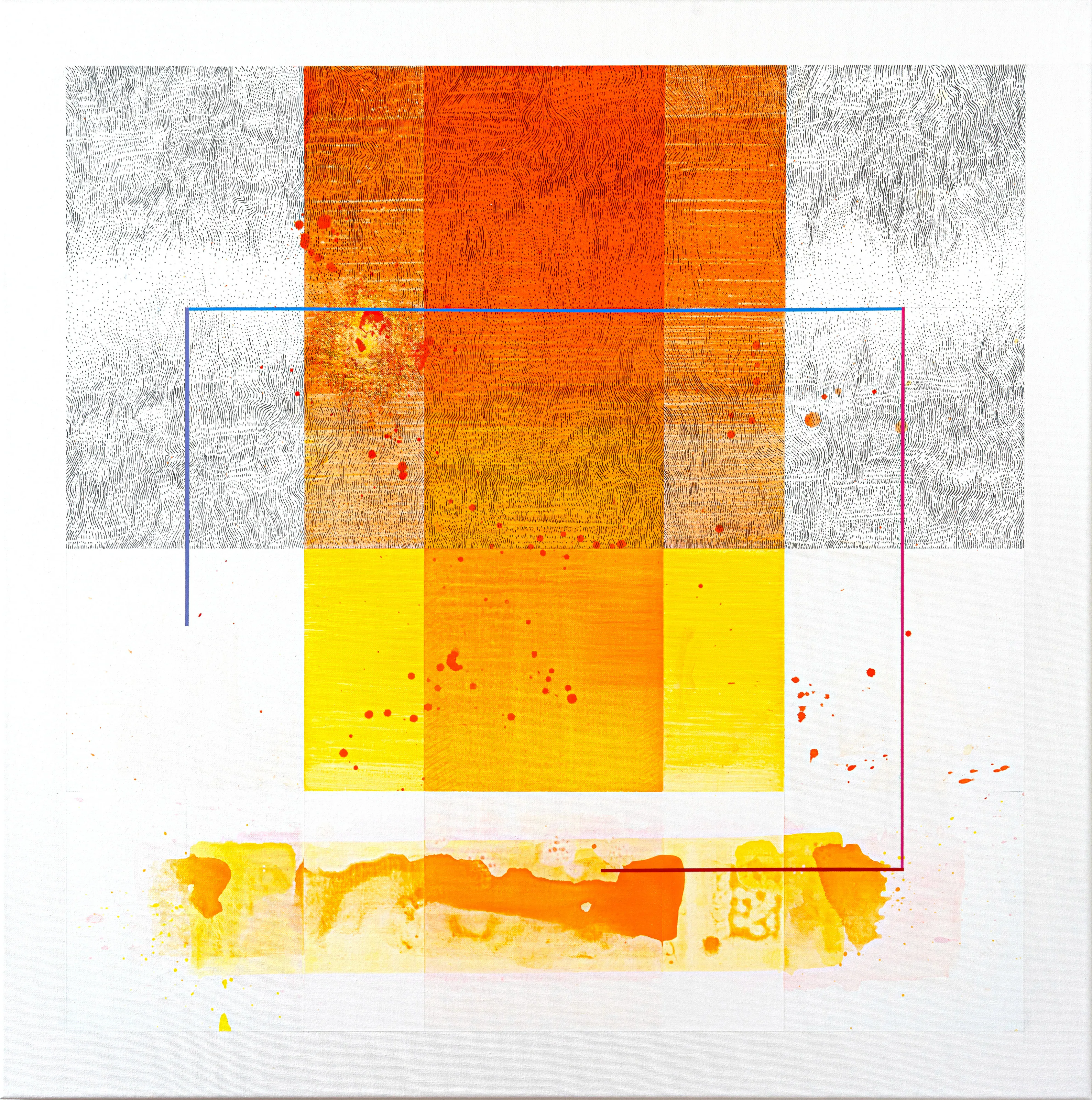
The Day Breaks: acrylic paint, paint marker, pigment, and varnish on canvas.
The title plays on the verb "to break": the day does not begin gently; it breaks, it bursts forth. The downward gradient mimics this movement; light falls, floods in, and spills over.
Floating rectangles: frame and overflow
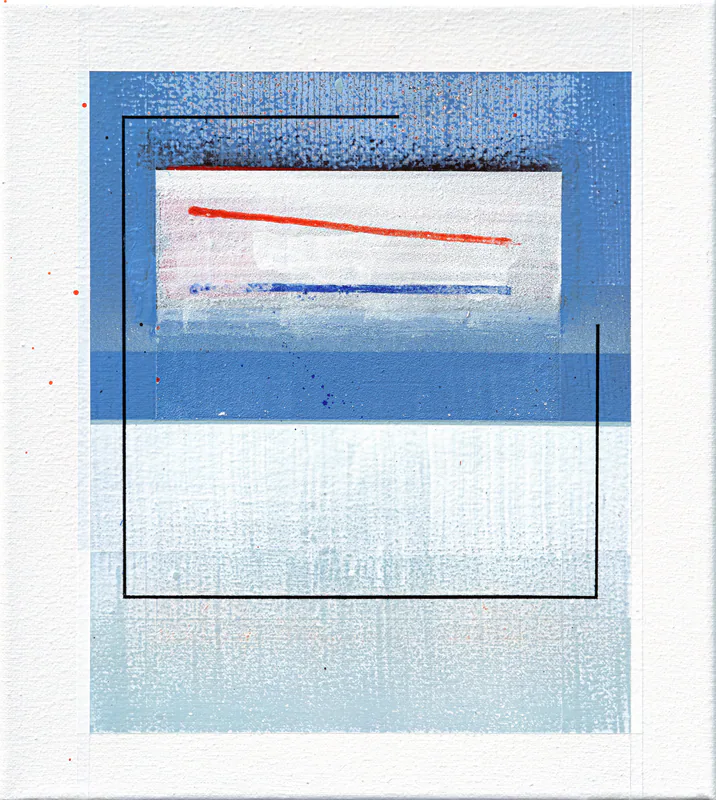
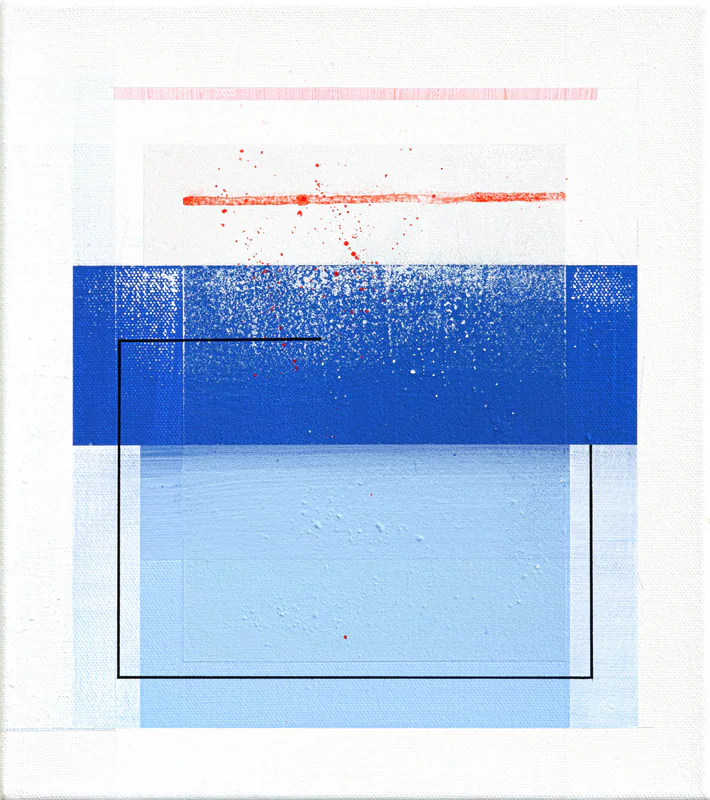
Two rectangles with fine lines—one cool blue, the other magenta—float above the composition without being bound by it. They function like windows or photographic frames, evoking the capture of a fleeting moment. The blue suggests the coolness of dawn, while the magenta evokes the pink glow of the sun's first rays. Yet they are incomplete; their outlines do not close, for dawn can never truly be framed.
The lower third defies all geometry. Splatters, drips, and yellow-orange stains against a white background represent the moment when light spills beyond established order—when day definitively shatters the structure of night. It is the luminous, joyful, and violent chaos of a fully realized dawn.