Absence
,
2026
Patrick Piccinelli
Absence
2026
acrylic paint, pigment, varnish
acrylic paint, pigment, varnish
60
60
X
X
60
60
Available
€
2,400
shipping worldwide included
Add to card
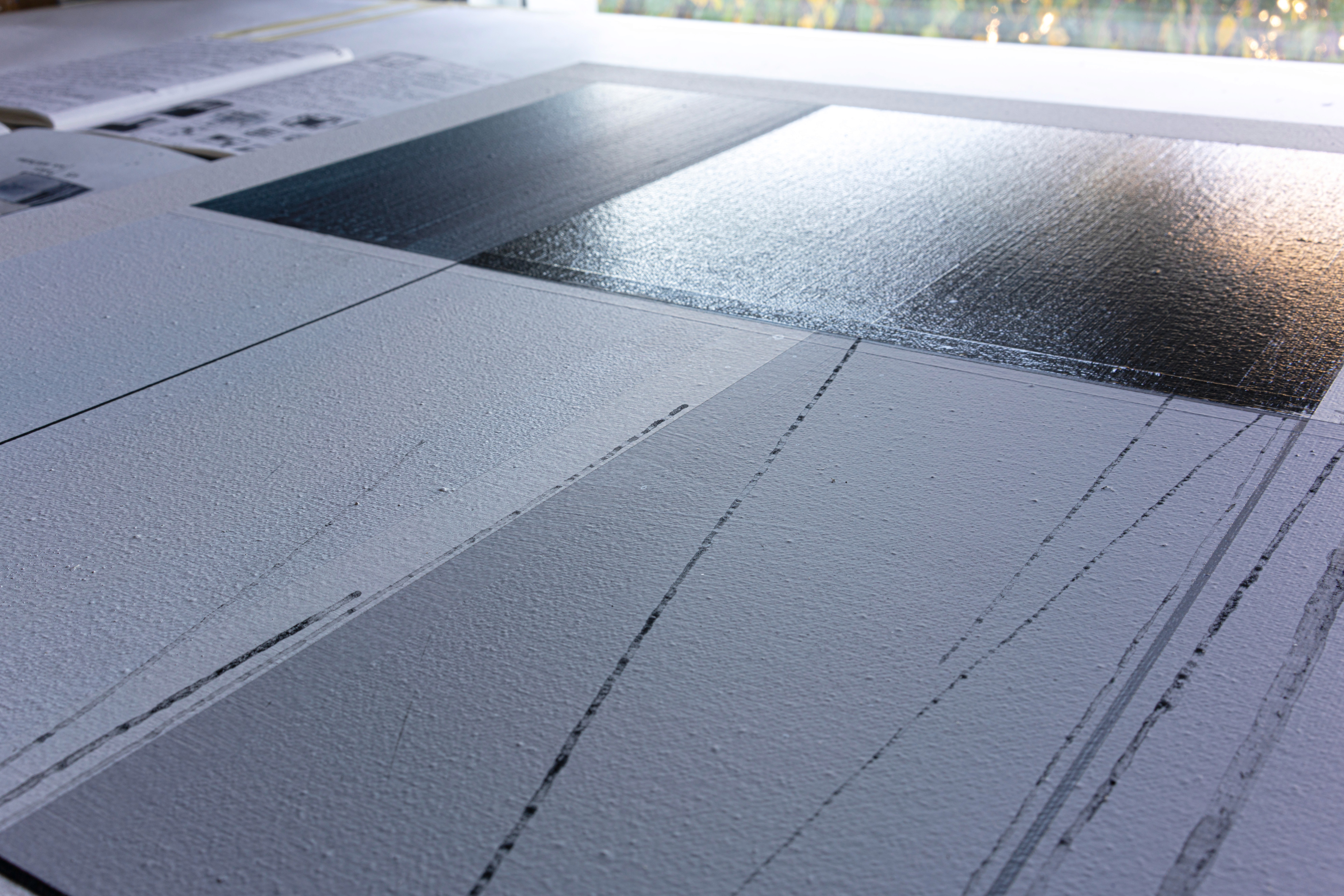
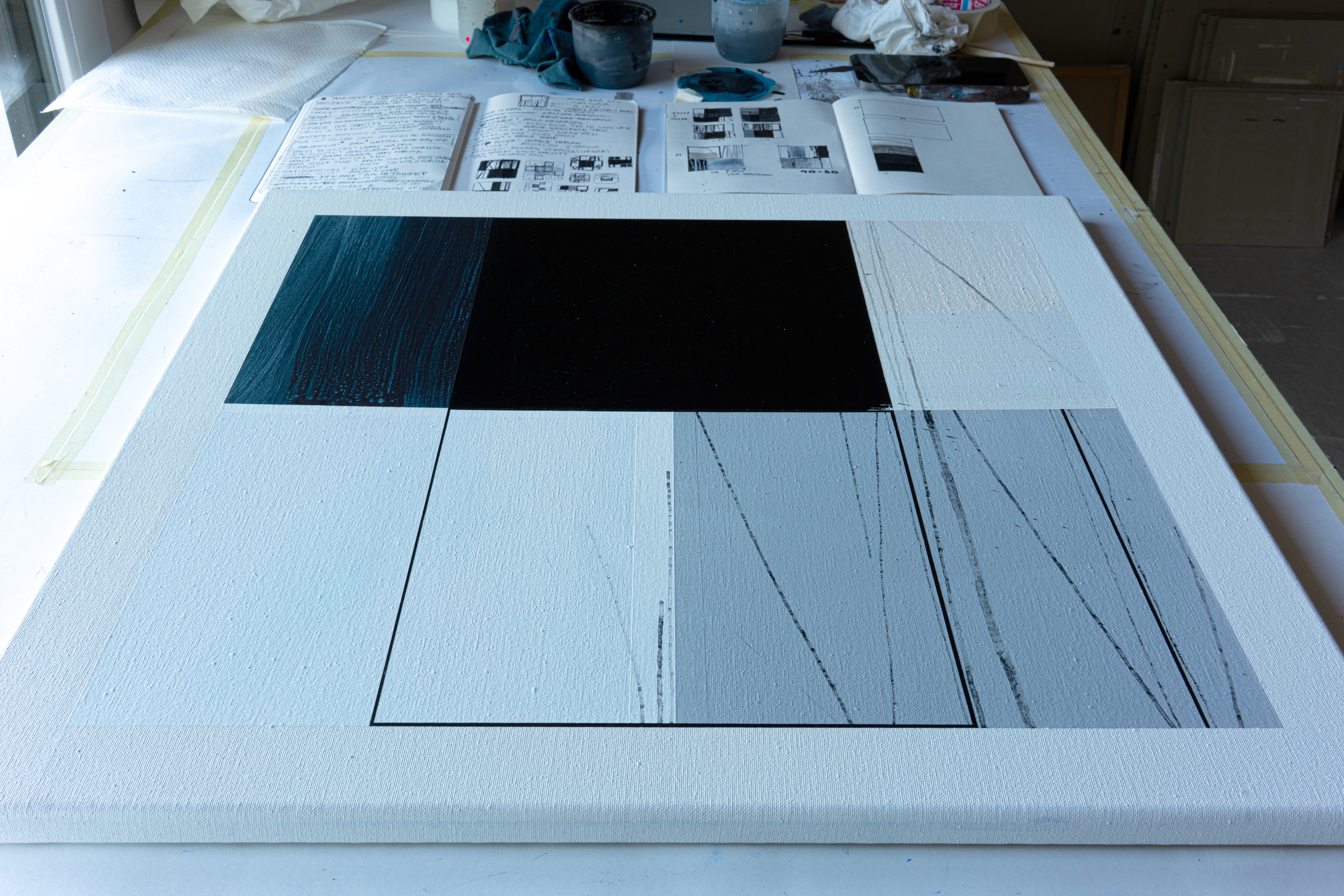
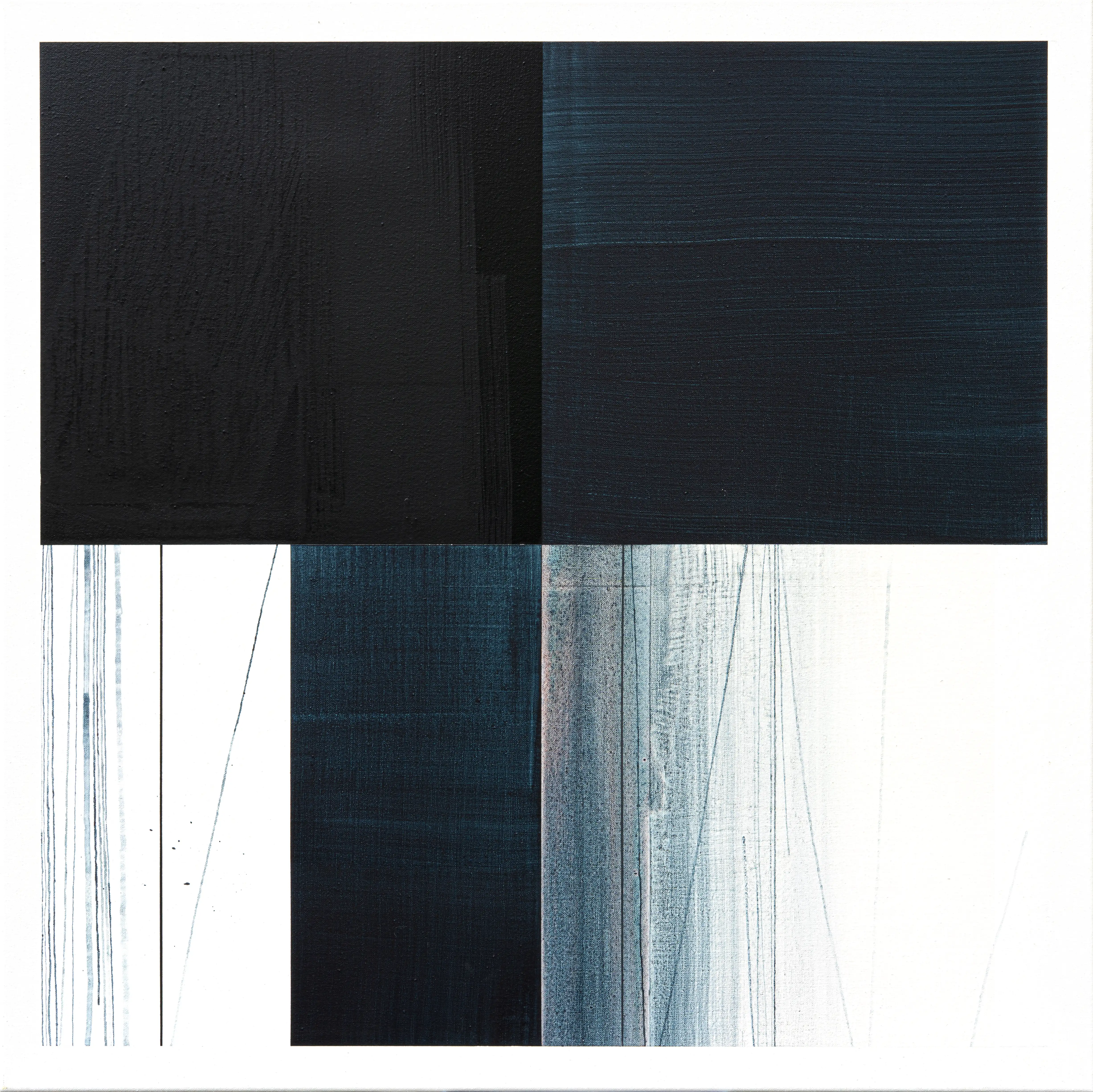
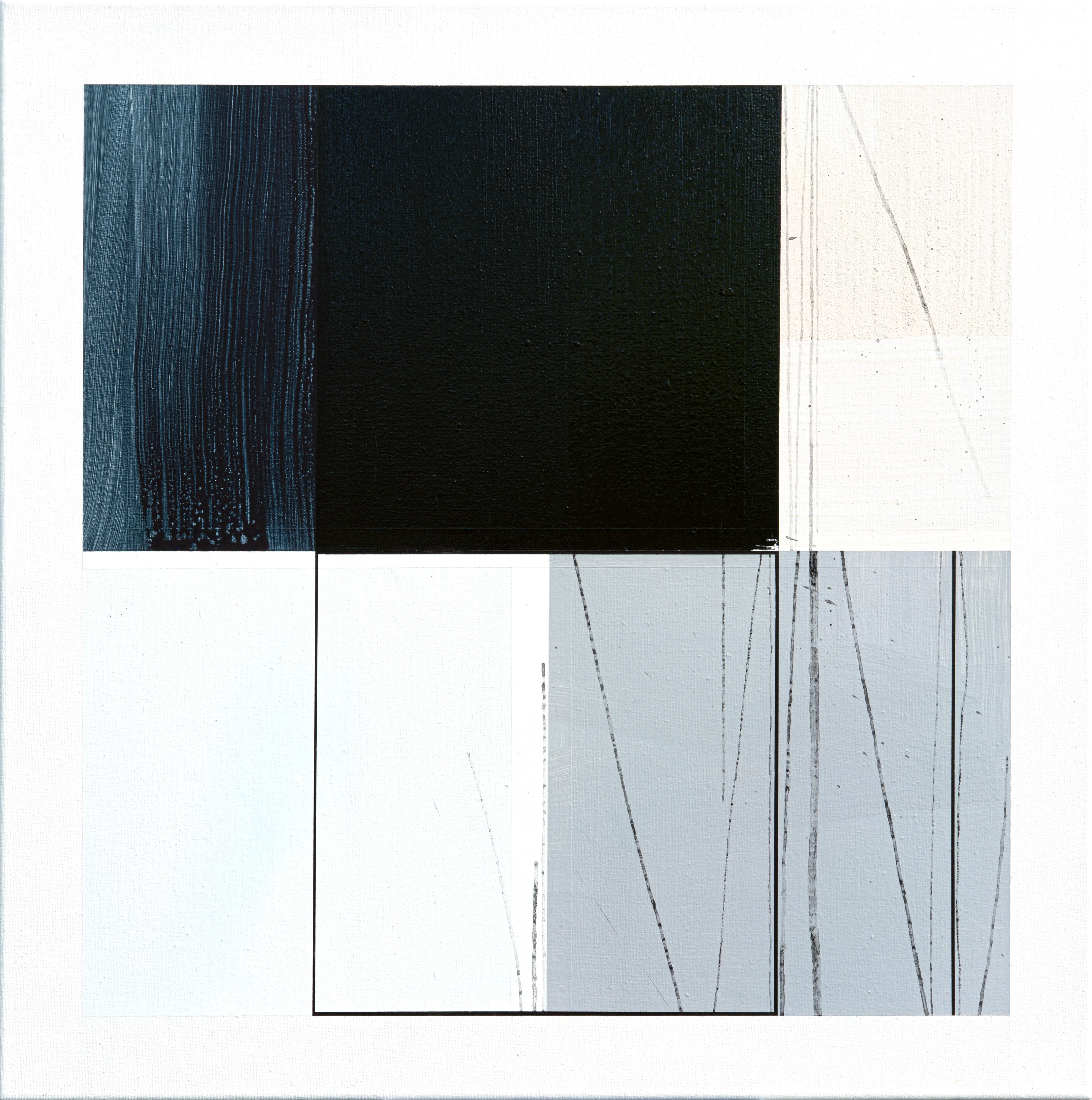
The entire structure functions like a visual score: panels of varying density, where solid forms (the black square) sit alongside nearly empty surfaces. The composition conveys a rhythm rather than an image—substance, then nothing; gesture, then silence.
Absence is also the title of a sublime album recorded in 2017 by Estonian pianist Kristjan Randalu, alongside guitarist Ben Monder and drummer Markku Ounaskari, and produced by Manfred Eicher for ECM. The music is truly inspiring!
Connections:
The title track closes the album, and one critic describes it thus: towards the end of the record, the track descends into a black-and-white surge, stripped of the liveliness found earlier in the session—a description that could almost serve as a caption for my painting.
One critic describes Randalu as a pianist who finds so much more by doing less—a phrase that aptly summarizes my painting’s approach: less painted material, yet greater tension between the different zones.
Black as a center of gravity: in the painting, the dense black square holds the dominant position, surrounded by voids—mirroring the movement of Randalu’s piece, which sinks into darkness at its conclusion, acting as a point of absorption following the motion.
The fading gesture: the blue band fraying into droplets evokes a musical phrase unraveling—a note allowed to die away rather than reach a definitive conclusion—a technique central to the ECM aesthetic, where silence is a material in its own right, not merely an absence.
White as active absence: the painting’s large, nearly empty expanses are not simply blank spaces; they carry weight within the composition—much like in Randalu’s aesthetic, where the silences and spaces between notes hold as much meaning as the notes themselves. The fine lines—vestiges of a gesture—are gray strokes traversing the pale areas; nearly erased, they function as a record of the gesture rather than as a solid motif. They offer a potential echo of the way critics have described Randalu’s work on memory and the Estonian landscape: each piece reflects a fertile memory of the stark yet beautiful landscape he left behind.
As a painter, I feel a kinship with what I perceive in Randalu’s music: absence is not a void to be filled but an active element—one that feels almost more charged than fullness itself. It is the black that draws everything in, the silence that structures just as sound does, and the white that carries as much weight as color.
The entire structure functions like a visual score: panels of varying density, where solid forms (the black square) sit alongside nearly empty surfaces. The composition conveys a rhythm rather than an image—substance, then nothing; gesture, then silence.
Absence is also the title of a sublime album recorded in 2017 by Estonian pianist Kristjan Randalu, alongside guitarist Ben Monder and drummer Markku Ounaskari, and produced by Manfred Eicher for ECM. The music is truly inspiring!
Connections:
The title track closes the album, and one critic describes it thus: towards the end of the record, the track descends into a black-and-white surge, stripped of the liveliness found earlier in the session—a description that could almost serve as a caption for my painting.
One critic describes Randalu as a pianist who finds so much more by doing less—a phrase that aptly summarizes my painting’s approach: less painted material, yet greater tension between the different zones.
Black as a center of gravity: in the painting, the dense black square holds the dominant position, surrounded by voids—mirroring the movement of Randalu’s piece, which sinks into darkness at its conclusion, acting as a point of absorption following the motion.
The fading gesture: the blue band fraying into droplets evokes a musical phrase unraveling—a note allowed to die away rather than reach a definitive conclusion—a technique central to the ECM aesthetic, where silence is a material in its own right, not merely an absence.
White as active absence: the painting’s large, nearly empty expanses are not simply blank spaces; they carry weight within the composition—much like in Randalu’s aesthetic, where the silences and spaces between notes hold as much meaning as the notes themselves. The fine lines—vestiges of a gesture—are gray strokes traversing the pale areas; nearly erased, they function as a record of the gesture rather than as a solid motif. They offer a potential echo of the way critics have described Randalu’s work on memory and the Estonian landscape: each piece reflects a fertile memory of the stark yet beautiful landscape he left behind.
As a painter, I feel a kinship with what I perceive in Randalu’s music: absence is not a void to be filled but an active element—one that feels almost more charged than fullness itself. It is the black that draws everything in, the silence that structures just as sound does, and the white that carries as much weight as color.